 Jia Lissa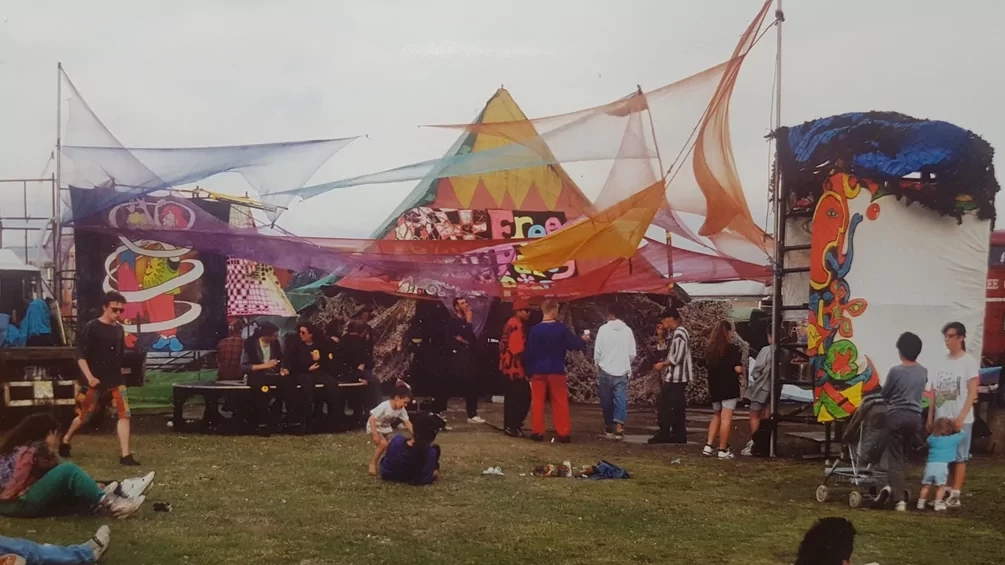
The acclaimed ’90s rave documentary, Free Party: A Folk History, is slated for an imminent streaming release, offering a deep dive into the UK’s vibrant and often controversial free party movement. Beginning May 21st, the film will be available for a 30-day window via the Eventive platform, with anticipation building for its eventual debut on major mainstream streaming services later this year. This latest iteration of the documentary includes newly integrated footage, promising an even more comprehensive and vivid portrayal of the era.
Pre-orders for the Eventive stream are currently open, with a portion of the proceeds designated for charitable causes. Beneficiaries include the Refugee Community Kitchen, an organisation providing vital support and sustenance, as well as the numerous contributors who played a crucial role in compiling the extensive archive footage that underpins the film. Any remaining profits are earmarked for future cinematic projects by the filmmakers, underscoring a commitment to documenting subcultures and social histories.
A Glimpse into a Pivotal Era: The ’90s Free Party Movement
Free Party: A Folk History emerges as a timely cultural document, reflecting upon a period of profound social and musical transformation in the United Kingdom. The film intricately weaves together narratives from the heart of the free party scene, a phenomenon born out of the burgeoning acid house movement of the late 1980s and early 1990s. This era, characterised by a spirit of rebellion, communal solidarity, and sonic innovation, saw thousands converge in fields, warehouses, and abandoned spaces across the UK, escaping the confines of conventional nightlife and the socio-political climate of the time.
The free party movement was more than just music; it was a potent counter-cultural force, a direct response to the prevailing economic and social policies of the Thatcher and Major governments. With soaring unemployment, a sense of disenfranchisement among young people, and a perceived lack of public spaces for unbridled expression, the DIY ethos of the free party scene offered an alternative. It championed accessibility, self-organisation, and a collective experience, eschewing commercialism in favour of grassroots community building. The scene’s philosophy was simple yet radical: anyone could bring a sound system, find a space, and throw a party, unbound by licensing laws or profit motives. This freedom, however, frequently put them on a collision course with authorities.
Chronicling Key Events: Castlemorton and The Battle of the Beanfield
The documentary’s narrative arc is deeply rooted in significant historical events that shaped the free party landscape. Among these, the legendary week-long Castlemorton Common Festival of 1992 stands as a monumental flashpoint. Attracting an estimated 20,000 to 40,000 attendees, Castlemorton was an unprecedented gathering that, for many, epitomised the utopian ideal of the free party movement. It was a sprawling, self-organised city of sound systems, tents, and vibrant communal life, operating largely outside the law. While celebrated by participants as a beacon of freedom and solidarity, its scale and defiance of authority sent shockwaves through the establishment, ultimately serving as a primary catalyst for punitive legislation. The film’s release prompts reflection on the enduring legacy of Castlemorton, an event that continues to resonate 33 years after its occurrence.
Equally central to the film’s historical context is the infamous Battle of the Beanfield in 1985. While preceding the peak of the ’90s rave explosion, this violent confrontation between police and New Age Travellers attempting to reach Stonehenge for the annual free festival foreshadowed the escalating tensions between state power and alternative communities. The Beanfield incident, marking 41 years since its brutal suppression, laid bare the government’s willingness to employ force to curb perceived threats to public order, a tactic that would later be heavily deployed against free parties. By linking these events, Free Party: A Folk History effectively traces the lineage of state suppression against non-conformist gatherings, illustrating a broader struggle for the right to assemble and express.
The Architects of Sound: Spotlight on Trailblazing Collectives
Free Party: A Folk History dedicates significant screen time to the trailblazing free party collectives whose ingenuity and resilience defined the era. These sound systems were not merely purveyors of music; they were social organisers, engineers, and cultural provocateurs, each contributing a unique flavour to the movement.
Spiral Tribe: Perhaps the most notorious and iconic of the free party sound systems, Spiral Tribe is a central focus. Originating in London, their ethos of "free tekno for free people" and their nomadic lifestyle became synonymous with the movement’s radical spirit. Known for their powerful, custom-built sound systems and uncompromising stance against commercialisation, Spiral Tribe frequently found themselves at the forefront of clashes with authorities. Their story, marked by arrests, equipment seizures, and a relentless pursuit of freedom, is crucial to understanding the political dimensions of the rave scene. The film explores their journey from London squats to international renown, highlighting their profound influence on subsequent generations of free party organisers across Europe.
DiY Sound System: Hailing from Nottingham, DiY Sound System carved out a distinct niche within the free party landscape. Unlike some of their harder-edged contemporaries, DiY championed a soulful, house-driven sound, fostering a more overtly communal and less confrontational atmosphere. Their commitment to the "Do It Yourself" principle extended beyond music production to organising events, building a loyal following through word-of-mouth and a dedication to creating inclusive, joyful spaces. The documentary delves into how DiY Sound System blazed a trail for the ’90s free party movement, emphasising their role in nurturing a diverse musical palette and demonstrating the viability of large-scale, independently organised events. Their story underscores the creative and community-centric aspects that often get overshadowed by narratives of conflict.
Circus Warp: While perhaps less widely known than Spiral Tribe or DiY, Circus Warp represents another vital thread in the tapestry of the ’90s free party scene. These collectives, often operating with unique aesthetic and musical approaches, collectively contributed to the rich diversity and decentralised nature of the movement. The film acknowledges their contributions, ensuring a comprehensive portrayal that captures the breadth of creativity and organisation present during this period.
Aaron Trinder’s Vision: A Folk History Unveiled
Filmmaker Aaron Trinder’s approach to Free Party: A Folk History is deeply empathetic and meticulously researched. The decision to title it "A Folk History" is deliberate, signaling a commitment to chronicling the movement through the eyes and voices of those who lived it. Trinder’s vision moved beyond mere nostalgia, aiming to capture the socio-political undercurrents and the profound human experience embedded within the free party phenomenon.
The process of compiling the archive footage was a monumental undertaking, involving extensive outreach to individuals who had documented the scene through personal camcorders, photographs, and audio recordings. This grassroots methodology ensures an authenticity that commercial documentaries often miss, presenting a raw, unfiltered perspective from the heart of the action. The inclusion of "never-before-seen footage" is a testament to this painstaking archival work, offering fresh insights and allowing viewers to witness moments previously confined to personal collections. As Trinder explained in a Q&A with DJ Mag, his aim was to celebrate the unifying spirit of an era, highlighting the collective joy and shared purpose that transcended socio-economic divides. The documentary stands as a vital repository of cultural memory, preserving a chapter of British youth culture that was largely ignored or demonised by mainstream media at the time.
Socio-Political Impact and Legislative Aftermath
The free party movement, with its explicit defiance of conventional norms and its occupation of public and private land, inevitably provoked a strong reaction from the state. The large-scale gatherings, the perceived lawlessness, and the association with drug culture became a significant concern for the government. This escalating tension culminated in the passing of the Criminal Justice and Public Order Act 1994 (CJA).
The CJA was a landmark piece of legislation that profoundly impacted the free party scene and indeed, many aspects of British civil liberties. Section 63 of the Act specifically targeted "gatherings of 20 or more persons at which amplified music is played during the night and which by reason of its loudness and duration is likely to cause serious distress to inhabitants of the area." Crucially, it included the now-infamous clause defining "music" as sounds "wholly or predominantly characterised by the emission of a succession of repetitive beats." This highly specific, almost absurd, legal definition was a direct response to rave music and effectively criminalised the core activity of free parties.
The Act granted police unprecedented powers to stop, search, and disperse gatherings, seize equipment, and arrest organisers. Its immediate effect was to drive the free party scene further underground, making large-scale outdoor events exceedingly difficult to organise without severe legal repercussions. While it succeeded in curbing the overt proliferation of massive free parties, it also ignited a new wave of political activism, uniting diverse groups – from ravers to environmentalists and travellers – under a common banner of resistance against what many saw as an authoritarian overreach. The CJA forever altered the landscape of youth culture and public assembly in the UK, making Free Party: A Folk History not just a cultural retrospective but also a critical examination of state power and individual freedoms.
Streaming Release Details and Broader Implications
The decision to initially release Free Party: A Folk History on the Eventive platform for a limited 30-day window from May 21st provides an accessible entry point for dedicated fans and newcomers alike. Eventive, known for its support of independent film distribution, offers a direct channel to audiences, allowing the filmmakers to maintain creative control and directly engage with their community. The subsequent move to mainstream streaming platforms later in the year will significantly broaden the film’s reach, introducing this crucial historical narrative to a much wider global audience.
The charitable component of the streaming release underscores the enduring values of the free party movement itself. The donation of proceeds to the Refugee Community Kitchen resonates deeply with the spirit of solidarity, mutual aid, and anti-establishmentarianism that characterised the ’90s scene. It highlights a continuity of progressive values, demonstrating how the legacy of communal support transcends specific cultural movements. Similarly, ensuring that contributors of archive footage receive a share of the proceeds acknowledges the vital role of individual participants in shaping and preserving this "folk history."
The Enduring Legacy and Contemporary Resonance
Decades after its peak, the spirit of the ’90s free party movement continues to resonate. As explored in DJ Mag’s 2024 feature on the UK’s thriving free party scene, the desire for independent, non-commercialised gatherings persists. While the legal and social landscape has undoubtedly changed, the underlying motivations – a craving for authentic communal experiences, an escape from commercial pressures, and a platform for alternative cultural expression – remain powerful.
Free Party: A Folk History arrives at a moment when discussions around public space, youth culture, and the right to assemble are as pertinent as ever. In an increasingly digital and commodified world, the film serves as a powerful reminder of a time when communities built their own spaces for joy and resistance, challenging established norms through collective action and the unifying power of music. It’s a testament to the resilience of counter-culture and a call to remember the profound impact that seemingly fringe movements can have on society, legislation, and the collective consciousness. By revisiting this pivotal era, the documentary offers not just a historical account but also an inspiring narrative about freedom, community, and the enduring human need to dance to repetitive beats.