Mia Khoirunisa
The world of modular synthesis, particularly within the Eurorack ecosystem, has long been a fertile ground for innovation, pushing the boundaries of sound design and musical expression. Today, Make Noise, a company renowned for its distinctive and forward-thinking approach to instrument design, has introduced a groundbreaking new module that promises to redefine the capabilities of spatial and textural audio processing. Dubbed Plexiphon, this module is not simply a new addition to the ever-expanding array of effects; it represents a paradigm shift in how reverb and echo can be synthesized and manipulated, offering a fluid, modeless transition between distinct echoes and continuous reverberant textures. This development is particularly significant as it emerges from the celebrated "Soundhack" lineage of digital signal processing (DSP) algorithms, a testament to the enduring legacy of experimental audio research.
The Genesis of Plexiphon: A Soundhack Evolution
At the heart of Plexiphon lies a sophisticated new DSP engine, meticulously crafted by Tom Erbe, the creative force behind the original Soundhack software and its subsequent hardware implementations. Erbe has consistently been at the forefront of developing unique and textural audio algorithms, and Plexiphon is no exception. Unlike many existing modules that achieve a blend of reverb and echo through crossfading, algorithm switching, or other discrete operational modes, Plexiphon achieves a seamless, continuous morphing of sonic characteristics. This "mighty morphing modeless modulation," as described by early observers, allows for unprecedented fluidity in sound shaping.
The module’s core innovation lies in its ability to fundamentally alter the underlying feedback structure of its algorithms. Traditional digital reverbs are often complex arrangements of multiple echo taps, and algorithmic reverbs are essentially highly developed combinations of these. The intuitive desire in sound design is to move fluidly between the distinct, rhythmic character of multi-tap echoes and the diffuse, continuous wash of a reverberant space. Plexiphon directly addresses this desire by allowing users to dynamically manipulate the very architecture of the sound generation process.
Unpacking the Control: Plexus, Size, and Color
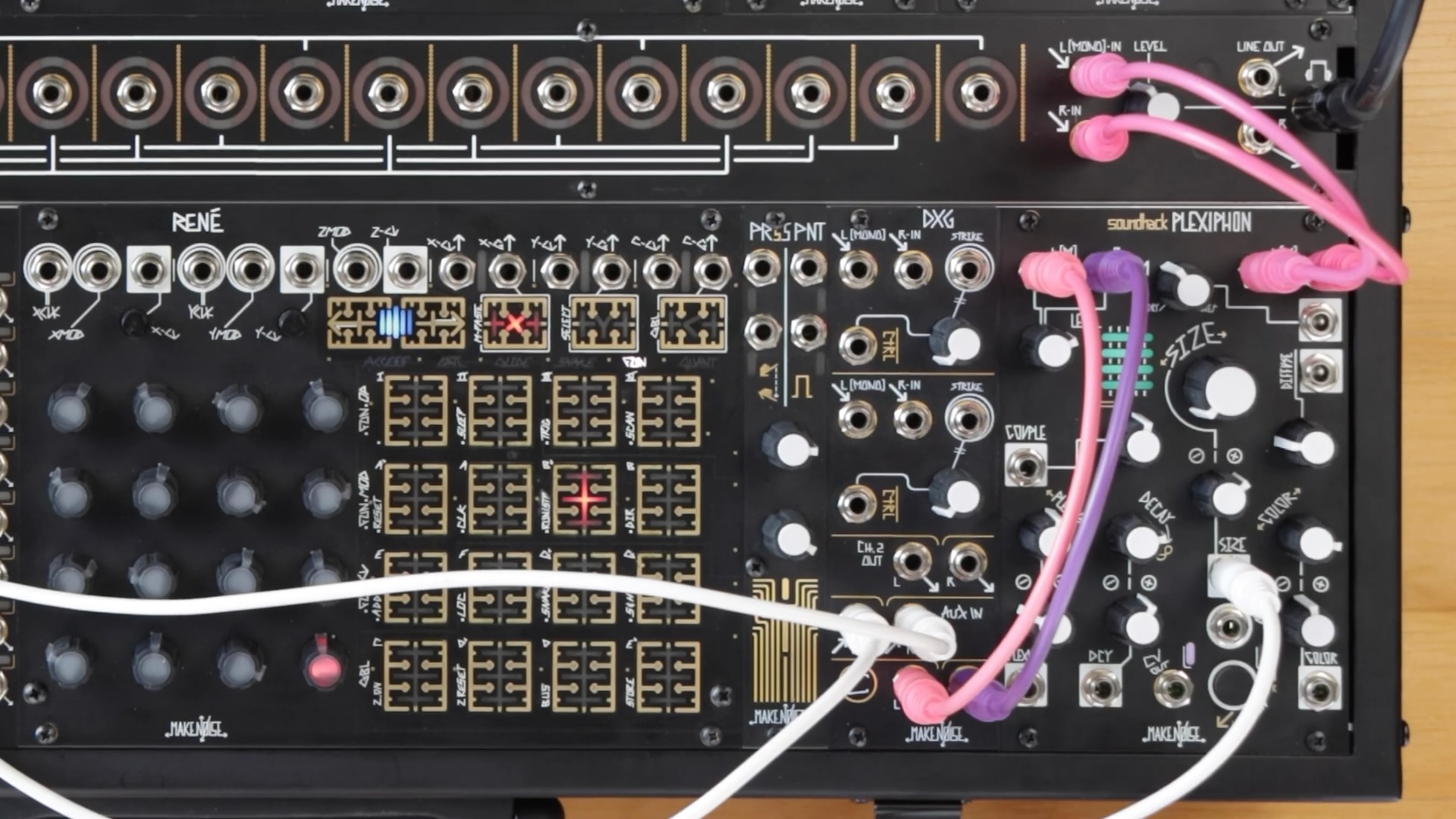
Plexiphon’s unique capabilities are unlocked through a carefully considered set of controls that offer deep, yet intuitive, manipulation of its spatial and temporal characteristics. The central "Plexus" control is arguably the most revolutionary. It directly modulates the number of feedback paths within the algorithm. By altering this parameter, users can transition from discrete, discernible echoes to a dense, complex web of interweaving reflections that coalesce into a rich, textural reverberation. This is the key to the module’s ability to avoid the abrupt transitions often found in less sophisticated effects.
Complementing Plexus, the "Size" parameter dictates the temporal spacing between these feedback paths. In conventional terms, this directly influences what is commonly understood as the "size" of the reverberant space or the decay time of echoes. By adjusting Size in conjunction with Plexus, users can sculpt the perceived dimensionality and decay characteristics of the generated sound.
The "Couple" control introduces another layer of spatial manipulation. It determines the independence of the left and right outputs. At one extreme, the outputs can function as independent stereo channels (dual mono). At the other, they become intricately cross-fed, creating a sense of sonic entanglement. The press release from Make Noise poetically describes this intermingling of left and right signals as "intermingled," a fitting term given the feedback-driven nature of the processing. This feature is crucial for creating immersive stereo fields and complex, evolving spatial textures.
Furthermore, the "Color" parameter allows for tonal shaping of the feedback signals, influencing the spectral content of the echoes and reverberations. This provides an additional dimension for sonic sculpting, enabling users to imbue the spatial effects with specific timbral qualities.
Skew: The Master of Asymmetrical Control
Adding a sophisticated layer of expressivity, the "Skew" control offers a novel way to modulate the interaction between the left and right channels. Skew determines the inverse or tandem control of these parameters. This means that as one parameter is adjusted, the corresponding parameter on the other channel can either move in the same direction (tandem) or the opposite direction (inverse). This allows for the creation of dynamic, asymmetrical spatialization and modulation effects, effectively "angling" the sound through space in complex and evolving ways. For example, one could imagine Skew being used to create a sense of a sound source moving from one side of the stereo field to the other, with the reverb and echo characteristics dynamically shifting in response.
Performative Design and the Eurorack Ethos
A defining characteristic of Plexiphon, and indeed much of Make Noise’s product philosophy, is its emphasis on performative control. The module is equipped with a "Send gate" and an integrated "envelope follower." These features strongly suggest that Plexiphon is designed not as a static "set it and forget it" effect, but as a dynamic instrument to be actively manipulated during performance. The envelope follower, for instance, can translate the amplitude of an incoming signal into control voltages, allowing the dynamics of a performance to directly influence the spatial and textural characteristics of the effect. This aligns perfectly with the hands-on, interactive nature of modular synthesis.
The inclusion of these performative elements signals a clear departure from the common perception of reverb as a passive background element. Plexiphon encourages users to engage with the effect as an active participant in the sonic narrative, rather than merely as a decorative embellishment. This philosophical stance is likely to resonate deeply with modular enthusiasts who prioritize real-time interaction and sonic exploration.
Technical Specifications and Market Positioning
Plexiphon measures 16 HP (Harmonic Pitch Standard) in width, a common and practical size within the Eurorack format. The module is priced at $469 USD. This price point positions Plexiphon as a premium module, suggesting a significant investment in its advanced DSP and unique feature set. Make Noise’s strategic pricing often reflects the cutting-edge technology and innovative design embedded in their products, aiming to encourage users to integrate these powerful tools into focused, creative setups. The implication is that the higher cost might encourage more deliberate and experimental use, fostering a deeper exploration of its capabilities rather than its casual deployment as a mere sonic garnish.
The premium positioning also suggests that users are paying for the novel algorithms and the seamless integration of complex functionalities. In a market saturated with effects modules, Plexiphon’s unique approach to morphing between reverb and echo, coupled with its deep modulation possibilities, carves out a distinct niche. This could appeal to sound designers, electronic musicians, and experimental artists seeking to push the boundaries of their sonic palettes.
The Soundhack Legacy and Future Potential
The "Soundhack" moniker carries significant weight in the experimental audio community. The original Soundhack software, developed by Tom Erbe, became a beloved tool for its unique and often unconventional audio processing capabilities. Its integration into hardware modules, particularly through collaborations like this with Make Noise, represents a significant evolution of Erbe’s work. The fact that Plexiphon utilizes entirely new code, specifically developed for this module, underscores the ongoing commitment to pushing the frontiers of DSP.
While Plexiphon is a hardware module designed for Eurorack, the author expresses a desire for a software version, acknowledging the profound impact Soundhack software had on their initial engagement with digital audio. This sentiment reflects a broader trend where hardware innovations often inspire new possibilities for software counterparts. The unique interface and inherent performative nature of Plexiphon, however, present an interesting challenge and opportunity for how such a module might be reimagined in a software environment, potentially leading to entirely new user experiences.
Broader Context and Related Innovations
The announcement of Plexiphon arrives amidst a vibrant period for Make Noise. The company recently updated its MultiWAVE module, indicating a sustained commitment to refining and expanding its product line. This continuous development cycle suggests a dynamic and responsive approach to the evolving needs and desires of the modular synthesizer community.
Furthermore, Make Noise actively engages with its user base by providing patch ideas and educational content. The inclusion of YouTube videos demonstrating concepts like "Space Tunin’ with MultiWAVE" and "Breakin’ Out" highlights the company’s dedication to fostering creativity and demonstrating the practical applications of their instruments. These resources are invaluable for users seeking to explore the full potential of their Make Noise gear, offering tangible starting points for sonic experimentation. The mention of "equal-divisions-of-the-octave microtuning" in the context of the MultiWAVE video also points to Make Noise’s interest in contemporary approaches to tuning and harmony within electronic music.
Official Statements and Industry Reactions (Inferred)
While direct quotes from Make Noise regarding Plexiphon were not provided in the initial release, the company’s reputation for meticulous design and innovative functionality speaks volumes. Their established track record suggests that Plexiphon has undergone rigorous development and testing, embodying their commitment to creating instruments that are both sonically compelling and musically inspiring. Industry observers and early adopters are likely to view this release with considerable anticipation, given the pedigree of both Make Noise and Tom Erbe’s Soundhack work. The potential for Plexiphon to become a staple in advanced sound design setups is high, given its unique blend of established sonic concepts with novel algorithmic approaches.
The Impact on Sound Design and Musical Production
Plexiphon’s arrival signifies a notable advancement in the realm of audio effects for electronic music production and live performance. By dissolving the traditional boundaries between reverb and echo and offering such granular, performative control, the module empowers musicians and sound designers with unprecedented creative agency. The ability to fluidly sculpt spatial textures, from intricate rhythmic delays to vast, evolving soundscapes, opens up new avenues for sonic exploration.
This module is likely to appeal to a wide range of artists, including those working in ambient, experimental electronic music, sound art, and even film scoring, where evocative spatialization is paramount. The performative aspect also makes it a compelling tool for live electronic artists who rely on real-time manipulation to create dynamic and engaging performances. As users begin to integrate Plexiphon into their existing setups and explore its extensive modulation capabilities, it is anticipated that a new wave of sonic innovation will emerge, further enriching the landscape of electronic music and sound design. The module’s capacity for both subtle textural enhancement and dramatic sonic transformation ensures its relevance across a broad spectrum of creative applications.