Mia Khoirunisa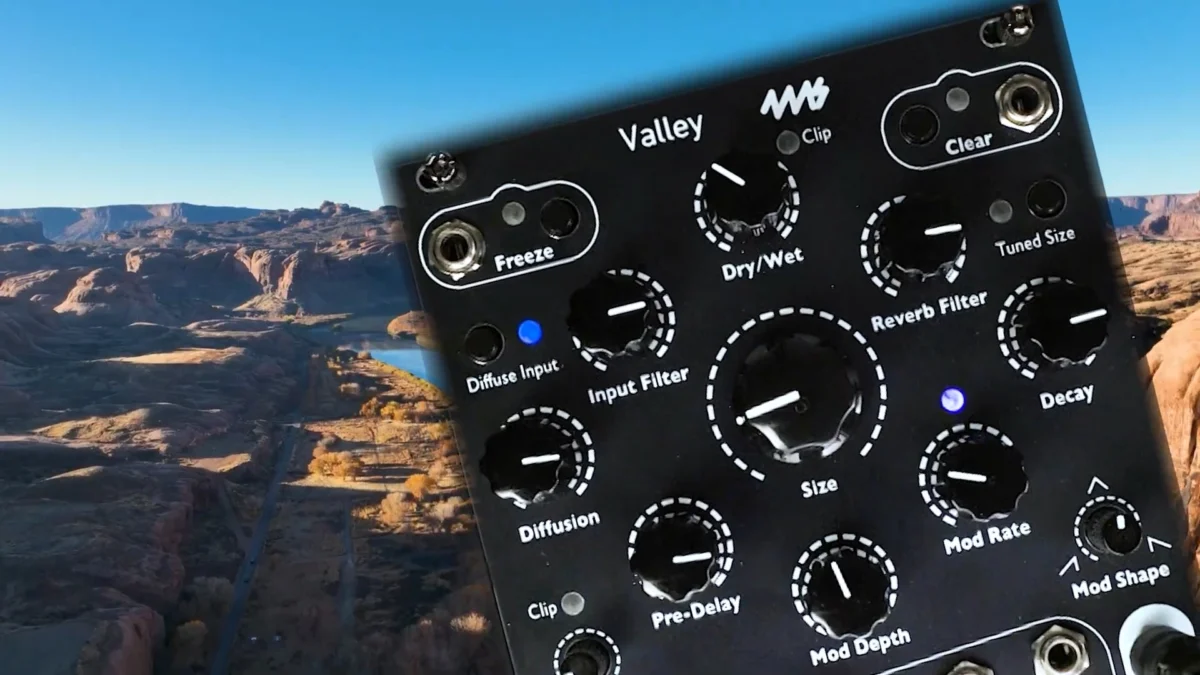
The dynamic landscape of modular synthesis has witnessed a fascinating evolution: Eurorack hardware is now emulating software, a reversal of a trend that has long seen digital audio workstations and plugins serving as inspiration for physical modules. This paradigm shift is vividly exemplified by the arrival of the 4ms Mesa, a dedicated Eurorack module that brings the highly regarded Valley Plateau reverb algorithm to the tactile world of hardware. The announcement has generated significant anticipation within the modular community, particularly among those who have already experienced the sonic capabilities of Plateau in its digital iterations.
From Digital Acclaim to Hardware Reality
The Valley Plateau algorithm, a digital plate reverb implementation, first gained prominence through its availability as a free plugin for VCV Rack, a popular open-source modular synthesizer software. Its success in the digital realm was substantial, with many users incorporating it into numerous ambient compositions, often featuring it prominently on every track. This widespread adoption underscored the algorithm’s versatility and sonic appeal, creating a clear demand for a hardware counterpart.
The original algorithm is rooted in a 1997 paper by Jon Dattorro of Stanford University’s CCRMA (Center for Computer Research in the Huggins of Music and Acoustic Sciences). Dattorro’s work focused on developing a plate reverb that mitigated the often-unpleasant ringing artifacts associated with longer reverb decay times. Valley Audio, the developer behind the Plateau plugin, expanded upon this foundational concept. Their implementation introduced easily patchable and tweakable modulation capabilities, ingeniously exploiting the natural pitch-shifting characteristics inherent in Dattorro’s algorithm to create rich and complex sonic textures. The ability to finely control and modulate these elements is a hallmark of effective modular synthesis, making the transition of such a feature-rich algorithm to a hardware module a logical and highly anticipated development.
The 4ms Mesa represents the culmination of this transition. The module, slated for release in August, is positioned as a dedicated hardware embodiment of the Plateau reverb, offering a hands-on approach to its intricate sonic palette. This move by 4ms Company, a well-established name in Eurorack hardware known for its innovative and high-quality modules, signifies a growing trend of bridging the gap between software innovation and hardware immediacy.
The Genesis of Mesa: A Deeper Dive into Plateau’s Architecture
The decision to bring Plateau into hardware is not arbitrary. The algorithm’s design inherently lends itself to the modular environment. Its core implementation is a sophisticated take on the plate reverb, a classic effect type known for its bright, dense, and immediate sound. Unlike algorithmic reverbs that attempt to simulate acoustic spaces, plate reverbs utilize large metal plates vibrated by transducers, with microphones capturing the resulting sound. Dattorro’s digital interpretation of this concept aimed to refine the sonic character and introduce greater control.
Valley Audio’s significant contribution was to unlock the full potential of this algorithm within a modular context. By making modulation parameters readily accessible for patching, they transformed Plateau from a static effect into a dynamic sound-design tool. The subtle pitch shifts that occur as the reverb tails decay, a natural byproduct of the algorithm, can be creatively manipulated. This allows for the creation of evolving textures, subtle detuning effects, and even more extreme pitch-bending sounds, all within the reverb itself. This level of interactivity and sonic exploration is precisely what draws users to modular synthesis, and it’s this very quality that the 4ms Mesa aims to deliver in a hardware format.
The emphasis on "easily patchable and tweakable modulation" is a critical point. In Eurorack, the ability to connect CV (Control Voltage) signals to various parameters is paramount. This allows for dynamic, real-time changes to the reverb’s character, driven by other modules in the system. This could range from subtle LFO modulation of the decay time to more aggressive envelope control of the pitch shifting, opening up a vast sonic canvas for experimentation. The inclusion of these features in the Mesa module ensures that it will integrate seamlessly into existing Eurorack setups, offering a wealth of creative possibilities beyond traditional reverb applications.
4ms Company’s Strategic Integration with Software Ecosystems
The launch of the Mesa module by 4ms Company is particularly noteworthy given their existing involvement in the intersection of hardware and software. 4ms is also the developer of the Meta Module, a groundbreaking Eurorack module designed to run VCV Rack modules directly within a hardware Eurorack system. This prior innovation makes the Mesa’s existence feel even more natural and strategic.
The Meta Module essentially brings the VCV Rack software environment into the physical Eurorack format, allowing users to load and interact with VCV Rack plugins as if they were dedicated hardware modules. Given that Valley Audio’s Plateau is freely available within VCV Rack and its popular fork, Cardinal, the Mesa module represents a dedicated, optimized hardware implementation of a beloved software effect. Users who have already invested time and creativity in the digital version will find the transition to the Mesa module a familiar yet enhanced experience.
The availability of a "module finder" on the Meta Module website further highlights the interconnectedness of these platforms. It allows users to discover which VCV Rack modules have been made available or are compatible with the Meta Module, effectively creating a bridge between the vast VCV Rack library and the Eurorack ecosystem. The Mesa, therefore, can be seen as a natural progression, offering a purpose-built hardware solution for an algorithm that has already proven its worth in the digital domain.
Accessibility and the Spirit of Open Source
A significant aspect of the Plateau story is its accessibility. The algorithm is not only free to use in VCV Rack and Cardinal but is also released under a GPLv3 license. This open-source licensing model fosters a spirit of collaboration and encourages further development. The article highlights that users with the necessary technical skills and time could even embark on creating their own hardware modules based on the Plateau algorithm, underscoring the community-driven nature of this innovation.
The "free as in beer" and "free as in freedom" distinction is crucial here. Plateau is freely downloadable for digital use, meaning users don’t incur a cost for its software version. Furthermore, its open-source license grants them the freedom to study, modify, and distribute the software, aligning with the principles of open innovation. This democratized access has undoubtedly contributed to its widespread adoption and the subsequent demand for a hardware version.
The price point of the 4ms Mesa is set at $399. While this represents a significant investment for a single effect module, the article argues that it is not merely a "$399 reverb." The module’s versatility extends beyond its primary function, offering capabilities as a delay, a textural effect, a modulation source, and even a tool for glitch production. This multi-faceted nature justifies the price for serious modular enthusiasts looking to expand their sonic toolkit.
A Look Ahead: Potential and Community Reaction
The impending release of the 4ms Mesa in August has already sparked considerable discussion and excitement. Many in the modular synthesis community have expressed their eagerness to integrate this highly anticipated reverb into their setups. The module’s ability to emulate a beloved software effect in a tactile, hardware form factor addresses a growing desire for immediacy and hands-on control in electronic music production.
The implications of this trend, where hardware modules directly translate sophisticated software algorithms, are significant. It suggests a future where the lines between software and hardware synthesis continue to blur, offering musicians and sound designers an even wider array of creative tools. The success of the Mesa could pave the way for more such hardware implementations of popular software effects and virtual instruments, further enriching the Eurorack ecosystem.
While the article playfully suggests alternative names like "Altiplano" or "Butte" for potential future pedal versions, the choice of "Mesa" by 4ms is fitting, evoking a sense of elevated, expansive soundscapes. The initial announcement video provides a glimpse into the module’s capabilities, and the anticipation for hands-on reviews and user demonstrations is palpable.
The Valley Plateau algorithm’s journey from a research paper to a widely used digital plugin, and now to a dedicated Eurorack hardware module, is a testament to the power of innovation, open-source collaboration, and the enduring appeal of high-quality audio effects. The 4ms Mesa is poised to become an instant favorite for many, offering a sophisticated and versatile reverb that embodies the best of both the digital and analog worlds of sound design. As modular synthesis continues its trajectory of innovation, modules like the Mesa will undoubtedly play a crucial role in shaping its future.