Jia Lissa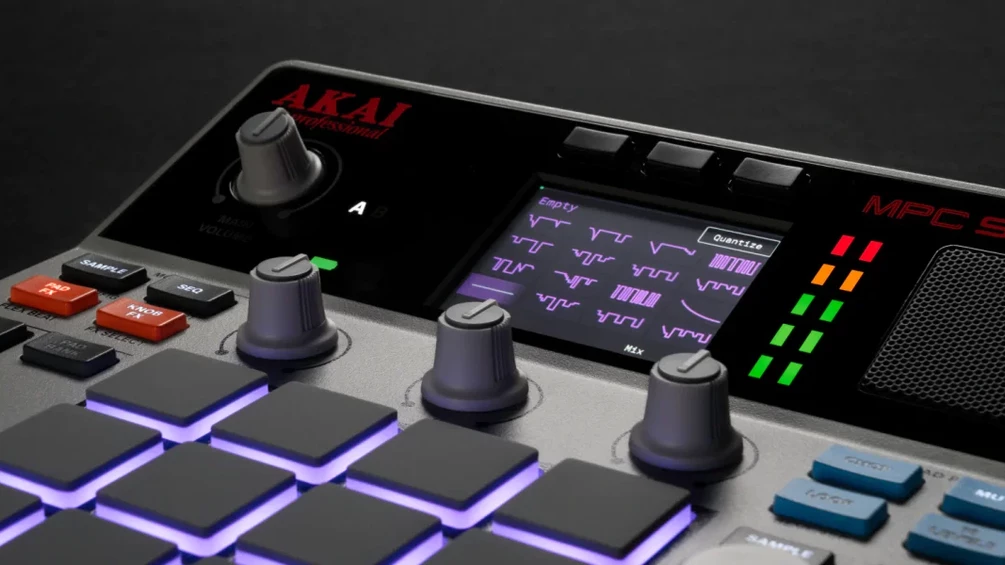
Akai Professional, a venerable name in music production technology, has officially released the MPC 3.8, a significant and free firmware update designed to dramatically enhance the interoperability and creative workflow between its flagship MPC hardware units and the recently introduced MPC Sample. This update marks a pivotal step in Akai’s strategy to foster a more cohesive and integrated ecosystem for its diverse range of music production tools, addressing previous workflow limitations and expanding the creative palette available to producers and musicians worldwide.
Seamless Integration: Bridging the MPC Ecosystem
Prior to the 3.8 update, the MPC Sample, launched earlier this year and lauded by Akai as "the most accessible standalone sampler yet," operated largely as a distinct entity within the broader MPC product family. While powerful in its own right as a portable beat-making solution, its integration with more advanced MPC hardware, such as the MPC X, Live, One, Key series, Force, and their corresponding desktop applications, presented certain workflow bottlenecks. Producers often found themselves navigating workarounds when attempting to transfer projects or leverage the full capabilities of their entire Akai setup.
The MPC 3.8 firmware update directly tackles this challenge. Its cornerstone feature is the newfound ability for users to effortlessly export MPC tracks directly from their high-end MPC hardware back to the MPC Sample. This functionality streamlines the creative process, allowing producers to initiate complex arrangements and detailed productions on their studio-grade MPCs, then seamlessly transfer these projects to the compact and portable MPC Sample for on-the-go refinement, live performance, or inspiration away from the studio environment. This bidirectional workflow is expected to significantly enhance productivity and creative freedom, allowing ideas to flow unhindered between different stages of production and different physical locations.
Furthermore, the update extends beyond mere project transfer. A crucial expansion of creative tools accompanies the integration, with five of the MPC Sample’s unique effects now being made available across the entire MPC lineup. These effects include highly sought-after sound-shaping tools such as a tape and vinyl emulator, designed to impart classic analog warmth, saturation, and character, alongside a colour compressor, which adds specific tonal qualities and dynamic control beyond standard compression. The inclusion of these effects across the full range of MPC devices ensures sonic consistency and expands the creative toolkit available to all Akai users, allowing for a more unified sound design approach irrespective of the specific hardware being utilized. This move underscores Akai’s commitment to providing a rich and diverse set of sonic textures directly within their hardware ecosystem, reducing the reliance on external plugins for certain desirable effects.
A Legacy of Innovation: The Akai Professional and MPC Story
Akai Professional’s journey in the music technology landscape dates back decades, with its roots deeply intertwined with the evolution of electronic music production. The company, originally Japanese and later becoming a prominent American-based entity, gained legendary status primarily through its groundbreaking Music Production Center (MPC) series. Introduced in the late 1980s, the MPC revolutionized beat-making by combining sampling, sequencing, and drum machine functionalities into a single, intuitive hardware unit. Icons of hip-hop and electronic music, such as DJ Premier, J Dilla, and Pete Rock, famously adopted the MPC, cementing its status as an indispensable tool for crafting grooves and shaping entire genres.
The philosophy behind the MPC has always centered on a tactile, hands-on approach to music creation, emphasizing performance and immediate interaction with sounds. Over the years, Akai has consistently evolved the MPC concept, adapting to technological advancements while retaining the core principles that made the original units so beloved. From the classic MPC60 and MPC3000 to the modern standalone units like the MPC Live and MPC X, the series has maintained its reputation for robust build quality, powerful sampling capabilities, and an intuitive workflow that empowers producers to translate ideas into music rapidly.
In recent years, Akai Professional has strategically positioned its MPC line to thrive in an increasingly hybrid music production environment, where hardware and software often coexist. The introduction of standalone MPCs that run their own operating system (MPC OS) while also integrating seamlessly with desktop DAWs (Digital Audio Workstations) exemplifies this approach. This strategy aims to offer the best of both worlds: the immediate, performance-oriented feel of hardware combined with the deep editing and expansive capabilities of software.
Recent Milestones: Power, Portability, and Precision
The MPC 3.8 update arrives on the heels of several significant product announcements and technological advancements from Akai Professional, illustrating a period of intense innovation and expansion for the company. These developments collectively paint a picture of Akai’s commitment to pushing the boundaries of what is possible within standalone music production hardware.
Earlier this year, Akai Professional unveiled what it proudly proclaimed as its "most powerful MPC ever," the MPC XL. This flagship device represents a monumental leap in processing capability, featuring a Gen 2 8-core processor that boasts four times the processing power of previous Akai MPCs. This substantial increase in computational horsepower is not merely a technical specification; it translates directly into tangible benefits for producers. It enables the MPC XL to handle more complex projects with a higher track count, run more sophisticated effects and virtual instruments in real-time without latency, and execute demanding tasks like its integrated "pro stem separation" with unparalleled efficiency. The MPC XL’s robust architecture positions it as a genuine contender for producers seeking a complete, studio-grade production environment within a standalone hardware unit.
The aforementioned pro stem separation technology, which also saw its debut within the MPC ecosystem, represents another groundbreaking development. Building upon the initial introduction of stem separation to its MPC range of samplers in 2024 (marketed as MPC Stems), the "pro" designation implies further refinements in accuracy, fidelity, and perhaps real-time processing capabilities. Stem separation technology allows producers to isolate individual components of a full audio mix—such as drums, bass, vocals, and melodic elements—into separate "stems." This capability has profound implications for sampling, remixing, and creative manipulation. It liberates producers from the constraints of pre-mixed tracks, opening up entirely new avenues for sampling individual instruments, creating custom acapellas, or remixing tracks with unprecedented surgical precision. This technology is particularly transformative for genres heavily reliant on sampling, offering a level of creative freedom previously unimaginable.
The MPC Sample, released earlier this year, played a crucial role in expanding Akai’s market reach. Positioned as "the most accessible standalone sampler yet," it targeted a broader audience, including beginners, mobile producers, and those seeking a more streamlined, immediate beat-making experience without the comprehensive feature set and higher price point of its larger siblings. Its portability and intuitive interface made it an attractive entry point into the MPC ecosystem. The MPC 3.8 update’s focus on integrating the MPC Sample more tightly with the rest of the lineup thus serves to validate its position, ensuring that even entry-level users can benefit from the advanced capabilities of the full Akai environment as they grow their production skills.
The Strategic Imperative: Cohesion in a Competitive Landscape
The release of the MPC 3.8 update is not merely a technical enhancement; it represents a strategic imperative for Akai Professional in a highly competitive music technology market. Companies like Native Instruments, Roland, Korg, and Ableton constantly vie for market share, offering their own ecosystems of hardware and software. In this environment, seamless integration and a unified user experience are paramount.
Akai’s move to enhance interoperability between its various MPC devices directly addresses a common pain point for modern producers: the fragmentation of workflows. Many artists utilize a combination of hardware and software from different manufacturers, often encountering friction when trying to move projects or sounds between them. By strengthening its internal ecosystem, Akai aims to create a compelling argument for producers to invest more deeply in the Akai brand, offering a more fluid and creatively unhindered experience.
Industry analysts suggest that such firmware updates, particularly when offered free of charge, play a crucial role in customer retention and brand loyalty. They demonstrate a company’s ongoing commitment to its existing user base, ensuring that their investment in Akai hardware continues to evolve and gain new functionality over time. This approach contrasts with models that might require users to purchase entirely new hardware for significant feature upgrades, fostering a more positive long-term relationship with customers.
Moreover, the integration of specific effects from the MPC Sample into the wider MPC lineup is a clever strategy. It not only democratizes access to these unique sonic tools but also subtly highlights the value and distinct character of the MPC Sample itself. By making these effects ubiquitous across the ecosystem, Akai reinforces the idea that each device, regardless of its size or complexity, contributes to a larger, coherent creative platform.
Inferred Industry Reactions and Broader Implications
While Akai Professional has not released formal statements beyond the update announcement, the industry response can be largely inferred as positive. A product manager at Akai Professional, speaking hypothetically on the philosophy behind the update, might emphasize user-centric design: "Our core mission is to empower creators. The MPC 3.8 update is a direct response to user feedback, aimed at removing workflow barriers and unlocking new creative possibilities. We believe that whether you’re starting an idea on the go with MPC Sample or finalizing a track in the studio on an MPC X, the creative flow should be seamless and inspiring. This update strengthens that connection, making the entire MPC ecosystem more powerful and intuitive than ever before."
Independent music technology reviewers and industry analysts would likely commend Akai for its proactive approach to ecosystem development. "Akai is clearly listening to its community," an analyst might observe. "In an era where standalone hardware is making a strong comeback, the ability to move projects effortlessly between a studio powerhouse and a portable unit is a significant advantage. The inclusion of the MPC Sample’s unique effects across the entire range adds tremendous value, ensuring a consistent sonic signature and expanding the creative palette for all Akai users. This update solidifies Akai’s position as a leader in integrated music production solutions."
For the user community, the update is expected to be met with enthusiasm. Forums and social media channels dedicated to Akai products would likely buzz with discussions about the new export capabilities and the creative potential of the newly available effects. Producers who own both a larger MPC and an MPC Sample will immediately benefit from the streamlined workflow, allowing them to truly leverage their entire hardware investment. New users considering entry into the Akai ecosystem might find the prospect of a unified and continuously evolving platform even more appealing.
The broader implications extend to the evolving landscape of music production itself. As technology continues to blur the lines between hardware and software, and as producers increasingly demand flexibility and portability without sacrificing power, Akai’s commitment to a robust, integrated, and continuously updated ecosystem positions it strongly for the future. The MPC 3.8 update is more than just a software patch; it is a declaration of Akai Professional’s enduring commitment to innovation, user experience, and the seamless creative journey of music makers across the globe. It reinforces the idea that the true power of modern music technology lies not just in individual devices, but in how intelligently and harmoniously they work together.