Nayara Elvina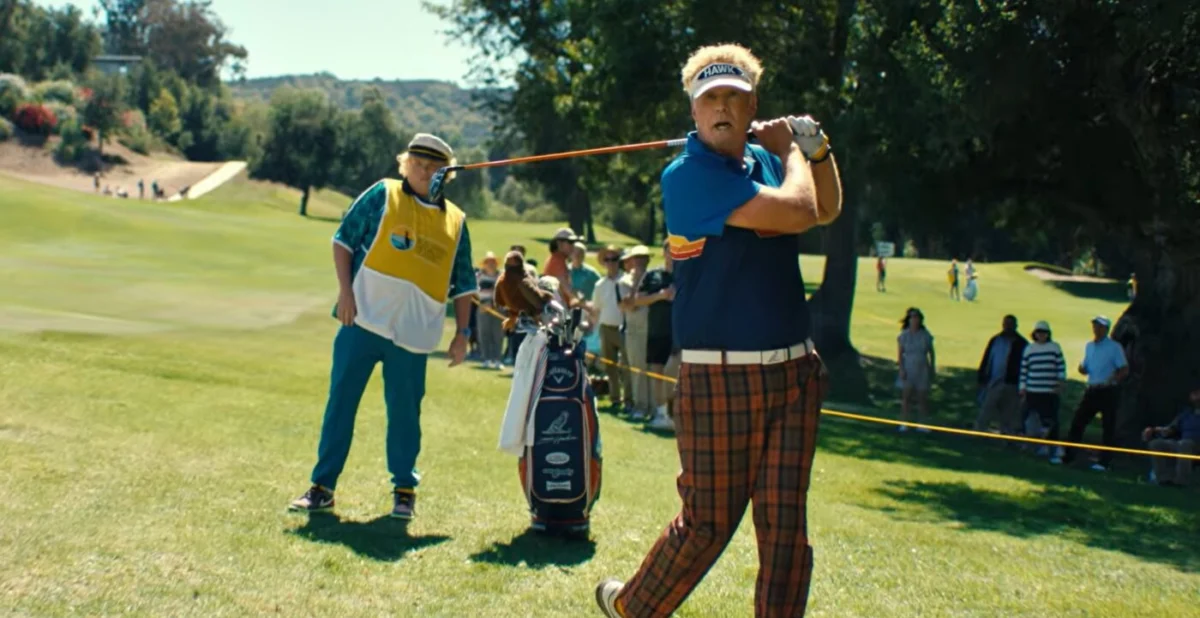
Netflix has officially released the first trailer and production details for its upcoming comedy series The Hawk, featuring Will Ferrell in his return to the sports-comedy subgenre that defined much of his cinematic career in the 2000s. The 10-episode scripted series stars Ferrell as Lonnie "The Hawk" Hawkins, a former professional golfer who reached the pinnacle of the sport in 2004 but has since fallen into obscurity. Set to premiere on July 16, the series represents a strategic expansion of Netflix’s comedy and sports-related portfolio, positioning Ferrell at the center of a narrative that blends professional athletics with the absurdist humor characteristic of his previous works like Talladega Nights: The Ballad of Ricky Bobby and Semi-Pro.
The series explores the complexities of professional sports longevity and the psychological toll of past success. According to the official synopsis provided by Netflix, Lonnie Hawkins was once the number-one ranked golfer in the world, a title he held two decades prior to the start of the show. The narrative picks up with Hawkins struggling on the "back nine of his career," grappling with physical decline while refusing to accept the end of his professional relevance. The conflict is heightened by the emergence of his son, Lance Hawkins, who has become the sport’s "new golden boy." This generational rivalry, coupled with Lonnie’s pursuit of a final Major championship to complete a career Grand Slam, serves as the primary driver for the season’s arc.
Narrative Structure and Character Dynamics
The Hawk utilizes a familiar comedic trope—the delusional but well-meaning athlete—to examine the culture of professional golf. Ferrell’s character, Lonnie Hawkins, is depicted as a man out of time, clinging to the aesthetics and ego of his 2004 heyday. Visual cues from the trailer, including a faux-hair visor and an RV emblazoned with a painted puma, suggest a character who has failed to evolve alongside the modernizing sport. This "man-child" archetype has been a staple of Ferrell’s collaborations with various directors and writers, often used to satirize the self-seriousness of professional industries.
The supporting cast brings a wealth of comedic experience to the production. Molly Shannon, a fellow Saturday Night Live alumna, stars alongside Ferrell, marking another collaboration between the two veterans of the legendary sketch show. The cast also includes Jimmy Tatro, known for his work in American Vandal and Home Economics, who plays a pivotal role in the younger generation of golfers. Chris Parnell, another SNL veteran, adds to the ensemble, while Luke Wilson, Fortune Feimster, and Katelyn Tarver round out the primary cast. The involvement of Wilson, who previously worked with Ferrell in the 2003 comedy classic Old School, signals a reunion of talent that helped define the "Frat Pack" era of American comedy.
The Evolution of the Sports Comedy Genre
The announcement of The Hawk comes at a time when the traditional studio comedy has largely migrated from theatrical releases to streaming platforms. During the mid-2000s, Ferrell dominated the box office with sports-themed parodies. Talladega Nights (2006) grossed over $163 million domestically, while Blades of Glory (2007) and Semi-Pro (2008) further solidified the marketability of Ferrell-led sports satires. These films relied on high-concept premises where Ferrell portrayed an "alpha" male in a niche or highly regulated environment, using improvisation and physical comedy to disrupt the setting’s inherent order.
The Hawk appears to be a spiritual successor to these films, though it adopts the episodic format of a television series. This transition allows for more extensive character development and subplots that a two-hour film might preclude. In the context of modern streaming, a 10-episode order provides Netflix with approximately five hours of content, a duration that fits the "binge-watching" model that the platform has championed. By focusing on golf—a sport often characterized by its rigid etiquette, quiet atmosphere, and high stakes—the series creates a natural contrast for Ferrell’s loud and erratic comedic style.
Strategic Context: Netflix and the Professional Golf Landscape
The timing of The Hawk’s release is noteworthy given Netflix’s recent and significant investment in golf-related content. The platform has seen considerable success with the docuseries Full Swing, which provides a behind-the-scenes look at the PGA Tour and the professional lives of its players. Furthermore, Netflix recently ventured into live sports broadcasting with The Netflix Cup, a crossover event featuring golfers and Formula 1 drivers.
By introducing a scripted comedy about golf, Netflix is leveraging an existing viewership base that has shown a high level of engagement with the sport. The Hawk also follows the release of Happy Gilmore 2, another high-profile golf comedy that Netflix secured for its library. While some industry analysts have noted the similarities between Ferrell’s Lonnie Hawkins and Adam Sandler’s Happy Gilmore, the two projects cater to different comedic sensibilities. Where Happy Gilmore is rooted in slapstick and underdog tropes, The Hawk appears to lean into the "washed-up legend" narrative, a theme Ferrell explored previously in Eastbound & Down (where he served as an executive producer and recurring guest star).
Chronology of Development and Production
The development of The Hawk has been relatively expedited compared to traditional television timelines. Initial reports of Ferrell’s involvement in a golf-centric project for Netflix began circulating in early 2025. By late 2025, the principal cast had been finalized, and filming commenced on location at several high-end golf resorts, ensuring the series maintained an authentic visual aesthetic to contrast with the absurdity of the script.
The trailer, released in mid-May 2026, generated immediate social media discourse. While many fans expressed enthusiasm for Ferrell’s return to the genre, some critics pointed toward the potential for "genre fatigue," given the recent influx of golf-themed content. However, the inclusion of a "Grand Slam" pursuit in the plot provides a specific structural goal for the series that mirrors real-world professional golf milestones. In the history of the modern era, only five players—Gene Sarazen, Ben Hogan, Gary Player, Jack Nicklaus, and Tiger Woods—have achieved the career Grand Slam. Positioning Lonnie Hawkins as a man one win away from this elite group adds a layer of faux-prestige to his character’s desperation.
Industry Analysis and Market Reception
The success of The Hawk will likely be measured not just by viewership numbers, but by its ability to maintain Netflix’s dominance in the "comfort comedy" space. As theatrical comedies have declined, streaming services have become the primary curators of star-driven humor. Ferrell remains one of the few comedic actors with global brand recognition capable of anchoring a high-budget series.
From a production standpoint, the series benefits from the involvement of established comedic writers who understand the "Ferrell formula." This formula typically involves a protagonist who is oblivious to his own failings, a hyper-competitive environment, and a redemption arc that is both heart-felt and ridiculous. Early reactions to the trailer suggest that the series captures the "Ricky Bobby energy" that fans have missed, particularly the use of specific sponsorships and the parody of the high-stakes world of professional endorsements.
Broader Impact on Sports Media
The Hawk reflects a broader trend of "sports-adjacent" entertainment where the lines between reality and parody are increasingly blurred. As professional golf undergoes its own real-world identity crisis—marked by the tension between the PGA Tour and LIV Golf—satirical takes on the sport become more relevant. While The Hawk does not explicitly mention current geopolitical tensions in golf, the theme of an aging star trying to find his place in a rapidly changing industry mirrors the current state of the professional game.
Furthermore, the series serves as a litmus test for Will Ferrell’s continued influence in the streaming era. After a decade of varied projects, including voice work and more dramatic turns, a return to the sports-comedy genre is a move toward "brand safety" for both the actor and the platform. By July 16, when the series becomes available to Netflix’s global subscriber base of over 260 million, the industry will have a clearer picture of whether the "Hawk" can soar in a crowded digital landscape.
The production of The Hawk signifies a commitment to high-value, talent-led episodic comedy. With a cast of veteran performers and a premise that taps into both nostalgia and modern sports culture, the series is positioned as a cornerstone of Netflix’s summer programming. Whether it will achieve the cult status of Ferrell’s previous sports films remains to be seen, but the initial rollout indicates a high level of confidence from the streaming giant in Lonnie Hawkins’ quest for one last moment in the sun.