Reynand Wu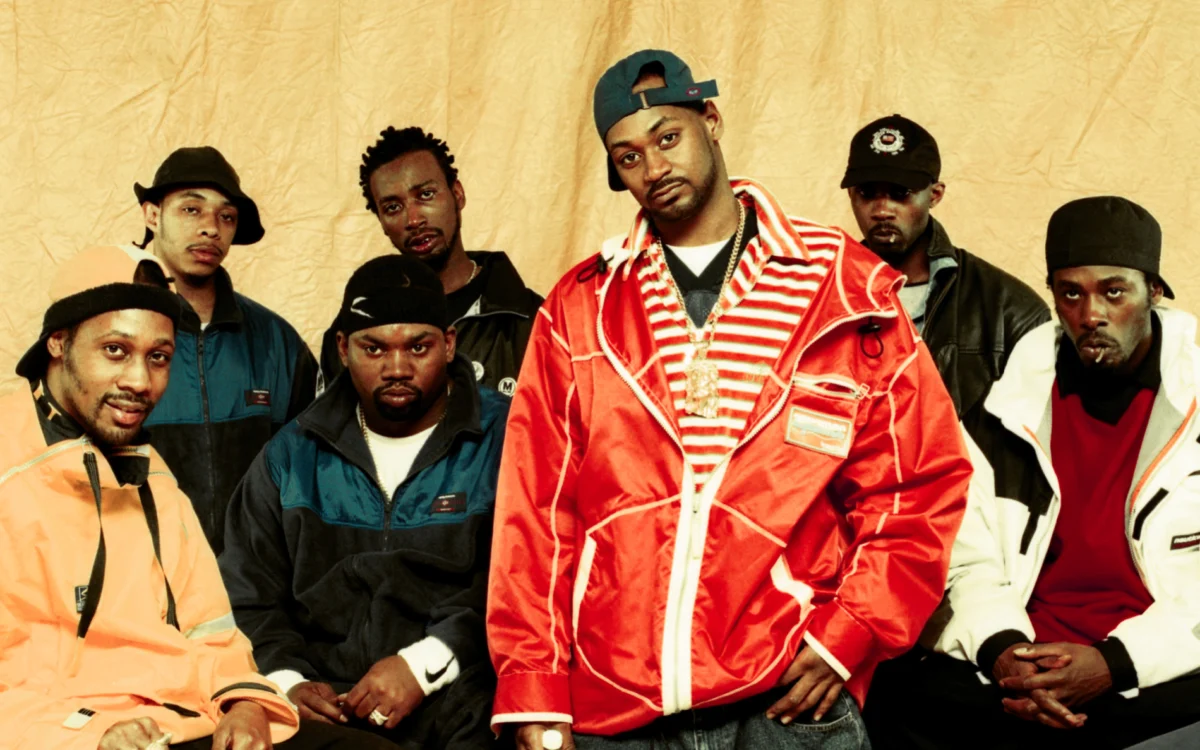
The iconic hip-hop collective Wu-Tang Clan has officially secured their place in musical history, being voted into the prestigious Rock & Roll Hall of Fame as part of the Class of 2026. This landmark announcement, made on Monday, April 13, signals a continued broadening of the Hall’s definition of "rock and roll" to encompass genres and artists whose influence transcends traditional categorizations. The legendary Staten Island group will be joined by an eclectic and celebrated cohort of inductees, including Sade, Luther Vandross, Oasis, Iron Maiden, Phil Collins, Billy Idol, and the dual entity of Joy Division/New Order. This diverse selection underscores the global impact and multifaceted nature of contemporary music.
In a further significant nod to the pioneering spirit of hip-hop, fellow rap luminaries Queen Latifah and MC Lyte are also slated for induction, receiving the esteemed "Early Influence" award. This special recognition acknowledges their foundational contributions to music and culture, highlighting their roles as trailblazers who shaped the landscape of hip-hop and empowered a generation. The formal induction ceremony is scheduled for November 14 at the Peacock Theater in Los Angeles, an event eagerly anticipated by fans and industry professionals alike. For those unable to attend, the ceremony will be broadcast in December on ABC and subsequently made available for streaming on Disney+, ensuring a wide audience for this momentous occasion.
The Enduring Legacy of the Wu-Tang Clan
The induction of Wu-Tang Clan into the Rock & Roll Hall of Fame is a testament to their unparalleled impact on music, culture, and the very fabric of hip-hop since their explosive emergence in the early 1990s. Formed in Staten Island, New York, the collective, comprising RZA, GZA, Ol’ Dirty Bastard, Method Man, Raekwon, Ghostface Killah, Inspectah Deck, U-God, and Masta Killa, redefined the sound and business model of hip-hop. Their debut album, Enter the Wu-Tang (36 Chambers), released in 1993, was a seismic event, characterized by its raw, gritty aesthetic, intricate lyrical narratives, and RZA’s distinctively dark and atmospheric production. The album, which went platinum, not only introduced a groundbreaking sound but also established a unique mythology and a cohesive, albeit sprawling, universe for its members.
What set Wu-Tang Clan apart was not merely their musical prowess but their innovative business strategy. RZA famously negotiated a deal that allowed individual members to sign solo contracts with different labels while maintaining their collective identity, an unprecedented move that maximized their reach and influence. This strategy led to a cascade of highly successful solo albums throughout the mid-to-late 1990s, including Raekwon’s Only Built 4 Cuban Linx…, GZA’s Liquid Swords, Ghostface Killah’s Ironman, and Method Man’s Tical. Each album further solidified the Wu-Tang brand, demonstrating the depth of talent within the group and expanding their thematic universe. Their influence extended beyond music, impacting fashion, language, and even filmmaking, with their distinct aesthetic and philosophical underpinnings resonating deeply with a global audience. The group’s commitment to artistic integrity and their fierce independence have cemented their status as one of the most influential and innovative groups in music history. Their induction into the Hall of Fame acknowledges not just their commercial success but their profound and lasting cultural footprint.
Pioneering Voices: Queen Latifah and MC Lyte
The recognition of Queen Latifah and MC Lyte with the "Early Influence" award is a vital acknowledgement of their groundbreaking contributions to hip-hop, particularly for women in the genre. This award category is designed to honor artists whose music and career predated the Rock & Roll Hall of Fame’s traditional 25-year eligibility period for mainstream inductees but whose foundational work significantly shaped music history. Both artists broke significant barriers and carved out indelible legacies.
Queen Latifah, born Dana Owens, emerged in the late 1980s as a powerful voice advocating for women’s empowerment, social justice, and self-respect. Her debut album, All Hail the Queen (1989), featuring the anthem "Ladies First," showcased her lyrical dexterity and her ability to blend hip-hop with jazz, R&B, and reggae influences. Beyond her musical achievements, Queen Latifah successfully transitioned into acting, becoming an Academy Award-nominated actress and a successful producer, demonstrating the expansive potential for artists to cross creative boundaries. Her career embodies versatility and enduring relevance, establishing her as a multifaceted icon.
MC Lyte, born Lana Moorer, also burst onto the scene in the late 1980s, distinguishing herself with her assertive delivery, sharp lyricism, and unapologetic stance. As one of the earliest female solo rappers to release a full-length album, Lyte as a Rock (1988), she paved the way for countless artists. Tracks like "Cha Cha Cha" and "Ruffneck" (from her 1993 album Ain’t No Other) not only garnered commercial success but also tackled themes of sexism and self-respect within a male-dominated industry. Her pioneering spirit and lyrical prowess solidified her status as a foundational figure in hip-hop, directly influencing generations of female MCs. The "Early Influence" award for these two artists highlights the Hall’s commitment to recognizing those who laid essential groundwork, irrespective of traditional genre confines or timeline considerations.
The Diverse Class of 2026: A Spectrum of Sound
The Class of 2026 is a testament to the Rock & Roll Hall of Fame’s increasingly broad interpretation of "rock and roll," embracing a multitude of genres and global influences. Alongside the hip-hop pioneers, several other iconic acts from diverse musical landscapes are being honored:
- Sade: The smooth jazz and R&B collective fronted by Sade Adu, known for their sophisticated soundscapes and timeless hits like "Smooth Operator" and "No Ordinary Love." Their unique blend of soul, jazz, and pop has captivated audiences for decades, establishing them as a paragon of elegance and musicality.
- Luther Vandross: A legendary R&B and soul vocalist whose velvety voice and emotive delivery made him one of the most beloved balladeers of his generation. Hits such as "Never Too Much" and "Dance with My Father" exemplify his enduring appeal and vocal mastery.
- Oasis: The quintessential Britpop band of the 1990s, led by the Gallagher brothers, whose anthemic rock songs like "Wonderwall" and "Don’t Look Back in Anger" defined an era and achieved global superstardom. Their induction reflects their immense cultural impact and massive commercial success.
- Iron Maiden: One of the most influential heavy metal bands of all time, known for their complex compositions, epic lyrical themes, and distinctive mascot, Eddie. Their consistent output and dedicated fanbase underscore their profound legacy in the metal genre.
- Phil Collins: A multi-talented artist, acclaimed both for his solo career, which yielded numerous pop and rock hits like "In the Air Tonight" and "Against All Odds," and his foundational role as drummer and frontman for Genesis. His versatility and pervasive presence in music for decades make him a natural fit.
- Billy Idol: A punk and new wave icon whose distinctive sneer, spiky hair, and energetic performances made him a defining figure of the MTV era. Songs like "Rebel Yell" and "White Wedding" remain enduring anthems of rebellious rock.
- Joy Division/New Order: This unique dual induction acknowledges the profound impact of both Manchester bands. Joy Division, a seminal post-punk band, left an indelible mark despite their brief existence. Following the tragic death of frontman Ian Curtis, the remaining members reformed as New Order, pioneering electronic music and dance-rock with hits like "Blue Monday" and "Bizarre Love Triangle," demonstrating remarkable artistic evolution and influence.
This broad selection highlights the Hall’s recognition of artists whose work has resonated across genres, influenced subsequent generations, and achieved significant cultural relevance, irrespective of their primary musical classification.
The Induction Ceremony and Artist Reactions
The formal induction ceremony on November 14 at the Peacock Theater in Los Angeles will be a star-studded event, celebrating the accomplishments of these musical titans. The broadcast on ABC in December and subsequent availability on Disney+ will allow fans worldwide to witness the tributes, performances, and speeches that mark this prestigious honor.
Initial reactions from the inductees have been heartfelt and reflective. RZA, the de facto leader and primary producer of Wu-Tang Clan, expressed profound gratitude on Instagram, stating, "In all Humility. This announcement filled me with joy, proudness, profound achievement, and awe. I’m grateful to all my brothers and those who helped us on the path. Thank you Rock & Roll Hall of Fame. This is a true Triumph – Wutang Forever." His words encapsulate the journey and collective effort that led to this moment.
Fellow Wu-Tang member Raekwon added his characteristic enthusiasm, declaring, "History books will know this club! this my grammy. what we talking bout! haaaaaaaaaaa. shout out to all our mothers who birth these men. they won tonite." His sentiment highlights the personal significance of this recognition, equating it to the highest accolades in the music industry. GZA, another foundational member, offered a more reflective statement, acknowledging the broader community that supported their rise: "We couldn’t have reached this milestone without our hip hop predecessors, fans, collaborators, friends and family. We thank you." These reactions collectively convey a deep sense of accomplishment, gratitude, and a shared victory for the entire Wu-Tang ecosystem and, by extension, for hip-hop culture.
Hip-Hop’s Enduring Legacy in the Hall of Fame
With the induction of Wu-Tang Clan, Queen Latifah, and MC Lyte, the total number of hip-hop acts recognized by the Rock & Roll Hall of Fame now stands at 18. This growing representation is a clear indicator of hip-hop’s undeniable impact on popular music and culture, a journey that began with cautious steps and has now blossomed into full-fledged recognition.
The pioneering group Grandmaster Flash and the Furious Five were the first hip-hop act to break through, inducted in 2007. Their entry marked a significant turning point, challenging traditional notions of what constituted "rock and roll" and opening the door for future rap legends. Following them, a steady stream of iconic hip-hop artists has been enshrined:
- Run-DMC (2009): The first rap group to achieve mainstream success and collaborate across genres.
- Beastie Boys (2012): A genre-bending trio that fused hip-hop with punk and rock.
- Public Enemy (2013): Known for their politically charged lyrics and innovative sound.
- N.W.A (2016): The controversial but highly influential pioneers of gangsta rap.
- 2Pac (2017): One of hip-hop’s most iconic and impactful solo artists.
- The Notorious B.I.G. (2020): A lyrical giant and a central figure in East Coast hip-hop.
- JAY-Z (2021): A commercial and critical titan, entrepreneur, and lyrical master.
- LL Cool J (2021, Musical Excellence Award): A trailblazing artist with a career spanning decades, known for his lyrical prowess and versatility.
- Tina Turner (2021, as a solo artist, already in with Ike & Tina Turner): While not primarily a hip-hop artist, her inclusion demonstrates the Hall’s recognition of influential artists across genres.
- Eminem (2022): One of the best-selling artists of all time and a lyrical phenomenon.
- Dolly Parton (2022): While not a hip-hop artist, her induction highlights the diverse musical tapestry the Hall acknowledges.
- Lionel Richie (2022): Another non-hip-hop artist, demonstrating genre diversity.
- Carly Simon (2022): Pop-rock icon.
- Duran Duran (2022): New Wave legends.
- Eurythmics (2022): British pop duo.
- Pat Benatar (2022): Rock vocalist.
- Judas Priest (2022, Musical Excellence Award): Heavy metal pioneers.
- Harry Belafonte (2022, Early Influence Award): Folk legend.
- Elizabeth Cotten (2022, Early Influence Award): Folk and blues musician.
- Jimmy Jam & Terry Lewis (2022, Musical Excellence Award): Iconic R&B producers.
- OutKast (2023): Southern hip-hop innovators.
- Missy Elliott (2023): Groundbreaking rapper, singer, songwriter, and producer.
- A Tribe Called Quest (2023): Pioneers of alternative hip-hop.
- Kate Bush (2023): British art-pop icon.
- Sheryl Crow (2023): Singer-songwriter.
- **George Michael (2023): Pop icon.
- Rage Against the Machine (2023): Political rock band.
- The Spinners (2023): R&B vocal group.
- Willie Nelson (2023): Country music legend.
- Chaka Khan (2023, Musical Excellence Award): R&B/soul vocalist.
- Al Kooper (2023, Musical Excellence Award): Musician, songwriter, and producer.
- Bernie Taupin (2023, Musical Excellence Award): Lyricist.
- DJ Kool Herc (2023, Musical Excellence Award): The undisputed father of hip-hop.
- Link Wray (2023, Early Influence Award): Rock and roll guitarist.
- Don Cornelius (2023, Ahmet Ertegun Award): Creator of Soul Train.
- Salt-N-Pepa (2024, Musical Excellence Award): Pioneering female rap group.
The inclusion of artists like LL Cool J, Salt-N-Pepa, and DJ Kool Herc through the "Musical Excellence Award" or "Early Influence" categories further solidifies the Hall’s commitment to recognizing the full spectrum of hip-hop’s historical and ongoing contributions. These categories provide avenues to honor artists whose impact might not fit the traditional "performer" criteria but whose influence is undeniable.
The Rock & Roll Hall of Fame: Evolving Definitions and Voting Process
The ongoing debate about the Rock & Roll Hall of Fame’s name and its evolving criteria reflects a broader societal understanding of music’s diverse forms and influences. Originally conceived to honor artists primarily associated with rock and roll music, the Hall has progressively expanded its scope to include genres such as R&B, soul, blues, country, pop, punk, heavy metal, and hip-hop. This expansion is not without its critics, but it largely reflects the interconnectedness of musical styles and the reality that "rock and roll" itself was born from a fusion of various Black American musical traditions. The induction of hip-hop artists, in particular, highlights how a genre that began as a counter-cultural movement has become a dominant global force, profoundly shaping popular music.
The induction process involves an international voting body of more than 1,200 inductees, historians, and music industry professionals. These voters cast ballots for the nominees they believe are most deserving, based on criteria such as musical influence on other artists, length and depth of career, body of work, innovation, and superiority and significance of style. While a public vote is also conducted, it only accounts for a single ballot, emphasizing the expert panel’s decisive role.
This year’s nominations saw several other prominent artists who did not receive enough votes for induction, including Lauryn Hill, Mariah Carey, and Shakira. Their nominations, however, underscore their own significant contributions to music and suggest that their time for induction may still come. The competitive nature of the selection process ensures that only the most impactful and enduring artists are ultimately enshrined.
Broader Impact and Future Implications
The Class of 2026, particularly the strong presence of hip-hop artists, carries significant implications for the Rock & Roll Hall of Fame and the music industry at large. It reaffirms the Hall’s commitment to reflecting the evolving landscape of popular music and acknowledging the cultural weight of genres beyond traditional rock. The induction of Wu-Tang Clan, a group known for its collective strength, unique sound, and independent spirit, sends a powerful message about the recognition of artistic innovation and autonomy.
For hip-hop, this continued inclusion in mainstream institutions like the Rock & Roll Hall of Fame serves to further legitimize its place as a globally dominant and historically significant art form. It ensures that the legacies of its pioneers and innovators are preserved and celebrated alongside those of other musical giants. As the Hall continues to adapt, it will undoubtedly face further discussions about its name and scope, but the Class of 2026 stands as a testament to music’s boundless capacity for evolution, influence, and unification across diverse cultural expressions. The ceremony in Los Angeles will not merely be an event to honor individuals but a celebration of music’s power to transcend boundaries and create enduring legacies for generations to come.