Jia Lissa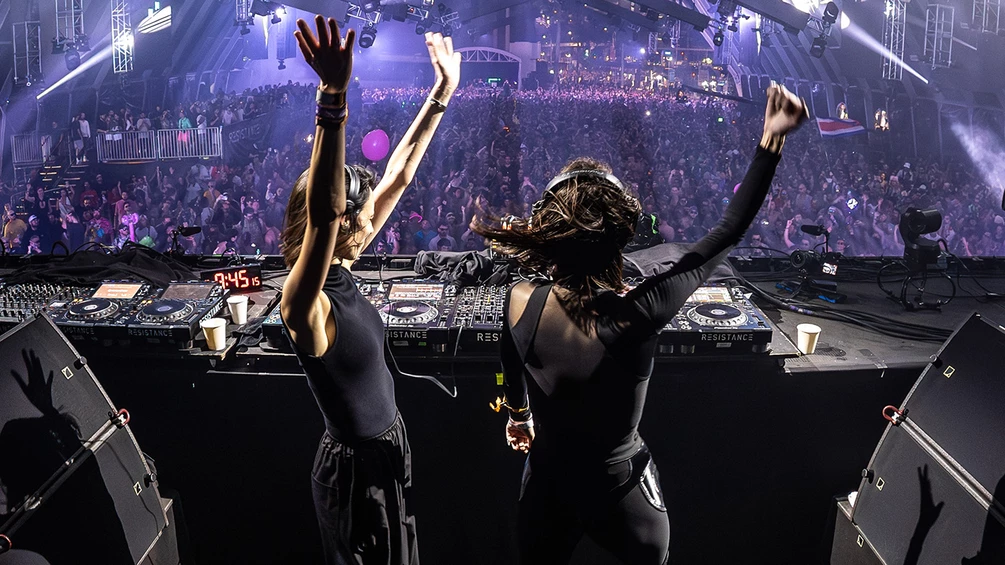
The full recording of Amelie Lens and Sara Landry’s highly anticipated back-to-back (b2b) set from Ultra Music Festival Miami, held earlier this spring, has been officially released online, offering a comprehensive look at their collaborative performance that closed the Megastructure stage on Sunday night. The set, a juggernaut display of hard techno, featured a meticulously curated selection of tracks, including Alex Farrell’s ‘Double Droppin’, West Galaxy and Akasha’s ‘Rainbow Body’, Lara Klart’s ‘Lumenbreath’, Blondex’s ‘For’, and Lens’ own recent single, ‘whatever you do’. This release not only provides fans who attended the festival with a chance to relive the experience but also extends the reach of their powerful musical statement to a global audience, solidifying their positions as leading figures in the contemporary techno landscape.
The performance at Ultra Miami’s Megastructure, renowned for its immersive production and capacity to host some of the most influential names in electronic music, represented a significant moment for both artists. The Megastructure, often considered the bastion of underground electronic sounds at Ultra, provides a cavernous, high-fidelity environment perfectly suited for the intricate sound design and relentless energy of techno. Lens and Landry’s selection to close this pivotal stage on the final night underscored their collective stature and the growing mainstream appeal of harder techno styles, a testament to their individual artistic trajectories and their combined synergy. The tracks chosen for their set reflect a blend of established and emerging talent within the techno genre, showcasing their commitment to both driving the dancefloor and highlighting innovative sounds. Alex Farrell’s ‘Double Droppin’ set an immediate, high-octane tone, while the inclusion of tracks like West Galaxy and Akasha’s ‘Rainbow Body’ and Lara Klart’s ‘Lumenbreath’ demonstrated a nuanced approach to the genre, incorporating atmospheric and melodic elements amidst the driving rhythms. Blondex’s ‘For’ further contributed to the set’s dynamic range, culminating with Amelie Lens’s own recent production, ‘whatever you do’, a track that encapsulates her signature powerful yet emotionally resonant sound.
Behind the Decks: A Dialogue on Industry Dynamics
Prior to their electrifying performance, Amelie Lens and Sara Landry engaged in an insightful interview with DJ Mag, delving into critical issues facing female artists within the electronic music industry. The discussion notably centered on the pervasive issue of constant comparison among female artists and the resultant exhaustion this often induces. Both DJs candidly articulated how male artists typically do not experience the same level of scrutiny or comparison, highlighting a fundamental disparity in industry perceptions and media narratives.
Sara Landry articulated the sentiment, stating, "No matter what the industry or media has to say about putting us against each other, we have nothing but love and respect for each other." This statement underscored a crucial message of solidarity and mutual support, directly challenging the often-competitive or divisive framing imposed by external forces. Amelie Lens echoed this sentiment, adding, "It’s just so draining. There’s so much room for all of us and it’s just a really weird thing… men really don’t get compared at all." Her words brought into sharp focus the psychological toll of such comparisons, emphasizing the collective desire for a more inclusive and equitable environment where artistic merit, rather than gender, dictates narrative.
This dialogue resonates deeply within the broader context of gender representation and equity in the electronic music industry. For decades, the scene has been predominantly male-dominated, with female artists frequently facing challenges ranging from underrepresentation on festival lineups and club bills to pervasive gender bias in media coverage and industry opportunities. While significant strides have been made in recent years, with initiatives like Keychange, shesaid.so, and various mentorship programs working to promote gender balance, the sentiments expressed by Lens and Landry reveal that systemic issues persist. The constant comparison between female artists often leads to a phenomenon known as "tokenism," where a limited number of women are highlighted, inadvertently creating an illusion of progress without genuinely addressing the underlying structural inequalities. This puts undue pressure on these artists to represent an entire demographic, rather than being judged solely on their individual artistic contributions.
Industry data, though still evolving, consistently points to a disparity. Reports from various music industry bodies and publications, including analyses of festival lineups and DJ rankings, often show female artists making up a significantly smaller percentage of headline acts and top-tier positions compared to their male counterparts. While the number of female producers and DJs has undoubtedly grown, their visibility and the narratives surrounding them continue to be shaped by historical biases. The observation that male artists are rarely subjected to the same level of direct comparison – where their success is often framed individually rather than in relation to other male artists – highlights a double standard that contributes to the "draining" experience described by Lens. This critical conversation provides valuable insight into the ongoing efforts required to foster an environment where talent is recognized universally, free from gendered lenses.
Ultra Music Festival: A Global Electronic Music Phenomenon
Ultra Music Festival, the illustrious backdrop for Lens and Landry’s b2b set, stands as a cornerstone of the global electronic music calendar. Founded in 1999 by Russell Faibisch and Alex Omes, the festival began as a one-day event on Miami Beach, attracting just over 10,000 attendees. Over its quarter-century history, Ultra has burgeoned into a multi-day spectacle, drawing hundreds of thousands of electronic music enthusiasts from across the globe to Bayfront Park in downtown Miami. Its expansion has been monumental, spawning the "Ultra Worldwide" brand, which now hosts festivals in over 20 countries, including Brazil, Japan, Australia, South Africa, and Croatia, establishing itself as a truly global phenomenon.
The festival is renowned for its cutting-edge stage production, state-of-the-art sound systems, and an unparalleled lineup that spans the entire spectrum of electronic dance music. From mainstage EDM giants to the most revered names in techno, house, trance, and drum & bass, Ultra curates an experience designed to cater to diverse tastes while pushing the boundaries of live performance. The economic impact of Ultra on the city of Miami is substantial, generating tens of millions of dollars annually through tourism, hospitality, and local employment. Beyond its economic contributions, Ultra plays a vital role in shaping electronic music culture, serving as a platform for artists to debut new music, showcase innovative stage designs, and connect with a massive international audience.
The Megastructure stage, where Lens and Landry performed, holds particular significance for techno and house aficionados. Introduced in 2015, it was conceived as a dedicated space for underground sounds, contrasting with the mainstage’s more commercial offerings. With its immense, enclosed structure, unparalleled sound fidelity, and often minimalist yet profoundly impactful lighting design, the Megastructure has hosted legendary performances from techno titans such as Carl Cox, Richie Hawtin, Adam Beyer, and now, Amelie Lens and Sara Landry. Its design specifically enhances the immersive qualities of techno, allowing the intricate layers and driving rhythms to envelop the audience fully, creating an intimate yet expansive experience within the vast festival grounds. Lens and Landry’s closing set at this iconic stage underscored techno’s undeniable resurgence and its firm footing at the pinnacle of global electronic music.
Amelie Lens & Sara Landry: Architects of Modern Techno
Both Amelie Lens and Sara Landry have independently carved out formidable reputations within the contemporary techno scene, each bringing a distinctive sound and aesthetic that has resonated deeply with a new generation of fans.
Amelie Lens, hailing from Belgium, rose to prominence with her relentless, high-energy take on hard techno, often infused with trance-like melodies and industrial textures. Her rapid ascent in the mid-2010s was fueled by powerful productions on labels like Lyase and Second State, culminating in the launch of her own highly successful imprint, Lenske. Lenske has become a beacon for cutting-edge techno, releasing tracks from both established and emerging artists who share her vision for intense, driving, and emotionally charged electronic music. Lens’s touring schedule is notoriously rigorous, headlining major festivals and clubs worldwide, and her DJ sets are characterized by their raw power, precision mixing, and an ability to connect with vast audiences. She has been credited with helping to popularize a harder, faster techno sound globally, drawing new listeners into the genre with her charismatic stage presence and uncompromising musical selections.
Sara Landry, an American artist based in Austin, Texas, has experienced an equally meteoric rise, establishing herself as a formidable force in industrial techno. Her sound is characterized by its dark, hypnotic, and often aggressive qualities, drawing heavily from industrial aesthetics and a keen sense of atmospheric tension. Landry’s unique visual branding, often featuring dark, ritualistic imagery, complements her sonic identity, creating an immersive experience for her audience. She launched her own label, KUNDALINI, which serves as a platform for her own productions and those of like-minded artists, further solidifying her artistic vision. Landry’s performances are known for their intensity and theatricality, pushing sonic boundaries and delivering an uncompromising journey through the darker realms of techno. Her ability to craft powerful narratives through sound has garnered her a dedicated following and propelled her onto major international stages.
The collaboration between Lens and Landry, therefore, represents a convergence of two distinct yet complementary forces within techno. While Lens often brings a slightly more melodic and trance-influenced edge to her hard techno, Landry delves deeper into industrial, often more abrasive soundscapes. Their b2b sets are a testament to their mutual respect and artistic chemistry, allowing them to weave their individual styles into a cohesive and exceptionally powerful collective statement, appealing to fans who appreciate both the nuanced complexities and the raw power of contemporary techno.
A Unified Front: Collaborations and Solidarity
The collaborative spirit evinced by Amelie Lens and Sara Landry extends beyond their Ultra Miami set, serving as a powerful counter-narrative to the competitive framing they actively critique. Their upcoming b2b performance on August 21st at Magazine Open-Air in London is eagerly anticipated, promising another opportunity for their combined energies to ignite a dancefloor. Magazine London, a relatively new but highly regarded venue, is known for its vast industrial spaces and cutting-edge sound systems, making it an ideal setting for their high-octane techno. This event will further cement their reputation as a dynamic duo whose combined prowess can command significant audiences.
Furthermore, their history of collaboration includes a notable b2b2b set alongside fellow techno powerhouse Indira Paganotto at Coachella 2024. Coachella, one of the world’s most iconic and commercially successful music festivals, traditionally known for its diverse lineup spanning multiple genres, has increasingly embraced electronic music’s underground sounds. The inclusion of a three-way b2b featuring three prominent female techno artists – Lens, Landry, and Paganotto – at such a globally recognized festival was a landmark moment. It not only showcased the burgeoning popularity of hard techno but also served as a potent symbol of female solidarity and collective strength within an industry that has historically struggled with gender imbalance. This b2b2b demonstrated a powerful unity, proving that collaboration, rather than competition, can amplify individual voices and collective impact. These instances of teamwork underscore a deliberate effort by these artists to foster a supportive community, challenging the industry’s default tendency to pit female talent against each other.
Milestones and Momentum: Sara Landry’s Red Rocks Debut
Adding to her rapidly accelerating career trajectory, Sara Landry recently announced a headline show at the legendary Red Rocks Amphitheatre in Colorado. This announcement marks a significant milestone for the artist and for the industrial techno genre as a whole. Red Rocks is not merely a venue; it is an iconic natural amphitheater carved into monolithic rock formations, globally renowned for its unparalleled acoustics, breathtaking scenery, and rich musical history. Playing a headline show at Red Rocks is considered a pinnacle achievement for artists across all genres, a true testament to their popularity and artistic impact.
For a techno artist, particularly one specializing in the more niche industrial subgenre, headlining Red Rocks signifies a profound breakthrough. It indicates a substantial crossover appeal and a burgeoning mainstream acceptance of sounds that were once considered strictly underground. This event will undoubtedly elevate Landry’s profile to new heights, placing her in an exclusive league of electronic artists who have commanded this revered stage. The logistical and creative demands of curating a headline show at Red Rocks – from elaborate production to extended set times – provide artists with a unique opportunity to present their vision on an epic scale. Landry’s forthcoming performance is poised to be a landmark event, not only for her individual career but also for the continued expansion and recognition of industrial techno within the broader electronic music landscape. It underscores the increasing appetite among audiences for intense, immersive, and boundary-pushing electronic experiences, further solidifying the genre’s cultural relevance.
The Enduring Impact of Online Content and the Future of Techno
The decision to release the full Amelie Lens and Sara Landry Ultra Miami set online is a strategic move that extends the lifespan and impact of the performance far beyond the festival grounds. In an era dominated by digital consumption, full set recordings serve multiple critical functions: they act as invaluable archival content, allowing fans to revisit memorable moments; they provide access to those who could not attend the live event; and they serve as powerful promotional tools for artists and festivals alike. The virality of such content on platforms like YouTube and SoundCloud can introduce artists to entirely new demographics, significantly expanding their global reach and influence. This digital dissemination democratizes access to high-quality performances, ensuring that the artistic and social messages embedded within sets, such as Lens and Landry’s discussion on gender equality, reach the widest possible audience.
The continued rise of hard and industrial techno, spearheaded by artists like Lens and Landry, suggests a dynamic evolution within electronic music. Audiences are increasingly drawn to sounds that offer intensity, depth, and a visceral experience, moving beyond purely commercial EDM. The success of these artists and the growing demand for their specific brand of techno at major festivals indicate a robust future for the genre. Furthermore, their outspokenness on issues of gender equality signals a broader cultural shift within the electronic music community towards greater inclusivity and awareness. As more female artists gain prominence and use their platforms to advocate for change, the industry is gradually being pushed towards a more equitable future. The legacy of Amelie Lens and Sara Landry, both individually and collectively, will undoubtedly be defined not only by their undeniable musical prowess but also by their significant contributions to shaping a more diverse, respectful, and progressive electronic music world.