Mia Khoirunisa
Make Noise, a prominent name in the modular synthesizer landscape, has announced the release of Plexiphon, a groundbreaking new module that promises to redefine sonic spatialization. Developed in collaboration with Tom Erbe, the visionary behind Soundhack, Plexiphon is engineered to seamlessly merge the characteristics of digital reverb and multi-tap echo, offering musicians and sound designers unprecedented control over evolving, textural soundscapes. This innovative device eschews conventional methods of sonic manipulation, such as crossfading or algorithmic switching, opting instead for a fluid, "modeless" approach to modulation that allows for continuous sonic metamorphosis.
The genesis of Plexiphon can be traced back to the long-standing reputation of Soundhack for pushing the boundaries of digital signal processing (DSP). Tom Erbe, widely recognized for his pioneering work in algorithmic audio manipulation, has developed entirely new code for this module, marking a significant evolution in his creative output. Plexiphon represents an ambitious attempt to achieve what many have strived for: the ability to fluidly transition between distinct, resonant echoes and dense, continuous reverberant textures without resorting to jarring transitions or discrete operational modes. This capability is particularly relevant in contemporary sound design, where the demand for immersive and dynamic spatial effects continues to grow across music production, film scoring, and interactive media.
The Core Innovation: Morphing Between Echo and Reverb
At its heart, Plexiphon addresses a fundamental desire in audio processing: the intuitive connection between discrete echoes and the continuous diffusion of sound in a reverberant space. While algorithmic reverbs are often constructed from complex combinations of multi-tap echoes, achieving a smooth, performative transition between these two sonic paradigms has remained a significant challenge. Plexiphon’s architecture is designed to overcome this limitation.
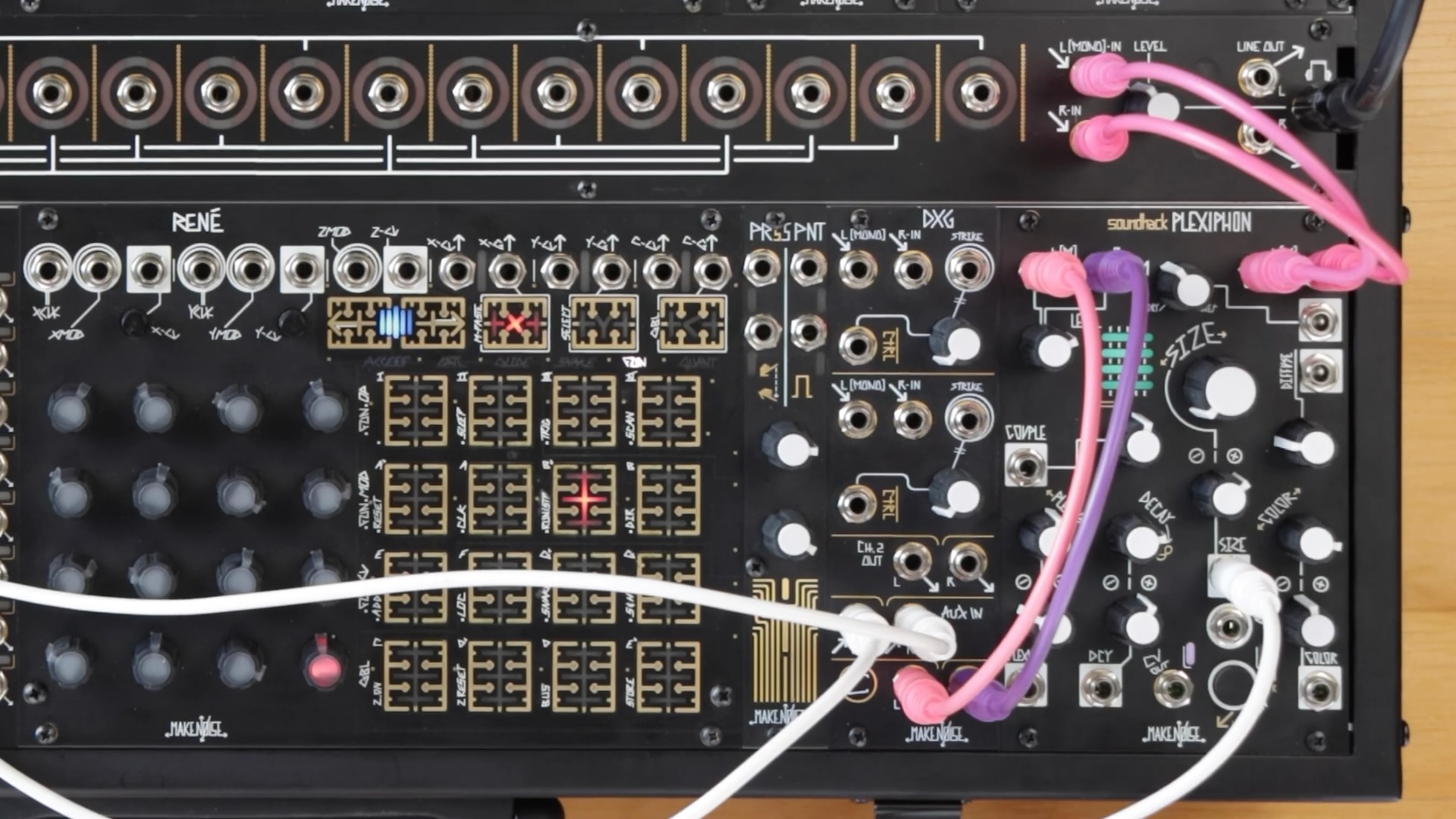
The module’s core functionality is driven by a set of elegantly designed controls that govern the interplay between feedback paths and temporal characteristics. The "Plexus" control is central to this innovation, modulating the number of feedback loops within the algorithm. By adjusting Plexus, users can directly influence how signals recirculate and decay, thereby dictating the transition from sharp, defined echoes to a more diffused, ambient wash.
Complementing Plexus, the "Size" parameter dictates the temporal spacing between these feedback paths. This is the traditional function of "size" in reverb algorithms, determining the perceived scale and decay time of the simulated space. However, in Plexiphon, this parameter is intimately linked with Plexus, allowing for a dynamic interplay that goes beyond static settings.
The "Couple" control introduces another layer of spatial manipulation. It determines the independence of the left and right outputs, offering a spectrum from dual mono operation to fully cross-fed stereo imaging. The press release from Make Noise poetically describes this as creating sounds where the left and right channels become "intermingled," a fitting description given the inherent feedback loops involved. This parameter allows for precise control over stereo width and depth, enabling the creation of anything from subtle stereo widening to complex, swirling spatial effects.
Furthermore, the "Color" parameter offers tonal shaping capabilities, allowing users to sculpt the spectral characteristics of the processed sound. Critically, all three of these primary controls – Plexus, Size, and Couple – can be modulated by "Skew." Skew introduces an inverse or tandem relationship between the left and right channels, providing a sophisticated method for "angling" sound through space. This allows for highly dynamic and evolving spatialization, where the soundstage itself can appear to shift and transform in real-time.
Performative Design and Sonic Exploration
Beyond its core morphing capabilities, Plexiphon is engineered with performativity in mind. The inclusion of a Send gate and an envelope follower indicates a design philosophy focused on interactive and dynamic sound manipulation. This suggests that the module is not intended to be a static "set-it-and-forget-it" effect, but rather a dynamic instrument that encourages real-time engagement and exploration. This contrasts with the common tendency in some electronic music production to rely on long, unchanging reverb presets, a practice that can sometimes lead to a sonic landscape that lacks dynamism.
The module’s physical specifications are also noteworthy. Measuring 16HP and priced at $469, Plexiphon positions itself as a premium component within the Eurorack ecosystem. The developers suggest that this price point might encourage users to integrate Plexiphon into smaller, more focused "skiff" setups, thereby fostering a more intimate and deliberate approach to its use. This strategy aligns with Make Noise’s broader philosophy of creating instruments that inspire focused creative exploration rather than overwhelming users with excessive complexity.
Context and Background: Soundhack’s Legacy and Make Noise’s Vision
The collaboration between Tom Erbe (Soundhack) and Make Noise is a significant development, bringing together two entities renowned for their contributions to experimental audio. Soundhack has consistently delivered innovative software and plugins that have become staples for sound designers and electronic musicians seeking unique sonic textures and advanced DSP capabilities. Their algorithms are often characterized by their depth, complexity, and ability to generate sounds that are both alien and musically compelling.
Make Noise, on the other hand, has established itself as a leader in modular synthesizer design, known for its thoughtfully engineered modules that encourage creative patching and sonic discovery. Their instruments are often characterized by their unique interfaces, innovative signal routing, and a commitment to pushing the boundaries of what is possible with modular synthesis. The integration of Erbe’s cutting-edge algorithms into a Make Noise Eurorack module represents a natural synergy, combining advanced DSP with the tactile, performative nature of modular hardware.
The timing of this release also holds significance. While not explicitly tied to a specific event in the provided text, the emphasis on performative sound design and spatial texturing aligns with ongoing trends in electronic music and sound art. The increasing sophistication of digital audio workstations and the growing accessibility of modular synthesis have fueled a demand for tools that offer greater control and expressiveness. Plexiphon appears to be a direct response to this demand, offering a novel solution for creating complex and evolving sonic environments.
Demonstrations and Further Exploration
To illustrate the capabilities of Plexiphon, Make Noise has released a launch video featuring sound examples and explanations. This video, along with accompanying materials, serves as a valuable resource for potential users looking to understand the module’s functionality. The video’s emphasis on breaking down the sonic possibilities with concrete examples suggests a commitment to user education and demystifying the module’s advanced features.
Beyond the Plexiphon launch, Make Noise has also highlighted recent updates to their MultiWAVE module and provided patching ideas. These include demonstrations of microtuning techniques, showcasing the company’s ongoing commitment to exploring alternative musical frameworks and encouraging users to experiment with their existing hardware. The "Space Tunin’ with MultiWAVE" video, for instance, delves into equal-divisions-of-the-octave microtuning, a concept that resonates with experimental musicians exploring non-traditional harmonic structures. The "Breakin’ Out" video offers practical starting points for patching, further underscoring Make Noise’s dedication to fostering a vibrant and engaged user community.
Market Implications and User Reception
The introduction of Plexiphon is likely to generate considerable interest within the modular synthesizer community. The module’s unique ability to fluidly morph between reverb and echo, coupled with its performative design, positions it as a distinctive tool for a wide range of sonic applications. Sound designers working in film and game audio, who often require nuanced and dynamic spatial effects, may find Plexiphon particularly valuable. Similarly, electronic musicians and composers seeking to create immersive and evolving soundscapes will likely be drawn to its capabilities.
The premium price point, while a consideration, also suggests a focus on quality and innovation. In the Eurorack market, modules that offer truly novel functionality and high-quality audio processing often command higher prices. The investment in Plexiphon could be seen as an investment in a unique sonic palette that is difficult to replicate with other modules or software.
While the article notes that Plexiphon was not yet listed on the Make Noise website at the time of writing, pre-order links for major retailers like Perfect Circuit and Thomann indicate that the module is nearing general availability. This suggests that official product pages and detailed specifications will be released shortly, providing further technical information for interested parties.
Future Possibilities and the Software Dream
The author expresses a personal desire for a software version of Plexiphon, a sentiment that likely resonates with many who have experienced the transformative power of Soundhack’s software creations. The enduring appeal of Soundhack’s digital tools has cemented their place in the history of electronic music production. While Plexiphon is designed with the tactile and immediate nature of Eurorack in mind, the potential for a software reimagining of its interface and functionality is an exciting prospect. Such a release could broaden its accessibility to a wider audience and inspire new forms of interaction with its unique sonic capabilities.
The modular synthesizer market continues to evolve, with manufacturers constantly pushing the boundaries of what is possible. Plexiphon stands as a testament to this innovation, offering a compelling new way to sculpt and manipulate sound. Its blend of sophisticated DSP, performative design, and intuitive control promises to make it a valuable addition to the toolkit of any serious sound explorer. The successful integration of Tom Erbe’s cutting-edge algorithms into a beautifully crafted Make Noise module signals a significant moment for spatial audio processing within the modular realm and beyond.