Muhammad Ibadurrohman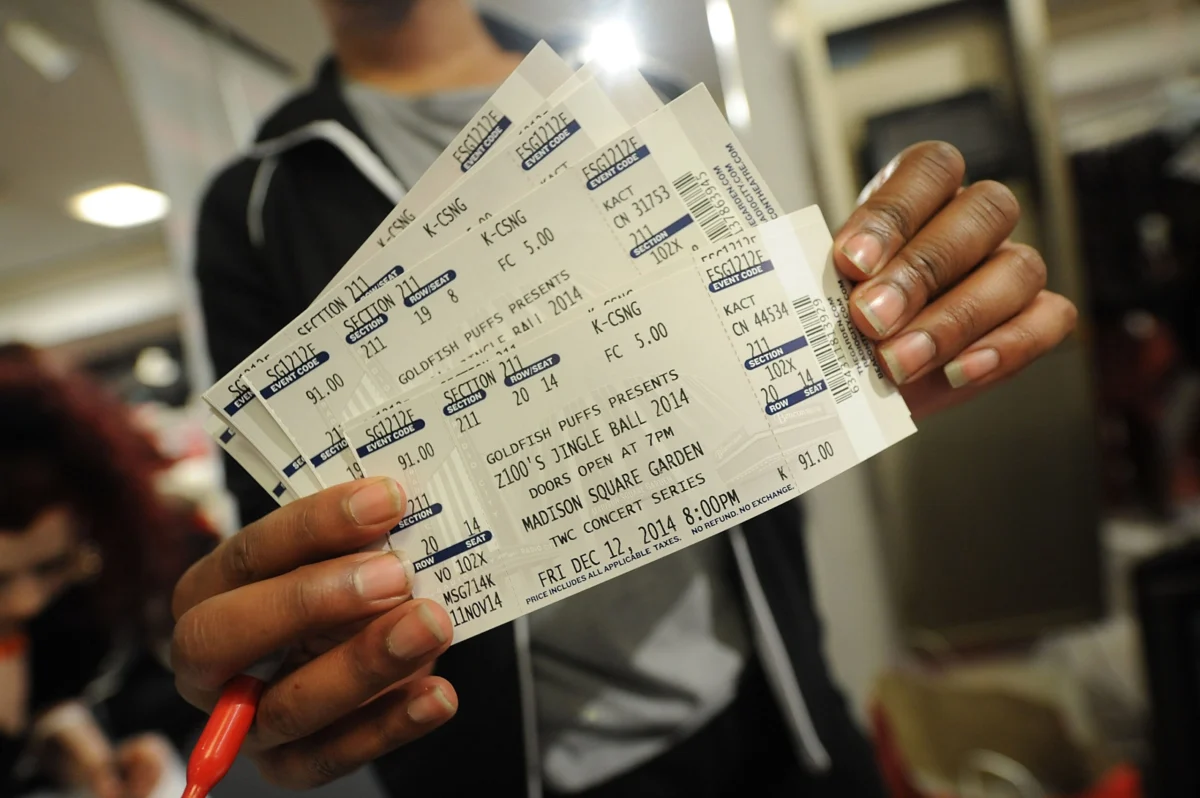
For seasoned tour and production manager Kimberly Curry, the past year has marked an unexpected deceleration in the vibrant post-pandemic live music resurgence. Conversations with peers across the industry reveal a consistent narrative: touring opportunities are becoming scarcer, and roles traditionally distinct, such as tour management and merchandise management, are increasingly being consolidated. This trend signals a significant shift from the frenetic activity that characterized the immediate aftermath of global lockdowns.
Curry describes a volatile landscape, stating, "Last year it was a little up and down with tours canceling last minute or offers coming through, and last minute you don’t hear back from them." She posits a direct link between these issues and exorbitant ticket pricing, alongside an oversaturation of the market. "I think it has to do with the overselling of tickets and pricing people out. I don’t know for a fact that that’s why it’s happening, but it just seems to be a little bit coincidental," Curry elaborates, highlighting a growing sentiment among industry professionals that the market has reached a critical inflection point.
A Wave of Cancellations Signals Market Strain
The past several weeks have seen a string of high-profile artists, including Post Malone, Zayn, Kid Cudi, the Pussycat Dolls, and Meghan Trainor, make headlines due to canceled shows or postponed tours. Even major festivals, traditionally robust in ticket sales, like Stagecoach, have struggled to sell out. This phenomenon stands in stark contrast to the earlier phase of the post-pandemic recovery, where pent-up demand often led to rapid sell-outs and bidding wars for tickets.

The question now looms large over the industry: after years of escalating prices driven by the rush back to in-person events and with tickets to major tours routinely fetching three-figure sums, have concert ticket prices finally surpassed what the average fan is willing or able to pay?
Sara Mertz, Vice President of Music Partnerships at Tixr, offers a definitive perspective. "Buyers are getting more educated," Mertz tells Billboard, emphasizing the evolving consumer landscape. "Artists are impacted by high touring costs, and buyers are also dealing with high gas prices. And 100%, I do think a correction is coming." This sentiment resonates deeply within an industry grappling with a complex interplay of economic pressures and shifting consumer behaviors.
The Escalation of Ticket Prices: A Data-Driven Look
Statistical evidence from Billboard Boxscore paints a clear picture of the dramatic increase in concert ticket prices. In 2019, the average ticket price stood at $98.64. By 2024, this figure had surged to $130.36, representing a substantial 32.3% increase over just five years. While 2025 saw a slight dip to an average of $127.17, Billboard’s year-end touring report for that year indicated a plateau in overall ticket sales revenue, suggesting that the era of continuous growth fueled solely by price hikes might be reaching its limits.
The recent period has witnessed some of the highest-grossing touring years in history, with monumental runs by global superstars such as Taylor Swift, Harry Styles, Coldplay, Bad Bunny, and Beyoncé setting unprecedented benchmarks for revenue and attendance. However, alongside these mega-tours, an increasing number of industry experts are observing a palpable pushback from fans, particularly for artists outside the very top echelon.

John Chavez, an agent at Ground Control Touring, acknowledges the undeniable impact of price. "It’s hard to think that ticket prices aren’t playing at least some role in everything," Chavez observes. "It’s clear that it’s much more expensive to go to a concert, especially when you’re getting to 2,000-cap-and-above-sized venues, the arenas and theaters and sheds of the world. It’s a lot more expensive to do that than it once was." This highlights the challenge faced by mid-tier artists and their teams in making touring financially viable without alienating their fanbase.
Shifting Consumer Behavior: The Late-Buying Trend
Beyond just the price point, another critical factor influencing the market is timing. Over the past several years, secondary ticket markets have exhibited a noticeable pattern: fans are increasingly purchasing tickets closer to the actual show date rather than during the initial onsale. Sources within Billboard confirm that this trend is becoming more prevalent, particularly in larger, competitive markets like New York City.
This shift creates significant anxiety for artists and promoters. Historically, major tours relied on early sell-outs to build momentum and financial confidence. Slow sales leading up to a show date can trigger alarm, even if tickets eventually move closer to the event.
Marshall Betts, Managing Partner at independent booking agency TBA, points to a direct correlation with the broader economic climate. "One of the largest changes in the last year, which I think is a direct reflection of the economy, is these large sweeping [discounted] sales that go on at Live Nation and AEG," Betts explains. "Usually, I would say those were reflections of poor-selling shows. These days, I have seen those discounts be very well-received amongst ticket buyers, which goes to show me people are aware of those things now and they’re waiting for it to be cheaper to buy as opposed to the onsale. And I have seen, generally, that people are buying tickets more at a later juncture when they can see if they can afford it for a certain night."

Mertz further corroborates this observation, noting a steady decline in fans purchasing tickets during a show’s initial onsale over the past few years. "Fans are waiting to buy, and they’re ordering protection and ticket insurance, so it shows an uncertainty there," she states. "I also think the onsale experience with all the big shows — it’s hard to get a ticket, and it’s been a negative experience for a long time for fans." The frustration associated with navigating complex online queues, battling bots, and facing dynamic pricing mechanisms has undeniably soured the early buying experience for many.
Artist Challenges and Strategic Missteps
The case of Post Malone’s "Big Ass Stadium Tour" serves as a compelling illustration of these market dynamics. While its initial leg was a resounding success, landing at No. 8 on Billboard’s Year-End Top 100 Tours chart with 1.6 million tickets sold and grossing $231.2 million across 51 shows, its planned second leg faced significant hurdles. The postponement was officially attributed to Post Malone needing to finish new music, with his social media statement acknowledging, "I came to the realization that what we’re trying to do, and what’s possible, isn’t really lining up."
However, fan observations and industry sources indicated that numerous seats remained available for purchase, often at steep prices ranging from $60 for nosebleeds to an astonishing $2,471 for floor seats. A contributing factor to the slower sales, according to Billboard sources, was the artist’s extensive touring schedule. Having just completed a massive, successful tour hitting major markets (Detroit, Chicago, Toronto, New York City, Miami, San Francisco) the previous summer with Jelly Roll, and headlining Coachella in 2025 and Stagecoach in 2026, Post Malone may have simply overexposed himself in a saturated market.
Chavez highlights a broader trend: "Now, I find it more and more rare that bands get multiple loops on the same record, because the attention economy moves so quickly that you get a tour on your record, and then that’s done. And, even in some cases, the record is not a compelling hook for the tour in the first place." This speaks to the accelerated consumption cycle of music and the difficulty artists face in generating sustained touring demand for a single body of work.

Industry Perspectives: Managing Expectations and Costs
During Live Nation’s Q1 earnings call on May 5, President Joe Berchtold addressed the recent wave of cancellations, attempting to contextualize them within historical patterns. "We always have a few cancellations," Berchtold stated. "We tend to have a 1%-2% cancellation rate historically, both at Ticketmaster, across the industry and at Live Nation. We’re tracking slightly below the industry, so we see no challenges at all in that. To give perspective, we have about 15,000 shows on sale, and 100 will be canceled. That would be typical." While technically accurate regarding percentage, the high-profile nature and cumulative effect of recent cancellations have undeniably created a perception of increased instability.
Some artists have been more candid about their reasons for pulling dates. Kid Cudi, for instance, openly shared on his Instagram story that his show at the Coca-Cola Amphitheater in Birmingham, Alabama, was canceled because "the ticket sales just weren’t strong enough." Similarly, the Pussycat Dolls and Zayn both canceled arena tours after fans observed significant unsold inventory, suggesting an overestimation of demand or a misjudgment of appropriate venue size.
Stephen Parker, Executive Director of the National Independent Venue Association (NIVA), offers a potential solution to this issue: "We would love for more artists to consider playing multiple nights at some smaller venues versus going the arena route." This strategy could better match demand with venue capacity, create more intimate experiences for fans, and potentially make touring more financially feasible for artists by reducing the pressure of filling massive spaces.
The Unrelenting Rise of Touring Costs

While the Live Nation antitrust lawsuit concluded with a jury finding that fans overpaid by an average of $1.72 per ticket, the core issue of high touring costs extends far beyond ticketing fees. Much of the increased expense stems from persistent supply-chain issues that, despite the passage of time, have never fully resolved since the pandemic.
"I remember the first time I put on a show with a $20 ticket, I thought it was nuts," Chavez recounts. "Now, if I do any less than a $20 ticket, the math doesn’t math. A band will walk out of the room with $500 after a sold-out show, and it costs more than that to drive to the next town." This stark comparison illustrates the dramatic inflation of operational expenses for touring artists.
The "Supply Chain Issues Tour" undertaken by Jack White in 2022 was aptly named, highlighting a widespread problem. In 2022, despite a wave of concert cancellations, the total ticket gross for the industry reached an impressive $6.4 billion, a 30.6% increase from 2019’s $4.9 billion. However, this success was largely concentrated among the highest-grossing tours. The underlying costs, driven by supply chain disruptions – including fewer buses and trucks available due to high demand and a reduced fleet after many were retired during the pandemic – forced an increase in ticket prices across the board. The ongoing conflict in Iran, which has driven up fuel prices, only exacerbates these challenges, making touring an even more expensive endeavor.
Income Inequality and the Divided Market
Mertz succinctly summarizes a broader societal challenge intersecting with the music industry: "We have an income inequality problem. There are fans that can afford the whole 10 yards with their experience, and there is a growing number of people that are having a harder time. Flexibility is important." This observation underscores the widening gap in the live music market, where a segment of affluent fans can comfortably afford premium experiences, while a larger, increasingly constrained demographic struggles to justify the cost of even basic attendance.

This disparity is evident in the divergence between the immense success of the highest-grossing acts and the struggles of the touring middle class. Smaller artists, in particular, have been disproportionately affected. For years, many have been unable to afford bus tours after fleets were sold off and drivers sought alternative employment during the COVID-19 pandemic, forcing them to rely on more expensive and logistically complex "fly dates" for the majority of their shows. This significantly limits their reach and profitability.
Chavez recalls the market’s trajectory: "I feel like we had a big boom in tours back in 2021, 2022 and the first half of ’23. By fall ’23, we started to see things correct, and it became very clear the buying patterns for fans had shifted over COVID… it was very hard to get fans to commit to following you up to that higher ticket price." The initial post-pandemic euphoria, characterized by "revenge spending" and a desire for communal experiences, has given way to a more cautious, economically driven consumer.
Navigating the Future: Pricing Strategies and Sustainability
Finding the optimal ticketing price point — one that allows artists to at least break even, if not turn a profit, while remaining accessible to fans — is far from an exact science. Sources at major agencies indicate a collaborative approach, with departments sharing insights into what fans in various markets are willing to pay. Prices are then adjusted dynamically if initial sales fall short of expectations.
Betts elaborates on this process: "We talk through projected costs through an entire run and tweak things in a certain way. It may be below what they need to make a profit on a tour, so perhaps we add a show or two. Or, perhaps we need to subtract a show or two because of health concerns or things of that nature, which goes into a budget, so we need to bump the ticket price up $1-$2 to help offset things here or there. That’s how most of it works." This intricate balancing act underscores the complexities of modern tour economics.

As touring costs continue their upward trajectory, the era of truly cheap concert tickets appears to be a relic of the past. Chavez’s reflection on past operational costs serves as a poignant reminder: "When I started booking shows here, gas was $2 a gallon and it was $50 to stay at a Motel 6. You could get from place to place for $150, and that is not possible anymore." The fundamental economic realities of touring have shifted irrevocably.
The live music industry now faces the challenging task of recalibrating its expectations and strategies. This requires a deeper understanding of evolving fan behavior, innovative approaches to pricing, and a concerted effort to address the systemic cost drivers that threaten the sustainability of touring for all but the biggest global acts. The correction Mertz predicted is not just coming; it is already underway, reshaping the landscape of live entertainment for years to come.