Jia Lissa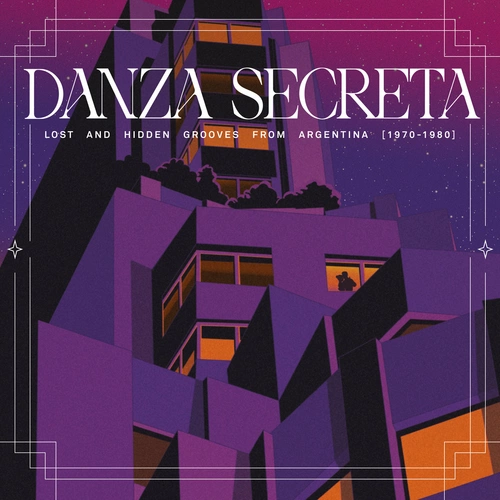
The Unveiling of Argentina’s Sonic Depths: A Curatorial Milestone
The release of "Danza Secreta" marks a significant moment for global music enthusiasts and scholars alike. Prior to this, notable efforts like Soundway’s "Sintesis Moderna," which offered a glimpse into Argentinian electronic dance and post-punk, had begun to chip away at the historical silence. However, "Danza Secreta" delves deeper into the preceding decade, presenting a broader spectrum of "grooves" that defy easy categorization. The compilation’s title, translating to "Secret Dance," aptly captures the clandestine nature of much of this music, born from an underground scene operating in defiance of a watchful and censorious state.
The 22 tracks, generously spanning a decade, are not unified by a single genre but by an undeniable current of powerful grooves. This stylistic diversity reflects the resilience and ingenuity of artists determined to create amidst adversity. From intricate funk to experimental fusion, the collection demonstrates a sophisticated musical vocabulary that deserves recognition alongside the more celebrated sounds of the continent. BBE Records, known for its dedication to uncovering and reissuing obscure yet vital recordings from around the world, has once again positioned itself at the forefront of musical discovery, providing a crucial platform for these "lost and hidden grooves."
A Political Shadow: Argentina Under Dictatorship (1970-1980)
To fully appreciate the significance of "Danza Secreta," one must understand the tumultuous political backdrop against which this music was created. The period from 1970 to 1980 encompassed some of Argentina’s most repressive years. While the compilation begins before the full onset of the military junta, it culminates squarely within the darkest chapters of the "National Reorganization Process" (Proceso de Reorganización Nacional), which officially began with the coup d’état on March 24, 1976. This military regime, led by General Jorge Rafael Videla, implemented a brutal campaign of state terrorism, systematically targeting perceived dissidents, intellectuals, artists, and political opponents.
Censorship was pervasive, extending into every facet of cultural life, including music. Songs deemed "subversive" or carrying implicit political messages were banned from radio airwaves, record stores, and public performances. Artists faced surveillance, intimidation, detention, and in many cases, forced disappearance or exile. This climate fostered a clandestine music scene where creative expression became an act of quiet defiance. Musicians often had to self-release their work on small, independent labels, distributing it through informal networks to avoid official scrutiny. The very act of producing and sharing music that deviated from state-sanctioned narratives was fraught with peril, underscoring the extraordinary courage of the artists featured in "Danza Secreta."
The Underground Resurgence: Artists and Their Creative Resilience
The artists contributing to "Danza Secreta" represent a crucial segment of Argentina’s cultural resistance. Lacking the widespread distribution channels available to artists in more open societies, and often operating with minimal resources, these musicians channeled their energy and passion into creating innovative sounds. Their music, while not always overtly political in its lyrics, embodied a spirit of freedom and experimentation that ran counter to the regime’s oppressive uniformity.
The challenges were immense. Securing studio time, finding engineers willing to work on "unofficial" projects, pressing vinyl in limited runs, and distributing records without attracting the attention of authorities were constant hurdles. Many of these recordings were produced on shoestring budgets, yet they often possess a raw, unfiltered quality that adds to their allure. This DIY ethos, born out of necessity, inadvertently contributed to the unique sonic signature of the era’s underground. The sheer existence of these tracks, let alone their quality and diversity, is a testament to the indomitable human spirit and the power of artistic expression in the face of tyranny.
Curatorial Insight: The Vision of Piccolo and Harari
The meticulous work of Ric Piccolo and Ariel Harari, both prominent figures in Buenos Aires’ DJ scene, has been instrumental in bringing "Danza Secreta" to fruition. Their deep understanding of Argentina’s musical heritage, combined with years of crate-digging and historical research, allowed them to unearth these hidden gems. Inferred statements from the compilers suggest a profound sense of responsibility and excitement in their undertaking. Piccolo and Harari likely faced considerable challenges in tracing masters, licensing tracks from obscure artists or their estates, and navigating the complexities of reissuing music from such a sensitive historical period.
Their motivation, it can be surmised, goes beyond mere musical appreciation; it is a quest to reclaim and re-contextualize a vital part of Argentina’s cultural memory. By presenting these tracks, they are not only introducing listeners to incredible music but also contributing to a more complete narrative of a nation’s artistic resilience. "This was music born from passion, from a desire to create and connect, even when the world outside was trying to silence us," one might infer Piccolo stating. Harari might add, "We wanted to show that even in the darkest times, creativity finds a way. These grooves are not just history; they are a pulse that kept a generation moving." Their curatorial vision has ensured that "Danza Secreta" is not just a collection of songs but a historical document.
Sonic Tapestry: A Deep Dive into the Tracks
"Danza Secreta" showcases a remarkable range of musical styles, all threaded together by compelling rhythmic structures and a distinctive "funk" sensibility. Each track tells its own story, reflecting the diverse influences and innovative approaches of Argentinian musicians during this era.
One standout example is Genius’s "Bermilyia Avenue," a track that immediately captivates with its bold experimentalism. It masterfully weaves a sample of a news report about Cambodia, creating an unexpected global political resonance within a local Argentinian context. This spoken-word element is juxtaposed against squirming synthesizers, a deep, resonant bassline, the distinctive cry of a wah-wah guitar, and a steady, hypnotic beat. The track’s ability to combine global political commentary with sophisticated musical arrangements speaks volumes about the intellectual depth of the underground scene. It’s a testament to the artists’ awareness of international affairs, even while operating under severe domestic restrictions. The use of synthesizers, a relatively new technology at the time, also highlights the forward-thinking nature of these musicians.
Another powerful entry is Palanca al Piso’s "Guanaba." This track is a quintessential heavy Latin funk piece, brimming with infectious energy. It features searing horns that punctuate the rhythm with vibrant stabs and solos, underpinned by incredibly tight drums that drive the groove relentlessly forward. The track’s infectious rhythm and instrumental prowess evoke the vibrant energy of a dance floor, perhaps one hidden from plain sight, where people could momentarily forget the anxieties of the outside world. "Guanaba" exemplifies the fusion of traditional Latin rhythms with contemporary funk influences, a hallmark of innovative music across South America during this period.
Perhaps one of the most intriguing selections is Ric Piccolo’s rework of Orquesta Disco Latino’s "Disco Tango," a track that achieves the remarkable feat of integrating the quintessential Argentinian accordion into a relentless 4/4 mirrorball anthem. The accordion, typically associated with traditional tango, is reimagined within a disco framework, creating a unique sonic hybrid that is both deeply rooted in Argentinian identity and universally appealing in its danceability. This fusion is not merely a novelty; it demonstrates a sophisticated understanding of musical synthesis, transforming an iconic national instrument into a dynamic element of a global genre. The track embodies the playful yet profound experimentalism that defined this era’s underground, proving that musical boundaries were meant to be pushed.
Across the entire compilation, a palpable rawness and irresistible funk permeate the sound. This isn’t polished, mass-produced pop; it’s the sound of artists pushing boundaries with limited resources, driven by an unyielding creative impulse. The immediacy and authenticity of these recordings make "Danza Secreta" not just a historical document but a truly engaging listening experience.
The Broader Context: Redefining South American Musical Narratives
"Danza Secreta" fundamentally alters the established narrative of South American music from the 1970s and 80s. For too long, the vibrant scenes of Brazil (with its MPB, Tropicália, and burgeoning disco) and Colombia (with its rich cumbia, salsa, and psychedelic sounds) have dominated the global perception of the continent’s musical output. While undeniably brilliant, this focus inadvertently marginalized the equally compelling developments occurring elsewhere.
This compilation serves as a powerful corrective, asserting Argentina’s rightful place within this diverse continental tapestry. It reveals that parallel to Brazil’s experimentalism and Colombia’s rhythmic prowess, Argentina was fostering its own unique blend of funk, disco, jazz fusion, and experimental electronic sounds. The country’s European heritage, particularly its strong Italian and Spanish influences, often gave its music a distinct flavor, integrating elements not always present in other Latin American styles. The compilation highlights that even under extreme political duress, cultural exchange and innovation continued, albeit in a more subdued and underground manner.
The role of reissue labels like BBE and Soundway cannot be overstated in this process of historical re-evaluation. They act as vital cultural archaeologists, unearthing forgotten masterworks and presenting them to a global audience, thereby enriching our collective understanding of music history. Without their dedicated efforts, much of this invaluable cultural heritage would remain unheard, confined to dusty archives or the memories of a few dedicated collectors.
Implications and Legacy: A Resonant Future
The release of "Danza Secreta" carries significant implications for music scholarship, cultural preservation, and the broader appreciation of global music. Firstly, it provides invaluable primary source material for researchers studying the intersection of music, politics, and social history in Latin America. It offers tangible evidence of cultural resistance and adaptation during periods of authoritarian rule, demonstrating how art can persist and even flourish in the shadows.
Secondly, it contributes to the ongoing decolonization of music history, moving beyond Eurocentric or Anglo-American narratives to highlight the creative dynamism of the Global South. By showcasing the sophistication and innovation of Argentinian artists, "Danza Secreta" encourages a more nuanced and inclusive understanding of global popular music.
Finally, for contemporary artists and music lovers, the compilation offers a fresh wellspring of inspiration. The raw energy, inventive arrangements, and fusion of genres present in these tracks can serve as a potent reminder of the boundless possibilities of musical expression. The "lost and hidden grooves" are no longer lost; they are now part of a global conversation, a vibrant testament to Argentina’s enduring musical spirit. This compilation is not just a treat for the ears but a profound cultural statement, ensuring that the secret dance of a generation will finally be heard worldwide.