Mia Khoirunisa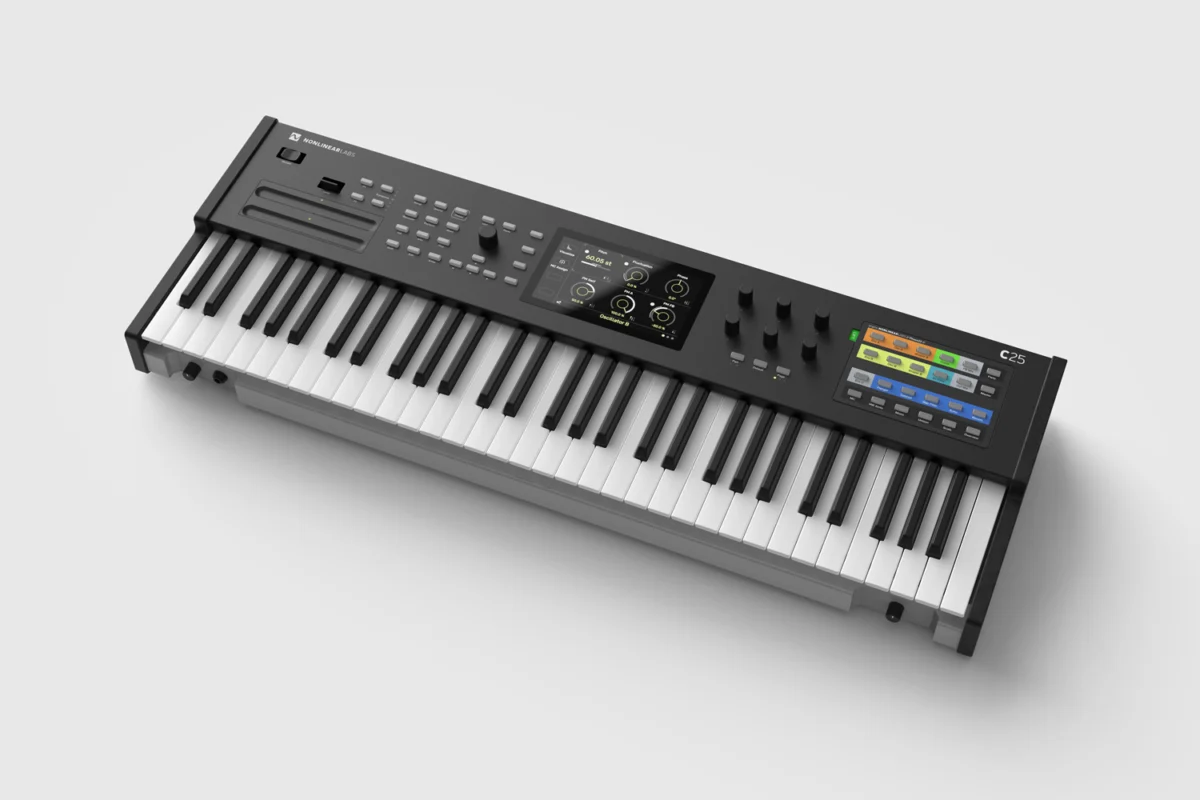
The world of digital music production is in a state of flux. Coinciding with the significant announcement of InMusic’s acquisition of Native Instruments, Stephan Schmitt, the visionary founder of Native Instruments himself, was simultaneously showcasing a compelling new direction for digital instruments with his latest creation at Nonlinear Labs: the C25. This premium instrument represents a profound statement on the future of synthesizers, prioritizing player interaction and deep sonic capabilities, a testament to Schmitt’s enduring commitment to innovative instrument design.
The C25 emerges as the successor to the critically acclaimed C15, continuing Nonlinear Labs’ philosophy of crafting instruments meticulously designed around the performer. While undoubtedly a high-end offering, the C25 is more than just a synthesizer; it is a carefully engineered proposition, from its intricate sound engines to its emphasis on tangible, physical control. This focus on the player experience is a hallmark of Stephan Schmitt’s work, a characteristic evident even in his earlier explorations with Reaktor, where performance interaction was frequently a central theme.
The C15, upon its debut, was a remarkable departure from convention. It presented itself as a bespoke craft piece, featuring a substantial ribbon controller and notably, a complete absence of traditional MIDI input or output. At its launch, it evoked the image of a meticulously constructed, niche sports car, built by an eccentric enthusiast. Over time, however, its potential as a professional keyboard instrument became widely recognized, with the option to integrate MIDI I/O later addressing the initial connectivity concerns for some users.
A Refined Aesthetic, Uncompromised Innovation
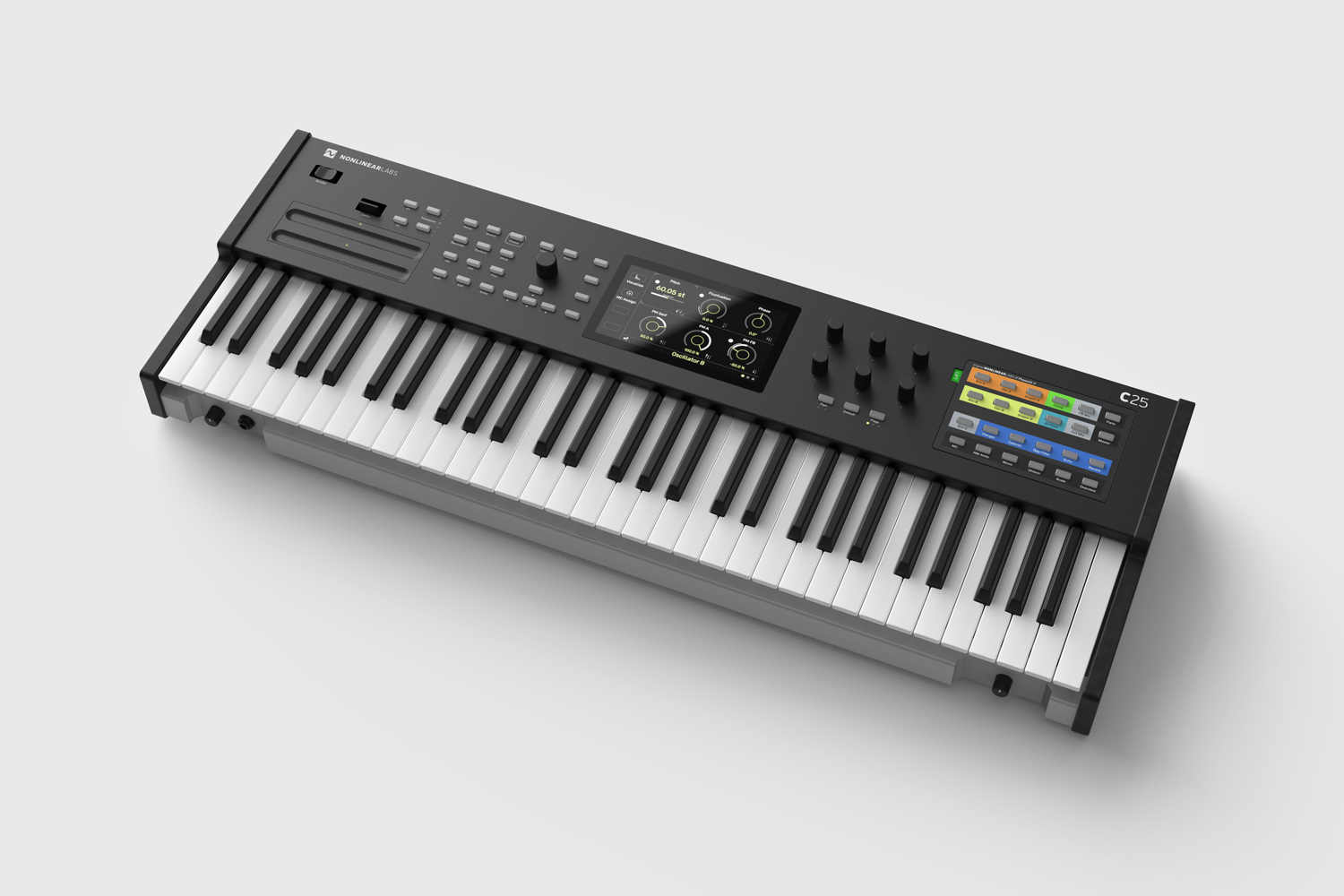
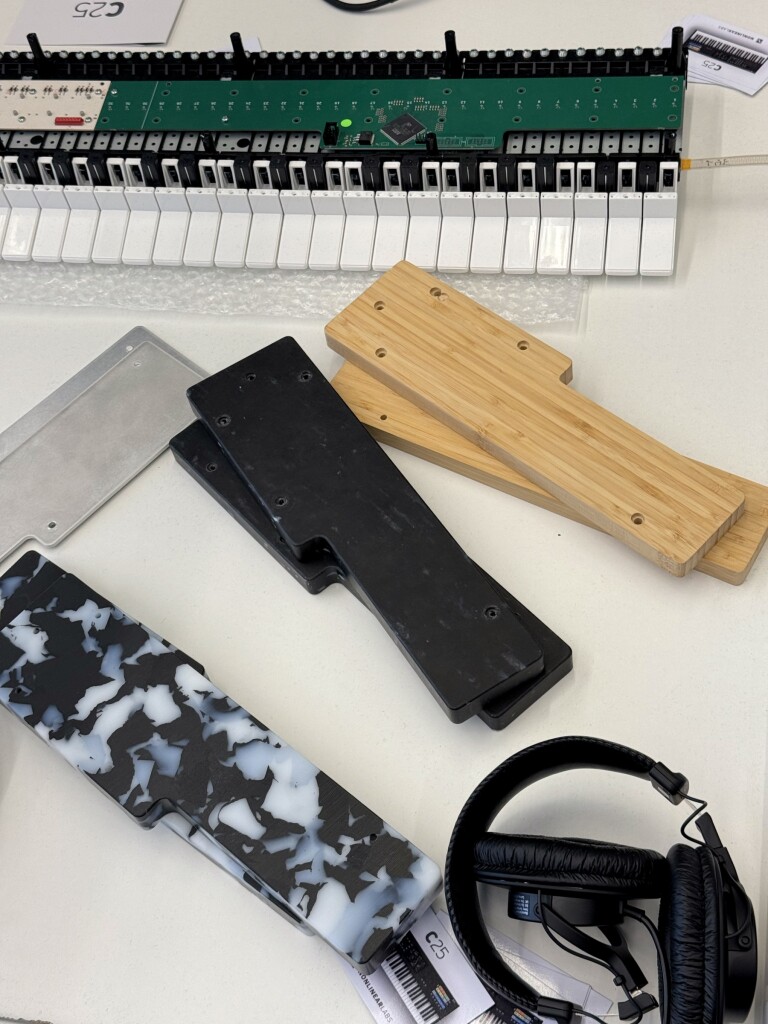
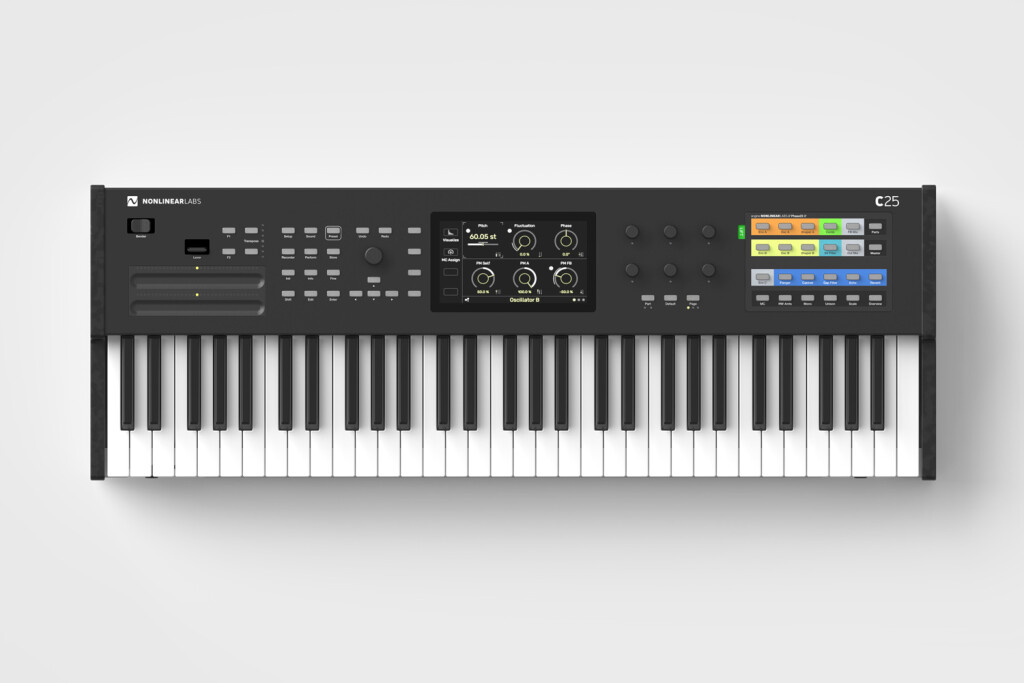
The C25, while outwardly adopting a more conventional aesthetic—clad in black with a more standard rectangular form factor, potentially making it more approachable for a wider audience—is by no means a compromise on innovation. This is an instrument designed for longevity and seamless integration into diverse studio environments. Crucially, Nonlinear Labs maintains its commitment to European manufacturing, sourcing the vast majority of its components domestically, a significant undertaking in today’s globalized supply chain.
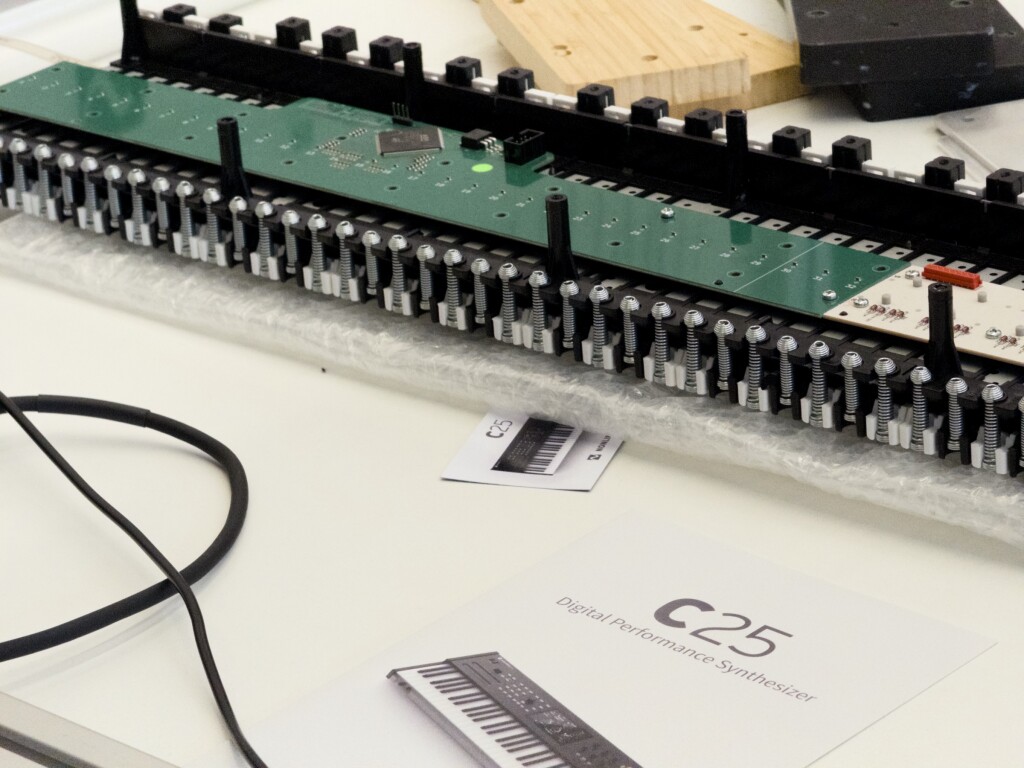
The C25 inherits the sophisticated continuous sensors that were a defining feature of the C15, alongside the renowned TP/8S keybed from Fatar, ensuring a high-quality playing experience. Furthermore, it offers full compatibility with the entire C15 preset library, providing users with immediate access to a vast sonic palette. However, almost every other aspect of the instrument has been re-envisioned to enhance its capabilities and user interaction.
While the C25 now boasts MIDI connectivity and a substantial display, it paradoxically offers an even more hands-on user experience. The ribbon controller, though now positioned more discreetly on the main panel, remains a vital element. This strategic shift might lead to a renewed appreciation for the original C15’s unique layout, and it’s not improbable that Nonlinear Labs might eventually introduce a "Signature Edition" C25, reintroducing the distinctive wood finishes and angled form factor of its predecessor, complete with a full-sized ribbon controller.
Advancing the Synthesis Frontier: The Phase 22 Engine
A key technological leap in the C25 is the introduction of the new Phase 22 Synthesis Engine. This engine builds upon the foundation of the C15, offering full preset compatibility, but significantly expands sonic possibilities. It incorporates advanced techniques such as phase modulation (FM), waveshaping, and physical modeling, moving beyond the purely subtractive synthesis capabilities of its predecessor. This integration of diverse synthesis methods within a cohesive hardware unit strongly echoes the ambitious vision behind Native Instruments’ original Generator and Reaktor software, bringing that conceptual depth into a dedicated, integrated keyboard instrument. The implications for sound design are considerable, opening up new avenues for timbral exploration and sonic sculpting.
Enhanced Performance Controls and Tactile Feedback
Nonlinear Labs has always prioritized expressive control, and the C25 continues this tradition with enhanced performance features:
- Polyphonic Expression: The C25 delivers on the promise of polyphonic aftertouch and polyphonic modulation, a feature that has become a hallmark of Nonlinear Labs instruments. This allows for intricate control over individual notes, enabling continuous morphing of virtually any parameter for a truly dynamic and nuanced performance.
- Advanced Control Surfaces: The instrument features a new Lever control alongside the existing Bender. The Lever is equipped with magnetic return force, offering precise and responsive pitch bending. The touch ribbons, while smaller in physical footprint than those on the C15, are now enhanced with a bar of 33 LEDs each, providing crucial visual feedback and enabling novel interaction possibilities.
- Haptic Feedback for Potentiometers: A significant innovation lies in the six high-resolution potentiometers, which now incorporate touch and haptic feedback. This feature, along with a stepped encoder, unlocks a wealth of new control behaviors. Users can experience software-generated detents, simulate push-and-pull physics, and engage in bi-directional interactions with the instrument’s internal engine. This level of tactile engagement is expected to influence future hardware synthesizer designs, encouraging a move towards more intelligent and responsive physical interfaces.
A Visual and Sonic Hub: The Integrated Studio Concept
The C25 is equipped with a 7-inch TFT display featuring touch functionality. This vibrant and responsive screen significantly enhances the user experience, providing clear visual feedback for the sophisticated sound engines and intuitive touch interaction. The development team’s focus on creating a performance-oriented instrument, rather than merely a computer interface, is palpable. The enthusiastic reception from musicians engaging with the C25 at its unveiling further solidifies its position as a dedicated performance keyboard.
Furthermore, Nonlinear Labs continues to champion the concept of the instrument as a complete studio solution:
- Extensive Connectivity: The C25 retains its affinity for expressive input with 8 inputs for pedals and control voltages, catering to modular synthesizer enthusiasts and those seeking deep external control.
- High-Fidelity Audio and Recording: The instrument boasts studio-grade audio quality, capable of 24 voices at a sample rate of 96 kHz. With ample effect slots and the capacity for hours of lossless audio recording onboard, the C25 positions itself as a self-contained creative hub.
- Ubiquitous Connectivity: Addressing the connectivity needs of modern workflows, the C25 now includes USB host and device functionality, as well as standard MIDI In and Out ports, making it a more versatile component in any studio setup.
Context of Industry Shifts and Future Implications
The unveiling of the Nonlinear Labs C25 occurs against a backdrop of significant consolidation within the music technology industry. The acquisition of Native Instruments by InMusic, a conglomerate that already owns a vast portfolio of brands including Akai, Alesis, M-Audio, and Numark, signals a new era of integration and strategic alignment for some of the industry’s most prominent players. This merger, announced in the same week as the C25’s debut, inevitably raises questions about the future trajectory of software and hardware development within these entities.
In contrast, Nonlinear Labs, under Stephan Schmitt’s leadership, represents a more focused and artisanal approach. The C25, with its emphasis on unique physical interfaces and advanced synthesis, stands as a testament to the enduring appeal of high-quality, player-centric hardware. The "hands-on" philosophy, often perceived as being at odds with increasing software integration, is demonstrably being redefined by instruments like the C25. The inclusion of haptic feedback on potentiometers and advanced polyphonic expression modes suggests a forward-thinking approach that bridges the gap between digital precision and analog tactility.
The C25’s design philosophy, deeply rooted in the performer’s connection with the instrument, offers a counterpoint to the trend of increasingly screen-dependent music production. While the C25 incorporates a modern touch display, its primary focus remains on the physical interaction afforded by its innovative controls. This dedication to the tangible aspect of music creation is likely to resonate with a segment of musicians seeking deeper engagement with their instruments.
The implications of the C25 extend beyond its immediate user base. Its advanced synthesis engine and sophisticated control mechanisms could serve as a blueprint for future instrument development across the industry. The integration of physical modeling and FM synthesis within a hardware platform that also prioritizes expressive performance controls is a potent combination. Moreover, the inclusion of features like haptic feedback on potentiometers points towards a potential paradigm shift in how digital instruments are designed and experienced.
A Glimpse into the Future of Instrument Design
Discussions with Stephan Schmitt and the Nonlinear Labs team reveal a profound passion for instrument building that transcends the mere creation of new gear. Their approach is one of deep engagement with the craft, inspiring even those not in immediate need of a new instrument to learn more about their innovations. The team’s dedication to meticulously engineered hardware, manufactured with a commitment to quality and European craftsmanship, sets a high standard.
The forthcoming talk at an upcoming industry event, as indicated by the provided details, offers an opportunity for a deeper dive into the C25’s capabilities and the philosophy behind its design. This presentation promises to shed further light on the meticulous engineering and creative vision that have come to define Nonlinear Labs.
The Nonlinear Labs C25 is more than just a new synthesizer; it is a bold statement about the future of digital instrument design. It champions a return to tactile engagement, pushing the boundaries of synthesis and performance control, all while maintaining an unwavering commitment to quality and innovation. In an industry experiencing significant shifts, instruments like the C25 offer a compelling vision of where expressive, tactile music creation can lead.
Key Features of the Nonlinear Labs C25:
- New Phase 22 Synthesis Engine: Incorporates FM, waveshaping, and physical modeling alongside subtractive synthesis.
- Polyphonic Aftertouch and Modulation: Enables expressive, note-specific control.
- Advanced Control Surfaces: Features a new Lever with magnetic return force and LED-enhanced touch ribbons.
- Haptic Feedback Potentiometers: Six high-resolution knobs offer tactile feedback and advanced interaction modes.
- 7-inch Touchscreen Display: Provides intuitive visual feedback and control.
- Extensive Connectivity: Includes 8 pedal/CV inputs, USB host/device, and MIDI I/O.
- Studio-Grade Audio: Offers 24 voices at 96 kHz, extensive effects, and onboard lossless audio recording.
- European Manufacturing: Prioritizes domestic component sourcing and production.
- C15 Preset Library Compatibility: Seamless integration with existing C15 sounds.
The Nonlinear Labs C25 represents a significant development in the realm of high-end synthesizers, offering a compelling blend of advanced sonic capabilities and unparalleled physical interaction. It stands as a testament to Stephan Schmitt’s enduring vision for instruments that are as much a joy to play as they are to create with.