Aveline Kirana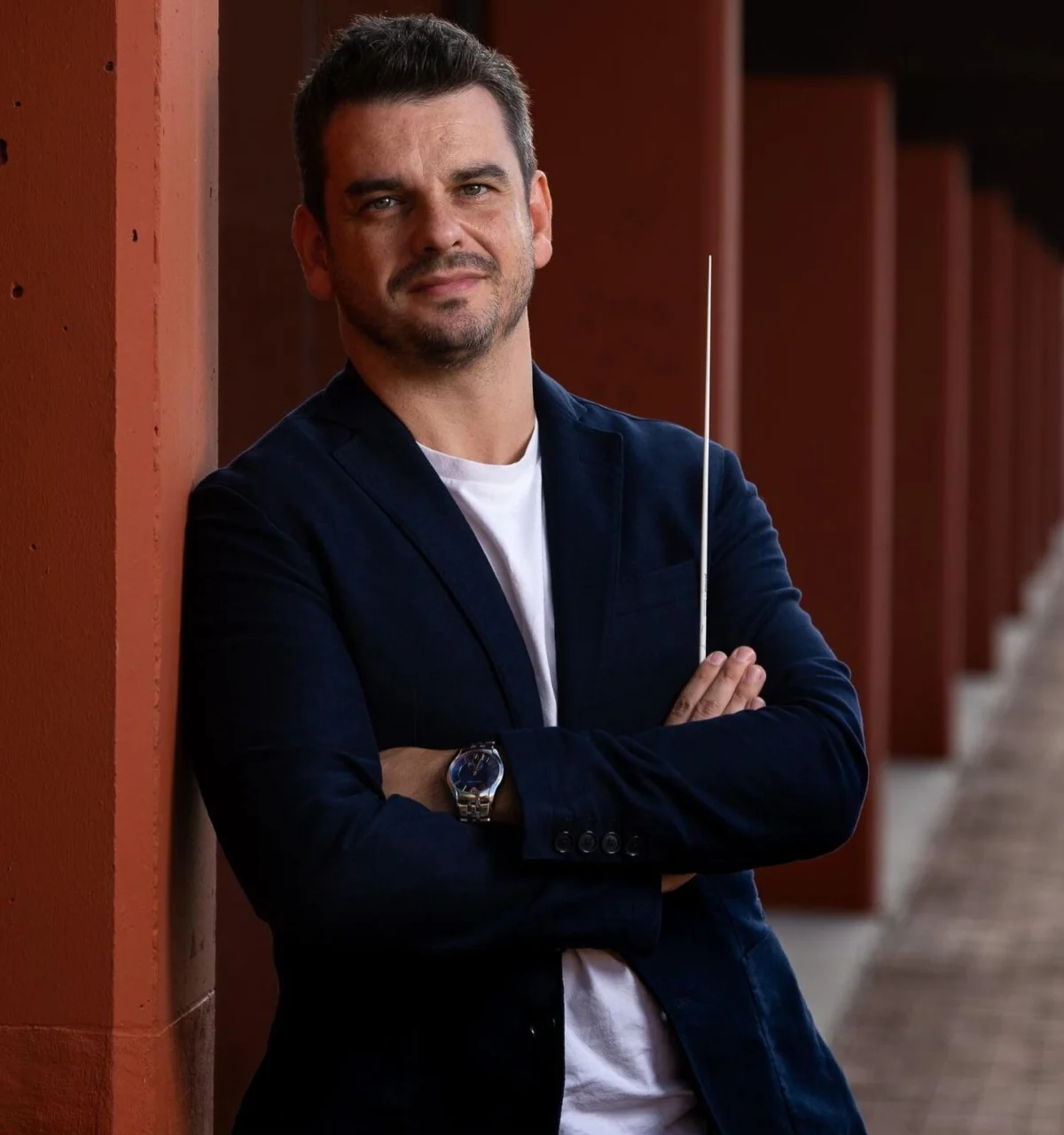
The vibrant world of classical music and Spanish zarzuela has been dimmed by the untimely passing of conductor Víctor Eloy López Cerezo, who died at the age of 43. His death, reported from his hometown of Malaga, Spain, comes after a year-long battle with cancer, leaving behind a significant legacy in the conducting sphere. López Cerezo was a conductor whose career, though tragically cut short, was marked by dedication, academic rigor, and a passion for both symphonic and traditional Spanish musical forms. His influence extended across national and international stages, solidifying his reputation as a rising star in the conducting firmament.
A Life Dedicated to Music: From Malaga to the International Stage
Born in Malaga, López Cerezo’s lifelong commitment to music was evident from an early age. His formal education laid a robust foundation for his future endeavors, demonstrating a profound understanding of music’s historical and theoretical dimensions. He pursued studies in Music History and Sciences, a discipline that provided him with a deep well of knowledge to draw upon in his conducting. This academic pursuit was complemented by practical training, as he obtained a diploma in Musical Teaching, equipping him with the pedagogical skills to inspire future generations.
Further enriching his intellectual and professional toolkit, López Cerezo earned a Master’s degree in Spanish Musical Heritage. This specialization underscores his particular interest and dedication to preserving and promoting the rich tapestry of Spanish musical traditions. His academic journey culminated with a Master’s in Cultural Management, a qualification that speaks to his understanding of the broader ecosystem of the arts and his capacity to navigate its complexities, from artistic direction to audience engagement.
Mentorship and Ascent: Forging a Conducting Career
López Cerezo’s journey as a conductor was shaped by distinguished mentors and invaluable assistant roles. He honed his skills in orchestral conducting under the tutelage of renowned figures such as Miguel Romea and José María Moreno. These formative experiences provided him with the technical precision and artistic insight essential for leading ensembles.
His development was further accelerated through his work as an assistant conductor to a roster of esteemed maestros, including Karel Mark Chichon, Rune Bergmann, Arturo Diez Boscovich, Alberto Veronesi, and José María Moreno. These positions offered him direct exposure to diverse conducting styles and interpretations, allowing him to absorb a wide spectrum of musical approaches. Working alongside such prominent figures on major productions provided him with practical experience in high-pressure artistic environments and exposed him to the intricacies of managing large-scale orchestral performances. This period of apprenticeship was crucial in preparing him for the significant leadership roles he would later assume.
His talent quickly gained recognition, propelling him towards a prominent position in the classical music scene. López Cerezo’s performances graced prestigious venues, including the esteemed Teatro Real in Madrid, the Malaga Philharmonic, and the Gran Canaria Philharmonic Orchestra. These engagements marked him as a conductor of considerable promise, capable of leading renowned orchestras in significant repertoire.
Principal Conductor and Versatile Repertoire
López Cerezo’s leadership capabilities were most prominently displayed in his roles as Principal Conductor. He held this distinguished position with the Spanish Philharmonic Orchestra and the Andalusian Symphony Orchestra, two significant ensembles within Spain’s orchestral landscape. In these capacities, he was instrumental in shaping their artistic direction and contributing to their repertoire development.
His conducting engagements extended far beyond Spain, showcasing his international reach and the universal appeal of his artistry. He led a diverse array of professional ensembles, including the Vienna Chamber Orchestra (Austria), the Filharmonia Szczecin Orchestra (Poland), the Malaga Symphony Orchestra, the Classical Orchestra of Granada, the National Band of Cuba, and the Municipal Band of Palma de Mallorca. This broad spectrum of affiliations highlights his versatility and his ability to adapt his conducting approach to different instrumental configurations and musical styles, from chamber orchestras to large symphonic bodies and even wind bands.
The geographical reach of his performances was equally impressive. López Cerezo conducted in some of the world’s most iconic concert halls, demonstrating his stature on the global stage. These included the Vienna Konzerthaus (Austria), Victoria Hall in Geneva, Switzerland, the Stravinski Auditorium in Montreux, Switzerland, and the Malmö Concert Hall in Sweden. Domestically, his appearances at venues such as the Gran Teatro del Liceo in Barcelona, the Wizink Center, and the Bilbao Arena underscored his significant presence within Spain’s cultural infrastructure.
A Champion of Zarzuela: Preserving a Spanish Art Form
Beyond his symphonic work, Víctor Eloy López Cerezo was particularly celebrated for his profound connection to and mastery of the zarzuela repertoire. Zarzuela, a uniquely Spanish lyric-dramatic genre, combines spoken dialogue with sung scenes, often featuring dance and a vibrant, accessible musical style. López Cerezo dedicated himself to the revival and popularization of this cherished art form, conducting an extraordinary number of performances.
His impressive record includes directing over 300 zarzuela productions. This extensive body of work encompassed iconic and beloved pieces such as "Luisa Fernanda," "Marina," "El Barberillo de Lavapiés," and "La Corte del Faraón." By consistently programming and performing these works, he played a crucial role in keeping them alive for contemporary audiences and ensuring their transmission to future generations. His deep understanding of the stylistic nuances, dramatic pacing, and emotional core of zarzuela made his interpretations particularly compelling and authoritative. This commitment not only showcased his musical acumen but also his cultural stewardship, actively contributing to the preservation of a significant element of Spanish cultural heritage.
Background and Context: The Fight Against Cancer
Víctor Eloy López Cerezo’s battle with cancer, which lasted for approximately a year, cast a shadow over his final months. While the initial reports are brief, the fact that he continued to conduct and engage with his artistic commitments for as long as he did speaks to his resilience and unwavering dedication to his craft. The diagnosis and subsequent treatment likely presented immense personal challenges, yet his commitment to music remained a guiding force.
Cancer, particularly in its advanced stages, often requires intensive treatment regimens that can be physically and emotionally taxing. For a conductor, whose profession demands significant stamina, precision, and mental focus, the physical toll of such an illness would have been particularly acute. The ability to continue performing and leading orchestras, even for a limited period, underscores his extraordinary strength of character and his profound love for music. The fact that he was able to lead orchestras on international stages and within prominent Spanish venues during this period of illness is a testament to his inner fortitude.
Timeline of a Promising Career
While a comprehensive chronological account of López Cerezo’s career is extensive, key milestones can be inferred from the provided information:
- Birth and Early Education: Born in Malaga, Spain. Early musical education and foundational studies in music history and teaching.
- Higher Education and Specialization: Pursued a diploma in Musical Teaching, followed by a Master’s in Spanish Musical Heritage and a Master’s in Cultural Management. This period likely spanned his late teens and early to mid-twenties.
- Apprenticeship and Mentorship: Trained in orchestral conducting with Miguel Romea and José María Moreno. Served as assistant conductor to Karel Mark Chichon, Rune Bergmann, Arturo Diez Boscovich, Alberto Veronesi, and José María Moreno. This phase would have been crucial for gaining practical experience and honing his skills, likely occurring in his mid-twenties to early thirties.
- Emergence on the National Stage: Performances at the Teatro Real in Madrid, Malaga Philharmonic, and Gran Canaria Philharmonic Orchestra. This period marks his transition from emerging talent to recognized conductor.
- Principal Conductor Roles: Assumed leadership positions with the Spanish Philharmonic Orchestra and the Andalusian Symphony Orchestra. These roles represent a significant elevation in his career, likely occurring in his early to mid-thirties.
- International Engagements: Conducted orchestras such as the Vienna Chamber Orchestra, Filharmonia Szczecin Orchestra, and led performances in renowned international venues like the Vienna Konzerthaus and Victoria Hall. This demonstrates his growing global reputation.
- Zarzuela Advocacy: Directed over 300 zarzuela performances, cementing his reputation as a master of this genre. This sustained effort likely spanned a significant portion of his professional life, with particular intensity in his later years.
- Final Year: Battled cancer for approximately one year before his passing at the age of 43.
Inferred Reactions and Broader Impact
The news of Víctor Eloy López Cerezo’s death has undoubtedly sent ripples of sorrow through the musical communities he touched. While specific official statements are not yet detailed, it is reasonable to infer that orchestras, opera houses, and cultural institutions where he performed or led would issue tributes. Colleagues, including the musicians he conducted and the fellow conductors he worked with, are likely mourning the loss of a talented and dedicated artist. Educational institutions where he studied or taught would also likely express their grief and acknowledge his contributions.
The loss of a conductor at such a young age is always a profound tragedy, particularly for one who had achieved significant recognition and demonstrated such immense potential for further growth and influence. López Cerezo’s passing represents a void in the Spanish musical landscape, especially in the realm of zarzuela, where his passion and expertise were invaluable. His dedication to both contemporary symphonic music and traditional Spanish genres highlights a rare breadth of artistic vision, making his contributions all the more significant.
The implications of his death extend beyond the immediate shock. It prompts reflection on the importance of supporting artists throughout their careers, recognizing the demanding nature of their profession, and the vulnerability that even the most accomplished individuals face. His legacy will live on through the recordings he may have made, the musicians he inspired, and the audiences he moved with his interpretations. The preservation of Spanish musical heritage, a cause he championed, will continue to be a vital endeavor, and his role in this will be remembered. His relatively short but impactful career serves as a reminder of the ephemeral nature of life and the enduring power of artistic contribution. The music world mourns the loss of a conductor who, in his 43 years, managed to leave an indelible mark on the stages he graced and the repertoire he championed.