Johan Budi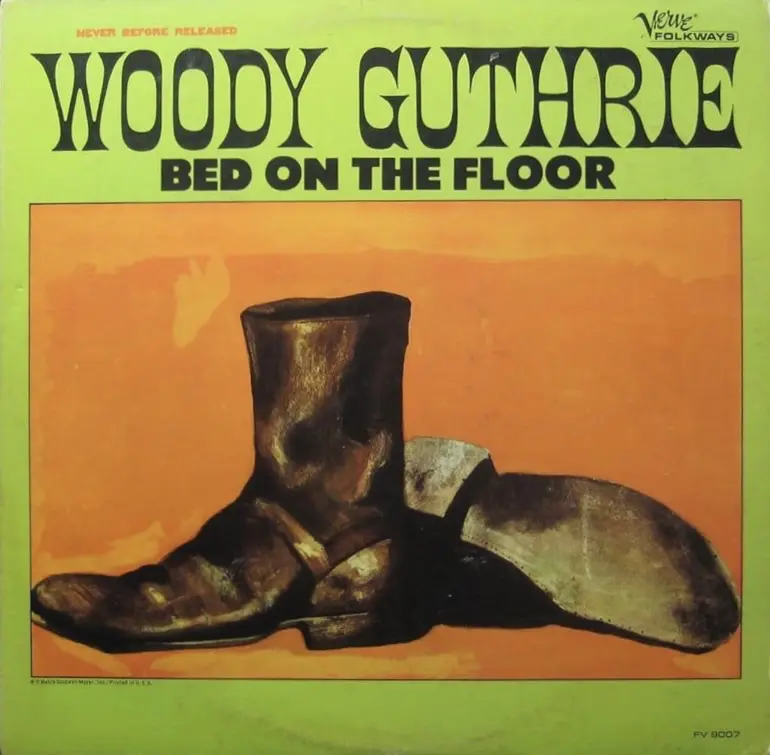
The publication of David Illingworth’s 1966 review of Woody Guthrie’s album "Bed on the Floor" in the May issue of Jazz Journal represents a pivotal moment in the history of music criticism, marking a period where the boundaries between jazz, folk, and protest music began to dissolve. At the time, Jazz Journal (JJ) was a bastion of traditional and modern jazz appreciation, yet the inclusion of Guthrie—alongside contemporary reviews of Ewan MacColl and Pete Seeger—underscored a growing recognition of the shared roots between the African American blues tradition and the white Appalachian folk tradition. This confluence of genres was not merely a stylistic overlap but a reflection of the socio-political climate of the mid-1960s, where the civil rights movement and anti-war sentiments utilized music as a primary vehicle for social change. Illingworth’s review served as a vital reminder to the jazz community that the "authentic" expression found in Guthrie’s work shared the same DNA as the improvisational and emotive spirit of jazz.
Historical Context: The 1960s Folk Revival and Jazz Journal
By 1966, the American folk music revival had reached its peak and was beginning to transition into the folk-rock era, catalyzed by Bob Dylan’s controversial electric performance at the Newport Folk Festival the previous year. In the United Kingdom, where Jazz Journal was based, the interest in Americana was profound. The British "trad jazz" boom of the late 1950s had already paved the way for an appreciation of "roots" music, including blues and skiffle, the latter of which was directly inspired by figures like Guthrie and Lead Belly.
The May 1966 issue of Jazz Journal arrived at a time when the jazz world was grappling with the rise of the avant-garde and the encroaching dominance of rock and pop. By reviewing Woody Guthrie, the magazine was making a statement about the "seriousness" of folk music. Guthrie was not viewed as a mere pop singer but as a chronicler of the human condition, much like the great bluesmen. The review of "Bed on the Floor," released on the Verve Folkways label, highlighted the industry’s attempt to bridge these worlds. Verve, a legendary jazz label founded by Norman Granz, had entered into a partnership with Folkways Records in 1964 to bring traditional field recordings and folk performances to a wider, more commercial audience.
Technical Analysis of "Bed on the Floor"
The album "Bed on the Floor" (Verve Folkways VLP 5008) was a compilation of recordings that showcased Guthrie’s raw, unvarnished style. Illingworth’s review emphasized that while Guthrie’s name was frequently invoked as a seminal influence by contemporary artists—most notably Bob Dylan and Ramblin’ Jack Elliott—the actual recordings of the man himself were in danger of being overshadowed by his legend.
The record featured several key collaborators who provided a bridge to other genres. Sonny Terry, the virtuoso blind harmonica player, brought a distinct Piedmont blues flavor to the tracks. Terry’s presence on a folk record was significant; it illustrated the racial and stylistic integration that Guthrie championed throughout his career. Cisco Houston, described by Illingworth as the "sad second voice," provided the vocal harmonies and additional guitar work that fleshed out Guthrie’s minimalist arrangements.
The tracklist included seminal works such as "Baltimore To Washington," "Little Black Train," and "Mean Talking Blues." Illingworth noted that while some of these songs dealt with a "hard, adventurous past," their themes remained strikingly topical. The railroad, a central motif in Guthrie’s oeuvre, served as a metaphor for both freedom and displacement. In "Train Blues," a guitar and harmonica instrumental with Sonny Terry, the music was described as "swinging like mad," a descriptor that justified its inclusion in a jazz periodical.
Chronology of Woody Guthrie’s Recording Career
To understand the impact of the 1966 review, one must look at the timeline of Guthrie’s career and the posthumous curation of his work:
- 1940: Guthrie records the "Dust Bowl Ballads" for RCA Victor, his most commercially successful early work.
- 1944–1945: Guthrie begins a prolific series of recording sessions for Moses Asch, the founder of Folkways Records. These sessions included the tracks that would later appear on "Bed on the Floor."
- 1952: Guthrie is hospitalized with Huntington’s disease, effectively ending his active performing career.
- 1964: The Verve Folkways partnership is established, leading to the repackaging of Asch’s recordings for a new generation.
- 1966: Jazz Journal publishes the Illingworth review, cementing Guthrie’s status among jazz aficionados.
- 1967: Woody Guthrie passes away on October 3, shortly after the folk revival had fully integrated his protest style into the mainstream.
Supporting Data: The Verve Folkways Partnership
The collaboration between Verve and Folkways was a strategic business move that reflected the shifting demographics of music buyers. According to industry data from the mid-1960s, the "college market" was the primary driver of both jazz and folk sales. By 1965, folk music accounted for approximately 15% of total US album sales, a significant increase from the previous decade.
The Verve Folkways label (later renamed Verve Forecast) released albums by Guthrie, Pete Seeger, and Lead Belly, but also signed "folk-rock" pioneers like Janis Ian and The Blues Project. This hybrid label structure allowed traditional artists to benefit from the distribution networks of a major conglomerate (MGM) while maintaining the "authentic" branding of Folkways. The price of the album in 1966, 32 shillings (as noted in the JJ review), positioned it as a premium product for serious collectors.
Reaction and Implications for the Jazz Community
The inclusion of Guthrie in Jazz Journal was met with mixed reactions from purists. However, the editorial direction under Sinclair Traill often sought to find common ground between various forms of "improvised" or "people’s" music. The logic was that if jazz was the "folk music of the city," then Guthrie’s work was the "jazz of the open road."
Illingworth’s assertion that "only the place-names have changed" regarding the topical nature of the songs resonated deeply. In 1966, the "Little Black Train" or the "Miner’s Song" could easily be mapped onto the struggles of the Civil Rights movement or the labor strikes of the era. The "conflation" mentioned in the article’s preamble refers to the intellectual movement that saw all these genres as part of a singular "protest" tradition.
Broader Impact and Cultural Legacy
The 1966 review serves as a historical marker for several reasons. First, it validates the role of the critic in preserving the legacy of an artist during a period of rapid cultural transition. Second, it highlights the importance of the Asch recordings, which captured Guthrie in his prime, often in casual settings that allowed for the "individual talent" mentioned by Illingworth to shine through.
Guthrie’s influence on jazz specifically can be seen in the works of artists like Charlie Haden, whose Liberation Music Orchestra would later blend folk melodies with free jazz to protest political injustice. The "swing" that Illingworth detected in "Train Blues" was a recognition that the rhythmic pulse of American music was not confined to a single genre.
Furthermore, the review’s mention of "previously unissued versions" of songs like "Slip Knot" and "Poor Boy" underscores the archival importance of the Verve Folkways releases. These recordings provided a more nuanced view of Guthrie’s discography, moving beyond the well-known "This Land Is Your Land" to explore his more complex, blues-inflected material.
Conclusion: The Endurance of the Guthrie Sound
In retrospect, the 1966 Jazz Journal review was ahead of its time. It recognized that the "danger of forgetting the recorded work of the man himself" was a real threat in an era of celebrity-driven folk-pop. By focusing on the musicality of Guthrie, Houston, and Terry, Illingworth elevated the discussion from mere hagiography to serious musicological analysis.
Today, the intersections between jazz and folk are widely accepted, with contemporary artists frequently moving between the two. However, in May 1966, this was a bold editorial choice that expanded the horizons of its readership. Woody Guthrie’s "Bed on the Floor" remains a cornerstone of American music, a testament to a time when the railroad, the guitar, and the harmonica were the primary tools for telling the American story. The review stands as a permanent record of the moment when the jazz world looked at the folk world and recognized a reflection of its own soul.




![Sijya announces Leather and Brass [Retrofitted] EP, shares Do I Know [Rachika Nayar Edit]: Listen](https://empire-music.net/wp-content/uploads/2026/09/sijya-announces-leather-and-brass-retrofitted-ep-shares-do-i-know-rachika-nayar-edit-listen.webp)