 Indra Aziz
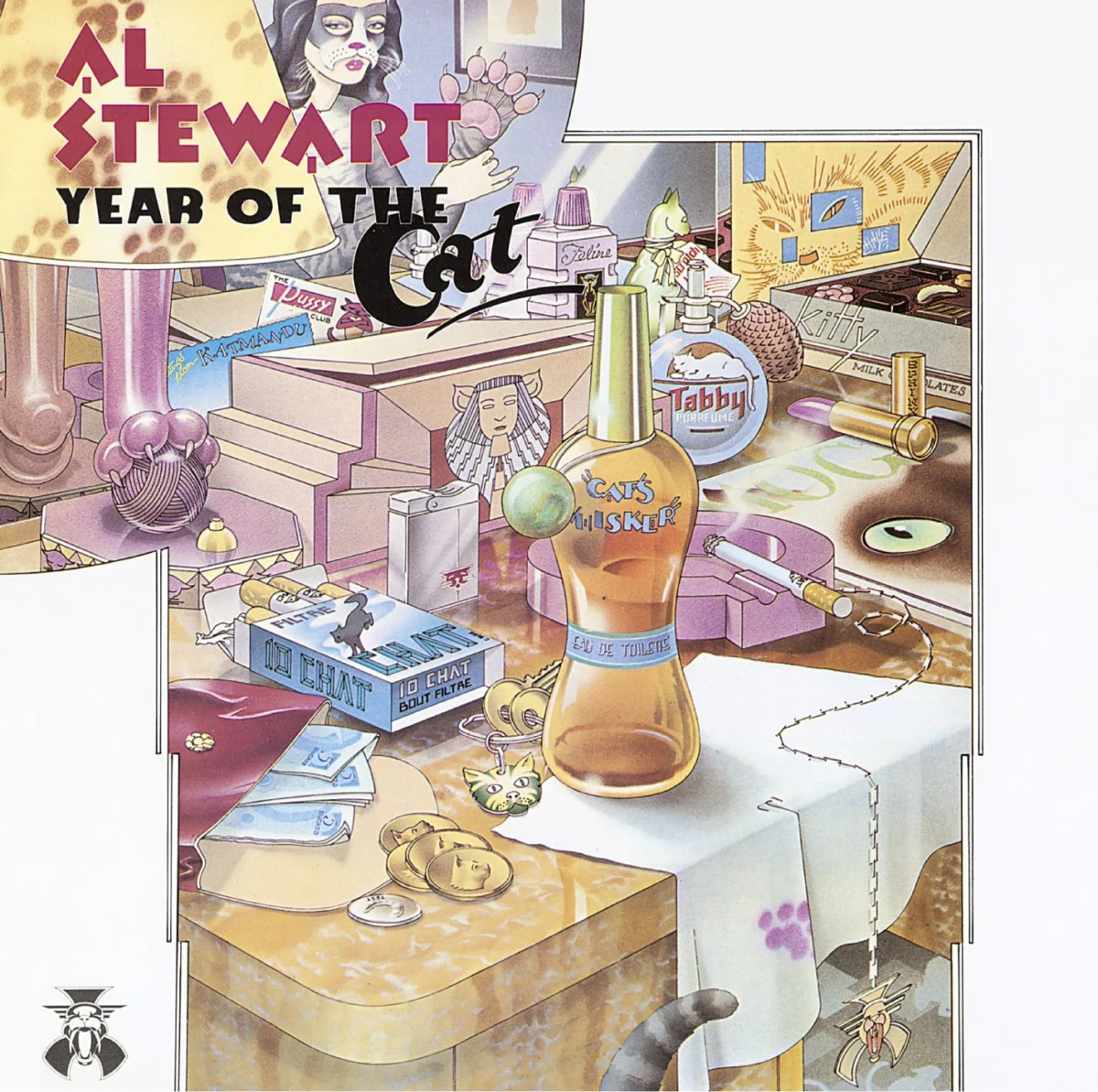
Some records belong strictly to their era, while others remain entirely untouched by the passage of time. Al Stewart’s 1976 masterwork, Year of the Cat, occupies a singular and curious space between these two extremes. It bears the unmistakable sonic hallmarks of mid-1970s soft rock and sophisticated folk-pop, yet it never sounds beholden to dated conventions or ephemeral studio trends. Viewed as a consummate achievement in audio engineering, songwriting craftsmanship, and arrangement even by modern standards, the album unfolds with the unhurried assurance of an artist who has finally mastered his linguistic and musical vocabulary.
As the seventh studio album in Stewart’s catalog, the project reached No. 5 on the US Billboard 200 chart and spawned a ubiquitous Top 10 single in its majestic title track. However, these commercial accolades tell only a fraction of the record’s cultural and artistic story. Nearly five decades after its initial release, the album continues to demand critical reassessment, far transcending the shadow of its most famous radio hit to reveal a tightly woven tapestry of historical narrative, literary allusion, and meticulous instrumental architecture.
The Long Road to the Studio: Background and Chronology
The Scottish singer-songwriter was decidedly not an overnight sensation. Born in Airdrie, Scotland, in 1945, Stewart spent years cutting his teeth in the fertile yet grueling London folk circuit of the mid-1960s, performing alongside contemporaries like Paul Simon and sharing living quarters with future icons such as George Harrison. During this formative period, his early releases—such as 1967’s Bedsitter Images and 1969’s Love Chronicles—established him as a literate, acoustic-driven diarist, though commercial breakthroughs proved elusive.
By the mid-1970s, Stewart’s trajectory shifted permanently when he crossed paths with producer and engineer Alan Parsons. Parsons, fresh off his monumental work as an engineer on Pink Floyd’s The Dark Side of the Moon, brought a pristine, cinematic clarity to Stewart’s increasingly sophisticated compositions. Their initial collaboration on 1975’s Modern Times laid essential groundwork, bringing Stewart’s lyrical vision into sharper focus and setting the stage for the artistic leap of faith that would become Year of the Cat. Recorded primarily at Abbey Road Studios in London between late 1975 and early 1976, the album benefited immensely from Parsons’ meticulous ear for spatial dynamics and sonic depth.
Structural Sophistication and Musical Architecture
What makes the nine compositions on Year of the Cat particularly remarkable is the sleight of hand with which Stewart and his collaborators oscillate between major and minor chords. This technique reshapes the emotional complexion of the narratives without resorting to theatrical excess or melodrama. These harmonic fluctuations slip into place seamlessly, preventing the melodies from becoming overly agreeable and uncovering sudden poignancies that their sunlit beginnings scarcely foreshadow.
Tracks like "Sand in Your Shoes" demonstrate this dynamic equilibrium. Beginning as a breezy folk-pop excursion, the song gradually develops a more complex harmonic vocabulary, introducing a darker passage in its third verse that completely recasts the surrounding scenery. This calculated shift makes the subsequent accordion flourish feel profoundly rewarding precisely because it was withheld until the ideal structural juncture.
A similar interplay between light and shade defines "Flying Sorcery," where dextrous acoustic guitar figures dance alongside Stewart’s voice on the approach to the chorus. Yet, it is the underlying chord cycle beneath the harmonica immediately following the chorus that grants the composition its deeper visceral pull. There is no conspicuous division between pleasure and melancholy here; each emotion is present in balanced, exact measure.
This equilibrium extends directly into the album’s core architecture, where traditional distinctions between verse and chorus frequently blur. Stewart appears almost indifferent to conventional song structures, treating passing phrases with the completeness of traditional refrains while designing bridges robust enough to sustain entire compositions. "If It Doesn’t Come Naturally, Leave It" advances this measured disregard by generating a steady burst of momentum without ever disturbing the album’s innate poise. Anchored by George Ford’s supple, melodic bass guitar lines, the track propels itself through a succession of rising movements until physical ascent and musical summit become virtually indistinguishable.
Orchestral Mastery and Instrumental Excellence
Perhaps the most astonishing quality of Year of the Cat is the seamless manner in which its instrumentation serves the underlying songwriting. Underpinning this finesse is the orchestral mastery of arranger Andrew Powell, whose string and horn arrangements lend each fleeting gesture a dramatic prominence that defies its brief appearance.
This meticulous attention to detail shines brightly through Peter White’s intricate Spanish guitar playing on "On the Border." The performance imbues the track with a distinct geographical and cultural character as it slips deftly into a hypnotic, cyclical rhythm following a tense, foreboding introduction. Even the album’s quieter corners are governed by this same austere discipline. "Midas Shadow" unfurls with a narcotic tranquility, its restless internal movement keeping the pastoral reverie from lapsing into static ambiance while yielding subtle textural disclosures upon repeated listens.

Stewart’s vocal delivery matches this instrumental restraint. Carrying the conversational phrasing of his early London folk days alongside a featherlight touch reminiscent of Paul Simon, his voice remains remarkably understated even when the lyrical subject matter ventures into considerably weightier territory.
Historical Narratives and Literary Influences
Stewart’s lifelong penchant for history and biographical portraiture finds a compelling subject in "Lord Grenville," which recounts the doomed, tragic voyage of the Elizabethan naval commander Sir Richard Grenville. The song unfolds against a sweeping backdrop of soaring orchestral strings that gather relentless urgency as the historical commander’s fate closes in.
Similarly, "Flying Sorcery" draws direct inspiration from the life of pioneering British aviator Amy Johnson, transmuting the physical motifs of early flight into an impressionistic meditation on physical distance, human longing, and isolation. In both instances, Stewart deliberately leaves enough narrative space unsaid, allowing Andrew Powell’s arrangements and the overarching musical cadence to carry these historical stories far beyond their literal origins.
As the tracklist enters its final stretch, the album reveals the full breadth of its emotional and dramatic range. "Broadway Hotel" trades much of the record’s accumulated pastoral warmth for heightened theatricality, driven by a delicately articulated violin passage that maps the contours of unspoken, mid-life yearning. The gathering tide of the arrangement steadily rises toward an operatic climax, delivering the album’s most impassioned emotional release.
This leads directly into "One Stage Before," which offers a more inward, subdued devastation. Its buried turbulence is quietly anchored by the resigned cadence in Stewart’s voice as he delivers the striking lines: "But where or when we met like this last time I just don’t know / It’s like a chord that rings and never dies."
Both tracks are bound by an invisible thread of memory and temporal recursion, with "One Stage Before" successfully transforming the lingering ache of "Broadway Hotel" into a broader philosophical meditation on memory and fate.
The Title Track and Cultural Legacy
The album reaches its natural and preordained culmination in its iconic title track. Spanning over six and a half minutes, the song’s opening lines conjure a cinematic world steeped in golden-age Hollywood nostalgia before quietly dissolving the boundaries between waking fantasy and reality. Here, a chance foreign romance temporarily loosens the heavy grip of time.
The vivid imagery strongly evokes the disorienting, sun-baked landscapes of Paul Bowles’ novel The Sheltering Sky, though Stewart replaces the book’s gathering existential dread with an intoxicating, romantic sense of possibility. Driven by shimmering acoustic piano figures and the smoldering, instantly recognizable saxophone cadences of Phil Kenzie, the song brings the album’s overarching thematic fascination with transience and travel to a rapturous, unforgettable conclusion.
This distinct enchantment is mirrored in the album’s physical presentation, beginning with the beguiling Hipgnosis-designed cover illustration. Featuring pastel-hued feline conceits and scattered curiosities, the artwork signals from the very first glance that Year of the Cat is an immersive daydream open to any listener.
Nearly fifty years after Alan Parsons engineered its master tapes and Elektra Records shipped its initial pressings into record stores worldwide, Al Stewart’s magnum opus commands a position of quiet authority in the canon of 1970s popular music. Far exceeding its status as an ornate backdrop to a classic FM radio single, the record remains a masterclass in subtlety—a timeless testament to the enduring power of literate songwriting, peerless arrangement, and uncompromising artistic vision.