Nayara Elvina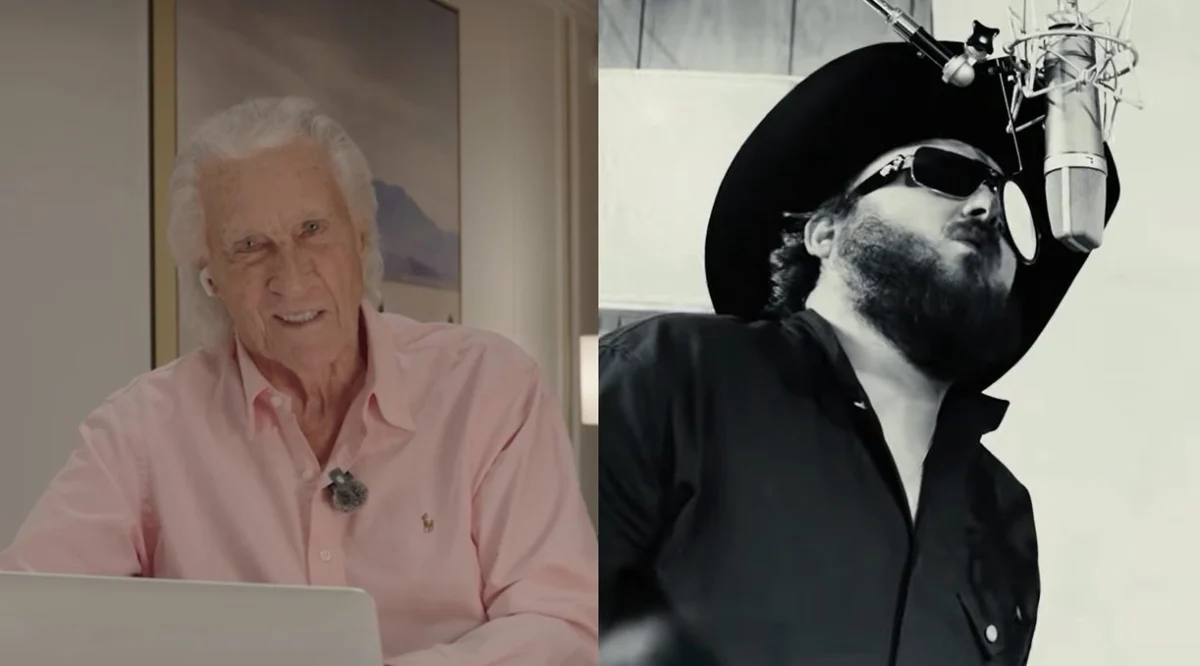
Bill Medley, the surviving founding member of the legendary vocal duo The Righteous Brothers, has officially offered his endorsement of the 2020 tribute project "The Unrighteous Brothers," a collaboration between modern country and Americana artists Paul Cauthen and Orville Peck. The endorsement came via a social media video shared by the official Righteous Brothers account, where Medley viewed and reacted to the duo’s performance of one of his most iconic hits. This public recognition bridges a generational gap between the pioneers of "blue-eyed soul" and the contemporary "outlaw" country movement, validating a project that sought to honor the vocal traditions of the 1960s while introducing them to a new audience.
The reaction from Medley serves as a significant milestone for Cauthen and Peck, who released their two-track EP under the moniker The Unrighteous Brothers during the height of the 2020 pandemic. The project featured covers of "Unchained Melody" and "You’ve Lost That Lovin’ Feeling," both of which were cornerstones of the original Righteous Brothers’ repertoire. Medley’s response was characterized by both professional respect and humor, as he noted the duo’s unique stylistic choices and their commitment to the source material without resorting to mere imitation.
The Legacy of the Righteous Brothers and the Origins of Blue-Eyed Soul
To understand the weight of Bill Medley’s endorsement, one must consider the historical impact of The Righteous Brothers. Formed in 1962, the duo consisted of Bill Medley and Bobby Hatfield. They became the definitive practitioners of "blue-eyed soul," a term used to describe white artists who performed R&B and soul music with the emotional depth typically associated with African American artists of the era.
Their 1964 hit, "You’ve Lost That Lovin’ Feeling," produced by Phil Spector using his famous "Wall of Sound" technique, is frequently cited by industry organizations like BMI as the most-played song in the history of American radio and television. Their rendition of "Unchained Melody," though originally a solo performance by Bobby Hatfield, became a global phenomenon and saw a massive resurgence in 1990 following its inclusion in the film Ghost. The Righteous Brothers were inducted into the Rock and Roll Hall of Fame in 2003, cementing their status as vocal icons.
The "Unrighteous Brothers" project was born out of a shared admiration for this vocal power. Paul Cauthen, often referred to by his nickname "Big Velvet" due to his deep, resonant baritone, and Orville Peck, the masked crooner known for his operatic range and enigmatic persona, aimed to replicate the dynamic contrast that Medley and Hatfield pioneered.
Medley’s Reaction: Analysis of the "Unrighteous" Aesthetic
In the recently released video, Medley is seen watching a performance by Cauthen and Peck. His commentary highlights several key aspects of the modern duo’s appeal. "I kind of like the way they are doing it," Medley remarked, comparing their chemistry to that of another legendary duo, Hall & Oates. This comparison is significant, as it suggests a level of sophisticated pop-soul arrangement that transcends a standard country cover.
Medley specifically praised the fact that Cauthen and Peck were "not copying the Righteous Brothers," but rather interpreting the music through their own stylistic lenses. He also expressed admiration for the visual presentation of the duo, particularly the distinctive "look" of the performers—likely a reference to Orville Peck’s signature fringed mask and Cauthen’s "Texas Swagger" attire. "I love the one guy’s look. I wish I could wear that on stage," Medley joked, acknowledging the theatricality that has helped both Cauthen and Peck build cult followings.
Perhaps most interestingly, Medley addressed the name of the collaboration. While the world knows Medley and Hatfield as "The Righteous Brothers," Medley revealed a bit of internal lore, stating, "We were the unrighteous brothers first." This playful claim to the "unrighteous" title suggests that the original duo shared the same rebellious or non-conformist spirit that Cauthen and Peck currently embody in the Nashville scene.
Chronology of the Unrighteous Brothers Collaboration
The timeline of this cross-generational connection began in early 2020. Paul Cauthen and Orville Peck, both rising stars in the alternative country world, entered Modern Electric Sound Recorders in Dallas, Texas. They worked with producer Beau Bedford and the Texas Gentlemen to record the two-track single.
- September 2020: The Unrighteous Brothers officially release "Unchained Melody" and "You’ve Lost That Lovin’ Feeling." The tracks were met with critical acclaim for their faithful yet modern production values.
- 2020-2023: The tracks become staples in the Americana community, often played during the artists’ solo live sets. Fans frequently speculated whether Medley or the Hatfield estate had heard the recordings.
- 2024: The official Righteous Brothers social media channels post Medley’s reaction video, confirming his awareness and approval of the project.
- Present: Paul Cauthen announces "The Book of Paul Tour," leveraging the momentum of this endorsement to bring his live show to a wider North American audience.
Paul Cauthen’s "The Book Of Paul" Tour and Career Trajectory
The endorsement comes at a pivotal moment for Paul Cauthen as he prepares for an extensive 2024 tour. Known for his high-energy performances and a voice that draws comparisons to Elvis Presley and Johnny Cash, Cauthen has spent the last decade carving out a niche that blends gospel, funk, and traditional country.
His upcoming "The Book Of Paul Tour" spans from July through November, covering a vast geographic range from the Midwest to the Pacific Northwest and concluding with a series of high-profile dates in his home state of Texas. The tour includes a significant stop at the Ryman Auditorium in Nashville, often referred to as the "Mother Church of Country Music," on September 11.
The tour features a rotating roster of support acts, including Alex Lambert, Ben Chapman, The Wilder Blue, and Leon Majcen, indicating Cauthen’s commitment to showcasing emerging talent within the Americana genre.
The Book Of Paul Tour Dates
- July 9 – Springfield, Missouri (Gillioz Theatre) *
- July 10 – West Peoria, Illinois (Crusens) *
- July 11 – Saint Paul, Minnesota (Minnesota Country Club) *
- July 14 – Billings, Montana (Pub Station) *
- July 16 – Jackson, Wyoming (Snow King Resort) *
- July 17 – Sandy, Utah (Sandy Amphitheater) *
- July 18 – Aspen, Colorado (Belly Up) *
- August 12 – Sturgis, South Dakota (Iron Horse Saloon)
- August 13 – Odessa, Texas (Dos Amigos)
- August 21 – Cincinnati, Ohio (Megacorp Pavilion) ^
- August 22 – Chattanooga, Tennessee (The Signal) ^
- August 23 – St. Louis, Missouri (The Hawthorn) ^
- August 25 – Milwaukee, Wisconsin (Turner Hall Ballroom) ^
- August 27 – Sioux Falls, South Dakota (The District) ^
- August 28 – Des Moines, Iowa (Val Air Ballroom) ^
- August 29 – Lincoln, Nebraska (Bourbon Theatre) ^
- September 11 – Nashville, Tennessee (Ryman Auditorium) =
- September 12 – Columbus, Ohio (Kemba Live!) ^
- September 14 – Madison, Wisconsin (Majestic Theatre) ^
- September 15 – Chicago, Illinois (Thalia Hall) ^
- September 17 – Royal Oak, Michigan (Royal Oak Music Theatre) ^
- September 18 – Indianapolis, Indiana (Hi-Fi Annex) ^
- September 19 – Pryor, Oklahoma (Born & Raised Festival)
- September 22 – Cambridge, Massachusetts (The Sinclair) ^
- September 23 – Philadelphia, Pennsylvania (Ardmore Music Hall) ^
- September 24 – New York, New York (The Bowery Ballroom)
- September 26 – Charleston, South Carolina (Hometeam BBQ)
- October 9 – Denver, Colorado (Mission Ballroom) ++
- October 10 – Grand Junction, Colorado (Mesa Theater) #
- October 12 – Boise, Idaho (Knitting Factory) #
- October 13 – Spokane, Washington (Knitting Factory) #
- October 15 – Calgary, Alberta (The Palace Theatre) #
- October 16 – Edmonton, Alberta (Midway Music Hall) #
- October 17 – Red Deer, Alberta (Bo’s Bar & Grill) #
- October 20 – Kelowna, British Columbia (Kelowna Comm. Theatre) #
- October 21 – Vancouver, British Columbia (The Commodore Ballroom) #
- October 23 – Portland, Oregon (Roseland Theater) #
- October 24 – Seattle, Washington (Showbox SoDo) #
- October 25 – Eugene, Oregon (McDonald Theatre) #
- November 3 – Tucson, Arizona (Rialto Theatre)
- November 4 – Tempe, Arizona (Marquee Theatre)
- November 6 – Pioneertown, California (Pappy & Harriet’s) %
- November 7 – Santa Ana, California (The Observatory) %
- November 8 – Paso Robles, California (BarrelHouse) %
- November 10 – Monterey, California (Golden State Theatre) %
- November 13 – Sacramento, California (Ace of Spades) %
- November 14 – San Francisco, California (Castro Theatre) %
- November 19 – Houston, Texas (White Oak Music Hall)
- November 20 – Austin, Texas (Stubbs’s WC Amphitheater)
- November 21 – Dallas, Texas (The Bomb Factory)
Support Legend:
- * Alex Lambert
- ^ Ben Chapman
- = Chaparelle / Colton Bowlin
- ++ Rootbeer Richie / Tristan Trincado
- % The Wilder Blue
- # Leon Majcen
Impact and Implications for the Music Industry
The validation of The Unrighteous Brothers by Bill Medley highlights a broader trend in the music industry where "heritage" acts are increasingly finding common ground with alternative contemporary artists. For Paul Cauthen and Orville Peck, this endorsement provides a layer of historical legitimacy that is often difficult for "indie" country artists to obtain.
From a commercial perspective, the "Unrighteous Brothers" collaboration has been a success on streaming platforms, introducing younger listeners to the songwriting of the 1960s. By covering "You’ve Lost That Lovin’ Feeling"—a song intrinsically tied to the production genius of Phil Spector—Cauthen and Peck also drew attention to the technical craft of vocal arrangement.
Furthermore, Medley’s positive reaction underscores the enduring nature of the "vocal duo" format. In an era dominated by solo artists and digital production, the focus on raw vocal chemistry—the "baritone versus tenor" dynamic—remains a powerful draw for audiences. As Cauthen embarks on his tour, the spirit of the Righteous Brothers, now officially sanctioned by Medley himself, will likely remain a central theme of his artistic identity. The connection serves as a reminder that while styles and "looks" may change, the fundamental appeal of a well-delivered, soul-infused melody remains constant across the decades.