Johan Budi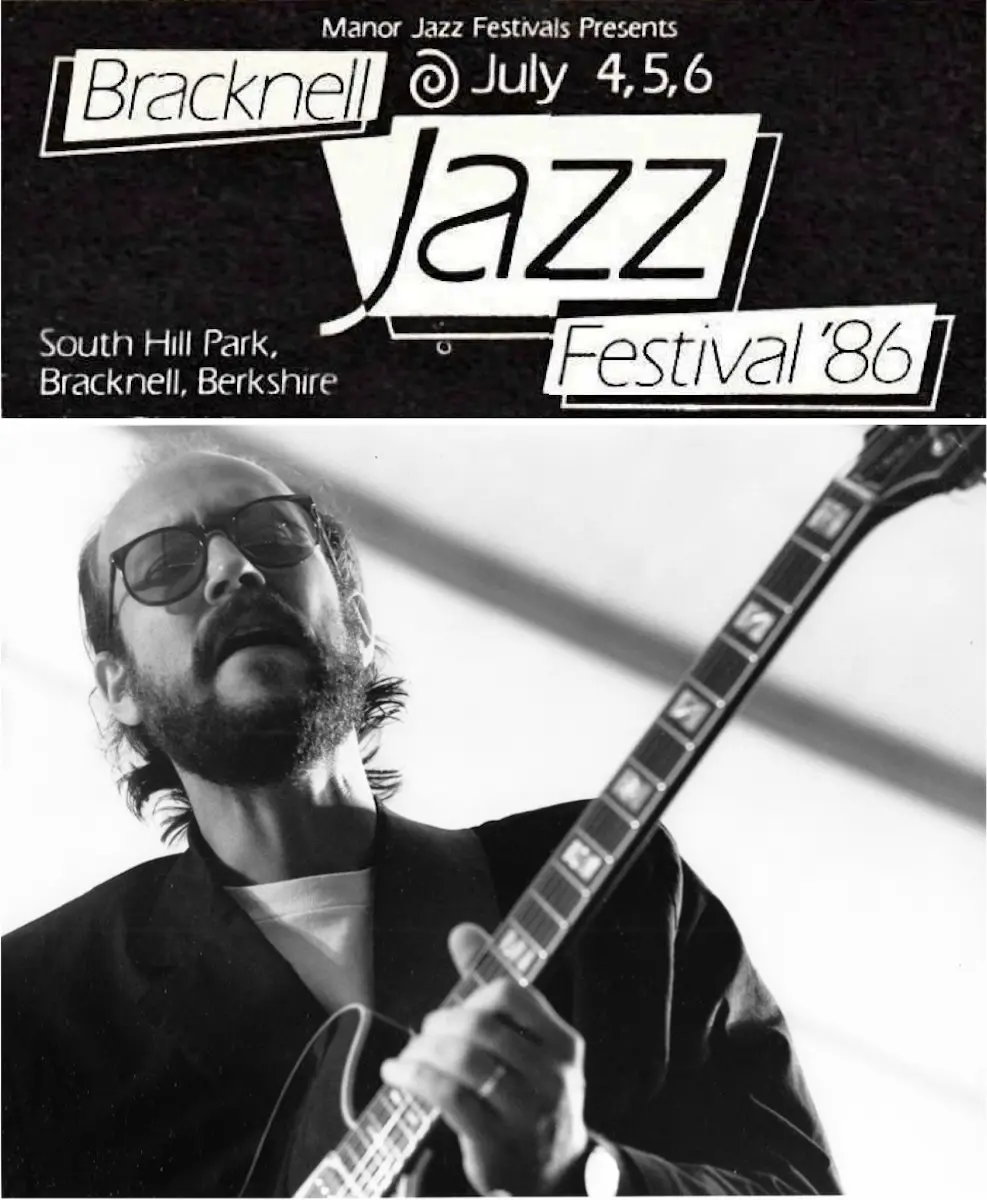
The annual Bracknell Music Festival returned for another landmark weekend, drawing jazz enthusiasts, critics, and avant-garde purists from across the United Kingdom to witness a meticulously curated celebration of improvised and contemporary music. Sponsored by Red Stripe and expertly steered through its comedic and theatrical interludes by master of ceremonies Lol Coxhill—whose omnipresent charm prompted backstage witticisms about renaming the venue "Lol Bracknell"—the three-day event offered an ambitious synthesis of big band grandeur, free jazz exploration, and contemporary fusion. Across the main marquee, the intimate Wilde Theatre, and subterranean late-night jam sessions, the festival reinforced its reputation as a vital crucible for both veteran innovators and rising global talents.
Opening Night and the Charlie Watts Big Band Spectacle
The festival commenced on Friday evening under the sponsorship of Red Stripe, beginning with a relatively subdued atmosphere in the main tent. Vocalist Carmel delivered an earnest yet somewhat lacklustre set that leaned heavily into the crossover pop-jazz field. While competent, the performance struggled to fully engage an audience that had crowded into the venue primarily in anticipation of the evening’s main attraction: the Charlie Watts Big Band.
Stepping onto the stage with an imposing 34-piece lineup, the ensemble launched directly into a thunderous rendition of Skyliner, setting a standard of awesome power and unbridled enthusiasm that would characterize the bulk of their performance. Despite the inherent logistical challenges of managing an aggregation of this unprecedented magnitude with minimal rehearsal time, instances of ragged execution were remarkably rare. The percussion section was a study in rhythmic mastery, featuring three distinguished drummers—bandleader Charlie Watts, the magnificent John Stevens, and Bill Eyden—driving the engine room. Almost every member of the massive orchestra was afforded at least one solo spotlight. While many of these individual showcases were unashamedly of the crowd-pleasing, rabble-rousing variety, they proved entirely appropriate within the celebratory context of the opening night.
The performance continued its upward trajectory as Robbins’ Nest swung with immense authority, offering the entire trombone section an opportunity to display their technical prowess. Tenor saxophonist Danny Moss emerged as a commanding giant of the horn, deploying a cavernous tone to devastating effect. Although a subsequent vocal interpretation on Love Me Or Leave Me proved largely forgettable, it was swiftly eclipsed from the audience’s collective memory by Bobby Wellins’ exquisitely sensitive reading of Midnight Sun.
The trumpet section seized ownership of Stompin’ At The Savoy, spearheaded by Dave DeFries, whose searing high-note explorations pushed toward the limits of the instrument’s register. Matters returned to a more grounded emotional plane with vocalist Gail Dorsey’s creditable, nuanced delivery of Spring Can Really Hang You Up The Most. A subsequent six-tenor saxophone battle pushed the energetic threshold back toward boiling point, complemented by Ray Warleigh’s subtle, highly effective nod to Illinois Jacquet via a tailored interpretation of Flamingo.
Although the concluding rendition of Flying Home felt mildly anticlimactic as a set-closer, it did little to diminish the overwhelmingly positive impression left upon both the capacity audience and the participating musicians. While Charlie Watts may modest-mindedly disclaim status as the most technically virtuosic instrumentalist in the ensemble he commands, he earned universal acclaim for successfully marshaling such a disparate, high-caliber roster of musicians into a singularly worthwhile enterprise. Observers noted the rare historical sight of British tenor luminaries Courtney Pine, Evan Parker, Bobby Wellins, and Danny Moss sharing a single saxophone section—a testament to the convening power of the project.
Nocturnal Explorations and the Saturday Matinee
True to the historic ethos of jazz as an art form born of sleazy, smoky subterranean late-night quarters, Bracknell integrated this nocturnal tradition into its scheduling. Both Friday and Saturday nights featured extended after-hours sessions that stretched the boundaries of conventional festival programming. These late-night binges showcased an impressive array of talent, including the meteoric saxophonist Courtney Pine, the rhythm-and-blues-flavored Team Ten, Lennie Best, Dick Morrissey, Kathy Stobart, Gail Thompson, Voice Of God III, Norma Winstone, and Jeff Clyne.
The festival proper swung into full gear on Saturday lunchtime with a diverse roster of major concerts partitioned between the large marquee and the newly established Wilde Theatre. Iain Ballamy’s Quartet opened the daytime proceedings, featuring the ubiquitous Steve Arguelles on drums, Django Bates on keyboards, and Mick Hutton on bass. The group tuned the audience into a playfully bizarre vision of modern jazz, epitomized by the angular, jagged composition Rats On Stilts—a piece whose unconventional moniker playfully nodded to the rodent-like toy dogs favored by elderly European dowagers.
In contrast, guitarists Gary Boyle and John Etheridge navigated a more traditional course. Accompanied by rhythm section mainstays Nic France on drums and Dill Katz on bass, the quartet explored a series of intricate bop and fusion standards alongside original compositions. Their repertoire maintained a distinct American orientation, highlighted by an insightful cover of John Scofield’s Looks Like Meringue, which served as an ideal thematic prelude to Scofield’s own headlining appearance later that evening.
Following this, Lol Coxhill and his cohorts presented Standard Conversions. Operating under a moniker that playfully inverted the identity of a building contractor firm, the ensemble cast a sidelong, irreverent glance at familiar jazz repertoire. True to the iconoclast spirit of the genre, the group embraced the temptation to playfully distort, parody, and deconstruct standard material.
Having fully recovered from the demanding physical exertion of the previous night’s Charlie Watts orchestral showcase, drummer John Stevens fronted his own dedicated bebop and free jazz fusion vehicle, aptly titled Freebop. Among its numerous musical highlights, the band provided an electrifying platform for a generational and stylistic dogfight between British free-jazz pioneer Evan Parker and the ascendant young tenor player Courtney Pine.
Simultaneously, within the contemplative acoustic acoustic environment of the Wilde Theatre, bassist Eberhard Weber delivered a compelling solo performance following an earlier collaborative set with Ian Carr and the Kreisler String Orchestra. Extracting lugubrious, serpentine arabesque melodies from his skeletal upright electric bass—including selections from his recent ECM album Chorus—Weber effectively functioned as a self-contained orchestra. In the complete absence of accompanying instrumentation, he executed his own intricate counterpoint, imbuing his sustained lines with a surprising degree of subtle rhythmic variation.
As afternoon transitioned toward evening, percussionist Nana Vasconcelos achieved an intuitive rhythmic mesh with legendary Ornette Coleman alumnus Ed Blackwell. They performed as part of Nu, a quintet rounded out by bassist Mark Helias, trumpeter Don Cherry, and reed player Carlos Ward. Cherry delivered a masterclass in modern brass improvisation, spinning linear motifs that deliberately bypassed historical pastiche. While Ward offered a slightly more conventional approach, his contributions functioned as a luminous, supportive foil for Cherry’s revitalized inventiveness.
Main Stage Climaxes and the Saturday Evening Debate
Festival programmers faced a subtle structural dilemma regarding Saturday’s final two acts, noting that a reversal of their performance order might have yielded a more dramatic climax. While the eclectic, high-energy jazz collective Loose Tubes remained a vibrant staple of the contemporary British scene, their special festival commission proved somewhat circumspect. It failed to generate the massive thermal and rhythmic momentum established by the preceding set delivered by the John Scofield Band.
Following Scofield’s blistering, high-intensity marathon—where stage temperatures metaphorically hovered near boiling point from the opening bar—Loose Tubes appeared comparatively subdued, causing an observable drop in audience pressure. Although the orchestra eventually revisited several of their older, reliable crowd-pleasing arrangements, industry observers began to question whether their trademark theatrical zaniness was beginning to exhaust its welcome.
Conversely, guitarist John Scofield bypassed overt showmanship entirely, relying exclusively on the sheer intensity of his musical execution to command the stage. Anchored primarily around material from his critically acclaimed Gramavision release Still Warm, the live environment granted Scofield the necessary expanse to elaborate upon his recorded statements. The set featured his trademark monstrous stylistic mutations, fusing elements of rock, funk, and rigorous bebop. Yet, the emotional nadir and zenith of the evening arrived with a sensitive, unaccompanied electric guitar reading of Georgia that brought the house down.
Sunday Programming and the Midday Revelation
Sunday’s itinerary commenced with a robust demonstration of provincial fusion courtesy of Bullitt, an 11-piece ensemble hailing from Bristol. However, the true artistic watershed of the afternoon arrived via tenor saxophonist Tommy Smith. Operating within the hard-driving, Coltrane-inspired lineage, Smith emerged as the most disruptive and compelling instrumentalist of Bracknell’s day of rest. Performing alongside the four-piece unit Forward Motion, the young saxophonist demonstrated maturity and technical authority, aggressively attacking his thematic material with a ferocious intensity that arguably warranted a much later evening billing.
Pianist Chris McGregor pursued a more inward-looking, harmonically rich pathway, framing intricate compositions with the vibrant, polyrhythmic vernacular of his native South Africa. His featured tenor player, Bheki Mseleku, established himself as an assertive, straight-ahead soloist, though a certain uniformity in his developmental phrasing left some critics desiring a broader palette of emotional textures.
Conversely, the American trio Third Kind Of Blue proved a case of unfulfilled promise. The young instrumentalists appeared overly preoccupied with replicating the exact acoustic profile of their recent studio recordings, resulting in an overreliance on drummer Ronnie Burrage’s vocal interludes. While reed player John Purcell delivered commendable passages on both soprano and tenor saxophones, the trio attained genuine sonic weight only during Purcell’s central improvisations, or when Burrage and bassist Anthony Cox anchored the rear with orthodox, driving swing.
A Triumph in the Wilde Theatre and Afternoon Transitions
While the marquee hosted the afternoon’s larger ensembles, a brilliantly balanced set in the adjacent Wilde Theatre stole the critical honors for the day. A veteran quartet featuring trumpeter Bobby Bradford, reedist Frode Gjerstad, and the formidable rhythm section of bassist Johnny Dyani and drummer John Stevens delivered a masterclass in modern chamber jazz to a near-capacity house. Dyani maintained an indefatigable rhythmic pulse throughout, and with Stevens operating in his characteristically urgent, propulsive mode, the harmonic and temporal backdrops crackled with subtle conversational tension. The frontline horns exhibited structural inventiveness rather than chaotic abstraction, with Bradford sketching elegant, spacious free-jazz patterns while Gjerstad navigated his solos without resorting to jarring harmonic fractures.
Back in the main tent, vocalist Maggie Maggie Nicols and pianist Pete Nu engaged in an extended, highly theatrical vocal-instrumental sparring match. Their performance traversed a wide stylistic spectrum, shifting fluidly between near-traditional song forms and total abstraction. They were succeeded on stage by Full Circle, a collective that demonstrated comprehensive technical competence yet occasionally lapsed into functioning as a backing ensemble for the unconstrained talents of trombonist Rick Taylor. Fortunately, Taylor was experiencing a creative peak, channeling a tremendous surge of communal atmosphere into the venue just as the festival approached its final hours.
The Festival Finale and Concluding Reflections
The official headlining slot fell to the Randy Brecker and Eliane Elias Group, rounded out by drummer Jukkis Uotila and guitar virtuoso Barry Finnerty. On paper, the ensemble appeared exceptionally well-equipped to deliver a rousing, high-energy climax to the weekend. In execution, however, the performance leaned toward the cautious. The group elected a safe, commercially accessible fusion route; Elias’s piano solos were characterized by tidy, academic precision rather than transcendent inspiration, while Brecker’s trumpet lines avoided risk in favor of technical security. Though the audience responded with warm appreciation—with only a minor contingent drifting toward the exits prior to the final chord—the set lacked the exploratory daring that defined the festival’s artistic highs.
As the house lights rose, festivalgoers reflected on a weekend that successfully captured the disparate, often contradictory currents of contemporary jazz. From the massive orchestral undertaking spearheaded by Charlie Watts to the intimate, rigorous explorations of the Wilde Theatre, the 1985 Bracknell Music Festival reaffirmed its status as an indispensable fixture on the international calendar. Through moments of brilliant combustion and occasional conservative retreat, the event once again proved that improvised music remains a vital, evolving dialogue between history and the avant-garde.