 Nana Wu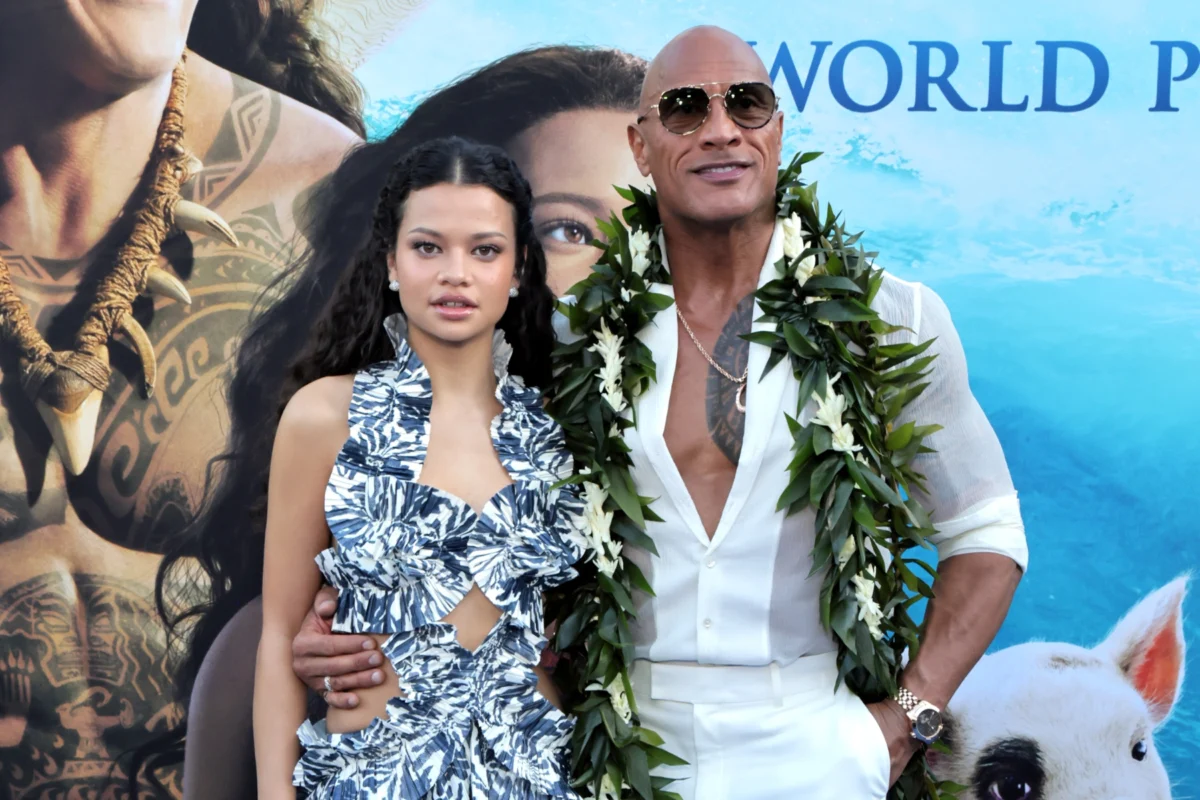
The Walt Disney Company’s highly anticipated live-action adaptation of Moana, which carried a reported production budget of $250 million, has debuted with a modest $95 million globally in its opening weekend. Despite securing the No. 1 spot at the domestic box office, the film’s initial performance has prompted industry analysts to question the sustainability of Disney’s live-action remake strategy, particularly for established and recently active franchises, and to assess the impact of a crowded family film market.
Initial Box Office Performance and Production Costs
The film, which premiered on July 7, 2026, at the Hollywood Bowl in Los Angeles, California, with stars Catherine Laga’aia and Dwayne Johnson in attendance, garnered $43 million from ticket sales across the U.S. and Canada in its first weekend, according to studio estimates released Sunday, July 12. Internationally, Moana added $52 million from 50 markets, culminating in its $95 million worldwide launch.
This opening figure stands in stark contrast to the film’s substantial production cost of $250 million. Factoring in typical marketing and distribution expenses, which can range from $125 million to $250 million for a tentpole release of this magnitude, the total investment in Moana could easily approach or exceed $400 million to $500 million. To merely break even, a film generally needs to earn at least 2.5 to 3 times its production budget at the global box office. For Moana, this suggests a break-even point somewhere between $625 million and $750 million, a considerable target given its soft opening.
Context: A Beloved Franchise with Recent Theatrical Success
The live-action Moana arrived in theaters with significant expectations, drawing from one of Disney’s most popular and financially successful modern franchises. The original 2016 animated film was a critical and commercial triumph, grossing $643.3 million worldwide and becoming a perennial favorite on Disney+. Its status as the most-watched movie on the streaming platform underscored its enduring appeal and built a strong foundation of fan loyalty.
Adding to the complexity, the live-action Moana followed closely on the heels of another successful theatrical release in the franchise. Moana 2, initially conceived as a streaming series before being reworked into a feature film, opened in November 2024 and shattered Thanksgiving box office records with an impressive $225 million debut. It went on to gross over $1 billion globally, demonstrating the immense theatrical appetite for the Moana brand just 19 months prior to the live-action adaptation’s release. This proximity between Moana 2 and the live-action Moana raises questions about market saturation and whether audiences felt compelled to revisit the story so soon.
Creative Direction and Critical Reception
Directed by Thomas Kail, the live-action Moana brought back Dwayne Johnson to reprise his role as the demigod Maui, with newcomer Catherine Laga’aia stepping into the titular role of the adventurous Polynesian princess. While Laga’aia’s performance has received some positive remarks, the film itself has faced a wave of largely dismal reviews from critics. Many have characterized it as an overly faithful, "shot-for-shot" remake of the original animated classic, lacking the creative justification for its existence.
This sentiment is reflected in its current Rotten Tomatoes score of 34%, indicating a predominantly negative critical consensus. Common criticisms cited a lack of narrative innovation, redundant storytelling, and a failure to capture the magic or urgency of the original, leading many to question the necessity of the adaptation.
Audience Response: A Mixed Signal
Despite the critical drubbing, audience reception for Moana appears to be more favorable, presenting a nuanced picture. According to PostTrak surveys, 63% of moviegoers stated they would "definitely" recommend the film to friends. The demographic breakdown showed a strong lean towards women, who comprised 66% of the audience. Parent reactions were even more positive, with 78% indicating they would recommend the film to other parents. Furthermore, the film earned a promising A- CinemaScore, a metric often considered a reliable indicator of audience satisfaction and future word-of-mouth performance.

This divergence between critical and audience reception is not uncommon for family-oriented films, where nostalgia, brand loyalty, and the sheer enjoyment of a familiar story can outweigh critical concerns about originality. The strong parent recommendations and CinemaScore suggest that while critics may have found the film redundant, the target family audience largely enjoyed the experience, which could potentially give the film "legs" in the coming weeks, helping it to sustain viewership beyond the initial rush.
The Broader Context of Disney’s Live-Action Remake Strategy
The performance of Moana adds another chapter to Disney’s extensive and often divisive strategy of adapting its animated classics into live-action features. This trend began in earnest with Cinderella (2015), followed by major successes like Beauty and the Beast (2017), The Lion King (2019), and Aladdin (2019), all of which surpassed the $1 billion mark globally. These films capitalized on potent nostalgia, sophisticated visual effects, and star power, appealing to both original fans and new generations.
However, the strategy has also encountered significant disappointments. Films like Mulan (2020), which faced release challenges and critical ambivalence, and The Little Mermaid (2023), which performed below expectations, highlighted potential vulnerabilities. Most notably, Snow White (2025) proved to be a significant financial misstep, earning only $205 million worldwide against a substantial budget, signaling a possible fatigue with the remake model.
The critical "shot-for-shot" criticism leveled against Moana is a recurring theme that has plagued several of these adaptations. While some remakes have attempted to offer fresh perspectives or expand on the original narratives, others have been accused of being too literal, failing to justify their existence beyond a commercial imperative. The mixed box office results suggest that audiences are becoming more discerning, and the mere act of converting animation to live-action may no longer be a guaranteed recipe for success.
Competitive Landscape and Market Oversaturation
One significant factor contributing to Moana‘s underwhelming debut is the highly competitive nature of the current box office, particularly within the PG-rated family film segment. As Paul Dergarabedian, head of marketplace trends for Rentrak, observed, "Families love going to the movies, but right now there are three of them. That’s a lot of competition."
Moana opened amidst two other major family-friendly contenders: Universal’s Minions & Monsters and Disney-Pixar’s Toy Story 5. Minions & Monsters secured second place with $20.5 million in its second weekend, demonstrating a modest 45% drop from its Fourth of July holiday opening and pushing its domestic total to $108.3 million. Close behind, Toy Story 5 claimed third place with $18.5 million in its fourth weekend, showcasing remarkable staying power with a running global total of $879.1 million.
This trifecta of major animated/family films presents a genuine challenge for Moana. While PG-rated films have historically outgrossed other categories in 2024 and 2025, suggesting that "family movie fatigue" isn’t the primary issue, the sheer volume of high-quality options forces families to make choices. Limited entertainment budgets and time mean that a family may only opt for one or two theatrical experiences in a given month, especially when multiple offerings directly target the same demographic. The prolonged success of Toy Story 5 indicates that audiences are still willing to spend, but they are prioritizing films that have either proven their longevity or offer a unique draw.
Implications for Disney and the Industry
The soft opening of the live-action Moana will undoubtedly lead to a deeper examination of Disney’s content strategy.
- Re-evaluation of Live-Action Remakes: While the studio has a robust slate of upcoming live-action projects, this performance, coupled with that of Snow White, may prompt a re-evaluation of which animated classics are suitable for live-action treatment and what creative approaches should be taken. Moving forward, Disney might prioritize adaptations that offer a fresh narrative perspective rather than purely faithful recreations.
- Franchise Management: The quick turnaround between Moana 2 and the live-action Moana raises questions about franchise saturation. Disney may need to space out releases more strategically to avoid diluting audience interest and to allow each installment to feel like a distinct event.
- Theatrical vs. Streaming: The original animated Moana‘s success on Disney+ highlights the increasing importance of streaming for Disney’s IP. Should future live-action remakes, particularly those that struggle to find a unique theatrical hook, be considered for direct-to-streaming releases, thereby saving on massive marketing costs and leveraging the subscriber base?
- Box Office Outlook: For the remainder of summer 2026, Moana‘s performance could slightly dampen overall box office projections if family films continue to cannibalize each other’s audiences. However, the strong holdovers for Toy Story 5 and Minions & Monsters indicate that quality and sustained appeal can still drive significant revenue.
- Talent Impact: While Dwayne Johnson’s star power remains formidable, this film’s performance suggests that even major celebrities cannot guarantee success if the underlying creative premise or market conditions are not optimal. For rising stars like Catherine Laga’aia, a debut in a financially underperforming film, despite individual praise, can be a challenging start, though her talent will likely lead to future opportunities.
Beyond Moana, the weekend’s other new releases offered a different genre appeal. The R-rated horror film Evil Dead Burn, a Warner Bros. release, opened to $13.7 million, securing fourth place and demonstrating that adult-oriented content continues to find its audience. Angel Studios’ historical drama Young Washington rounded out the top five in its second weekend, adding $6.4 million to its tally.
As Moana continues its theatrical run, its ability to leverage positive audience word-of-mouth and navigate the competitive landscape will be crucial. Its ultimate global haul will serve as a significant data point for Disney’s future strategies in an ever-evolving entertainment market where legacy IP, production costs, and audience choices are constantly reshaping the cinematic landscape.