 Nayara Elvina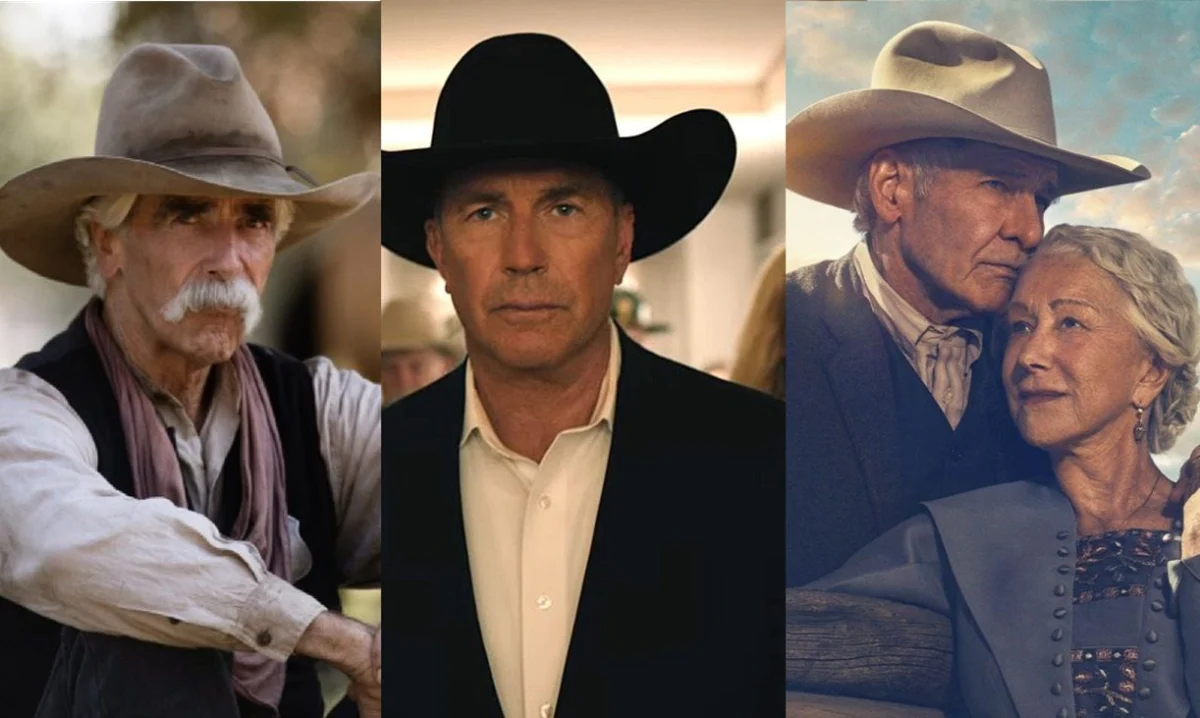
Taylor Sheridan has fundamentally altered the landscape of prestige television since the 2018 debut of Yellowstone, a series that revitalized the Western genre and established a sprawling multi-generational saga. The franchise, which began as a single-camera drama on the Paramount Network, has evolved into a cornerstone of modern media, facilitating a massive production pipeline that includes prequels, sequels, and spin-offs. This expansion has not only secured Sheridan’s position as a premier architect of American television but has also led to a historic billion-dollar deal with NBC set to begin in 2029. As the flagship series concludes its run and newer entries take center stage, an analysis of the franchise’s internal hierarchy reveals the varying degrees of critical and commercial success achieved by these interconnected narratives.
The Evolution of the Taylor Sheridan Television Portfolio
The trajectory of the Sheridan-verse is marked by a shift from niche cable programming to a dominant force in both linear broadcasting and streaming services. Following the success of Yellowstone, which introduced audiences to the Dutton family’s struggle to maintain their Montana ranch, Sheridan launched a series of high-profile projects. These include the 1883 and 1923 prequels, as well as modern-day extensions like Dutton Ranch and the CBS procedural Marshals. The sheer volume of production is unprecedented for a single creator, involving a revolving door of Academy Award-winning talent and veteran actors.
The financial implications of this expansion are significant. Industry reports indicate that the production costs for these series often exceed $10 million per episode, driven by the need for authentic locations, period-accurate costuming, and a cast of A-list performers including Harrison Ford, Helen Mirren, Kevin Costner, and Nicole Kidman. This "Sheridan Machine" has become a vital asset for Paramount Global, driving subscriptions for its streaming platform, Paramount+, while maintaining a strong presence on traditional cable.
5. Marshals: The Procedural Pivot and Network Adaptation
The lowest-ranked entry in the current Yellowstone universe is Marshals, a series that represents a significant departure from Sheridan’s typical narrative structure. Broadcast on CBS, Marshals operates as a procedural drama, a format designed for network television’s broader, more episodic requirements. Unlike the serialized, cinematic pacing of the flagship series, Marshals focuses on the law enforcement aspects of the Yellowstone lore, specifically following the career of Kayce Dutton.
Critical reception for the first season was polarized. Analysts noted that the show lacked the atmospheric depth and character-driven complexity that defined the earlier prequels. The transition to a procedural format necessitated a different writing room, leading to what some critics described as a "clunky" and "awkward" storytelling rhythm. Despite these growing pains, the series maintained respectable viewership figures, bolstered by the inclusion of country music star Riley Green, which helped bridge the gap between the show’s Western themes and its broader network audience. With a change in leadership expected for the second season, industry observers are watching to see if the series can refine its execution and better integrate into the established Dutton mythology.
4. Yellowstone: The Flagship Phenomenon and Its Finality
Yellowstone remains the most culturally significant entry in the franchise, yet it occupies the fourth position in this ranking due to the perceived volatility of its concluding chapters. Premiering in 2018, the show transformed Kevin Costner’s John Dutton into a modern television icon and consistently topped ratings charts, reaching a peak of over 12 million viewers for its Season 5 premiere. However, the series’ final run was marked by behind-the-scenes complications, most notably the highly publicized departure of Costner before the conclusion of the final season.
The narrative arc of Yellowstone was defined by its exploration of land rights, political corruption, and the internal rot of a dynastic family. While the early seasons were lauded for their gritty realism and the performances of Kelly Reilly and Cole Hauser, some critics argued that the series began to "tread water" in its later years. The absence of the patriarch in the final episodes left a void that the production sought to fill through intensified drama among the remaining siblings. Despite these hurdles, Yellowstone’s impact on the industry cannot be overstated; it proved that traditional Western themes could still command a massive, diverse audience in the digital age.
3. Dutton Ranch: A Refined Continuation in the South
Dutton Ranch serves as the spiritual and narrative successor to the flagship series, effectively functioning as a sixth season while shifting the primary setting from the mountains of Montana to the plains of South Texas. This transition allowed Sheridan to "fine-tune" the Dutton formula, focusing on the fan-favorite chemistry between Beth Dutton (Kelly Reilly) and Rip Wheeler (Cole Hauser). By isolating these characters and placing them in a new environment, the series managed to recapture the intensity of the early Yellowstone seasons while shedding some of the narrative bloat that had accumulated over the years.
The first season of Dutton Ranch was characterized by high-stakes cliffhangers and a more streamlined approach to the family’s conflicts. The move to Texas also integrated the franchise more closely with Sheridan’s own 6666 Ranch, creating a synergy between the fictional narrative and the real-world ranching culture that Sheridan champions. While some purists missed the Montana backdrop, the critical consensus suggests that Dutton Ranch has the potential to surpass its predecessor if it maintains its focused character development and avoids the production delays that plagued the original series.
2. 1883: The Cinematic Origin Story
As the first prequel in the franchise, 1883 set a high bar for television production values. Starring Tim McGraw and Faith Hill alongside veteran actor Sam Elliott, the limited series functioned as a brutal, unflinching origin story for the Dutton family. It chronicled their arduous journey from Texas to Montana, highlighting the extreme hardships of 19th-century westward expansion. The series was a critical darling, praised for its "epic and gripping" storytelling and its stunning cinematography.
The success of 1883 was instrumental in proving that the Yellowstone brand could sustain a multi-series universe. By focusing on a single, self-contained journey, Sheridan was able to deliver a more cohesive narrative than the sprawling flagship series. The performances were widely acclaimed, with Tim McGraw and Faith Hill surprising critics with their dramatic range. The show’s tragic conclusion underscored the high stakes of the Dutton legacy, providing essential context for the family’s fierce obsession with their land in the modern era.
1. 1923: The Pinnacle of the Franchise
At the top of the ranking is 1923, a series that combines massive star power with a complex historical backdrop. Starring Academy Award winners Harrison Ford and Helen Mirren, the show explores the Dutton family’s survival during the Prohibition era and the early onset of the Great Depression in Montana. 1923 is widely considered the most "perfect" iteration of Sheridan’s vision, blending period-accurate production design with powerhouse performances.
What distinguishes 1923 from other entries is its scope. The narrative expands beyond the ranch to include subplots in Africa and the harrowing realities of the American Indian boarding school system. While some viewers found the pacing deliberate, the "whirlwind of perfection" cited by many critics stems from its willingness to let tension build over time. The inclusion of actors like Brandon Sklenar and Timothy Dalton added layers of sophistication to the ensemble. 1823 represents the zenith of the franchise’s ambition, proving that the Yellowstone universe could function as high-brow historical drama while maintaining the visceral thrills of a Western.
Chronology of the Yellowstone Universe
To understand the scale of the franchise, one must look at the timeline of both the fictional events and the real-world production milestones:
- 1883 (Released 2021): The Duttons travel from Texas to Montana.
- 1923 (Released 2022): The family faces the Great Depression and Prohibition.
- Yellowstone (2018–2024): The modern-day struggle for the ranch concludes.
- Dutton Ranch (2024–Present): The continuation of the saga in Texas.
- Marshals (2025–Present): The procedural spin-off following law enforcement in the Yellowstone orbit.
- 2029: Taylor Sheridan’s exclusive deal with NBC is scheduled to commence, potentially signaling the end of the current Paramount-centric era.
Broader Impact and Industry Implications
The success of the Yellowstone universe has had profound implications for the television industry. It signaled a return to "middle-America" storytelling, a demographic that had been largely underserved by coastal-centric prestige dramas. Furthermore, Sheridan’s ability to attract top-tier cinematic talent to television projects has blurred the lines between the silver screen and the small screen even further.
The impending transition of Sheridan to NBC in 2029 suggests a major shift in the media landscape. As shows like Mayor of Kingstown, Tulsa King, and Lioness reach their natural conclusions, the industry is preparing for a new decade of Sheridan-led content. The "Yellowstone effect" has also influenced regional economies; Montana and Texas have seen significant boosts in film-related tourism and production infrastructure.
In conclusion, while the quality of individual shows within the Yellowstone universe varies, the collective achievement of the franchise is undeniable. From the procedural experiments of Marshals to the cinematic heights of 1923, Taylor Sheridan has constructed a modern mythos that continues to resonate with millions. As the franchise evolves, its ability to balance historical gravity with contemporary drama will determine its long-term legacy in the pantheon of American television.