 Aveline Kirana
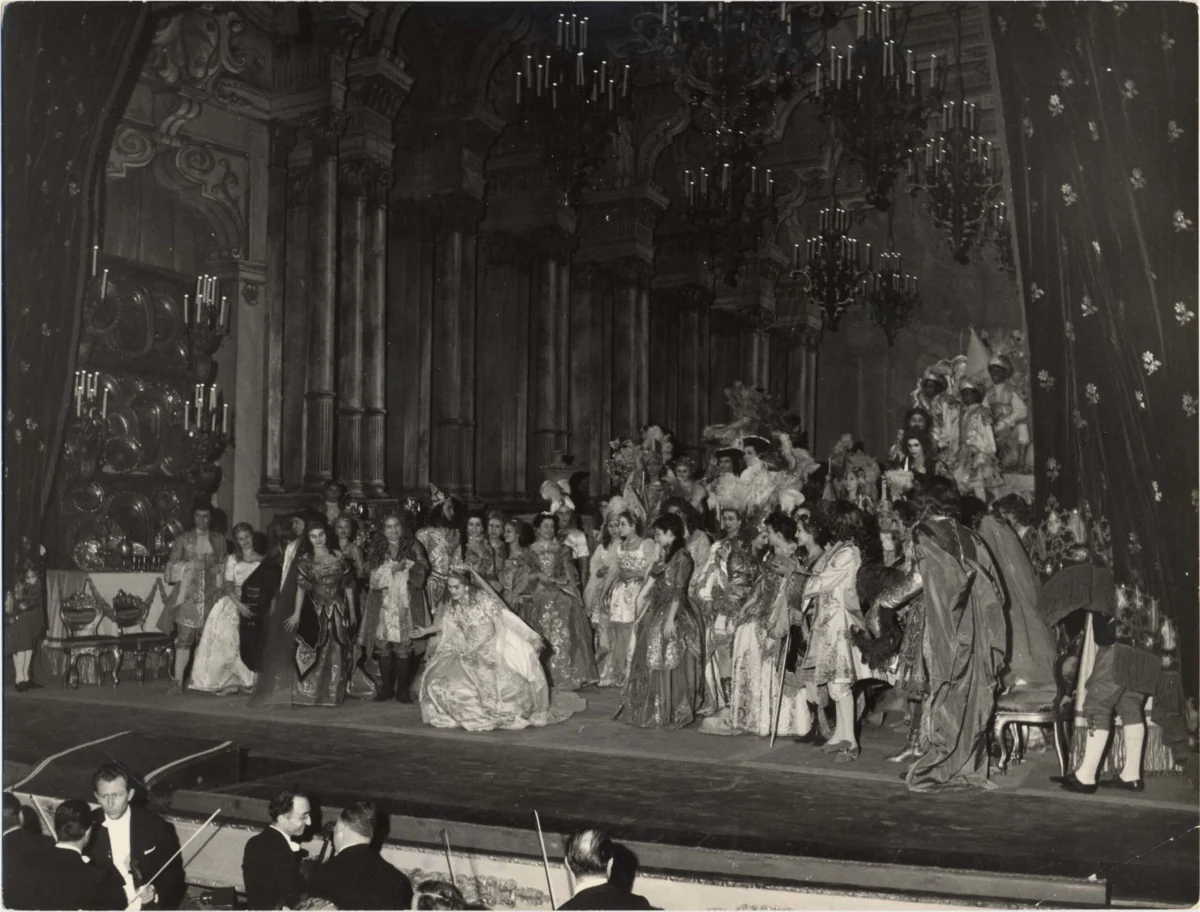
The Metropolitan Opera, the Royal Opera House, Opera Australia, and Teatro La Fenice have formally announced a collaborative tribute to celebrate the centenary of the birth of Dame Joan Sutherland, an icon widely regarded as one of the most significant coloratura sopranos in operatic history. The event, titled La Stupenda: The Voice of the Century, is scheduled to take place on October 28, 2026, at Australia House in London. This gala, organized by the Tait Memorial Trust in partnership with Opera Australia and the Metropolitan Opera, serves as a focal point for the international opera community to reflect on the legacy of a performer whose vocal prowess redefined the bel canto repertoire.
The Life and Legacy of La Stupenda
Born in Sydney, Australia, on November 7, 1926, Joan Sutherland’s trajectory from a young student in Australia to the stages of Covent Garden and the Metropolitan Opera remains a cornerstone of 20th-century music history. Her nickname, "La Stupenda," was famously bestowed upon her by the audience at La Fenice in Venice following her 1960 performance of Bellini’s Beatrice di Tenda.
Sutherland’s vocal characteristics—a seamless blend of power, agility, and a hauntingly beautiful upper register—brought back to life long-neglected works by composers such as Bellini, Donizetti, and Rossini. Her partnership with her husband, conductor Maestro Richard Bonynge AC CBE, was both personal and professional, spanning decades of performances that established the standard for stylistic integrity in the bel canto tradition. Maestro Bonynge is slated to attend the 2026 celebration as the Guest of Honor, providing a direct link to the golden era of Sutherland’s career.
Chronology of a Legendary Career
To understand the significance of the upcoming centenary, one must examine the timeline of Sutherland’s rise to global prominence:
- 1926: Born in Sydney, Australia.
- 1951: Makes her debut at the Royal Opera House in Covent Garden in Eugene Goossens’ Judith.
- 1959: Her legendary performance as Lucia in Donizetti’s Lucia di Lammermoor at Covent Garden, directed by Franco Zeffirelli, establishes her as a world-class prima donna.
- 1960: Receives the moniker "La Stupenda" following her triumph at Teatro La Fenice.
- 1961: Makes her Metropolitan Opera debut in the same role, Lucia di Lammermoor, sparking a standing ovation that lasted for minutes.
- 1975: Appointed a Dame Commander of the Order of the British Empire (DBE).
- 1990: Performs her final operatic role as Marguerite de Valois in Meyerbeer’s Les Huguenots at the Sydney Opera House.
- 2010: Passes away at her home in Switzerland at the age of 83.
Official Responses from Operatic Titans
The participation of the world’s leading opera houses underscores the enduring impact Sutherland had on the institutional standards of the art form. Peter Gelb, General Manager of the Metropolitan Opera, emphasized the weight of her contribution in a recent statement. "Few artists have made as meaningful a contribution to the Metropolitan Opera as Dame Joan Sutherland, one of the most transcendent singers of the 20th century—if not the entire history of our art form," Gelb remarked. He further highlighted the visceral experience of her live performances, noting, "I will never forget the power of her voice, the thrill of her stratospheric high notes, and the endless ovations she received."
Similarly, Alex Beard, Chief Executive of the Royal Opera House, expressed his institution’s enthusiasm for the upcoming commemoration. "The Royal Opera is delighted to join in the celebrations for the centenary of Dame Joan Sutherland’s birth. Her history with Covent Garden is inextricable from the history of our house, and it is only fitting that we honor her memory on such a significant milestone."
Artistic Program and Performance Details
The commemorative concert will be a multidisciplinary display of the repertoire that Sutherland championed. Natalie Murray Beale has been appointed to conduct the Tait Sutherland Chamber Orchestra, an ensemble featuring alumni from the prestigious Sinfonia Smith Square.
The program is curated to showcase the breadth of Sutherland’s artistic range. It will feature seminal works from the Italian bel canto school, including selections from Vincenzo Bellini and Gaetano Donizetti, as well as dramatic pieces by Giuseppe Verdi and the lyrical works of Léo Delibes. In a nod to Sutherland’s versatility—she was known to perform lighter music with the same rigor as her dramatic roles—the concert will also incorporate operetta and works by Noël Coward.
The lineup of soloists includes an array of rising and established talent: Cassandra Wright, Alasdair Kent, Duncan Rock, Emmanuel Fonoti-Fuimaono, Bella Marslen, Eden Shifroni, Lyla Levy-Jordan, Karl Huml, and Valda Wilson. Additionally, guest sopranos Ellie Neate and Soraya Mafi will appear courtesy of Opera Rara, a label that has long been associated with the revival of obscure operatic works, a cause Sutherland herself championed throughout her career.
Data-Driven Analysis of Her Vocal Influence
Sutherland’s impact is not merely anecdotal; it is statistically significant in the history of opera programming. During the 1960s and 1970s, the "Sutherland Effect" led to a measurable increase in the frequency of bel canto operas being staged in major houses globally. Before her emergence, many of these works were considered too technically demanding or historically irrelevant.
Analysis of Metropolitan Opera archives shows that between 1960 and 1990, the frequency of productions of Bellini and Donizetti operas increased by approximately 40% compared to the three decades prior. This surge in popularity can be directly attributed to Sutherland’s ability to sell out houses while singing repertoire that had been largely relegated to scholarly interest. Her ability to combine technical perfection—such as the rapid-fire coloratura runs and precise intonation—with a massive, dramatic voice, created a blueprint for the modern "dramatic coloratura" soprano.
Broader Impact and Industry Implications
The centenary celebration at Australia House is more than a nostalgic exercise; it is an affirmation of the importance of historical continuity in the arts. In an era where opera houses are increasingly focused on modern production techniques and avant-garde staging, the return to the core principles of vocal excellence—principles that Sutherland personified—remains vital.
Furthermore, the collaboration between the Metropolitan Opera, the Royal Opera, Opera Australia, and Teatro La Fenice signals a unified approach to preserving the operatic canon. By pooling resources for the Tait Memorial Trust event, these institutions are demonstrating a commitment to educating younger generations about the lineage of the art form. The inclusion of young alumni from Sinfonia Smith Square as the backing orchestra serves as a symbolic passing of the torch, ensuring that the stylistic nuances of the Sutherland era are transmitted to the next generation of orchestral musicians and vocalists.
The implications for the opera industry extend to the preservation of legacy. As many of the legendary singers of the 20th century pass from living memory, the role of archives and commemorative events becomes essential. The 2026 celebration will likely act as a catalyst for a global retrospective of her recordings, film appearances, and documented interviews, potentially leading to renewed interest in her vast discography, which includes definitive recordings of Norma, La Traviata, and Lakmé.
Conclusion
As the global opera community prepares for October 2026, the focus remains on the singular talent of Dame Joan Sutherland. Her career was defined by an uncompromising standard of excellence that challenged the boundaries of human vocal capacity. By bringing together the disparate institutions that were lucky enough to host her talent, the upcoming centenary at Australia House promises to be a definitive moment in the history of the art form, honoring a woman who did not merely sing the music of her time but fundamentally reshaped the operatic landscape for all who followed. The tribute serves as a reminder that while voices may fade, the standard of "La Stupenda" remains an indelible benchmark for all aspiring performers.