Muhammad Ibadurrohman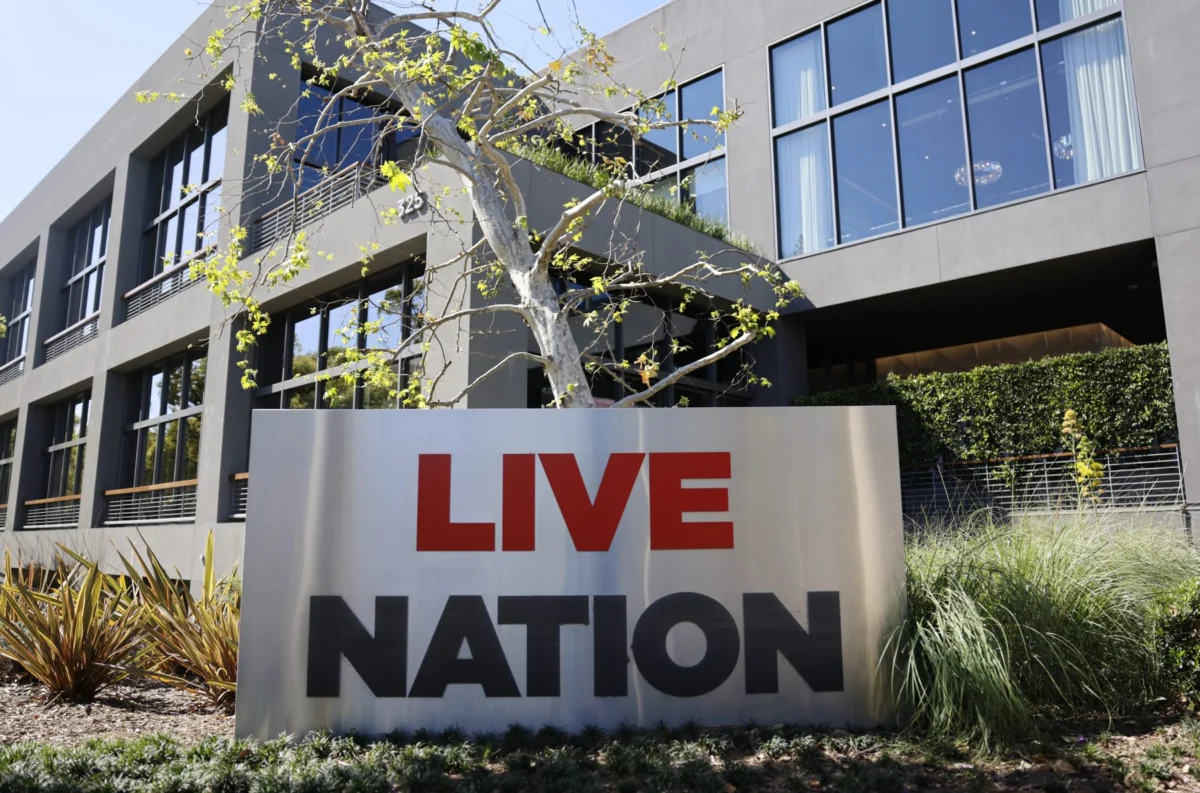
The fourth week of the landmark antitrust trial against Live Nation Entertainment, the world’s largest concert promoter and ticketing behemoth, concluded with the company mounting a robust defense against accusations of monopolistic practices. As proceedings in Manhattan federal court edged closer to potential closing arguments and jury deliberations, Live Nation presented key witnesses and dramatically accused its primary competitor, AEG, and the prosecuting states of attempting to suppress critical testimony through intimidation tactics. This week’s developments underscored the high stakes involved in a case that could fundamentally reshape the live entertainment industry.
Background to a Blockbuster Trial: The Live Nation-Ticketmaster Merger and Subsequent Scrutiny
The current antitrust battle is rooted in the controversial 2010 merger between Live Nation, then the largest concert promoter globally, and Ticketmaster, the dominant ticketing service. The U.S. Department of Justice (DOJ) initially approved the merger under specific conditions, including a consent decree designed to prevent anti-competitive behavior and ensure fair competition in the live events market. For years, critics, including artists, consumer advocacy groups, and smaller industry players, argued that the combined entity had leveraged its dual power in concert promotion and ticketing to stifle competition, control venues, and inflate ticket prices through excessive fees.
These persistent complaints culminated in the current legal challenge. The DOJ reopened its investigation into Live Nation in 2019, alleging violations of the original consent decree. While the DOJ ultimately reached a tentative settlement with Live Nation a week into the current trial – reportedly involving a $200 million payment but no structural breakup – a coalition of states, led by New York and California, deemed this agreement insufficient. These states, now numbering over three dozen, chose to press ahead with their own lawsuit, seeking a more drastic remedy: the forced divestiture of Ticketmaster from Live Nation, a move they believe is essential to restore competition and benefit consumers. The trial, which began in early March, has since seen explosive testimony from various industry figures, shedding light on the intricate and often cutthroat dynamics of the live music business.

Week Four: Live Nation’s Counter-Narrative Takes Shape
Following the conclusion of the states’ case last week, the fourth week saw Live Nation shift from defense to offense, presenting its own witnesses to dismantle the prosecution’s narrative. The company’s core argument is that its substantial market share is a testament to superior service, innovation, and efficient operations, rather than coercive or anti-competitive strategies. The defense aimed to convince the jury that venues choose Ticketmaster not out of fear of losing Live Nation tours, but because it offers the best available technology and service package.
The week’s proceedings were somewhat abbreviated, with no jury testimony scheduled on Wednesday, April 1, or Thursday, April 2, as the court addressed various legal and procedural matters behind closed doors. Despite the shorter schedule, the testimonies delivered were highly strategic, directly confronting earlier claims made by the prosecution. The trial is expected to resume on Monday, April 6, with the possibility of closing statements and the commencement of jury deliberations occurring within the following week, signaling the approaching climax of this significant legal battle.
Key Defense Witnesses Challenge Allegations of Coercion
A central tenet of the states’ case has been the allegation that Live Nation leverages its unparalleled roster of artists and its power in concert promotion to strong-arm venues into using Ticketmaster. This week, Live Nation brought forward witnesses designed to directly refute these claims, painting a picture of competitive advantage rather than illegal strong-arming.

One of the most anticipated testimonies came from Laurie Jacoby, the CEO of Brooklyn Sports & Entertainment, which oversees the Barclays Center. Her appearance was a direct counterpoint to earlier testimony from the arena’s former boss, Brett Yormark, who had claimed Live Nation threatened to withhold major artists if Barclays switched from Ticketmaster to rival SeatGeek. Jacoby offered a different perspective, detailing a period when SeatGeek served as the venue’s ticketing partner and encountered significant operational issues. She cited specific problems during on-sales for popular artists like The Strokes and My Chemical Romance, which reportedly led to difficulties in attracting and retaining major acts. According to Jacoby, these service deficiencies, not threats from Live Nation, were the primary drivers behind Barclays Center’s decision to revert to Ticketmaster. Her testimony aimed to demonstrate that venues choose Ticketmaster based on performance and reliability, not coercion.
Another crucial witness for Live Nation was Jim Van Stone, President of Business Operations at Monumental Sports & Entertainment. Monumental Sports owns the NHL’s Washington Capitals, the NBA’s Washington Wizards, and the Capital One Arena in Washington D.C. Van Stone directly contradicted earlier testimony from an executive at the NHL’s Minnesota Wild, who had expressed fears of "catastrophic" consequences, including the loss of Live Nation concerts, if his venue abandoned Ticketmaster. Van Stone, instead, characterized Ticketmaster as a "great business partner," praising their professionalism and treatment of partners. He emphatically stated, "Ticketmaster… has met all our needs. We believe in the fact that an exclusive relationship [with Ticketmaster] is better for us." This testimony was intended to show that exclusivity agreements are often mutually beneficial and a preferred business arrangement for some venues, not necessarily a coercive tool.
The defense also presented Eric Budish, a University of Chicago professor and an expert economic witness. Budish’s testimony focused on the competitive dynamics of the ticketing market, arguing that Ticketmaster’s market position is a result of genuine competitive advantages, including superior technology, extensive data analytics, and a vast network of venues and artists. However, during cross-examination, his credibility was challenged when he admitted to having received over $1 million from Live Nation for his expert services. While common for expert witnesses to be compensated, the substantial sum could potentially be used by the prosecution to suggest a bias in his analysis, even if his findings are based on sound economic principles.
Allegations of Witness Intimidation: A Dramatic Turn
Perhaps the most dramatic development of Week Four unfolded outside the direct jury testimony, in a scathing legal filing submitted by Live Nation to the presiding judge. On Thursday, Live Nation’s legal team filed a motion demanding sanctions (judicial punishment) against the states, alleging that AEG – Live Nation’s biggest competitor and a major player in the live events industry – had secretly provided the states with a "dossier of personal information" about a former AEG employee. Live Nation claimed that the states then exploited this information to intimidate the individual and prevent him from testifying in the trial.

Live Nation’s lawyers asserted that this was a "blatant attempt to dissuade a witness from providing truthful testimony through intimidation," branding it "intolerable." The company requested that the judge inform the jurors that AEG and the states had been "closely coordinating" and that they had actively tried to suppress testimony indicating that AEG’s own ticketing system, AXS, was "never of comparable quality to Ticketmaster."
This accusation, if proven, would be a significant blow to the prosecution’s credibility and could sway jury sentiment. Live Nation argued that the states and AEG feared this former employee’s testimony because it would directly undermine a core tenet of the plaintiffs’ case: that alternative ticketing services are viable and that Live Nation’s dominance is artificially maintained. If a key competitor’s system (AXS) was perceived as inferior, it would lend credence to Live Nation’s defense that its market share is earned through product superiority. The judge’s decision on this motion will be closely watched, as granting sanctions could send a powerful message to the jury about the conduct of the prosecuting parties.
Broader Implications and the Future of Live Entertainment
The legal battle against Live Nation is not merely a corporate dispute; it carries profound implications for the entire live entertainment ecosystem. The outcome could dictate everything from ticket prices and service fees for consumers to the autonomy of venues and the economic viability of artists.
If the states succeed in breaking up Live Nation and Ticketmaster, proponents argue it could foster greater competition among ticketing platforms. This, in turn, might lead to lower service fees, more transparent pricing, and greater choice for venues and artists. It could also empower smaller promoters and venues by reducing the perceived leverage of a single dominant entity. Such a structural change would be unprecedented in the modern live music industry, which has seen increasing consolidation over the past two decades.

Conversely, if Live Nation prevails, it would solidify its current business model and potentially embolden other large corporations facing antitrust scrutiny. Live Nation’s defense posits that its integrated model – combining promotion, venue management, and ticketing – creates efficiencies and better experiences for fans and artists, facilitating complex global tours and stadium-filling events. They argue that a breakup would disrupt these efficiencies, potentially leading to higher costs or less seamless event production.
The trial also highlights ongoing public frustration with the live ticketing experience. The "Taylor Swift effect" – the widespread outrage over the Ticketmaster meltdown during the Eras Tour pre-sale in 2022 – significantly amplified public and political pressure on Live Nation. While not directly part of the current trial’s specific allegations, this public sentiment undoubtedly looms large over the proceedings, underscoring the broader desire for a more equitable and functional ticketing system.
As the trial moves into its final stages, the jury will be tasked with navigating complex economic arguments, conflicting testimonies, and now, serious allegations of impropriety. Their decision will not only determine the fate of Live Nation and Ticketmaster but also set a significant precedent for how antitrust laws are applied in rapidly evolving digital and entertainment markets. The coming week promises to bring this high-stakes legal drama to its long-awaited conclusion, with ramifications that will reverberate across the music industry for years to come.