Muhammad Ibadurrohman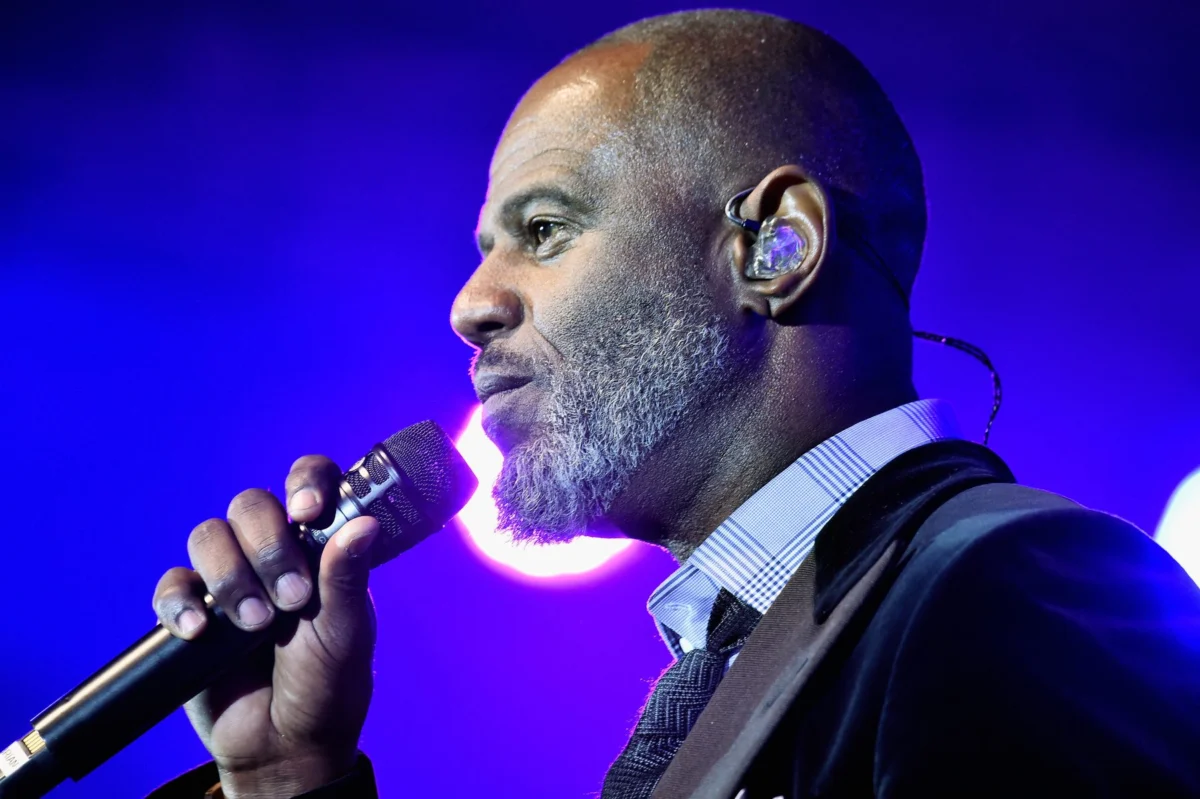
Radio broadcasting giant Urban One has formally requested a federal court in Raleigh, North Carolina, to dismiss the defamation lawsuit filed by Grammy-nominated R&B singer Brian McKnight. The motion, filed on Friday, April 3, argues that McKnight’s claims stemming from broadcasts on The Rickey Smiley Morning Show and a local North Carolina station lack legal viability and should be thrown out before the discovery phase or a full trial. This development marks a critical juncture in the ongoing legal battle that has drawn attention to the complex interplay between celebrity family disputes, media responsibility, and defamation law.
The Genesis of the Legal Dispute: Family Matters and Public Platforms
The lawsuit, initiated by Brian McKnight in January of the preceding year, centers on two specific broadcasts from 2025 on Urban One-affiliated stations. These programs allegedly contained defamatory statements concerning McKnight’s character and his interactions with his former family members. The R&B crooner, celebrated for his soulful ballads and impressive vocal range throughout a career spanning decades with hits like "Anytime" and "Back at One," finds himself entangled in a public and legal confrontation with his ex-wife and son.
McKnight’s public image, largely built on themes of love and sophisticated romance, has recently faced challenges from within his own family. His marriage to Julie McKnight, which lasted from 1990 to 2003, produced children whose narratives have now become central to this legal dispute. Following their divorce, Julie McKnight released a book titled Mama Bear: Beautifully Blended in early 2025. It is within the context of promoting this book that the initial contentious statements, forming the basis of McKnight’s legal action, first emerged. The book itself reportedly contains passages that characterize the singer as emotionally abusive and neglectful towards their children, allegations that Brian McKnight vehemently denies.
A Detailed Timeline of Alleged Defamatory Broadcasts
The core of McKnight’s defamation claims against Urban One stems from two distinct radio segments:
-
January 2025 – FOXY 107.1 (North Carolina): Julie McKnight appeared on the North Carolina-based satellite station FOXY 107.1 for an interview with host Karen Clark, primarily to promote her newly published book. During this interview, Julie McKnight made several allegations that Brian McKnight contends are defamatory. Specifically, she asserted that Brian was "negative" during their late son Niko’s cancer treatment. Furthermore, she stated that she and her children had "stepped away" from the singer due to his "harmful behavior." These statements, made on a public platform, quickly circulated and became a point of contention for Brian McKnight, who views them as direct attacks on his character and parental conduct during a profoundly difficult period for his family. The tragic loss of their son Niko to cancer adds a deeply sensitive layer to these public accusations, intensifying the emotional stakes of the legal battle.
-
December 2025 – The Rickey Smiley Morning Show: Later in the year, The Rickey Smiley Morning Show, a nationally syndicated program broadcast on another Urban One affiliate, featured an excerpted rebroadcast of an interview given by McKnight’s son, Brian McKnight Jr. In the clips aired, Brian McKnight Jr. made a poignant and deeply personal accusation, claiming that his father "refused to tell Niko he loved him" before Niko succumbed to his battle with cancer. This particular statement, amplified by a prominent radio show, struck at the heart of McKnight’s paternal image and his relationship with his children, especially in the context of a child’s terminal illness.
These two broadcasts, according to Brian McKnight’s legal team, constituted defamation by Urban One through its affiliates, causing significant damage to his reputation and public standing.

Urban One’s Motion to Dismiss: Legal Strategy and Arguments
In its comprehensive motion to dismiss, Urban One, represented by attorney Lauren Nichols of the firm Troutman Pepper Locke, outlined several key arguments designed to undermine the singer’s defamation claims. The network’s defense hinges on established legal principles concerning media liability, the distinction between fact and opinion, and the high legal bar for public figures in defamation cases.
-
No Liability for Third-Party Statements: A primary argument from Urban One is that it cannot be held legally responsible for statements made by individuals who are not employees or agents of the network. In the case of Julie McKnight’s interview on FOXY 107.1, Urban One contends that she was merely a guest promoting her book. Therefore, any statements she made, regardless of their content, fall outside the scope of Urban One’s direct liability. This argument relies on the principle that media outlets generally aren’t guarantors of the veracity of every statement uttered by a guest, provided they haven’t actively endorsed or fabricated the content.
-
Opinion vs. Fact in Host’s Remarks: Regarding the statements made by FOXY 107.1 host Karen Clark during the interview, Urban One asserts that they do not rise to the level of defamation. Lauren Nichols states in the motion: "The Ms. Clark statements identified by plaintiff cannot reasonably be interpreted as stating actual facts about plaintiff. The alleged ‘defamatory statements’ are not truly factual statements — most are merely questions. And any statement not solely a question, is at most an expression of opinion." Defamation law typically requires that a statement be a false assertion of fact, not merely an opinion, a question, or hyperbole, to be actionable. Legal precedent has long differentiated between subjective viewpoints and verifiable facts, with only the latter generally forming the basis for a defamation claim.
-
Lack of Specificity for Rickey Smiley Broadcast: Urban One also challenges McKnight’s claims regarding The Rickey Smiley Morning Show broadcast. The motion asserts that McKnight "does not identify any specific statements or content from this video that plaintiff asserts are defamatory." This argument highlights a procedural requirement in defamation lawsuits: plaintiffs must clearly and precisely identify the exact statements they allege to be false and damaging. A vague or generalized complaint about a broadcast, without pinpointing specific defamatory remarks, can be grounds for dismissal.
-
The "Actual Malice" Standard for Public Figures: Perhaps the most formidable hurdle for Brian McKnight is his status as a public figure. As a widely recognized entertainer, he must meet a higher burden of proof to succeed in a defamation lawsuit. This standard, known as "actual malice," was established by the U.S. Supreme Court in New York Times Co. v. Sullivan (1964). To prove actual malice, a public figure must demonstrate that the defendant published the defamatory statement either with knowledge that it was false or with reckless disregard of whether it was false or not. This is a significantly more difficult standard to meet than the "negligence" standard applied to private figures.
Urban One’s motion explicitly addresses this, stating: "Even assuming the statements made by Urban One were indeed statements of ‘actual fact,’ not opinion/hyperbole, and could be defamatory (they cannot), plaintiff does not allege any facts that Urban One knew, or should have known, the statements were false or that any statements were made with a reckless disregard for the truth." The network argues that McKnight has failed to provide any evidence or even plausible allegations that Urban One or its employees acted with this elevated level of culpability. The mere broadcasting of a third-party interview or guest’s opinion, without evidence of deliberate falsehood or extreme recklessness, typically does not satisfy the actual malice standard.
Brian McKnight’s Broader Legal Campaign
The lawsuit against Urban One is not an isolated incident but rather one component of a broader legal campaign initiated by Brian McKnight to defend his reputation. The article refers to this as a "defamation lawsuit spree," indicating a concerted effort to combat various public accusations.
-
Lawsuit Against Julie McKnight: Concurrently with the Urban One case, Brian McKnight has pending libel claims directly against his ex-wife, Julie McKnight. These claims target specific passages within her book, Mama Bear: Beautifully Blended, which he alleges contain false and damaging characterizations of him as emotionally abusive and neglectful towards their children. This direct legal action against his ex-wife underscores the deeply personal nature of these disputes and McKnight’s determination to clear his name against family-originated allegations.

-
Lawsuit Against Jaguar Wright: In the preceding year, McKnight also filed a lawsuit against singer/songwriter Jaguar Wright. Wright had garnered significant attention through a series of Instagram videos in which she made a slew of serious allegations against McKnight. These included claims that he was physically abusive to Julie McKnight during their marriage and also engaged in abusive behavior towards sex workers. Brian McKnight has consistently and emphatically denied all claims of mental or physical abuse made against him by any party, signaling a firm stance against what he perceives as a concerted effort to tarnish his reputation. These multiple lawsuits illustrate the challenges public figures face in controlling their narrative, especially when personal and family matters spill into the public domain through various media channels.
Implications for Media Responsibility and Public Figures
The Urban One motion to dismiss Brian McKnight’s lawsuit highlights several critical implications for both media organizations and public figures in the digital age.
-
Media Gatekeeping and Content Moderation: For radio conglomerates like Urban One, which operates a vast network of stations and syndicated shows, this case underscores the ongoing challenge of content moderation and the legal risks associated with live interviews and the rebroadcasting of third-party content. While media outlets generally enjoy broad First Amendment protections, they are not immune to defamation claims. The line between facilitating public discourse and publishing defamatory material can be thin, especially when dealing with emotionally charged personal narratives. The outcome of this case could influence how radio networks vet guests, moderate discussions, and curate content, particularly when it involves sensitive family disputes of public figures.
-
The Burden on Public Figures: The "actual malice" standard remains a significant barrier for public figures seeking to win defamation lawsuits. While designed to protect robust public debate, it often means that celebrities and politicians must tolerate a higher degree of criticism, even if it is harsh or arguably unfair. McKnight’s struggle to meet this standard, as argued by Urban One, exemplifies the difficulty public figures face in legally challenging statements made about them, even when they feel profoundly wronged. This dynamic often leads public figures to pursue other avenues for reputation management, such as public statements or social media engagement, rather than relying solely on the courts.
-
The Role of Social Media in Amplifying Disputes: The involvement of platforms like Instagram (in the Jaguar Wright case) alongside traditional radio broadcasts demonstrates how personal disputes are increasingly amplified across diverse media landscapes. What might once have been confined to private circles or less accessible media can now rapidly go viral, reaching millions. This interconnectedness complicates defamation claims, as the origin, spread, and perceived impact of alleged defamatory statements become harder to control and litigate.
-
The Cost of Litigation and Reputation Management: Defamation lawsuits are notoriously expensive and protracted, involving extensive discovery, expert testimony, and significant legal fees. For Brian McKnight, this multi-front legal battle represents a substantial investment of time, resources, and emotional energy, all while potentially distracting from his artistic career. For Urban One, defending against such a high-profile lawsuit, even if ultimately successful, incurs considerable costs and potential reputational damage. The strategic decision by Urban One to seek outright dismissal underscores their confidence in the legal weakness of McKnight’s claims and their desire to avoid the costs and uncertainties of a full trial.
-
Evolving Legal Landscape: As family dynamics become more openly discussed in public forums and traditional media adapts to the digital age, the interpretation and application of defamation law continue to evolve. Cases like McKnight’s provide important precedents and test the boundaries of existing legal frameworks, particularly concerning the interplay between personal allegations, celebrity status, and media responsibility.
Urban One is urging a federal judge in Raleigh, N.C., to toss the lawsuit outright, effectively ending the legal challenge before it progresses to the evidence discovery phase or a full trial. Brian McKnight’s attorney did not immediately return a request for comment on the motion to dismiss. The court’s decision on this motion will be a pivotal moment, potentially setting a precedent for similar cases involving public figures and media organizations navigating the complexities of personal narratives in the public sphere.