Lana Akmaluna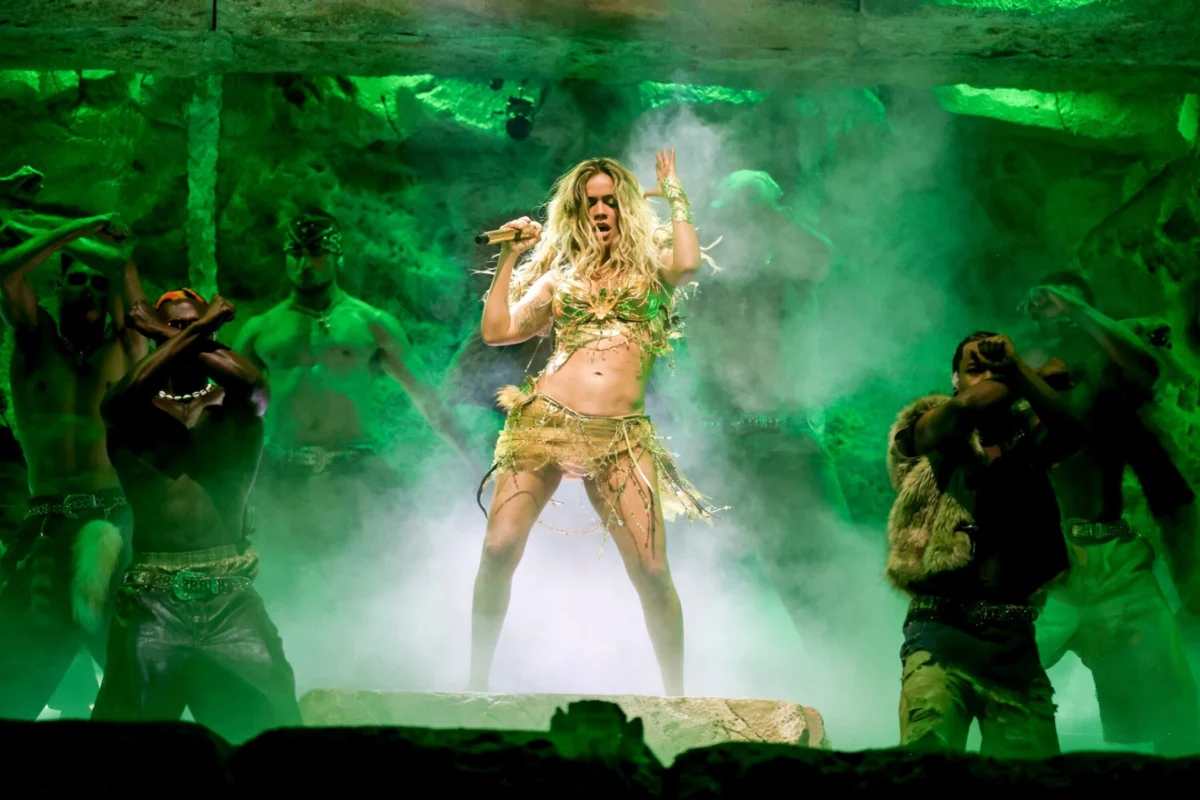
On Sunday, April 12, 2026, the landscape of the American music festival circuit underwent a seismic shift as the Colombian global superstar Karol G took the stage at the Empire Polo Club in Indio, California. Her appearance marked a monumental milestone in the 27-year history of the Coachella Valley Music and Arts Festival, as she became the first Latin woman to serve as a primary headliner. The performance was not merely a concert but a high-concept, maximalist production that served as a testament to the global dominance of reggaeton and Latin pop, as well as a poignant tribute to the cultural heritage of the Spanish-speaking world.
The Technical Ambition and the Dramatic Prelude
The evening was characterized by a sense of high-stakes anticipation, though the start was not without its logistical hurdles. Scheduled for a 9:55 p.m. start time on the main Coachella Stage, the set was delayed by approximately 30 minutes. This pause was necessitated by the sheer complexity of the stage design—a massive, two-story structure resembling a prehistoric or volcanic cave. As tens of thousands of fans watched from the field, a crew of over 15 technicians worked with visible urgency to finalize the assembly.
The construction involved the precise placement of a secondary staircase and the securing of large, synthetic boulders that formed the "cave" aesthetic. By 10:25 p.m., the structure was deemed secure, and the show rumbled to life. The delay, rather than dampening the mood, seemed to heighten the tension, making the eventual opening more explosive. The performance began with a cinematic prologue displayed across the towering LED screens. The visual narrative told the story of a young girl without a voice who, through struggle and perseverance, transformed into a powerful woman. This thematic introduction set the stage for a show centered on feminine empowerment, vulnerability, and eventual triumph.
A Chronology of the Performance: From "Latina Forever" to "Oki Doki"
The musical journey commenced with the 2025 anthem "Latina Forever," a track that has come to define Karol G’s recent era. The choreography was immediately striking; roughly 20 dancers, dressed in minimalist gold fabric, sequins, and fur accents, created a human shield around the singer. As they arced back in a synchronized reveal, Karol G appeared, commanding the attention of the massive crowd and the millions watching via the global livestream.
Following the opening number, the energy transitioned into "Un Gatito Me Llamó," a hit single from the previous summer. Karol G delivered the track from the elevated second story of the cave structure, utilizing the height to emphasize her status as the night’s focal point. She then descended to the main level to join a troupe of male dancers for a high-energy rendition of her 2023 hit "Oki Doki." The setlist was carefully curated to bridge her early career successes with her most recent chart-topping releases, demonstrating a range that spanned from hard-hitting reggaeton to melodic pop-infused ballads.
Cultural Representation and Artistic Vision
Beyond the music, the performance was a meticulously crafted celebration of Latin culture. Throughout the set, Karol G incorporated traditional elements that signaled a deep respect for her roots. This included the integration of mariachi instrumentation and the visual display of flags from various South and Central American nations, many of which were echoed by fans waving physical flags in the audience.
The production design, described by critics as "dazzling and maximalist," utilized the cave set as a metaphor for resilience and the "Bichota" spirit—a term Karol G has popularized to represent a strong, independent woman. The use of gold and earthy tones in the costuming and lighting further reinforced this theme of natural power and refined success.
A Historic Address to the Audience
One of the most significant moments of the night occurred when Karol G paused the music to address the crowd. Breaking from her primarily Spanish-language performance, she spoke in English to underscore the gravity of the occasion.
"Myself, I am Carolina Giraldo from Medellín, Colombia. And today, I am the first Latina woman to headline Coachella," she stated, her voice carrying across the desert air. While expressing her happiness and pride, she also offered a pointed critique of the time it took for the festival to reach this milestone. "It feels… late," she admitted, noting that after 27 years of the festival’s existence, the absence of a Latina headliner was a gap that needed to be acknowledged.
She was careful to frame her achievement not as a solitary victory but as a win for an entire community. She paid homage to the legendary Latin artists who preceded her, noting that their work paved the way for her to occupy the headlining slot. "This is not just about me. This is about my Latina community, this is about my people," she added, specifically dedicating the moment to Latinos who have faced struggles in the United States in recent years.
Supporting Data: The Rise of Latin Music on the Global Stage
The significance of Karol G’s Coachella headlining set is supported by the explosive growth of Latin music in the global market. According to industry data from Luminate and IFPI, Latin music has consistently been one of the fastest-growing genres in the United States and globally over the last five years. In 2023 and 2024, Latin music revenues in the U.S. surpassed $1 billion for the first time, driven largely by streaming platforms.
Karol G herself has been a primary engine of this growth. Her 2023 album, Mañana Será Bonito, was the first all-Spanish language album by a female artist to reach number one on the Billboard 200. Furthermore, her "Mañana Será Bonito" stadium tour in 2024 broke records for the highest-grossing tour by a Latin female artist in history. These figures provided the commercial justification for Coachella’s organizers, Goldenvoice, to finally place a Latin woman in the festival’s most prestigious slot.
Comparison and Context: The Evolution of Coachella Headliners
The 2026 performance by Karol G followed in the footsteps of Bad Bunny, who became the first Latin solo artist to headline the festival in 2023. This progression signals a significant shift in the festival’s booking strategy, moving away from a traditional reliance on Anglo-centric rock and indie acts toward a more diversified, globalized lineup.
The comparison to Bad Bunny is particularly apt, as both artists have utilized their platform to bring specific cultural narratives to the forefront. While Bad Bunny’s set and his subsequent Super Bowl appearance focused heavily on the Puerto Rican experience, Karol G’s set brought a distinctly Colombian and pan-Latin perspective to the stage. Both artists have successfully proven that language is no longer a barrier to headlining major Western festivals, as the audience for these events has become increasingly international.
Industry Reaction and Future Implications
The reaction from the music industry has been overwhelmingly positive, with many viewing Karol G’s set as a turning point for female representation in the genre. Managers, promoters, and fellow artists have taken to social media to highlight the "glass ceiling" that was shattered during the Sunday night performance.
Industry analysts suggest that the success of this headlining set will likely lead to an increase in Latin artists being booked for top-tier slots at other major festivals like Lollapalooza, Glastonbury, and Tomorrowland. The "Karol G effect" is expected to encourage festivals to look beyond traditional markets and recognize the massive ticket-selling power of Latin superstars.
Furthermore, the Coachella livestream, which was broadcast to dozens of countries, ensured that this moment reached a global audience. Early metrics indicate that the Sunday night stream was one of the most-watched in the festival’s history, particularly in markets across Latin America and Europe. This digital reach further solidifies the argument that Latin music is no longer a "niche" or "regional" genre but a core pillar of the modern global music industry.
Final Reflections on a Landmark Evening
As the final notes of the set echoed across the Coachella Valley, the impact of the evening was clear. Karol G did more than just deliver a high-energy pop show; she validated the cultural and commercial power of Latinas in the music industry. Her performance was a blend of technical spectacle, vocal prowess, and deep-seated cultural pride.
By acknowledging the lateness of the milestone while celebrating the progress it represented, Karol G positioned herself as both a revolutionary and a bridge-builder. As the festival closed its first weekend of 2026, the conversation remained centered on the "Bichota" from Medellín who redefined what a Coachella headliner looks like, sounds like, and represents. The 27-year wait for a Latin woman to lead the bill ended not with a whisper, but with a roar that will likely influence the festival circuit for years to come.