Jia Lissa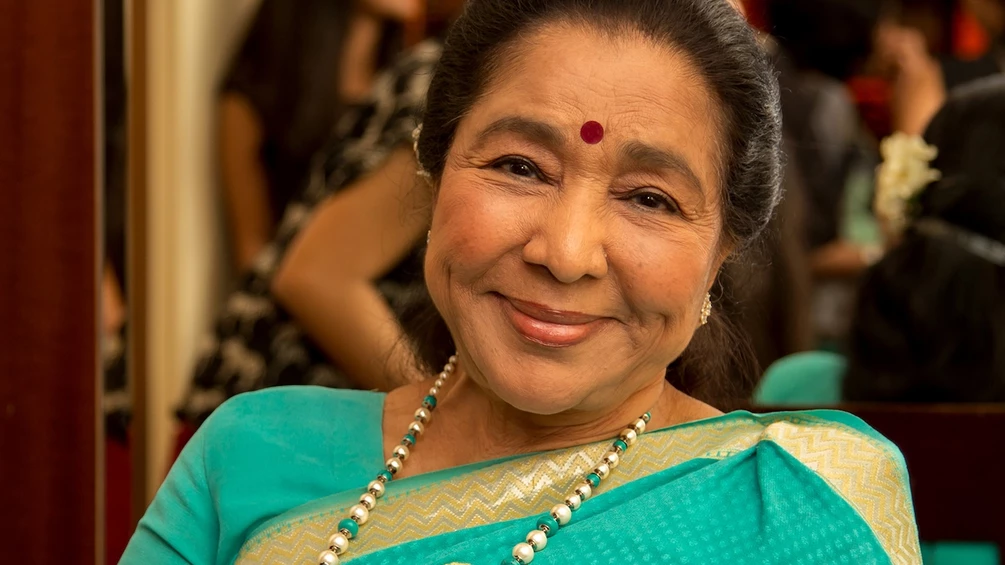
Mumbai, India – Asha Bhosle, the legendary Indian playback singer whose illustrious career spanned over eight decades and defined the sound of Bollywood for generations, has passed away at the age of 92. Bhosle, affectionately known as the "Queen of Playback," died in a Mumbai hospital on Sunday, April 12th, after being admitted for exhaustion and a chest infection. Her son, Anand Bhosle, confirmed her passing to The Times of India, citing multiple organ failure as the cause of death, bringing an end to an unparalleled musical journey that touched countless lives worldwide.
A Life Dedicated to Melody: Chronology of Her Final Days and Public Tributes
The news of Asha Bhosle’s demise reverberated across India and the global music community, prompting an immediate outpouring of grief and tributes. Her final days saw her admitted to a Mumbai hospital, where she battled health complications stemming from exhaustion and a chest infection. Despite the medical efforts, she succumbed to multiple organ failure on Sunday, April 12th.
Following her passing, arrangements were swiftly made for public and state honours. On Monday, April 13th, fans, celebrities, and dignitaries were invited by her son, Anand Bhosle, to pay their final respects at her Mumbai residence. The solemn occasion allowed a personal farewell to a woman who had been a constant, vibrant presence in their lives through her music. Later that evening, Asha Bhosle was accorded full state honours, a testament to her immense contribution to Indian arts and culture. Her last rites were performed at Shivaji Park in Mumbai, a significant public space often associated with major cultural and political events, signifying the nation’s profound respect for its departed icon. The solemn ceremony, attended by family, friends, and a multitude of well-wishers, marked the dignified conclusion of a life lived in service of art and melody. Her son, Anand, had earlier requested fans to avoid large gatherings at Shivaji Park, highlighting the family’s desire for a respectful and peaceful observance amidst the public outpouring of grief.
From Humble Beginnings to Global Stardom: The Journey of Ashalata Dinanath Mangeshkar
Born Ashalata Dinanath Mangeshkar in 1933 in the small village of Goar in Sangli, Maharashtra, Asha Bhosle hailed from a family steeped in classical Indian music and theatre. Her father, Dinanath Mangeshkar, was a renowned classical singer and theatre actor, a towering figure whose influence laid the foundation for his children’s extraordinary musical talents. Asha was the younger sister of Lata Mangeshkar, revered as "India’s Nightingale," creating a familial lineage that would profoundly shape the landscape of Indian music for nearly a century.
Her childhood, however, was marked by hardship. The untimely death of her father when she was just nine years old plunged the family into financial difficulties, forcing them to move to Mumbai and necessitating the children to work to support the household. It was in these challenging circumstances that Asha, alongside her elder sister Lata, began her musical journey, initially singing and acting in Marathi plays. Her foray into playback singing, the art of pre-recording songs for actors to lip-sync on screen, began in 1943 with the Marathi film Majha Bal and in Hindi cinema in 1948 with Chunariya.
The early years of her career were often spent in the shadow of her more established sister, Lata. Asha’s initial assignments frequently involved singing for vampish characters or less prominent actresses, often with challenging vocal ranges or experimental compositions. Yet, it was precisely these roles that allowed her to hone her unparalleled versatility and develop a distinct identity. She embraced every challenge, transforming each song into a masterpiece, and gradually carved out a niche that was uniquely her own, demonstrating a vocal dexterity that could adapt to any genre, mood, or character.
The Reign of the "Queen of Playback": A Career Defined by Versatility and Innovation
Asha Bhosle’s career spanned an astonishing 83 years, during which she recorded an unprecedented number of songs – over 12,000, a feat officially recognized by the Guinness World Records in 2011, making her the most recorded artist in music history. This monumental output firmly cemented her title as the "Queen of Playback." In the highly competitive world of Bollywood, where playback singers often become as famous as the actors they lend their voices to, Bhosle stood out for her remarkable ability to morph her voice to suit any actress, age, or emotion.
Her repertoire was extraordinarily diverse, showcasing a genre-defying versatility that remains unmatched. She effortlessly navigated the intricate classical melodies of ghazals and bhajans, the soulful exuberance of qawwalis, the folk traditions, and the modern rhythms of pop music. From the cabaret numbers of the 1960s and 70s, which she made her own with her vivacious and often sensuous delivery, to the classical-infused compositions and devotional songs, Bhosle’s voice was a chameleon. She was equally at home with the traditional Indian classical forms, Rabindra Sangeet, and even explored Western pop sensibilities.
A significant chapter in her career was her collaboration with music director O.P. Nayyar in the 1950s and 60s, which produced a string of iconic hits and helped establish her unique identity. Later, her artistic partnership with legendary music composer Rahul Dev Burman (R.D. Burman), whom she later married, marked another golden era. Together, they experimented with new sounds, jazz influences, and modern arrangements, pushing the boundaries of Bollywood music. Her collaborations also extended to other stalwarts like Bappi Lahiri and, in later years, A.R. Rahman, proving her ability to adapt and remain relevant across changing musical landscapes and generations of composers. Her incredible longevity was not just about endurance but about continuous artistic evolution and a relentless pursuit of excellence.
Accolades and Global Recognition: A Legacy Honoured
Asha Bhosle’s immense contributions to Indian music did not go unnoticed, earning her numerous accolades both nationally and internationally. In 2008, she was bestowed with the Padma Vibhushan, the second-highest civilian award of the Republic of India, a testament to her profound impact on the nation’s cultural fabric. This followed the Dadasaheb Phalke Award in 2000, India’s highest honour in cinema, which recognized her lifetime achievement in the Indian film industry. She also received multiple Filmfare Awards for Best Female Playback Singer, a testament to her consistent excellence and popularity.
Her talent transcended geographical boundaries, leading to significant international collaborations. One of her most notable forays into the Western music scene was her feature on the 1997 "Brimful Of Asha" remix by Fatboy Slim, a track that became a global hit and introduced her voice to a new generation of listeners outside India. The song, a tribute to her prolific career, brought her immense recognition in the West. More recently, she continued to demonstrate her contemporary relevance by featuring on the British virtual band Gorillaz’s album, The Mountain, released in February. Her distinctive voice graced the track "The Shadowy Light," alongside artists like Gruff Rhys, Ajay Prasanna, Amaan Ali Bangash, and Ayaan Ali Bangash, showcasing her enduring appeal and willingness to engage with diverse musical projects across cultures and genres. Furthermore, her musical excellence was acknowledged by the global recording industry with two Grammy nominations: one for "Legacy" with Ustad Ali Akbar Khan in 1996 and another for the soundtrack of the film Monsoon Wedding in 2002. These nominations underscored her stature as a world-class artist whose work resonated far beyond the confines of Bollywood.
A Philosophical Reflection: Life, Music, and Moksha
Just a month before her passing, Asha Bhosle shared a poignant reflection on her Instagram account, offering profound insights into her philosophy of life, music, and mortality. The statement, accompanying her collaboration on Gorillaz’s "The Shadowy Light," revealed a deeply spiritual perspective: "On ‘The Shadowy Light’, my crossing this deep river signifies my life’s journey… my birth, my relationships, my dedication to music, my achievements and my duties as a daughter, mother, sister, wife and a Hindu Indian," she wrote. "The boatman is my music, my guide across this river of life and when I get to the other side, my journey shall be complete. I shall attain moksha (ultimate freedom) wherein I shall become one of the thousands of sounds floating all around us. If you put some of them together, they form a beautiful tune. Therefore, I shall become one of those sounds, which shall eventually become a musical note in a beautiful song which shall be heard by several generations for thousands of years. This freedom to become one with nature is what awaits me on the other side of the river."
This statement serves as a powerful epitaph, encapsulating her understanding of her life’s purpose and her harmonious relationship with her art. It speaks of a deep acceptance of life’s journey, the transformative power of music, and a spiritual yearning for ultimate liberation, or moksha, where her essence would merge with the universal symphony, echoing through eternity. It portrays music not merely as a profession but as a divine guide and a path to transcendence.
In a 2016 interview with The Guardian, Bhosle had similarly reflected on her life with characteristic candour and resilience: "I’m happy to have provided everything to my family and been successful in the career I chose. Music has given me great solace in my times of hardship. It has also brought me fame and wealth and I owe everything to music. I’ve enjoyed my life. There has been great tragedy but also moments of great happiness. I’ve taken both in my stride and if I were to replay my life, I would do it all over again." This quote highlights her strength in overcoming personal tragedies, her gratitude for her musical gift, and her profound contentment with a life lived fully and authentically.
An Outpouring of Tributes: A Nation Mourns Its Voice
The news of Asha Bhosle’s death triggered an unprecedented outpouring of tributes from across the globe, reflecting the universal impact of her voice and persona. Social media platforms became a canvas for grief and gratitude, as millions shared their favourite songs, memories, and messages of condolence.
Prime Minister Narendra Modi led the national tributes, hailing her as "one of the most iconic and versatile voices India has ever known." In a post on X (formerly Twitter), he added that her "extraordinary musical journey" not only enriched the nation’s cultural heritage but also touched "countless hearts across the world." His words underscored her status not just as an entertainer but as a cultural ambassador who brought joy and comfort to millions.
Prominent figures from the Bollywood film industry, including legendary actors, directors, and music composers, expressed their profound sorrow. Many spoke of her professionalism, her infectious energy, and her unparalleled ability to breathe life into every lyric. Veteran actor Amitabh Bachchan, a contemporary with whom she collaborated on numerous film songs, posted a heartfelt message, recalling her "magical voice" and "ever-smiling demeanour." Singers from current generations, many of whom grew up idolizing her, shared their personal anecdotes and acknowledged her as a foundational influence. Renowned music director A.R. Rahman, with whom she had collaborated, paid tribute to her "unmatchable spirit and incredible range," emphasizing her timeless appeal. Politicians, artists, sports personalities, and common citizens alike united in mourning, testifying to her pervasive presence in the collective consciousness of India and beyond. Her passing was not just the loss of a singer but the silencing of a voice that had been an integral part of their personal and national narratives.
The End of an Era: Broader Impact and Enduring Legacy
Asha Bhosle’s passing marks the end of an extraordinary era in Indian music. Following the death of her sister, Lata Mangeshkar, a few years prior, her demise truly signifies the departure of the last titans of Bollywood’s golden age of playback singing. Her unique vocal style, characterized by its sensuality, playfulness, and remarkable range, opened up new avenues for female singers in an industry often dominated by more traditional voices. She proved that a female voice could be versatile, bold, and adaptable to various cinematic moods, from romantic ballads to fiery dance numbers.
Her influence on successive generations of singers is immeasurable. Many aspiring artists studied her technique, her breath control, her improvisation, and her uncanny ability to convey deep emotion with seemingly effortless grace. She not only set incredibly high standards for vocal performance but also championed artistic freedom and experimentation.
Asha Bhosle was more than just a singer; she was a cultural phenomenon. Her songs formed the soundtrack to millions of lives, accompanying moments of joy, sorrow, love, and celebration. They are woven into the fabric of Indian society, transcending age, language, and regional barriers. Her collaborations with Western artists also cemented her role as an accidental cultural bridge, introducing the richness of Indian melodies to a global audience.
While the physical voice of Asha Bhosle may have been silenced, her musical legacy is eternal. The vast catalogue of her recordings ensures that her voice will continue to resonate for generations, inspiring, entertaining, and comforting listeners. Her life story—a testament to resilience, passion, and unparalleled talent—will forever serve as a beacon for artists worldwide. The void she leaves in the Indian music industry is immense, but the melodies she gifted to the world will continue to play on, ensuring that the "Queen of Playback" will remain an immortal voice in the annals of music history.