Nayara Elvina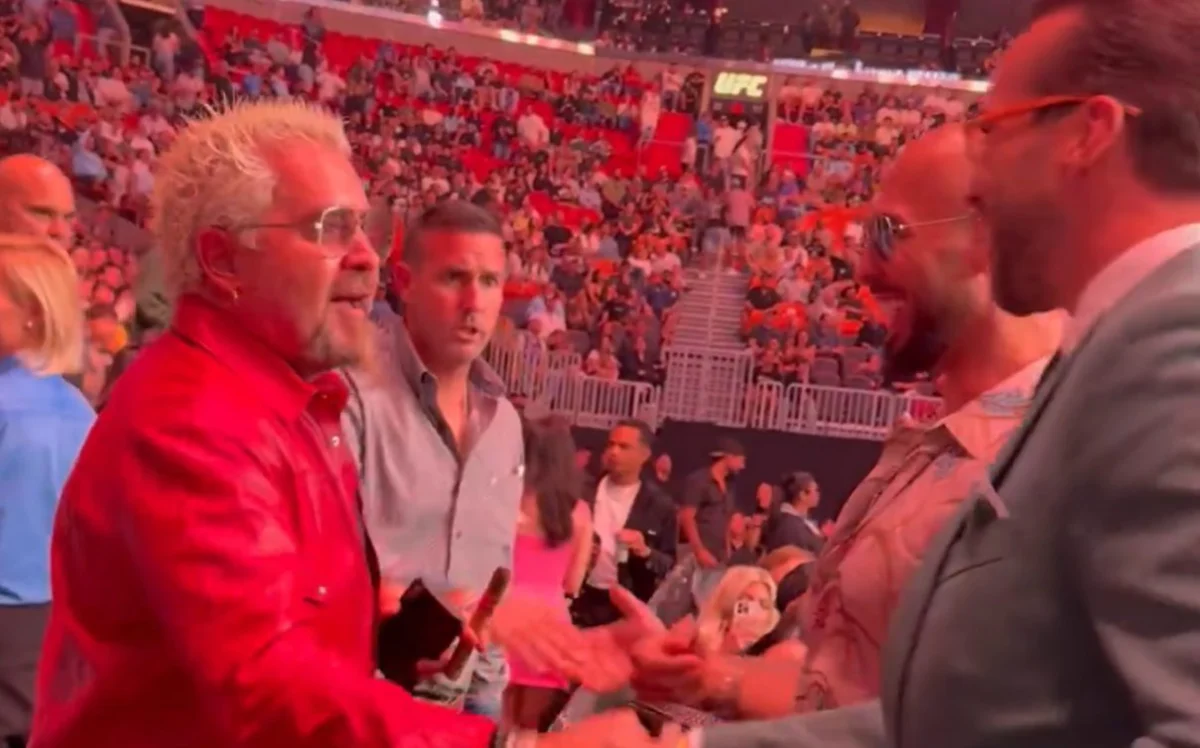
Guy Fieri, the renowned restaurateur and Food Network personality, has issued a formal statement of apology following a widely circulated video showing him interacting with the controversial social media influencer Andrew Tate and his brother, Tristan Tate. The encounter, which took place during a high-profile Ultimate Fighting Championship (UFC) event in Miami, Florida, sparked an immediate and intense backlash across social media platforms, leading to calls for professional repercussions against the television icon. Known globally as the "Mayor of Flavortown" and the host of the long-running series Diners, Drive-Ins and Dives, Fieri has built a public persona centered on charisma, community support, and culinary exploration. However, his brief exchange with the Tate brothers has placed him in the crosshairs of a modern debate regarding celebrity accountability and the implications of public association with polarizing figures.
Overview of the Controversy
The incident occurred in the VIP seating area of the arena, a space frequently populated by athletes, entertainers, and high-net-worth individuals. In the footage that quickly went viral on X (formerly Twitter) and Instagram, Fieri is seen engaging in a cordial exchange with the Tate brothers. The interaction appeared to be a standard greeting, common in the high-energy, networking-heavy environment of a major sporting event. Despite the brevity of the encounter, the reaction from Fieri’s extensive fanbase was swift and largely negative.
Andrew Tate is a figure defined by extreme polarization. A former professional kickboxer turned digital influencer, Tate has garnered a massive following by promoting a lifestyle centered on traditional masculinity, wealth acquisition, and a worldview that he describes as "alpha male." Conversely, his rise to fame has been shadowed by severe allegations and legal challenges. Tate has been banned from multiple social media platforms in the past for violating policies regarding hate speech and has openly described himself as a misogynist. More critically, both Andrew and Tristan Tate have been the subjects of serious criminal investigations in Romania, involving allegations of human trafficking, rape, and the formation of an organized crime group to sexually exploit women. Given these factors, any public association with the Tates is viewed by many as a tacit endorsement of their behavior and rhetoric.
Chronology of the Event and Subsequent Response
The timeline of the controversy began on a Saturday evening during the UFC event. Fieri, a known fan of combat sports and a frequent attendee at major matches, was present in the front-row area.
- The Encounter: As Fieri moved through the venue, he was approached by the Tate brothers. The resulting video shows a handshake and a brief conversation.
- Viral Dissemination: Within hours, the footage was uploaded to various social media accounts, including those belonging to supporters of the Tates, who framed the interaction as an endorsement of their brand.
- The Backlash: By Sunday morning, "Guy Fieri" was trending on social media, with thousands of users expressing disappointment. Critics tagged the Food Network and its parent company, Warner Bros. Discovery, demanding that they distance themselves from Fieri or take disciplinary action.
- The Official Apology: Recognizing the escalating crisis, Fieri’s team released a statement on Monday. In the post, Fieri expressed devastation over the public’s perception of the event and maintained that he had no prior knowledge of the Tates’ identities or reputations.
In his statement, Fieri noted: "I’m seeing all of your comments about the photo from Saturday’s UFC event and all I can say is that I’m devastated. I was there to see the fights and when I was walking through the venue, the Tate brothers stood up and said hello and that’s when the exchange happened. I did not know them or about them before that moment. I’ll never pretend to be a perfect person but let me be crystal clear, I do not know the Tate brothers nor do I support them in any way."
Contextualizing the Figures: Fieri vs. Tate
To understand the weight of this controversy, it is necessary to examine the contrasting public standing of the individuals involved. Guy Fieri is often cited as one of the most well-liked figures in American entertainment. Beyond his television success, he is recognized for his significant philanthropic efforts. During the COVID-19 pandemic, Fieri partnered with the National Restaurant Association Educational Foundation to raise more than $25 million for the Restaurant Employee Relief Fund, providing $500 grants to over 43,000 restaurant workers who had lost their jobs. This track record of community service has earned him a "wholesome" reputation that many fans felt was compromised by the meeting with the Tates.
Andrew Tate, meanwhile, represents a radical departure from the mainstream entertainment values Fieri embodies. Tate’s "Hustler’s University" and various media appearances have been criticized by human rights organizations and educational experts for promoting harmful gender stereotypes and exploiting young men’s insecurities. The legal proceedings in Romania, while ongoing, have significantly tarnished his reputation in the eyes of the general public. For a celebrity like Fieri, whose brand is built on broad-market appeal and family-friendly entertainment, an association with Tate presents a direct threat to his commercial viability and professional legacy.
Supporting Data and the Impact of Celebrity Associations
The "cancel culture" phenomenon often hinges on the concept of "guilt by association." In the digital age, a single photograph can carry as much weight as a formal endorsement. Market research suggests that celebrity brand value is highly sensitive to social controversies. According to data from various PR crisis management firms, a celebrity’s "trust score" can drop by as much as 30-40% following an association with a figure involved in criminal or ethically questionable activities.
For Fieri, the stakes are particularly high. In 2021, he reportedly signed a three-year deal with the Food Network worth an estimated $80 million, making him one of the highest-paid hosts in cable television history. His value to the network is predicated on his ability to attract a wide demographic, including families and rural audiences. Any sustained negative sentiment could influence advertising revenue and the longevity of his various television franchises.
The reaction to Fieri’s apology has been divided. One segment of the public remains skeptical, arguing that a public figure of Fieri’s stature should be more aware of who he is interacting with in public spaces. Others have come to his defense, noting that at high-profile events like the UFC, celebrities are frequently approached by hundreds of strangers and fellow attendees. These supporters argue that expecting a celebrity to perform a background check on every individual who offers a greeting is unrealistic.
Official Responses and Industry Implications
While the Food Network has not issued a formal corporate statement regarding the incident, industry insiders suggest that the network is monitoring the situation closely. Historically, networks have taken varied approaches to such controversies. In some instances, stars are required to undergo sensitivity training or take a temporary hiatus from the air. However, given Fieri’s quick response and his categorical denial of any affiliation with the Tates, many analysts believe he will avoid formal sanctions.
The incident also highlights a growing challenge for event organizers and PR teams. The VIP sections of sporting events are becoming increasingly difficult to manage as influencers and traditional celebrities mix in close quarters. This creates "PR minefields" where a casual moment can be captured and repurposed for a specific narrative.
Broader Impact and Social Analysis
This event serves as a case study in the speed of modern information cycles. Within 48 hours, a casual greeting transformed into a national news story that required a formal intervention from a multi-million dollar brand. It reflects a societal shift toward hyper-vigilance regarding the moral alignment of public figures.
The controversy also touches upon the political and cultural divides currently present in the United States. Some social media users pointed to Fieri’s past interactions with other polarizing figures, such as former President Donald Trump, as evidence of a pattern. Others countered that Fieri’s "Mayor of Flavortown" persona is inherently apolitical and that his willingness to engage with people from all walks of life is a core part of his appeal.
From a journalistic perspective, the situation underscores the importance of context. While the video provided a visual fact—that an interaction occurred—it did not provide the intent or the background of the participants. Fieri’s apology was an attempt to provide that missing context, asserting that the interaction was a matter of polite social convention rather than shared ideology.
Conclusion and Future Outlook
As the news cycle moves forward, the long-term impact on Guy Fieri’s career remains to be seen. In the immediate aftermath, Fieri continues to film his various programs and manage his extensive restaurant empire. The speed of his apology suggests a sophisticated understanding of modern media dynamics and a desire to protect the "Flavortown" brand from being co-opted by controversial digital movements.
The incident at the UFC event serves as a reminder that for today’s celebrities, there is no such thing as a "private" public moment. Every interaction is a potential data point in the ongoing assessment of their character by a global audience. For Fieri, the "fires" he is currently putting out are not in the kitchen, but in the court of public opinion, where the ingredients of a reputation are scrutinized as closely as the recipes he shares with the world. Moving forward, it is likely that Fieri and other high-profile figures will exercise increased caution in public settings, navigating a landscape where a simple handshake can have profound professional consequences.