Nayara Elvina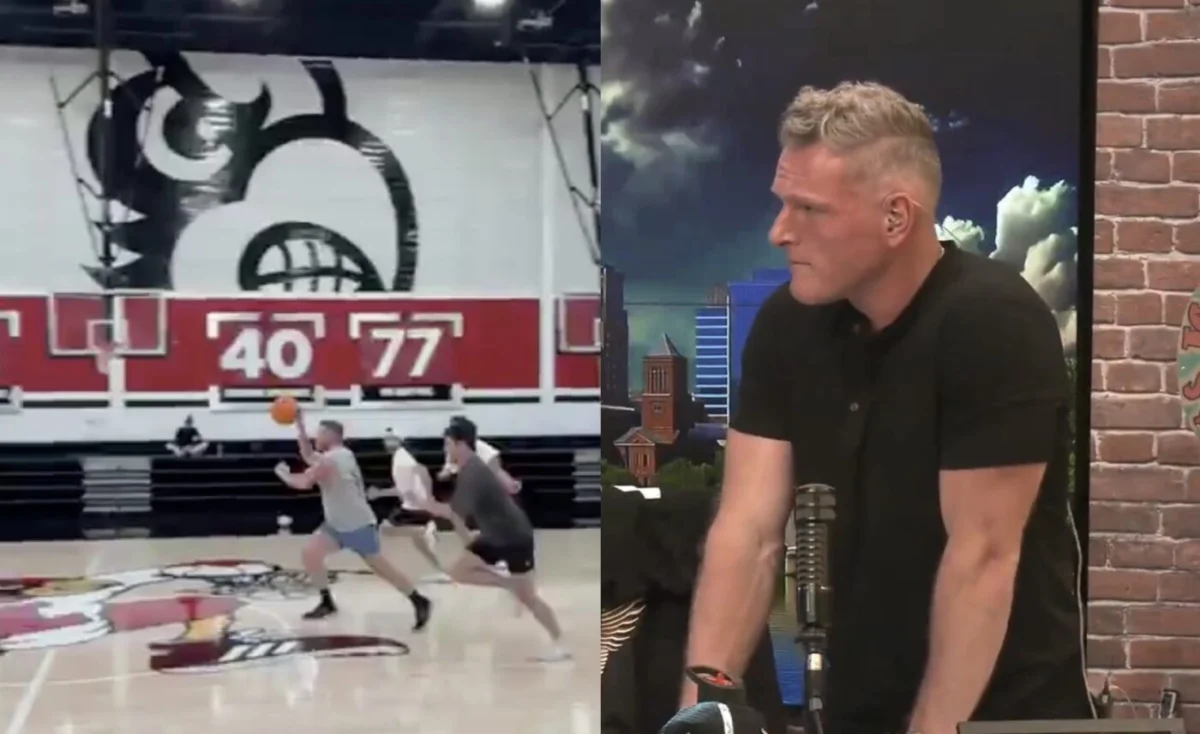
The intersection of professional sports commentary and the country music industry found an unexpected focal point this week as Zach Bryan, the chart-topping singer-songwriter behind hits such as "Something in the Orange," became the subject of widespread social media scrutiny following the release of a video capturing his performance on a basketball court. While Bryan has spent the better part of the last two years shattering attendance records and dominating the Billboard charts, his recent foray into amateur athletics has invited a different kind of commentary. The footage, which depicts Bryan struggling with fundamental basketball mechanics during a full-court game, prompted Pat McAfee, the host of ESPN’s "The Pat McAfee Show," to provide a detailed and humorous analysis of the situation during his popular "Oh No!" segment.
The video in question surfaced on various social media platforms earlier this week, quickly gaining millions of views. In the clip, Bryan is seen participating in a high-intensity basketball game, showcasing a level of effort that outpaces his technical execution. The footage highlights several instances of traveling violations and a general lack of coordination in the paint, contrasting sharply with the poised and commanding presence Bryan maintains when performing for tens of thousands of fans on his "Quittin Time Tour." Despite the lack of scoring output, the singer’s commitment to the game was evident, a point that McAfee and his co-hosts were quick to acknowledge even as they critiqued the decision to allow the footage to reach the public domain.
The Pat McAfee Analysis: A Duality of Respect and Critique
Pat McAfee, a former NFL punter turned media mogul, utilized his platform to balance the scales between poking fun at Bryan’s athletic shortcomings and reinforcing the artist’s unprecedented success in the music industry. McAfee’s "Oh No!" segment typically highlights moments of athletic failure or misfortune, but the host took care to frame Bryan’s "lowlight" within the context of his massive cultural influence.
"This guy sells out stadiums," McAfee noted during the broadcast. "We need to show respect to what he has been able to do with a guitar and his voice. Most ever at the Big House in Ann Arbor. Sells out stadiums. Okay, if you’re able to sell out stadiums… I have respect for what you’ve been able to do."
McAfee’s reference to "The Big House" refers to Bryan’s recent performance at Michigan Stadium, where he set an all-time attendance record for a country music concert at the venue, drawing over 100,000 attendees. This statistical milestone serves as a testament to Bryan’s stratospheric rise from a Navy veteran uploading videos to YouTube to a global headliner. However, McAfee was less complimentary regarding the technical aspects of Bryan’s basketball play, specifically questioning why the artist was being utilized as a transition player rather than staying in the post.
"They need to keep him away from the basketball court," McAfee continued. "I like that he’s doing sports for cardio. I like that he’s a sports fan. Can’t have that on tape. Can’t have that on tape. Okay, we need to make sure that camera’s not getting out of there. Not only was it a travel and other things, it was also just—Zach Bryan’s working in the paint. Why they got him running the full court? You know, like that ain’t where he’s supposed to be."
Zach Bryan: A Statistical Overview of a Country Music Powerhouse
To understand the weight of McAfee’s defense of Bryan, one must look at the data surrounding Bryan’s career. Since his honorable discharge from the United States Navy in 2021 to pursue music full-time, Bryan’s trajectory has been nearly vertical. His 2022 single "Something in the Orange" was certified 7× Platinum by the RIAA and spent an unprecedented 65 weeks on the Billboard Hot 100, peaking at number 10. This track became the longest-charting country song by a solo male artist in the history of the chart.
Bryan’s self-titled 2023 album debuted at number one on the Billboard 200, and his current "Quittin Time Tour" has consistently sold out professional sports arenas and NFL stadiums across North America. The tour’s financial success is equally impressive; industry reports suggest that Bryan’s nightly grosses often exceed $5 million, placing him in the upper echelon of touring artists alongside names like Taylor Swift and Morgan Wallen. These figures provide the "stadium status" context that McAfee cited as a reason to overlook a few missed layups and traveling calls.
Military Service and the Foundation of Bryan’s Work Ethic
A significant portion of the public discourse surrounding the viral video has touched upon Bryan’s physical conditioning and his history in the military. Bryan served eight years in the U.S. Navy, following a family tradition of service. During his time as an active-duty sailor, he famously spent his off-hours writing and recording music, often in makeshift environments. This background has instilled a "blue-collar" persona that resonates deeply with his fan base.
McAfee alluded to this history, stating, "Also served in the military. Appreciate his service, all that stuff." The host’s comments suggest that Bryan’s willingness to "put in maximum effort" on the court, despite the lack of results, is a reflection of the discipline and grit developed during his naval career. This narrative has helped mitigate some of the mockery, as fans view the basketball clip not as a sign of incompetence, but as a relatable moment of a high-achiever attempting a difficult task outside his primary field of expertise.
The Mechanics of the Viral Clip: Technical Basketball Analysis
From a technical standpoint, the viral footage provides a case study in the differences between "game speed" and "gym speed." In the clip, Bryan is seen securing a rebound—a feat for which McAfee gave him credit—before attempting to lead a fast break. The resulting sequence involved a series of steps without a dribble, a clear violation of basketball’s traveling rules.
Furthermore, the positioning of Bryan on the court was a point of contention for McAfee’s crew. In amateur "pickup" games, players are often forced into roles that do not suit their physical stature or skill sets. Bryan, who possesses a sturdy build but lacks the verticality and speed of a traditional guard, was seen attempting to navigate the perimeter. McAfee’s suggestion that Bryan should "work in the paint" aligns with standard coaching logic for players of his physical profile, emphasizing strength and positioning over ball-handling and transition speed.
Public Image Management in the Digital Era
The most poignant part of McAfee’s critique was directed not at Bryan himself, but at his inner circle. In the age of social media, where a single 15-second clip can define a celebrity’s public perception for a week, the role of "gatekeepers" has never been more critical. McAfee expressed disbelief that Bryan’s friends or teammates allowed the footage to be filmed and subsequently leaked.
"All I ask of the boys is, you see that camera filming that fast break? We need to ask for that video," McAfee said. This comment highlights a broader trend in celebrity culture where the "humanization" of stars—showing them in vulnerable or unpolished moments—can be both a branding tool and a liability. While Bryan has built his brand on authenticity and a lack of "industry polish," the basketball video pushed that boundary into the realm of "Oh No!" comedy.
Broader Impact on Celebrity Authenticity and Fan Engagement
The reaction to Zach Bryan’s basketball video serves as a microcosm of modern celebrity engagement. Unlike traditional pop stars who maintain a carefully curated and often unattainable image, Bryan’s appeal lies in his perceived "everyman" status. By engaging in a public game of basketball and failing spectacularly on camera, he inadvertently reinforced the idea that he is a regular person who happens to possess an extraordinary talent for songwriting.
The data suggests that these moments of vulnerability do little to hurt the commercial viability of artists like Bryan. In fact, engagement metrics on social media often spike following such "viral" incidents, driving more traffic to the artist’s music and tour announcements. As of the time of writing, ticket sales for the remainder of Bryan’s tour remain robust, and his streaming numbers continue to hold steady, indicating that his "zero points" on the court have had zero negative impact on his professional standing.
Conclusion: The "Can’t Be Good at Everything" Paradigm
The consensus among sports commentators and music fans alike appears to be a mix of amusement and continued admiration. As Pat McAfee concluded, the effort displayed by Bryan is commendable, even if the results were lackluster. The incident serves as a reminder that excellence in one highly specialized field—such as the composition of evocative folk-country anthems—does not automatically translate to other disciplines.
Zach Bryan continues his "Quittin Time Tour" with upcoming stops in major markets, where he will undoubtedly find more success behind a microphone than he did behind the three-point line. For now, the viral basketball video remains a humorous footnote in the career of a man who has already proven he can conquer the biggest stages in the world, even if he can’t quite conquer the full-court press. The "Oh No!" moment, while embarrassing in the short term, ultimately underscores the human element of a star whose rise has been nothing short of legendary.