Mia Khoirunisa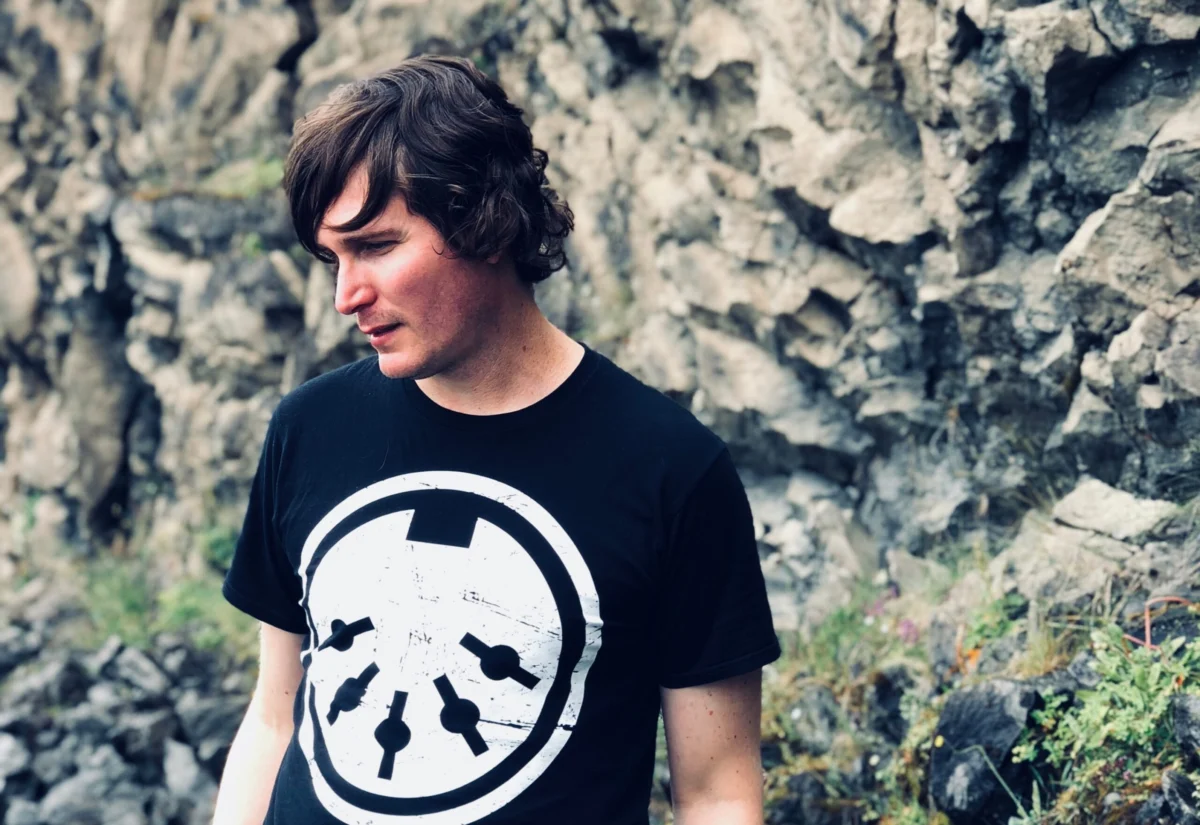
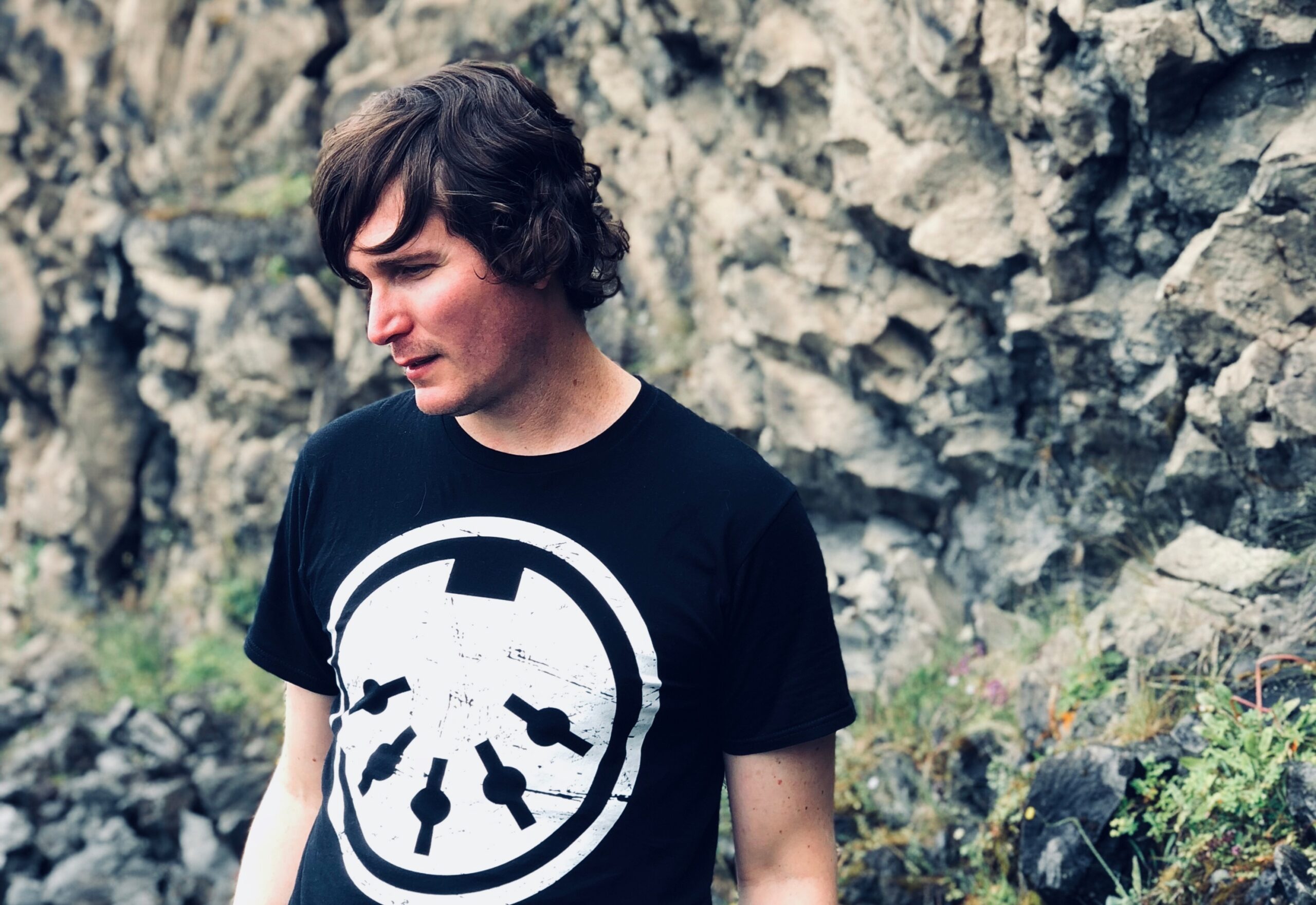
For over two decades, Rafael Anton Irisarri has cultivated a distinctive sonic territory, existing at the confluence of the imposing grandeur of modern classical music and the ethereal expanses of ambient soundscapes. Whether operating under his own moniker or as the project The Sight Below, Irisarri’s work is consistently defined by a profound sense of scale. His compositions evoke vast, almost geological landscapes, imbued with the dynamism of weather systems and the deep strata of historical resonance. This latest solo album, Points of Inaccessibility, despite its expansive sonic palette, presents a surprisingly accessible journey, one that invites immediate and repeated immersion. The album’s genesis lies in a residency at the Uncloud studio in Utrecht, a creative crucible that profoundly influenced its thematic core. Points of Inaccessibility confronts a pervasive modern paradox: in an era of unprecedented technological interconnectedness, humanity finds itself arguably more isolated than ever before. The very environment of the studio, housed within the imposing walls of the Pieter Baan Centrum—a former psychiatric prison—imprinted a palpable weight and gravitas onto the recordings.
The Resonance of Place: Utrecht’s Former Psychiatric Prison
The choice of the Pieter Baan Centrum as the recording location for Points of Inaccessibility was not merely circumstantial; it was a deliberate immersion into an environment steeped in human history and psychological intensity. The facility, which once served as a high-security psychiatric prison for individuals undergoing observation, offered a stark and potent backdrop for Irisarri’s exploration of isolation. The physical architecture—its formidable barriers, labyrinthine corridors, and heavy, secured doors—mirrored the album’s thematic preoccupations with inaccessibility and confinement, both literal and metaphorical.
"The minute that you enter the place, you think, ‘wait, this place looks kind of weird. What’s going on here? Like, this looks like it was a prison? What the hell?’" Irisarri recalled in a recent interview. The cells, though no longer in use, remained, their imposing doors retained for each studio space, each featuring a small, restrictive window. This preservation of the prison’s physical remnants amplified the psychological weight of the location. "It has all these barriers, corridors that lock, and you have to get buzzed in to different areas. All these heavy doors and whatnot," he observed. The stark reality of the former psychiatric prison, a place where minds were once subjected to intense scrutiny and containment, provided a powerful, almost visceral, foundation for the album’s sonic architecture. The implication of countless stories and profound emotional experiences etched into the very fabric of the building undoubtedly contributed to the deep, often melancholic, textures found within Points of Inaccessibility.
The Paradox of Connection and Isolation
The titular concept of Points of Inaccessibility is deeply rooted in Irisarri’s observations of contemporary human behavior. He notes a growing disconnect between physical presence and mindful engagement, particularly evident in social settings. "You’ll see a group of friends at a table having dinner," he explained. "In certain cultures—let’s take Mexico City, for example—people eat as a group, and they’re all chatting and whatnot. But then you see them now, and they’ll all be on their phone as well. They’re not really in that moment." This phenomenon extends to the curation of digital personas, where the act of documenting an experience often supersedes the experience itself. "Or, they’re taking pictures for content, whether it be taking a selfie or taking a group shot or taking a picture of their food. They’re not in the moment anymore, you know."
Irisarri draws a parallel between this pervasive digital distraction and the geographical concept of "halls of inaccessibility"—locations on Earth that are the furthest removed from any other landmass. "I was kind of really obsessed with this concept, and I start to correlate it: ‘man, it feels like modern life, it’s like we’re all in these, like, isolated islands in the middle of nowhere.’ We’re all connected now, but also very isolated." This striking dichotomy forms the emotional and philosophical bedrock of the album. The experience of recording in a former prison, a place designed for ultimate physical isolation, further amplified these feelings of modern, self-imposed emotional and psychological separation despite ubiquitous digital connectivity. The album grapples with the unsettling reality that while technology promises to bridge distances, it can simultaneously erect invisible walls between individuals.
The film Her, directed by Spike Jonze, serves as a potent cultural touchstone for this theme, a cinematic exploration of human connection in the age of artificial intelligence. Irisarri sees the film’s narrative as having transcended fiction. "Basically became a fucking documentary," he stated. He acknowledges that loneliness and isolation are fundamental human experiences, but argues that technology has "massively exacerbated" them. The very tools designed to combat loneliness, he contends, are often the architects of it, creating what he describes as an "ouroboros" – a self-consuming cycle. This intricate interplay between technological advancement and human experience forms a significant part of the conceptual framework for Points of Inaccessibility.
Sonic Architecture: Looping, Saturation, and Bowed Guitars
Irisarri’s creative process is as meticulously crafted as his sonic output. For Points of Inaccessibility, he spent an intensive week at the Uncloud studio, working closely with visual artist Jaco Schilp on an AV set. His daily routine involved generating sound for Schilp’s real-time visual projections, often for eight to ten hours a day. This immersive approach, characterized by constant improvisation and iterative layering, resulted in approximately three to four hours of raw material, which Irisarri later refined into the album’s fifteen distinct pieces.
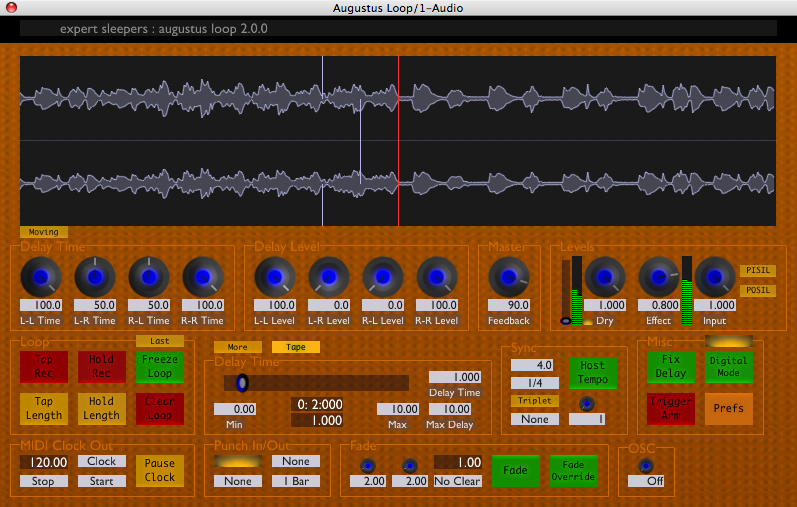
Central to his live performance and recording rig is a reliance on loopers, specifically Augustus Loop from Expert Sleepers. "I absolutely love this plugin," Irisarri enthused. "It’s crazy because it’s super basic, but very powerful." He values its versatility, allowing for varispeed manipulation, sound-on-sound recording, saturation, and filtering. While acknowledging its rudimentary graphical user interface, he emphasizes its unwavering stability and familiarity. "I really hate it when they take something that you know how to use really well, and you know the functionality… and then suddenly the entire thing is redesigned to look ‘nicer.’ Augustus Loop is super stable, and I trust it well." This reliance on a trusted, albeit understated, tool underscores Irisarri’s focus on sonic function over superficial aesthetics.
The perceived "grit" underlying his signature washed-out reverbs, a characteristic that sets his ambient work apart, is largely attributed to saturation. "My biggest ‘weapon’ for music is actually saturation," he revealed. This foundational element provides a rich textural density before the application of more overt spatial effects. Furthermore, his unconventional approach to guitar playing is a key component of his unique sound. He employs exceptionally thin picks, measuring 0.38 millimeters, which he describes as "like paper." This technique minimizes heavy transients, allowing for a more nuanced and delicate interaction with the strings.
Perhaps most striking is Irisarri’s use of bowed guitar, a technique that transforms the instrument into something akin to a string section. He frequently utilizes viola bows, and occasionally violin bows, to draw sustained, expressive tones from his electric guitar. This method, while demanding, allows him to generate the "non-guitar like sounds" that define many of his compositions. To achieve cello-like registers, he employs a pitch-shifting pedal, such as the Electro-Harmonix Pitch Fork, detuning the signal down an octave. "With a little bit of distortion, I get the cello ‘growl’ that you’re talking about." This inventive use of effects and bowing techniques allows him to traverse a broad sonic spectrum, from the delicate resonance of a violin to the deep rumble of a cello or even an upright bass.
Collaboration and Vocal Transmissions
In addition to his solo endeavors, Irisarri maintains a prolific collaborative output. His partnership with Italian artist Abul Mogard has yielded significant works, including Where Light Pauses in the Silence of Sun, released in June. Mogard also contributes to Points of Inaccessibility, further enriching its sonic tapestry.
A particularly captivating element on Points of Inaccessibility is the ethereal vocal performance on "Signals from a Distant Afterglow" by Karen Vogt, known for her work with the band Heligoland and her collaborations with Robin Guthrie. Irisarri sent Vogt the track, and she independently identified a latent vocal melody within the recording. "I keep hearing this voice melody in the recording," she reportedly said. Irisarri encouraged her to record her interpretation, and Vogt, a practitioner of vocal looping, delivered a performance that perfectly captured the track’s intended atmosphere. "She recorded something, and I was like, ‘Oh, this is fantastic.’ I just dropped them into the session and did very little to it, really." The vocal processing, a blend of her apartment reverb and her own added effects, contributed to its distinctive "room" feel, sounding remarkably like a signal arriving from a remote source, a deliberate effect that Irisarri chose to preserve.
The Dual Role: Artist and Engineer
Irisarri navigates a dual career as both a recording artist and a highly respected mixing and mastering engineer. This multifaceted involvement in the music creation process, operating Black Knoll Studio and offering his expertise, informs his artistic output. He describes himself as a "musician’s musician," someone who possesses the technical acumen to meticulously refine sound in the mastering suite and the creative vision to coax emotive performances from his instruments.
His workflow involves distinct software for different stages of production. He utilizes Pro Tools for mixing and live performance capture, while Ableton Live serves as his primary production and live sequencing environment. "When I’m mastering, I use Steinberg’s WaveLab for a lot of it," he noted, though he prefers Pro Tools for tracking. He views the distinction between analog and digital mastering as nuanced, rejecting the notion that one is universally superior. "If I’m working on a hip hop record, say, a reggaeton record, and I try to run the kick drum through my [Manley] Vari-Mu right here, it’s not gonna work, because the sound that you’re used to hearing on reggaeton records is not of an 808 kick going through a Vari-Mu." The goal, he asserts, is to match the sonic expectations of a particular genre, which often involves embracing digital tools.
The resurgence of vinyl and cassette formats presents a unique set of challenges and rewards for mastering engineers. While CDs offer a predictable delivery format, vinyl mastering can introduce unpredictability. "When you do vinyl, then it’s like, ‘roll the dice and flip a coin and see what happens.’" He recounts instances where vinyl masters have exceeded expectations, while others have fallen short. Similarly, cassette manufacturing, as experienced during a recent reissue of his album A Fragile Geography, can be fraught with technical hurdles, particularly regarding hiss and duplication quality.
The Evolving Landscape of Music Consumption and AI’s Shadow
Irisarri expresses concern over the profound shift in how music is consumed, particularly the decline of sustained, focused listening. "No one sits through a record from start to finish anymore," he observed, contrasting the immersive album experiences of his youth with the fragmented, notification-driven engagement of contemporary streaming. This fragmentation, he suggests, diminishes the depth of musical appreciation and the potential for artists to convey their intended narratives.
Adding to these anxieties is the burgeoning issue of AI-generated music on streaming platforms. Irisarri highlights instances of fraudulent AI-generated releases, such as a recent misattributed album falsely credited to William Basinski. He notes the prevalence of "automated artists" designed to populate playlists and circumvent royalty payments, a trend that he finds "very depressing" for artists. The ease with which AI can mimic established styles poses a significant threat to the authenticity and integrity of musical creation, particularly within experimental and ambient genres.
The North Star of Passion and Future Endeavors
In the face of an increasingly fractured and challenging music industry, Irisarri finds his guiding principle in the intrinsic love of the craft. "If you’re doing this and you decided to make it your way of life, you must do it because you really love it, not because you’re getting any kind of money from it. You’re not seeking validation from people. You just love doing it, and that’s it." This unwavering passion fuels his continued artistic output.
Looking ahead, Irisarri is preparing for the release of his second album with Abul Mogard, a project born from a recent residency in Berlin. He is also planning further collaborative work in Berlin, featuring a small ensemble including cellist Martina Bertoni and violinist Andrea Burelli. His recent connection with a reactivated Belgian band from the 1970s signals further exciting creative avenues. These ongoing projects underscore Irisarri’s commitment to pushing the boundaries of his sonic explorations and engaging with a diverse array of musical collaborators.



![Indira Paganotto announces Hï Ibiza and [UNVRS] ARTCORE line-ups for 2026.](https://empire-music.net/wp-content/uploads/2026/04/indira-paganotto-announces-hi-ibiza-and-unvrs-artcore-line-ups-for-2026.webp)