Nayara Elvina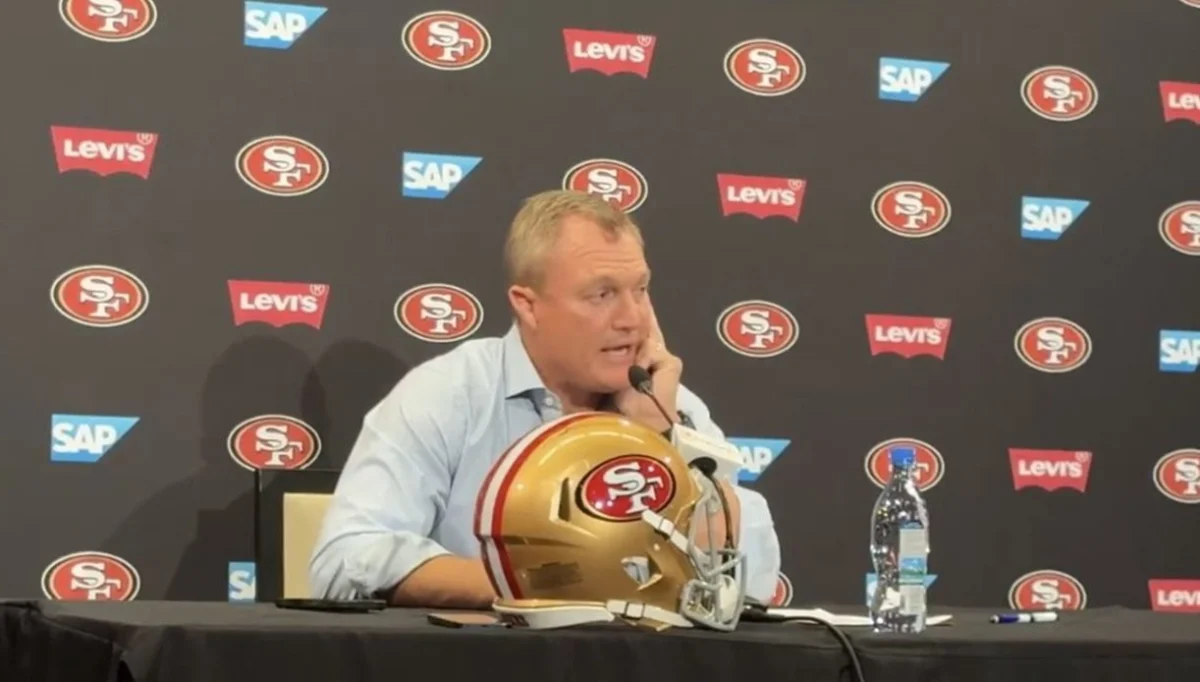
The San Francisco 49ers have officially signaled a new era in professional football management by integrating advanced artificial intelligence into their talent evaluation processes ahead of the upcoming NFL Draft. San Francisco 49ers General Manager John Lynch recently confirmed that the organization is leveraging AI technology to refine its scouting reports and streamline decision-making protocols. This shift marks a significant departure from traditional scouting methods, positioning the 49ers at the forefront of a technological arms race that is reshaping how professional sports franchises identify and value collegiate talent. Lynch’s public acknowledgment of these tools suggests that the "eye test"—the long-standing reliance on a scout’s intuition—is being systematically augmented, and perhaps eventually superseded, by machine learning algorithms capable of processing vast datasets with unprecedented speed.
The San Francisco 49ers and the Silicon Valley Advantage
The 49ers’ move toward artificial intelligence is largely seen as a strategic utilization of their geographic location. Headquartered in Santa Clara, California, the franchise operates at the epicenter of global technological innovation. John Lynch noted that the organization has sought to capitalize on its proximity to Silicon Valley by collaborating with developers to create bespoke tools for the front office. According to Lynch, the adoption of AI is no longer a luxury but a necessity for maintaining a competitive edge in the National Football League (NFL). He characterized the current landscape as a period of "adapt or die," suggesting that franchises failing to incorporate these technologies are already at a significant disadvantage compared to their peers.
Lynch’s commentary highlighted the accessibility of modern AI, comparing its utility to everyday tasks such as planning travel itineraries. However, within the context of the NFL Draft, the applications are far more complex. The 49ers are reportedly using AI to synthesize traditional scouting reports, biometric data, and collegiate performance metrics to generate comprehensive player profiles. This allows the front office to ask specific queries of their data models, such as predicting a player’s developmental trajectory or assessing how a specific athlete’s skill set aligns with the team’s existing schematic requirements.
A Historical Chronology of NFL Scouting Methodologies
To understand the magnitude of the shift toward AI, it is necessary to examine the evolution of NFL scouting over the last half-century. The process has transitioned through four distinct eras, each defined by the prevailing technology of the time.
- The Analog Era (1960s–1980s): During this period, scouting was almost entirely qualitative. Personnel directors relied on handwritten notes, physical film reels, and the subjective opinions of regional scouts. Communication was slow, and data was often localized, leading to significant discrepancies in player evaluations between different teams.
- The Digital Database Era (1990s–2000s): The introduction of centralized databases allowed teams to share information more efficiently. Services like BLESTO and National Football Scouting began providing standardized reports. The use of video began to transition from physical tape to digital formats, allowing for faster review.
- The Analytics Revolution (2010s): Inspired by the "Moneyball" movement in Major League Baseball, NFL teams began hiring data scientists to analyze "Next Gen Stats." This era focused on quantitative metrics—such as catch probability, air yards, and pressure rates—to challenge traditional narratives about player value.
- The Artificial Intelligence Era (2020s–Present): While analytics describe what has happened, AI is used to predict what will happen. By using neural networks and predictive modeling, teams can now simulate thousands of draft scenarios and career outcomes based on historical precedents and real-time biometric inputs.
The Technical Distinction: From Analytics to Generative AI
The transition from standard analytics to artificial intelligence represents a fundamental change in data processing. Standard analytics involve the retrospective study of data to find trends. In contrast, the AI tools currently being deployed by the 49ers and other forward-thinking organizations utilize machine learning to identify non-linear patterns that human analysts might overlook.
For instance, an AI model can analyze "tracking data"—the X and Y coordinates of every player on the field recorded 10 times per second—to evaluate a wide receiver’s "separation ability" in a way that goes beyond simple yardage stats. By processing years of this data, the AI can determine which collegiate players possess the specific movement patterns that correlate with success at the professional level. Furthermore, generative AI can be used to draft initial scouting summaries, allowing human scouts to spend more time on high-level analysis rather than administrative data entry.
Data-Driven Decisions: The NFL’s Partnership with Amazon Web Services
The league-wide shift toward AI is supported by the NFL’s overarching partnership with Amazon Web Services (AWS). Since 2017, the NFL has utilized AWS to power its "Next Gen Stats" platform, but the collaboration has recently expanded into the realm of player health and performance. The "Digital Athlete" program, a joint venture between the NFL and AWS, uses AI and machine learning to create a virtual representation of an NFL player. This tool analyzes data from various sources—including player equipment, environment, and historical injury records—to predict injury risks and inform training loads.
This league-level infrastructure provides the foundation upon which individual teams like the 49ers build their proprietary AI tools. While the NFL provides the raw data, it is up to individual franchises to develop the algorithms that turn that data into a competitive advantage on draft day. The ability to accurately predict a player’s durability and "pro-readiness" is worth millions of dollars in salary cap management and draft capital.
The Impact of Automation on Professional Sports Personnel Roles
The introduction of AI into the draft room has prompted discussions regarding the future of traditional scouting roles. In the broader technology sector, the rise of AI has been accompanied by significant labor shifts. Reports indicate that over 70,000 professionals in the tech space have faced layoffs as automation and AI efficiencies have been integrated into corporate workflows. While the NFL has not seen a direct correlation in terms of mass scouting layoffs, the job description of a professional scout is undeniably changing.
The modern scout is increasingly expected to be "data-literate." While the ability to judge a player’s character and "locker room fit" remains a human-centric task, the technical evaluation of on-field performance is being outsourced to algorithms. This has led to a hybrid model where human scouts provide the qualitative context (the "why") while AI provides the quantitative evidence (the "what"). John Lynch’s comments suggest that rather than replacing humans, AI is acting as a force multiplier, allowing a front office to process a much larger volume of prospects with a higher degree of accuracy.
Industry Reactions and the Competitive Landscape
While the 49ers have been vocal about their use of AI, other organizations remain more guarded regarding their proprietary technologies. However, industry analysts suggest that the Baltimore Ravens, Cleveland Browns, and Philadelphia Eagles—teams with long histories of prioritizing analytics—are likely employing similar or more advanced AI frameworks.
The reaction among NFL personnel is mixed. Traditionalists argue that football is a game of human emotion and unpredictability that cannot be reduced to an algorithm. They point to "draft busts" who had perfect physical profiles but lacked the mental fortitude for the professional game. Conversely, proponents of AI argue that human scouts are prone to cognitive biases, such as "recency bias" or "confirmation bias," which AI can effectively neutralize. By providing an objective baseline for evaluation, AI serves as a check and balance against emotional decision-making in the high-pressure environment of the draft’s first round.
Future Implications for the NFL Competitive Landscape
As the NFL Draft approaches, the success or failure of the 49ers’ AI-augmented selections will be closely monitored by the rest of the league. If the 49ers continue their recent trend of successful talent acquisition, it is expected that AI adoption will accelerate across all 32 franchises.
The long-term implications of AI in the NFL extend beyond the draft. We are likely to see AI integrated into real-time in-game strategy, such as play-calling probabilities and clock management optimization. Furthermore, as AI models become more sophisticated, they may begin to influence player contract negotiations, using predictive performance data to determine a player’s future market value.
The 49ers’ transparent embrace of artificial intelligence marks a pivotal moment in sports history. As John Lynch articulated, the era of the "expert-only" domain is fading, replaced by a democratized access to high-level data processing. Whether this leads to a more "perfect" draft remains to be seen, but the integration of AI ensures that the process of building a professional football team has moved irrevocably into the realm of high-tech data science. The "future" of the NFL is no longer a distant prospect; it is the current standard for any organization seeking to achieve and sustain success in the modern era.