Aveline Kirana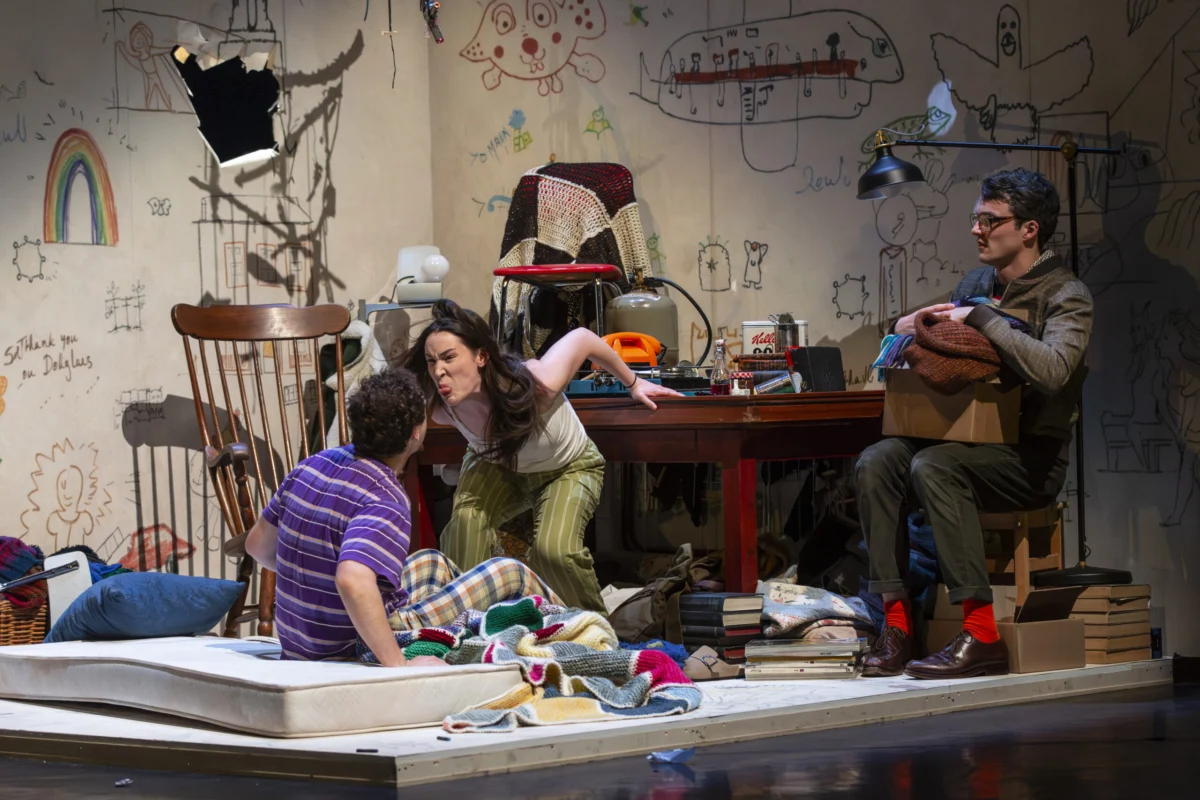
Amsterdam’s Opera Forward Festival, a prominent platform for contemporary opera and cross-disciplinary artistic exploration, recently concluded its engagement with a production of Philip Glass’s enduring work, "Les Enfants Terribles." While opting for a relatively safe directorial approach, the festival’s staging of this complex psychological drama delivered an enjoyable and thought-provoking theatrical experience, drawing a commendable audience. The opera, a staple in Glass’s repertoire since its 1996 premiere, owes its frequent performance to a streamlined instrumentation – a piano accompaniment – and a compact cast, making it an attractive proposition for touring companies. This particular production was a significant collaboration, uniting the touring expertise of Opera Zuid with the national reach of Nederlandse Reisopera and the Dutch National Opera, underscoring a commitment to bringing challenging operatic works to a wider Dutch audience.
A Deep Dive into Sibling Psyche and Adolescent Entrapment
Philip Glass’s "Les Enfants Terribles," adapted from Jean Cocteau’s seminal 1929 novel, delves into the intensely symbiotic and ultimately destructive relationship between adolescent siblings Paul and Elisabeth. Their shared bedroom transforms into a hermetically sealed universe, a sanctuary fortified by an accumulation of objects imbued with private, symbolic significance. Within this self-created world, they engage in a perpetual, elaborate "game" of psychological torment and provocation, a ritualistic dance where each strives for the final word, their emotional lives inextricably bound. The death of their mother severs the last vestiges of external guidance, leaving them free to retreat further into this arrested state of adolescence, a realm where conventional morality and shame hold no sway.
The narrative is further complicated by the introduction of other characters who inevitably breach the siblings’ insular existence. Gérard, Paul’s loyal friend, harbors an unrequited affection for Elisabeth. Concurrently, Elisabeth encounters Agathe, a model whose striking resemblance to Dargelos—Paul’s childhood acquaintance and near-fatal tormentor—introduces a disquieting element of uncanny duplication. The quartet—Paul, Elisabeth, Gérard, and Agathe—eventually converges within the confines of a large house, a confluence of marginalized adolescent energies that escalates towards tragic repercussions.
The novel’s inherent complexity and rich tapestry of symbolic meanings provide fertile ground for directorial interpretation. Themes such as toxic sibling dependency, stunted adolescent development, the insidious grip of addiction, and profound Freudian or other psychological underpinnings are all readily accessible avenues for exploration. In this production, director Béatrice Lachaussée, in concert with set and costume designer Jorine van Beek, opted for a lucid and dynamic presentation. Their approach skillfully navigated the narrative’s undercurrents, offering glimpses into the motivations driving the teenagers’ behavior while crafting a compelling and gripping theatrical event.
Visualizing the Psychological Landscape
The stage design, primarily focusing on the siblings’ childhood bedroom within their mother’s house and subsequently a larger, shared living space in their inherited home, effectively mirrored the psychological confinement of the characters. These spaces were depicted with an intentional untidiness and an abundance of seemingly random clutter, exuding an atmosphere of disarray and a lack of rigorous cleanliness. The sleeping arrangements, often relegated to the floor, contributed to a palpable sense of chaos that pervaded the stage. This visual representation fostered a suffocating environment, emphasizing the erosion of privacy and the immersive nature of the characters’ shared existence.
Lachaussée’s direction elicited remarkably realistic portrayals from the cast. Despite the characters’ often distorted psychological traits, their performances were consistently believable, fostering an immediate connection with the audience. The intricate relationships among the characters were expertly crafted, reflecting the inherent volatility and emotional complexities of adolescence. The bond between Paul and Elisabeth, in particular, was pushed to an extreme, powerfully illustrating the suffocating intensity of their mutual emotional dependency.
Ultimately, the production offered an engaging and psychologically astute interpretation of "Les Enfants Terribles." It subtly hinted at the darker forces at play without becoming overly didactic, remaining anchored to the core dramatic impetus. By refraining from an exhaustive exploration of every possible interpretative nuance, the staging maintained its focus, allowing the driving forces of the narrative to culminate in a profoundly moving and emotionally charged death scene.
A Triumph of Pianistic Virtuosity
Philip Glass’s score for "Les Enfants Terribles" is uniquely scored for three pianos, demanding exceptional coordination and musicality from the performers. In this production, the three pianos were strategically placed, two to the left of the performance area and one to the right, creating a visually engaging ensemble. The pianists—Nicolas Krüger (also the musical director), Leonardo Moyano Ortiz, and Daniel Ruiz de Cenzano Caballero—delivered a performance of remarkable synergy. They not only achieved a perfectly integrated and rich sonic texture but also demonstrated a keen sensitivity to the dramatic ebb and flow of the opera.
Listening to Glass’s signature repetitive, driving, and mesmeric rhythms, which serve as the operatic engine propelling the narrative forward, was a genuine pleasure. The balance between the orchestral accompaniment and the vocal performances was consistently precise and emotionally resonant throughout the evening, a testament to the pianists’ mastery and their deep understanding of the score’s dramatic function.
Vocal Prowess and Character Interpretation
The four principal singers demonstrated considerable commitment and effectively embodied their respective characters. While all delivered pleasing vocal performances, the two female singers, in particular, stood out for their nuanced interpretations and vocal artistry.
Soprano Eva Rae Martinez delivered a performance of significant emotional depth and psychological complexity as Elisabeth. Her portrayal captured the character’s intricate blend of jealousy, dependency, competitiveness, and self-absorption. Martinez’s singing was marked by clarity, articulate phrasing, and expressive vocalization. Her nuanced phrasing allowed for a subtle unfolding of Elisabeth’s internal world, and her upper register was employed with striking effect to convey the character’s febrile outbursts. Beyond the dramatic intensity, Martinez also showcased the inherent beauty of her voice, offering moments of vocal repose that were a pleasure to the ear.
Baritone Ismael Correa Ulriksen, as Elisabeth’s brother Paul, delivered a generally successful interpretation, though his performance was somewhat undermined by a tendency to project his voice at a volume that occasionally overwhelmed the theater. At times, his singing verged on being ear-splittingly loud, a dynamic choice that detracted from the overall impact of his portrayal. Nevertheless, Ulriksen effectively developed the complex dynamic of his relationship with Elisabeth, portraying their interactions as a volatile mix of playfulness, fractiousness, envy, manipulation, and demandingness. His portrayal of his feelings for Agathe and his fraternal friendship with Gérard were also convincingly rendered.
Regrettably, Steven van der Linden, portraying Gérard, shared a similar issue with vocal projection, his singing also proving excessively loud. Despite this forceful delivery, Van der Linden managed to convey the shy and malleable nature of his character with notable success.
Mezzo-soprano Aaike Nortier took on the dual roles of Agathe and the enigmatic Dargelos. The production did not delve deeply into the thematic connection between these two characters, presenting them more as distinct individuals. Nortier offered well-crafted interpretations of both roles, effectively showcasing her vocal strengths. Her piercing upper register and vocal flexibility were particularly noteworthy, adding a distinct sonic signature to her performances.
A Cohesive and Impactful Production
In summation, this staging of "Les Enfants Terribles" proved to be a thoroughly engaging and well-realized production. It successfully ignited the audience’s imagination without resorting to overly conceptual or potentially distracting interpretations that could have detracted from the core dramatic material. The young cast, despite some instances of overly robust vocal projection from the tenor and baritone, acquitted themselves commendably. The true stars of the evening, however, were the three pianists, whose virtuosity and sensitive musical direction elevated the production to an exceptional level, providing a performance within a performance. The Opera Forward Festival’s decision to present this powerful work, with its exploration of the darker recesses of the adolescent psyche, underscored its commitment to showcasing contemporary opera that resonates with enduring human themes. The collaborative nature of the production also highlighted a growing trend in the opera world towards pooling resources to bring ambitious and significant works to a broader audience base across different regions. This approach not only maximizes artistic impact but also fosters a sense of shared cultural endeavor among national opera companies.