Muhammad Ibadurrohman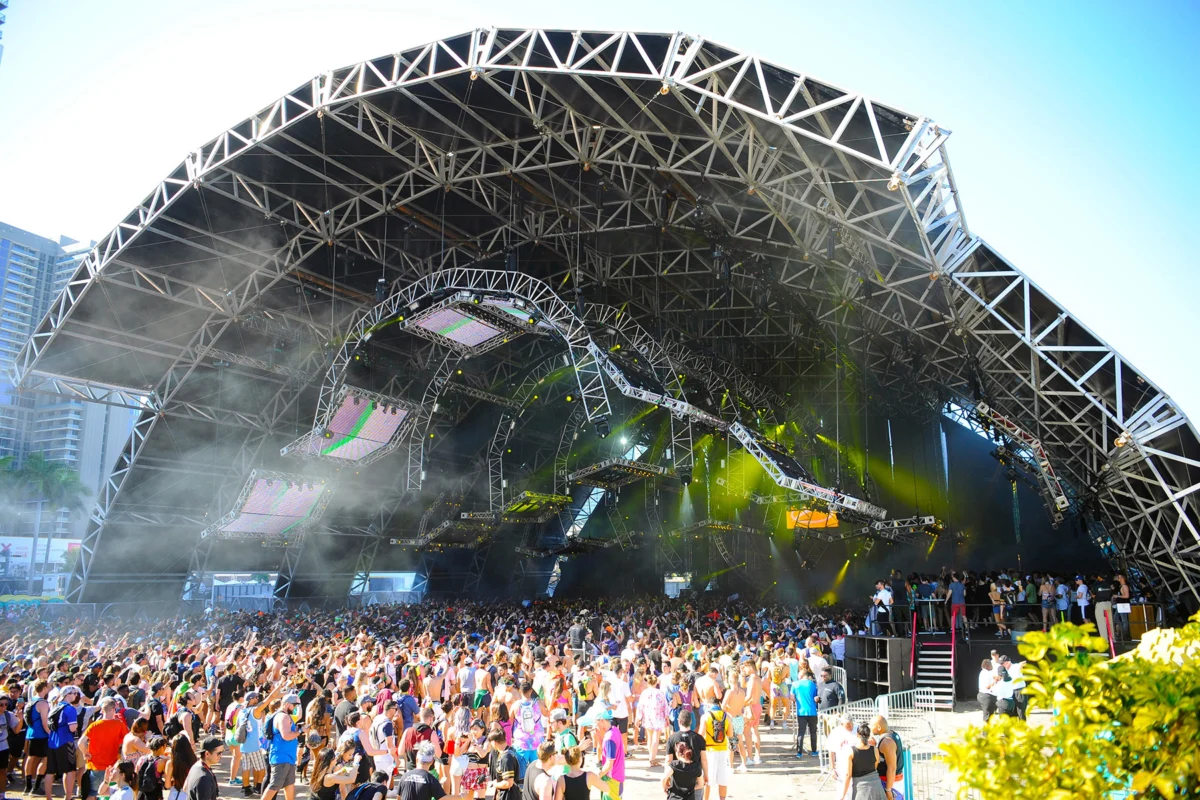
A consortium of downtown Miami residents has initiated new legal proceedings against the Ultra Music Festival, asserting that the globally renowned electronic dance music (EDM) event has flagrantly violated a prior settlement designed to mitigate sound levels. The lawsuit, filed on Wednesday, April 22, accuses Ultra of inflicting "psychological torture" upon its neighbors each spring through what residents describe as an "inescapable warzone of low-frequency bass," coinciding with the Miami City Commission’s controversial decision to grant Ultra a new 20-year agreement to continue operations at Bayfront Park.
The legal action, brought forth by the Downtown Neighbors Alliance (DNA), marks a significant escalation in a long-standing dispute between the festival organizers and the burgeoning residential community surrounding Bayfront Park. Five years after a previous legal settlement aimed at resolving persistent noise complaints, the DNA contends that Ultra has "brazenly obliterated" the terms of that agreement. The plaintiffs specifically cite a "relentless sonic assault" during this year’s festival, which concluded last month, as well as previous editions, claiming consistent breaches of agreed-upon noise caps.
The Genesis of Conflict: Ultra’s Rise and Urbanization of Downtown Miami
Ultra Music Festival, established in 1999, began as a relatively modest one-day event during the Winter Music Conference. Over two decades, it burgeoned into one of the world’s premier EDM festivals, attracting hundreds of thousands of attendees and featuring a lineup of global superstar DJs and producers. By 2011, it had expanded to a three-day spectacle, solidifying its status as a major international cultural event. Its primary location, Bayfront Park, offers a picturesque waterfront setting against the dramatic backdrop of Miami’s skyline, making it an ideal, albeit increasingly contentious, venue for such a large-scale event.
Concurrently with Ultra’s expansion, downtown Miami underwent a dramatic transformation. What was once primarily a commercial and financial district began evolving into a densely populated urban residential hub. A surge in condominium tower construction brought thousands of new residents into close proximity with Bayfront Park, setting the stage for an inevitable clash between the vibrant, high-energy festival culture and the desire for peace and quiet in residential living spaces. This demographic shift created a dynamic tension that has fueled years of legal battles and community grievances.
A History of Discord: The Timeline of Ultra and DNA’s Confrontations
The current lawsuit is not an isolated incident but rather the latest chapter in a protracted conflict:

- Early 2010s: As downtown Miami’s residential population grew, so did the volume and frequency of complaints regarding noise, traffic, and public disturbances associated with Ultra. Residents began organizing, leading to the formation of groups like the Downtown Neighbors Alliance.
- 2013-2018: Initial complaints and negotiations between residents, city officials, and Ultra representatives aimed at finding common ground. These efforts often proved insufficient to resolve the core issues, leading to a build-up of frustration within the residential community.
- 2019 Relocation: Amid mounting pressure from residents and city commissioners, Ultra was compelled to relocate from Bayfront Park to Virginia Key. This move, however, proved problematic due to logistical challenges, traffic congestion, and environmental concerns, leading to its return to Bayfront Park in 2020. The 2019 relocation, though brief, highlighted the deep divisions and the city’s struggle to balance economic benefits with quality of life for its citizens.
- 2020 Lawsuit: Following its return to Bayfront Park, the DNA filed a lawsuit against Ultra, specifically citing violations of noise ordinances and public nuisance. This legal action laid the groundwork for the subsequent settlement.
- 2021 Settlement: During a two-year hiatus prompted by the COVID-19 pandemic, Ultra and the DNA reached a comprehensive settlement designed to resolve their ongoing disputes. The agreement stipulated several key conditions, most notably capping noise levels at 95 decibels (dB) at designated monitoring points and requiring robust sound monitoring at "most vulnerable" residential locations. At the time, leaders from the DNA expressed optimism, stating the deal would "allow Ultra and its neighbors to coexist."
- 2024, 2025, 2026 Festivals: According to the DNA’s new lawsuit, Ultra consistently breached the 2021 settlement during these editions, both by exceeding the 95 dB limit and by failing to implement adequate sound monitoring protocols as required.
- April 22, 2026: The DNA files the new lawsuit, alleging breach of contract and common law nuisance.
- April 23, 2026: Miami City Commissioners approve a 20-year extension for Ultra to continue holding the festival at Bayfront Park, just one day after the lawsuit was filed, adding another layer of complexity to the dispute.
The Allegations: "Apocalyptic Noise Levels" and "Psychological Torture"
The core of the DNA’s complaint centers on the assertion that Ultra has "materially breached" the 2021 contract. Lawyers for the residents articulate the impact in stark terms: "The ensuing acoustic bombardment is nothing short of psychological torture, turning downtown Miami into an inescapable warzone of low-frequency bass that violently shakes the foundations of residential towers and actively endangers human sanity." They further contend that "the apocalyptic noise levels generated by [Ultra] are offensive, annoying, and intolerable to any reasonable person of ordinary sensibilities, creating a severe life-safety hazard and inflicting emotional distress."
The 95-decibel limit established in the 2021 settlement is a critical benchmark. To provide context, 95 dB is roughly equivalent to the sound of a power lawnmower, a motorcycle 25 feet away, or a busy urban street. Prolonged exposure to sounds at or above 85 dB can cause permanent hearing damage. When festival sound systems consistently exceed 95 dB, particularly with powerful low-frequency bass, the impact on nearby residents can be profound. Low-frequency sound, unlike higher frequencies, penetrates solid structures more easily and can cause physical vibrations within buildings, leading to rattling windows, vibrating floors, and a pervasive sense of disturbance that is difficult to escape. This physical sensation, coupled with the sheer volume, contributes to the residents’ claims of "psychological torture" and "emotional distress."
The lawsuit highlights not only the alleged exceedance of decibel limits but also Ultra’s purported failure to properly monitor sound levels at critical locations, as mandated by the settlement. The DNA claims to have retained acoustic engineers whose reports document these violations, providing scientific evidence to bolster their legal arguments. Such reports typically involve detailed sound measurements taken at various distances and times, comparing recorded levels against regulatory limits and identifying patterns of non-compliance.
Ultra’s Defense and the City’s Position
In response to the lawsuit, Ultra’s chief administrative officer, Ray Martinez, issued a statement to Miami’s WPLG-10, asserting that the festival had "complied with all applicable requirements governing sound level" and vowed to "vigorously defend against the lawsuit." Martinez further stated, "Ultra will continue to act as a responsible neighbor, independent of any formal agreement or arrangement with the DNA or any other resident group, and irrespective of this lawsuit." While Ultra did not immediately provide a direct comment to Billboard regarding the specifics of the new filing, their stance indicates a firm denial of the allegations and a commitment to their operational practices.
The timing of the lawsuit, filed just one day before the City of Miami Commissioners granted Ultra a 20-year approval to remain at Bayfront Park, underscores the complex political and economic considerations at play. The City Commission’s decision likely weighed the festival’s significant economic impact on Miami – generating millions in revenue, supporting local businesses, and drawing tens of thousands of international tourists – against the persistent concerns of its residents. For city officials, finding a balance between fostering a vibrant cultural scene and ensuring residents’ quality of life is an ongoing challenge, particularly in a rapidly developing urban core. The long-term approval suggests the city views Ultra as a vital component of Miami’s global identity and economic engine, despite the ongoing community friction.
Broader Implications: Urban Living, Event Management, and Legal Precedent

This renewed legal battle between the Downtown Neighbors Alliance and Ultra Music Festival carries significant implications beyond the immediate parties involved.
1. The Future of Urban Event Management: The case highlights the escalating tensions inherent in hosting large-scale cultural events within increasingly dense urban environments. As cities worldwide experience rapid urbanization, the friction between commercial entertainment, economic development, and residential quality of life is becoming more pronounced. This lawsuit could set a precedent for how cities and event organizers navigate these conflicts, potentially leading to more stringent regulations, innovative sound mitigation strategies, or even reconsiderations of appropriate venues for such events.
2. Legal Precedent for Nuisance and Contract Law: The DNA’s dual claims of "breach of contract" and "common law nuisance" are critical. A successful breach of contract claim would underscore the enforceability of agreements made between event organizers and community groups, emphasizing accountability. A successful nuisance claim, particularly one focused on "psychological torture" and "severe life-safety hazard" due to noise, could strengthen the legal standing of residents in other cities facing similar issues, potentially influencing future urban planning and event permitting processes. It could establish a higher bar for what constitutes an acceptable level of disturbance in residential areas adjacent to event venues.
3. Economic vs. Social Welfare: The dispute encapsulates the perennial conflict between economic benefits and social welfare. While Ultra undoubtedly contributes substantially to Miami’s economy, the residents argue that this comes at an unacceptable cost to their health and well-being. This case compels a public reckoning with how cities prioritize these competing interests and whether economic prosperity should always outweigh residents’ right to peace and quiet.
4. Technological Solutions and Innovation: The lawsuit might also spur innovation in sound technology and urban planning. The need for effective sound containment and monitoring systems could drive the development of advanced acoustic barriers, directional sound arrays, and real-time noise mapping technologies that can help large festivals coexist more harmoniously with their neighbors. Investment in such solutions could become a mandatory component of event permitting in sensitive urban areas.
5. The Fate of Bayfront Park: The long-term lease granted by the City Commission means Ultra intends to remain at Bayfront Park for two more decades. However, a successful legal challenge from the DNA could jeopardize this long-term plan, potentially leading to injunctions, significant financial penalties, or even a reconsideration of the park’s suitability for such a high-impact event. This could force the city and Ultra to revisit alternative locations or significantly modify the festival’s footprint and operational protocols at Bayfront Park.
In conclusion, the renewed legal battle between the Downtown Neighbors Alliance and Ultra Music Festival is more than a localized dispute; it is a microcosm of the broader challenges faced by rapidly developing urban centers grappling with the balance between vibrant cultural events and the quality of life for their residents. As the legal proceedings unfold, the outcome will be closely watched by city planners, event organizers, and residential communities across the globe, potentially shaping the future of urban entertainment and the rights of city dwellers.