Johan Budi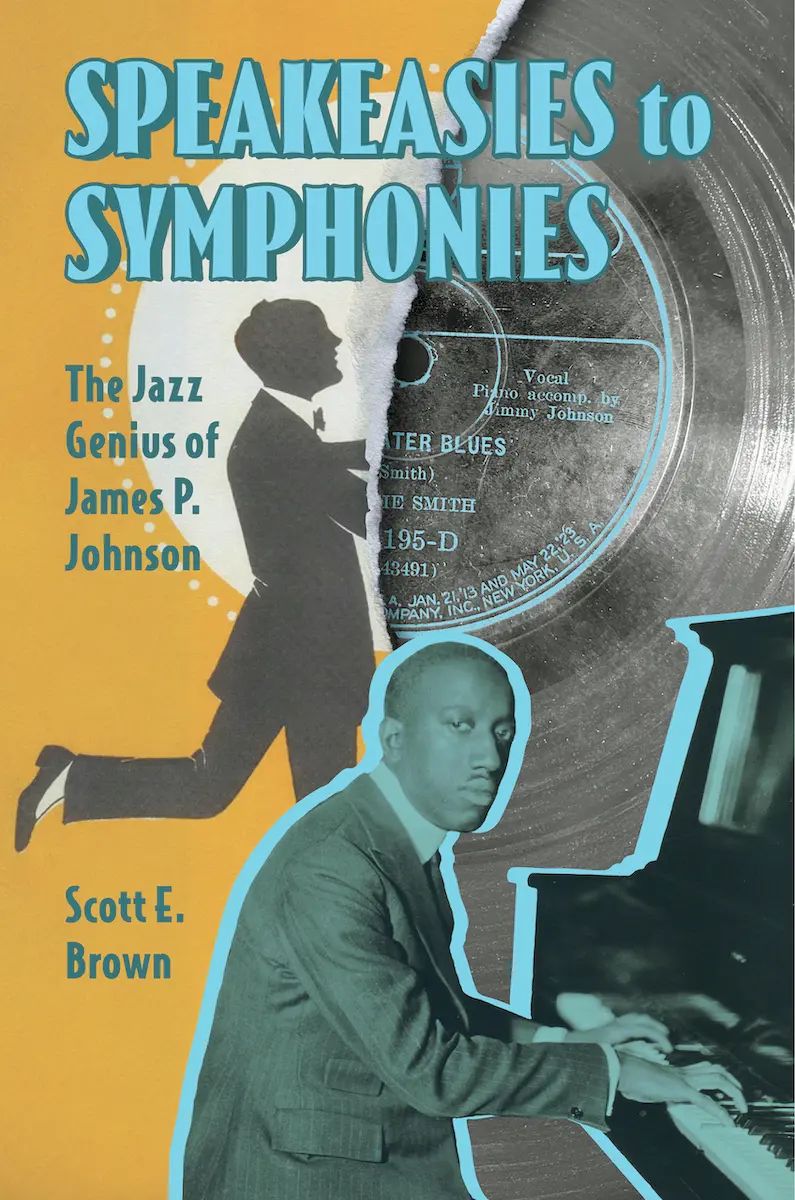
The Archival Depth of Scott E. Brown’s Research
The scholarly rigor of Speakeasies To Symphonies is evidenced by its 380 pages of text supplemented by 48 pages of meticulous notes. Brown’s research delves into the 19th-century origins of the Johnson family, revealing that James P. Johnson’s maternal grandfather was born into slavery in 1805. Having gained his freedom by the mid-1800s, this ancestral background provides a poignant context for Johnson’s own birth in 1894 in New Brunswick, New Jersey.
A notable discovery within the text is the origin of Johnson’s middle name, "Price." Brown clarifies that the name was adopted from a white family that maintained a long-standing relationship of employment and protection with the Johnsons, offering a glimpse into the social dynamics of the post-Reconstruction North. The biography further illuminates Johnson’s early musical education, identifying Alberta Simmons as his primary piano instructor. In a revelation that underscores the continuity of jazz history, Brown notes that Simmons also provided lessons to a young Thelonious Monk years later, establishing a direct pedagogical link between the stride era and the birth of modern bebop.
The Evolution of Stride Piano and the Harlem Renaissance
Central to the book’s thematic core is the technical and cultural development of "stride" piano. Brown provides a thorough consideration of what constitutes the style—a virtuosic evolution of ragtime characterized by a powerful "oom-pah" left-hand rhythm and highly syncopated, often improvisational right-hand melodies. During the Harlem Renaissance, Johnson’s prowess at "rent parties" and in the speakeasies of "The Jungle" (the Hell’s Kitchen district of New York) made him a legendary figure among his peers.
The narrative details Johnson’s interactions with a vast spectrum of the musical community. He was a mentor to Fats Waller and a profound influence on Duke Ellington, Art Tatum, and Count Basie. However, Brown does not limit the scope to famous contemporaries; the book includes hundreds of peripheral characters, from minor session musicians to club owners, creating a granular—if at times overwhelming—portrait of the New York jazz scene in the early 20th century.
Commercial Success vs. Symphonic Ambition
One of the most compelling arcs in Speakeasies To Symphonies is the dichotomy between Johnson’s commercial success and his frustrated aspirations in the world of "serious" composition. Unlike many of his contemporaries who struggled financially, Johnson and his family enjoyed a degree of economic stability. This was largely due to the enduring popularity of his 1923 composition, The Charleston, which became the definitive anthem of the Jazz Age. The royalties from this and other stage works ensured that Johnson was rarely in financial distress.
Despite this success, the book highlights Johnson’s deep-seated regret regarding his symphonic works. He composed several large-scale pieces, including Yamekraw: A Negro Rhapsody (1927), Harlem Symphony (1932), and the opera The Organizer (with libretto by Langston Hughes). Throughout the 1930s and 40s, Johnson struggled to have these works performed by major American orchestras. The racial barriers of the era relegated African American composers primarily to the "popular" or "race record" categories, often denying them entry into the prestigious concert halls reserved for the Western classical tradition. Brown notes that while interest in these orchestral works has grown posthumously—with several modern recordings now available—the lack of recognition during his lifetime remained a source of professional sorrow for Johnson.
Chronology of James P. Johnson’s Life and Legacy
To understand the scope of Brown’s biography, it is essential to view Johnson’s life through a chronological lens of his milestones and the broader shifts in American music:
- 1894: Born February 1 in New Brunswick, New Jersey.
- 1908: Moves to New York City, where he is exposed to the "ticklers" of the San Juan Hill and Harlem districts.
- 1917: Records his first piano rolls for the QRS company, including the influential "Caprice Rag."
- 1921: Records "Carolina Shout," which becomes the "test piece" for every aspiring stride pianist in New York.
- 1923: Composes the music for the Broadway revue Runnin’ Wild, featuring "The Charleston."
- 1927: Premieres Yamekraw: A Negro Rhapsody at Carnegie Hall (conducted by James Reese Europe’s associates).
- 1930: Records a series of piano duets with Clarence Williams, showcasing the informal, social side of his musical personality.
- 1940s: Continues to record as a leader and sideman for labels like Blue Note and Asch, bridging the gap between New Orleans jazz and swing.
- 1951: Suffers a severe stroke that effectively ends his performing career.
- 1955: Dies on November 17 in Jamaica, Queens, New York.
Critical Analysis and Scholarly Implications
Brown’s decision to omit a discography in this volume—relying instead on the one provided in his 1986 book—has been noted by some historians as a missed opportunity for a "one-stop" reference. However, the depth of the biographical data compensates for this omission. The book serves as a vital record of the socio-economic conditions of Black musicians during the early 20th century.
The author’s focus on the impact of alcohol on Johnson’s health provides a sobering look at the "after-hours" lifestyle that defined the era. While Johnson was a serious and disciplined musician, the culture of the speakeasies and the pressures of the entertainment industry took a physical toll, contributing to his death at the age of 61. Brown’s inclusion of private recordings and unreleased tracks provides a more complete picture of Johnson’s creative process, even if the book stops short of deep technical music theory analysis.
Broader Impact on American Musicology
The release of Speakeasies To Symphonies arrives at a time of renewed interest in the "lost" symphonic works of Black composers. Modern scholars and conductors have increasingly looked toward Johnson, Florence Price, and William Grant Still to diversify the American orchestral canon. By documenting the barriers Johnson faced, Brown’s work provides necessary historical evidence for the systemic exclusion of Black composers from the 20th-century classical stage.
From a journalistic perspective, the book is an essential corrective to the narrative that jazz was merely a "folk" or "spontaneous" art form. By highlighting Johnson’s formal training under Alberta Simmons and his sophisticated compositional structures, Brown reinforces the fact that the architects of jazz were highly educated and ambitious artists who viewed their work as part of a grander American musical tradition.
Conclusion and Reception
While the density of the names and peripheral details may prove challenging for the casual reader, Speakeasies To Symphonies is positioned as the definitive biographical resource for jazz historians. It captures the dual nature of James P. Johnson: the entertainer who fueled the parties of the Roaring Twenties and the serious composer who sought to elevate jazz to the symphonic level.
Scott E. Brown’s 40-year endeavor successfully preserves the legacy of a man who was often overshadowed by his more flamboyant protégés. By tracing Johnson’s lineage back to 1805 and following his journey through the recording studios of the 1920s and the concert halls of the 1940s, the book ensures that the "Jazz Genius of James P. Johnson" is documented with the precision and respect it deserves. For those with a serious interest in the roots of American music, this volume offers an unparalleled depth of information, cementing Johnson’s place not just in jazz history, but in the broader tapestry of American cultural identity.