Johan Budi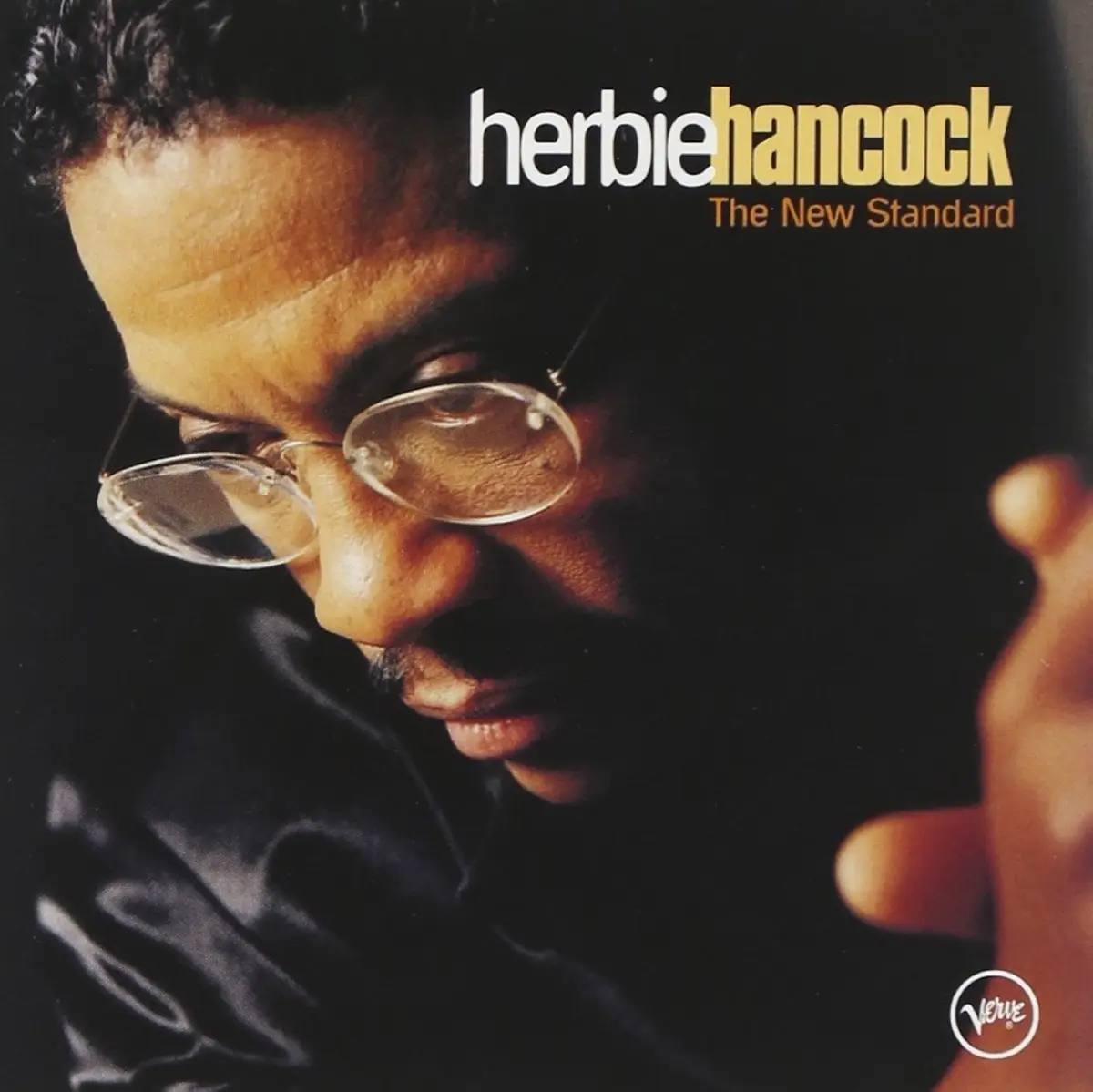
The release of Herbie Hancock’s latest studio effort, The New Standards, marks a significant milestone in the career of the legendary pianist and composer, representing his first "orthodox" jazz recording as a leader in approximately a quarter of a century. Issued under the prestigious Verve Records label, the album features a meticulously assembled sextet consisting of some of the most respected figures in contemporary jazz. Despite the high-caliber personnel and the superlative production quality provided by Verve’s engineering team, the project has sparked a complex dialogue among critics regarding the efficacy of adapting modern rock and pop compositions into the jazz idiom.
The Return to Acoustic Leadership
For decades, Herbie Hancock has been a chameleon of the music world, oscillating between the avant-garde acoustic sounds of the 1960s Miles Davis Quintet and the pioneering electronic fusion of the 1970s and 80s. The New Standards arrives as a deliberate pivot back to the acoustic piano, a move that many purists have anticipated since his early 1970s transition into synthesizers and funk-inflected rhythms.
The ensemble gathered for this session is nothing short of a "jazz dream team." It includes tenor and soprano saxophonist Michael Brecker, guitarist and electric sitarist John Scofield, bassist Dave Holland, drummer Jack DeJohnette, and percussionist Don Alias. This lineup represents a cross-section of jazz royalty, each member bringing a distinct voice and a history of innovation. The recording itself, captured in Hollywood, California, has been praised for its sonorous and clean aesthetic, a hallmark of Verve’s high-fidelity standards during this era of the label’s "new jazz" policy.
A Chronology of Artistic Evolution
To understand the weight of The New Standards, one must look at the timeline of Hancock’s career leading up to this 1996 release. Following his departure from Miles Davis’s "Second Great Quintet," Hancock explored expansive, atmospheric jazz with his Mwandishi band before achieving massive commercial success with the 1973 album Head Hunters. By the 1980s, he was at the forefront of the MTV era with the hit "Rockit," an electronic track that introduced scratching and turntablism to a global audience.
However, throughout the late 1980s and early 1990s, Hancock’s output as a leader of a traditional jazz small group was sporadic. While he participated in various "tribute" projects and collaborative efforts, The New Standards is his first concerted effort in 25 years to apply the rigors of the acoustic jazz sextet to a curated set of contemporary melodies. This hiatus from the "orthodox" format created immense expectations for the album, positioning it as a potential manifesto for the future of the genre.
Repertoire and Technical Composition
The central conceit of the album is the transformation of popular songs from the late 20th century into sophisticated jazz vehicles. The tracklist includes:
- "New York Minute" (Don Henley)
- "Mercy Street" (Peter Gabriel)
- "Norwegian Wood (This Bird Has Flown)" (The Beatles)
- "When Can I See You" (Babyface)
- "You’ve Got It Bad Girl" (Stevie Wonder)
- "Love Is Stronger Than Pride" (Sade)
- "Scarborough Fair" (Traditional, popularized by Paul Simon)
- "Thieves In The Temple" (Prince)
- "All Apologies" (Nirvana)
- "Manhattan" (Herbie Hancock)
- "Your Gold Teeth II" (Steely Dan)
The arrangements vary in complexity. Some tracks, such as "New York Minute" and "You’ve Got It Bad Girl," utilize a full brass and reed section, featuring veteran players like Oscar Brashear and Sam Riney. Others incorporate a string quartet, adding a layer of chamber-jazz sophistication to the proceedings. The inclusion of John Scofield’s electric sitar on "Norwegian Wood" provides a textural nod to the psychedelic era, while the rhythm section of Holland and DeJohnette ensures a high level of technical interplay.
Critical Analysis and Industry Response
Despite the technical proficiency on display, the album has met with a polarized reception. Some analysts argue that the project is a masterclass in modern improvisation, while others suggest that the results are only intermittently satisfying. A primary point of contention lies in the choice of material. While the repertoire is contemporary and vigorous, some critics have questioned whether a musician of Hancock’s stature should be engaging with certain pop melodies, which some have characterized as "pap."
Specific criticisms have been directed at the treatment of Paul Simon’s "Scarborough Fair," with some observers noting that the original’s delicate nature is lost in an arrangement they describe as "anodyne." Similarly, the rendition of Stevie Wonder’s "You’ve Got It Bad Girl" has been labeled by some as repetitive and overly busy. However, the album is not without its highlights. Kurt Cobain’s "All Apologies" has been noted for its interesting harmonic explorations, and Hancock’s original composition, "Manhattan," is cited as having considerable style and gravitas.
The overarching critique of the album is that it may be "less than the sum of its parts." The expectation was that an encounter between top-flight jazz musicians and superior rock material would result in a "heady mix of inspiration and polyvalent flair." For some listeners, this synergy failed to materialize fully, leading to comparisons with other recent Verve releases, such as Wayne Shorter’s High Life, which some found similarly formulaic.
Supporting Data and Market Context
The New Standards was released during a period of significant transition for the jazz industry. The mid-1990s saw a resurgence of interest in "classic" jazz sounds, fueled in part by the "Young Lions" movement led by Wynton Marsalis. Verve Records, under the leadership of executives like Guy Eckstine, sought to bridge the gap between traditional jazz excellence and modern commercial sensibilities.
Data from the era suggests that while The New Standards was a critical lightning rod, it was a commercial success within the jazz category. The album went on to win the Grammy Award for Best Instrumental Jazz Performance, Individual or Group, in 1997. This accolade suggests that while certain critics remained skeptical of the pop-to-jazz crossover, the industry at large viewed the project as a successful validation of Hancock’s continued relevance.
The production costs for an album of this scale—involving a premier sextet, additional brass, reeds, and strings—were substantial, reflecting Verve’s commitment to high-end jazz production. The label’s reissue program and "new jazz" policy were designed to maintain the genre’s prestige while expanding its reach into the CD-buying market of the 1990s.
Broader Impact and Implications for Jazz
The release of The New Standards raises fundamental questions about the nature of the "jazz standard." Historically, the jazz canon was built upon the Great American Songbook—compositions by Gershwin, Porter, and Berlin. Hancock’s project posits that the works of Prince, Peter Gabriel, and Nirvana should be viewed as the new foundational texts for improvisation.
This shift has significant implications for the genre’s future. By looking to the rock and pop of the 1980s and 90s, Hancock attempted to find a common language with a younger generation of listeners. However, the mixed critical response highlights the difficulty of this endeavor. To succeed, the jazz performance must do more than simply play the melody; it must "transcend, or at the very least reinvigorate and illuminate the material."
The concern among some scholars and critics is that such projects could signal a slide into "narcissistic trendiness" if not handled with the utmost artistic rigor. They fear that the pursuit of contemporary relevance might come at the expense of the depth and emotional resonance that defined the acoustic jazz tradition.
In the broader context of Herbie Hancock’s discography, The New Standards remains a fascinating experiment. It serves as a bridge between his experimental past and his later projects, such as the 2007 Joni Mitchell tribute River: The Joni Letters, which would eventually win the Grammy for Album of the Year. Whether viewed as a flawed masterpiece or an incidental aberration, The New Standards stands as a testament to Hancock’s enduring desire to push the boundaries of the jazz idiom, even when returning to its most "orthodox" forms.