Aveline Kirana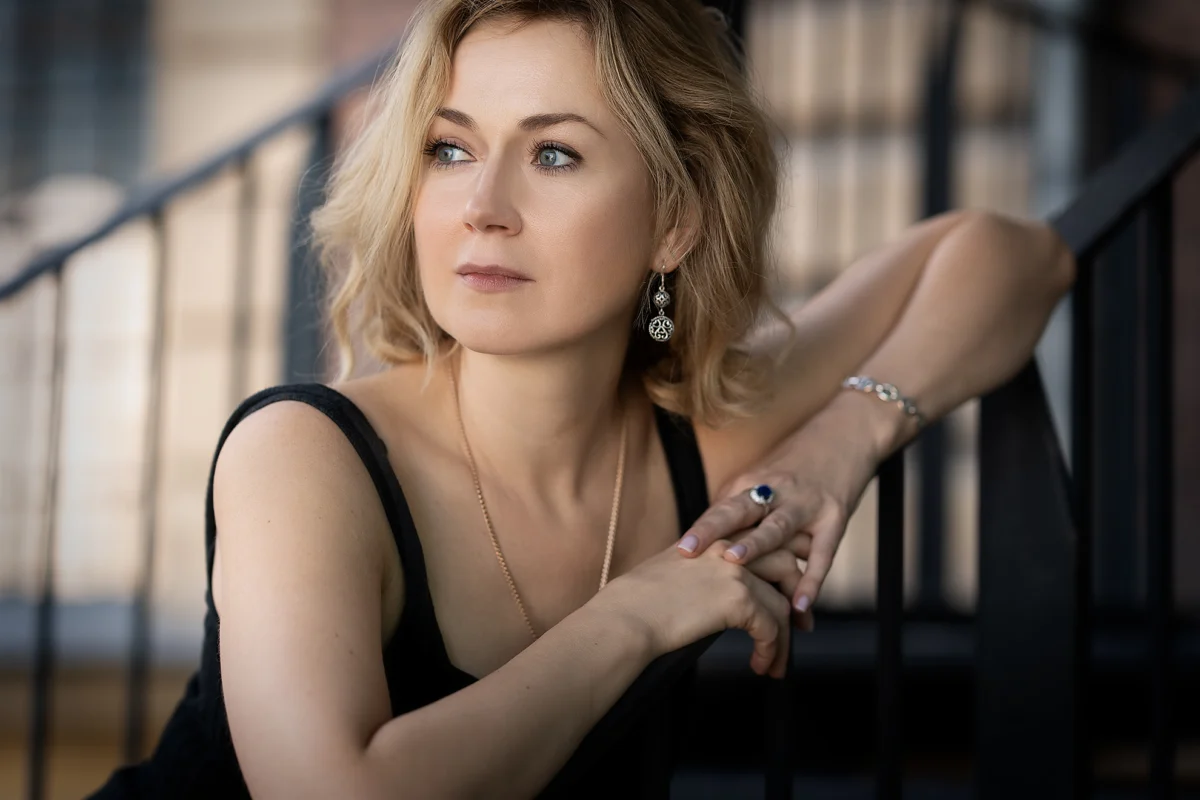
Svetlana Aksenova, a soprano hailing from St. Petersburg, has established herself as a formidable presence in the contemporary opera world, celebrated for her rare ability to fuse impeccable vocal technique with profound dramatic authenticity. Her formative years were spent at the prestigious Rimsky-Korsakov Conservatory, where her student performance of Tchaikovsky’s "Iolanta" first garnered significant critical acclaim, foreshadowing a career marked by exceptional artistry. Aksenova belongs to a distinguished echelon of artists who are often described as the "muses of demiurge-directors," individuals whose careers are not merely a compilation of performances on major international stages like La Scala and the Metropolitan Opera, but rather a testament to deep, sustained artistic collaborations with some of the most groundbreaking theatrical visionaries of our era.
Her international recognition is inextricably linked to her transformative work with director Dmitri Tcherniakov. As a pivotal figure in his conceptually driven productions, Aksenova has delivered performances that have been widely lauded as definitive interpretations of complex characters. Her portrayals of Fevroniya in "The Legend of the Invisible City of Kitezh" and Militrisa in "The Tale of Tsar Saltan" under Tcherniakov’s direction are frequently cited as benchmarks of operatic drama. Further cementing her reputation is her significant artistic partnership with Christoph Loy, a director renowned for his nuanced approach to psychological theatre. Aksenova’s portrayal of Tatiana in Loy’s highly discussed production of "Eugene Onegin" offered a fresh, unvarnished interpretation of the character, stripped of conventional pathos. Equally compelling was her performance as Elisabeth in Loy’s staging of "Tannhäuser" in Amsterdam.
Currently, Aksenova graces the stage in Madrid, performing in Bedřich Smetana’s "The Bartered Bride" at the Teatro Real. This engagement provided an opportune moment to delve into her perspectives on contemporary opera, the psychological intricacies of her characters, and the collaborative process that defines her celebrated career.
The Enduring Appeal of "The Bartered Bride" in Madrid
The Teatro Real’s presentation of Smetana’s "The Bartered Bride" marks a significant return of this beloved Czech classic to the Madrid stage after a hiatus of over a century. The opera, a vibrant tapestry of folk melodies and engaging characters, has found a receptive audience in Spain, a phenomenon that Aksenova attributes to several interconnected factors. "This year, almost all the major houses are staging it – I assume because of an anniversary, as is often the case," she explains. Indeed, 2026 marks 160 years since the opera’s premiere, a milestone that frequently prompts retrospectives and revivals. The historical context of the Teatro Real’s programming further amplifies this connection; the theatre celebrated the centenary of Smetana’s birth with a production in 1924, underscoring a long-standing appreciation for the composer’s work in Madrid.
Aksenova elaborates on the opera’s resonance with Spanish culture: "And yes, it resonates – with the Spanish temperament and with Spanish theatre. The first thing that comes to mind is the abundance of dance and choral music, that vivid folkloric element. You could probably draw a parallel with zarzuela: there are no spoken dialogues, but there are recitatives that are very similar. And there’s a certain lightness – there is drama, but it’s not heavy, not convoluted, not a bloody story, as is often the case." This intrinsic connection to vibrant musical traditions and narrative structures likely contributes to the opera’s warm reception by Spanish audiences.
A Collaborative Approach to Smetana’s Score
The production also features the debut of Gustavo Gimeno as music director of the Teatro Real, leading Smetana’s score with a distinctive transparency that has been described as almost Mozartian, eschewing what some might consider "romantic syrup." Aksenova’s perspective on this approach highlights the nuanced relationship between conductor and soloist. "People tend to put conductors and singers into boxes, don’t they? I’d like to point out that the conductor’s work with the orchestra doesn’t directly affect me. It affects how I perceive and hear the music. But a conductor doesn’t demand a specific kind of sound from me the way they might from instrumentalists."
Her collaboration with Gimeno was characterized by intense exploration of tempi. "Gustavo and I worked a lot – really a lot – on tempos. He wanted things faster, for the recitatives to really fly," Aksenova recalls. However, the practicalities of performance space quickly came into play. "Then, once we got on stage, we realized we had to take the acoustics of Teatro Real into account: it was too fast, and the recitatives needed a different pace, just like the music. So we had to broaden things a bit to make it sound ideal."
Beyond the technical adjustments, Aksenova emphasizes the human element of their collaboration. "What I would really like to highlight about working with Gustavo Gimeno is that he’s an extremely kind and decent person – truly delightful. And that doesn’t always automatically come with a conductor’s professionalism and talent." This emphasis on personal connection and mutual respect fostered an environment conducive to artistic growth. "You can’t imagine how important and comfortable that is for an artist, and how crucial it is in working on an opera and a character. You can suggest things, ask questions. He may not like something, or you may not. But I never once felt that he was ‘the boss’ and I had to obey. That’s so liberating – it opens me up as a singer. I feel free, and he’s willing to follow that as well. It’s about working toward a result, a win-win, as they say in business. Not a conductor on a pedestal, but two adult musicians thinking together."
A particularly striking aspect of Gimeno’s approach was his individualized attention to the singers. "We have two casts, don’t forget – so two Mařenkas. And something I encountered for the first time: he listened to each of us. We’re different, we breathe differently, we have different capabilities. He noted where each singer breathes." This bespoke approach to musical phrasing, where the singer’s unique vocal needs are paramount, is a testament to Gimeno’s empathetic and artist-centered direction. Aksenova shares an anecdote illustrating this: "He asked me if I wanted to ‘take a breath’ in a certain place, and I explained that in Czech, here, my text repeats, and I take a breath where I first say it, and the second time I say it with a different emotion, a different dynamic. And he said: ‘Yes, I see – got it, noted.’ And we just moved on. That’s fantastic. Because I know many other conductors who say, ‘I said together with me!’ – and that’s it. Breathe here and here, no matter what." This anecdote underscores a profound shift towards a more collaborative and singer-empowering model of musical direction.
Laurent Pelly’s Vision: Humor and Emotional Depth
The staging of "The Bartered Bride" by French director Laurent Pelly is characterized by its sharp wit and distinctive visual aesthetic. Aksenova describes the production’s world as one of "bright geometry and almost surreal farce." However, she emphasizes that this outward appearance does not overshadow the emotional core of the characters. "When I’m on stage, inside it – especially during rehearsals – I don’t think about that at all. Laurent is not the kind of director who spends two hours explaining a concept and immediately puts you in a box."
Aksenova highlights the trust inherent in her working relationship with Pelly. "You don’t see what’s in his head during the process – you only see the result from the outside at the very end. It’s a matter of trust on both sides." She further describes Pelly as "a very sensitive person – vulnerable, empathetic. But so am I. So it all makes sense to me." This shared sensitivity, what she terms "Highly Sensitive People," allows for a deep connection and an organic development of character. "He reacts to everything, to the smallest nuances, to things you don’t even know about yourself yet. And he waits for you to reveal yourself, your emotion – and he will integrate it. He doesn’t want to break you, he wants to understand your nature, how you’re built, so he can carefully incorporate you into his concept, not endlessly explain it."
The integration of Aksenova’s emotional discoveries into Pelly’s grander vision is a testament to their shared artistic purpose. "Later I saw how much time was devoted to choreography, to the staging itself – there’s enormous work with the chorus as well. So the sketch we made together ended up fitting perfectly into his vision. And again, I’m sincerely happy about that."
Crucially, Pelly’s direction steered Aksenova away from conventional comedic tropes, urging her toward a more profound emotional reality. "As for the role’s inner content, he spoke to me about it at the very end. He said that for Mařenka this is a nightmare of a day – and everything that happens on stage is really about her. Even though I only learned this explicitly at the end, we coincided perfectly in feeling. And I added movement based on what I felt." She further notes Pelly’s specific guidance: "Another important point: I like to joke around, and this is a comic opera – it seems simple. But every time I did something ‘comic opera-like,’ Laurent immediately removed it and asked me to be as serious as possible. ‘Give me the real thing,’ he said." This direction allowed the underlying drama and emotional weight of Mařenka’s plight to shine through, creating a performance that deeply resonated with the audience.
Deconstructing Mařenka: Beyond Comic Archetypes
Aksenova’s interpretation of Mařenka challenges the traditional perception of the character as solely a figure of lighthearted comedy. She argues that the opera’s central conflict is far from humorous. "How is she comic? Not at all – it’s not funny what’s happening," Aksenova asserts. "That’s what makes her modern: she goes against her parents, she refuses to accept her fate, she follows her love. She clearly says that if she can’t marry the man she loves, she’ll remain alone – and she won’t marry anyone else. For her, it’s all real, and quite harsh."
The late addition of the third-act aria, a piece of considerable musical and emotional depth, further supports this interpretation. "And look at the aria in the third act – it’s extraordinary. It was written and inserted into the opera 20-25 years later, when Smetana had reached a completely different level of maturity. It feels like music from a different opera. There’s nothing dance-like about it. Here we have a mature composer, and such beautiful music. Of course it invites more drama – and you want to give it." The juxtaposition of this profound musical statement with the ensuing "Chicken Run" sequence, which Aksenova describes with a wry "chick-chick-chick," highlights the complex emotional landscape of the character and the opera itself. "Mařenka turns around, not knowing what to do, running back and forth. What is this? How is it possible? Why? How could he? For the voice, it’s actually difficult – the transition, the sudden shift in rhythm and intonation."
The theme of the "sale" of the bride, while historically rooted, carries potent contemporary implications. Aksenova views Mařenka as a proactive agent, not a passive victim. "Your Mařenka seems like a woman who doesn’t wait for salvation or marriage like manna from heaven, but plays her own game. How did you build her inner strategy of fighting for personal freedom?" Her response is refreshingly grounded: "By walking in the park and genuinely enjoying the beauty of Madrid."
When asked for advice to her heroine from the perspective of 2026 regarding the infamous 300 florins and her choice of husband, Aksenova offers a pragmatic and sharp assessment of Jeník. "I’d say: ‘That’s not enough.’ Personally, I’d also think twice about Jeník. He’s staging all this, but he tells her nothing – she suffers, his beloved! And how do you live with a trickster like that? What’s the next surprise – what will he sell, to whom, for how much? ‘Another surprise, darling?’ You’ll always be on edge – where did the money come from, who else did he deceive? And what about your child – is he trading at the market now? And so on." This unflinching analysis reveals Aksenova’s commitment to portraying Mařenka’s agency and her potential for strategic decision-making in a complex social landscape.
The Art of Partnership: Vocal Chemistry and Shared Journeys
Aksenova’s collaborations extend beyond directors to her fellow singers, with a notable partnership with tenor Pavel Černoch. Their duets in "The Bartered Bride" have been praised for their "tonal unity." Aksenova expresses a particular fondness for working with Černoch. "This is my third opera with him, third Czech opera – and all three with him. He invites me; he’s a wonderful partner. It just worked out that way, and it’s great." Their previous collaborations include successful productions of "Rusalka" in Paris and "Jenůfa" in Vienna.
The question of whether Smetana’s music is inherently international or if a singer’s "Czech background" plays a significant role is met with a nuanced response. "The music is, of course, international – but I love Pavel in a special way." She highlights his supportive nature: "He’s very supportive. If I ask, he’ll correct me, but he never imposes – never says ‘this isn’t ideal Czech.’ He respects you and always points out what worked well. And he’s funny, sincere – I adore him. It’s so good to work with someone you simply enjoy being with. He’s very positive – whatever happens, his positivity helps." This emphasis on mutual respect and positive collaboration underscores the vital role of partner dynamics in achieving exceptional operatic performances.
The Unique Acoustic Landscape of Madrid
The Teatro Real’s distinctive acoustics present a specific challenge and opportunity for performers. Aksenova acknowledges this, recalling the adjustments made during rehearsals. "I already mentioned the recitatives – we had to adapt them. I also noticed that when you sit in the auditorium, the sound changes a lot depending on where you sit – not just stalls versus balcony." She further notes the variability within sections of the auditorium, stating, "That’s true in any theatre, of course – but here, even within the stalls, the experience varies greatly."
Despite these complexities, Aksenova finds the Madrid stage to be a rewarding environment for both performers and audiences. "In Madrid, I think it works both ways – you feel good on stage, and it carries in the hall. That’s wonderful." She also comments on the spatial dynamics on stage, particularly with the presence of a large chorus. "On stage, there are specific key positions, but in the auditorium many seats don’t see them. When we all came on stage together, everything shifted and narrowed. If I used to walk this way, now I had to go that way. But I adapted quickly. And of course, there’s a huge chorus on stage, which must both look good and sound good."
Mařenka’s Place in a Storied Repertoire
Reflecting on Mařenka’s position within her artistic journey, Aksenova views the role as a departure from her more frequently encountered dramatic and tragic characters. "For me, it’s less about Smetana and more about the genre – I’ve never done anything quite like this." She contrasts this with her experiences singing Mozart’s Countess in "Le nozze di Figaro" and Donna Elvira in "Don Giovanni," noting that while these characters do not die, they are often steeped in deception and complex emotional turmoil.
The opportunity to inhabit a role where intense suffering or death is not the central narrative arc is a significant and welcome change. "It’s a completely different feeling to sing a role where you don’t have to suffer intensely – or die. It’s wonderful – a rare case in my repertoire!" The vocal demands of Smetana’s music, including specific coloratura passages, also presented an enjoyable challenge. "And those lovely Smetana coloraturas – there aren’t many, but they require a certain vocal work. I really enjoyed it. I’d happily ‘cluck’ some more."
Aspirations for Dramatic Heights
Looking ahead, Aksenova harbors a strong desire to embody Katerina Izmailova in Shostakovich’s "Lady Macbeth of Mtsensk." "One I really want is Katerina Izmailova. I know I’ll be a bombshell Lady Macbeth of Mtsensk! I understand that woman completely. I’m waiting for it – with a good director, preferably, and definitely a good conductor." This ambition stems from a deep connection with the character’s complex psychology and the opera’s powerful dramatic scope.
Her dream repertoire also includes Janáček’s Káťa Kabanová, a role she feels aligns with her own nature. Additionally, she expresses a long-standing connection to Verdi’s "Il trovatore," a role she has rehearsed but not yet performed, hinting at a complex personal journey with the character. Massenet’s "Hérodiade" is another opera she champions for its beauty and relative obscurity, expressing a desire to see it staged more frequently. The expansive world of Puccini also beckons, with a desire to explore the diverse dramatic and vocal demands of his heroines.
The Foundation of an Actor’s Craft
Aksenova identifies Konstantin Stanislavski’s method as the primary influence on her acting approach. "Mostly Stanislavski. His method is about immersion and truly living the role. So everything is honest, everything is real. I live through it all, I think through everything." This commitment to authenticity and psychological realism forms the bedrock of her powerful stage presence.
Her innate inclination towards performance was evident from childhood. She recounts childhood memories of improvisational play, mimicking commercials and hosting imaginary guests while cooking. "I feel like I’ve been performing since childhood." This natural inclination led her to explore dramatic theatre, though her path ultimately diverged towards opera. She recalls applying to theatre school in St. Petersburg, balancing this ambition with her academic pursuits in mathematics and physics. However, a profound personal experience shifted her trajectory. "And there was another part of my life: at that time I was already singing in the church choir, from the age of sixteen – in the church and at the Theological Academy. And one day I had the most beautiful dream of my life, where my path was simply shown to me. I saw clearly where I had to go, that this was exactly it. After that, everything became easy, because I understood that when I sing, a kind of light opens up – and it needs to be carried further."
The Voice as a Sacred Trust
Aksenova offers profound advice to aspiring artists, emphasizing the nature of talent as a gift to be served rather than a possession to be exploited. "That’s a very important thing you just said – and it shouldn’t be forgotten, especially by young artists. You must not forget that the voice doesn’t belong to you. That’s crucial. Once you understand that, you start treating it completely differently." This perspective fosters a sense of stewardship and deep respect for the instrument. "It also becomes much easier to protect it – even to say ‘no.’ To say, for example: my voice needs me to eat this or that right now. And that’s truly important. Because sometimes we see that someone has a voice today, and tomorrow it’s gone… These are sacred things. Talent must be served. You cannot neglect it. You cannot subordinate it. And you cannot think that it serves you."
Svetlana Aksenova’s journey, from her early promise at the Rimsky-Korsakov Conservatory to her current standing as a celebrated soprano, is a testament to her unwavering dedication to vocal artistry and dramatic truth. Her collaborations with visionary directors and her insightful interpretations of complex characters continue to shape the landscape of contemporary opera, offering audiences profound and unforgettable experiences.