Nayara Elvina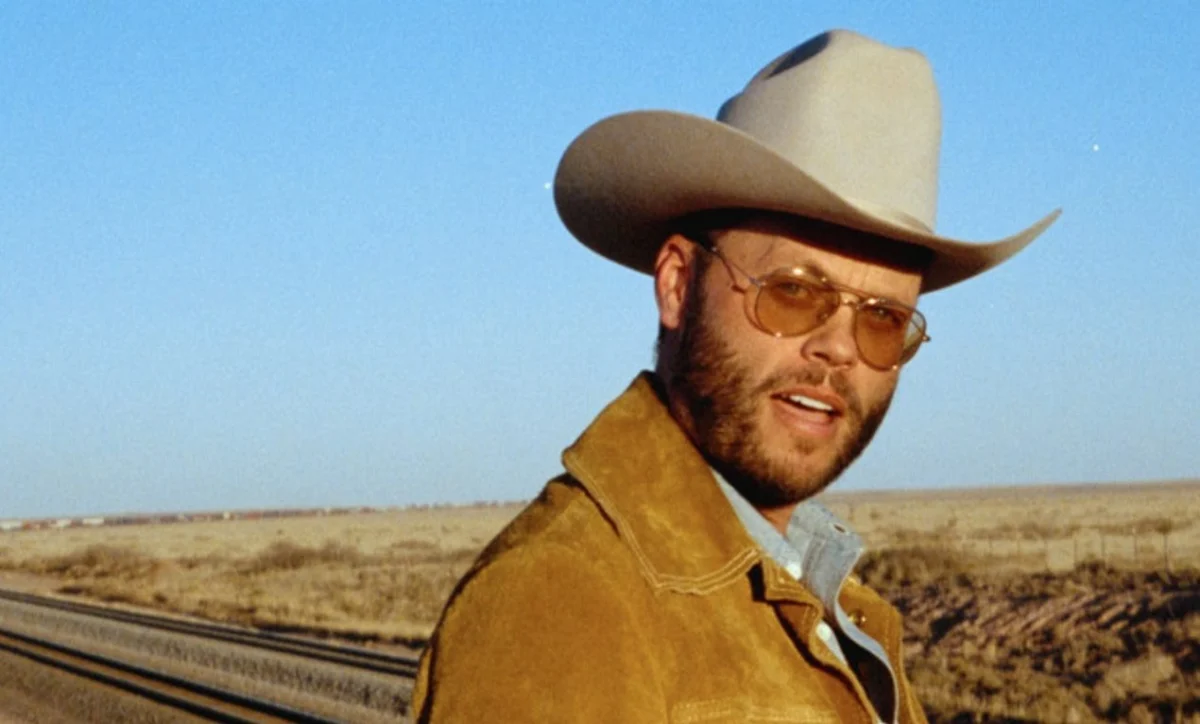
The release of Clovis marks a pivotal turning point in the career of Charley Crockett, arriving as both a prolific musical achievement and a definitive severance from the traditional major label infrastructure. Following the conclusion of his critically acclaimed Sagebrush Trilogy, Crockett’s decision to drop a 14-track surprise album only three weeks after his previous record, Age of the Ram, has sent ripples through the country and Americana music industries. This new body of work, co-written largely with long-time collaborator Shooter Jennings, serves as the inaugural release under Crockett’s own imprint, $10 Cowboy. The transition represents a calculated shift away from Island Records and Universal Music Group (UMG), the entities responsible for his last three major projects. By self-funding the production at a reported cost of $300,000, Crockett has effectively transitioned from a rising star within the corporate system to a fully autonomous entity, echoing the historic "outlaw" movements of the 1970s.
The Strategic Shift to Independent Distribution
The move to the $10 Cowboy label is more than a branding exercise; it is a structural change in Crockett’s business model. For the past several years, Crockett’s output was funneled through Island Records, a subsidiary of the global conglomerate Universal Music Group. While this partnership provided significant reach and resources, Crockett has recently been vocal regarding the friction between artistic velocity and corporate timelines. The surprise nature of Clovis—arriving less than a month after Age of the Ram—would likely have been impossible under a standard major label release schedule, which typically requires months of lead time for marketing, physical manufacturing, and international coordination.
By launching $10 Cowboy, Crockett joins a growing cohort of established artists who are reclaiming their masters and controlling their release cadences. The financial risk is substantial, as evidenced by Crockett’s public confirmation that he personally financed the $300,000 production costs. However, the potential for long-term revenue through direct ownership of master recordings often outweighs the initial capital expenditure for artists with a dedicated touring base. This independence allows Crockett to maintain his "prolific" reputation, which has seen him release as many as three albums within a single twelve-month period.
Historical Context: The Norman Petty Studios Connection
The recording location for Clovis is as much a part of the narrative as the music itself. Crockett traveled to Clovis, New Mexico, to record at the legendary Norman Petty Studios. This facility holds a sacred place in the annals of American music history, having served as the creative birthplace for Buddy Holly and the Crickets. It was also the site where Waylon Jennings, a foundational figure in the Outlaw Country movement, made his first professional recordings.
Choosing this specific studio provides a historical tether to the themes of independence and rebellion found throughout the album. By recording in the same rooms as Holly and Jennings, Crockett is visually and sonically aligning himself with artists who famously bucked industry trends to define their own sounds. The raw, analog aesthetic associated with the Clovis sound—characterized by its distinct echo and mid-century warmth—complements the 14 tracks, which include a mix of original compositions and a poignant cover of Johnny Cash’s "Don’t Take Your Guns to Town."
A Chronology of the Sagebrush Trilogy and the Surprise Transition
To understand the impact of Clovis, one must examine the rapid-fire timeline of Crockett’s recent discography. Over the last year, Crockett has been engaged in a massive creative undertaking known as the Sagebrush Trilogy.
- Lonesome Drifter: The first installment, which established the narrative tone of a wandering protagonist navigating the complexities of the American West.
- A Dollar A Day: A continuation of the themes of labor, struggle, and the high cost of living on the fringes of society.
- Age of the Ram: Released in early April 2026, this album was intended to be the grand finale of the trilogy. It featured the fictional outlaw Billy McLane and was lauded for its cinematic scope and Shooter Jennings’ polished production.
The release of Age of the Ram was accompanied by a traditional press cycle, but behind the scenes, Crockett was already preparing his exit strategy. Shortly after the trilogy’s conclusion, Crockett teased that "the next one’s already done," a statement that many industry observers assumed referred to a 2027 release. The sudden appearance of Clovis on streaming platforms and independent retail channels just three weeks later effectively upended the promotional cycle for Age of the Ram, signaling that Crockett was no longer interested in following the industry’s prescribed "breathing room" between projects.
Lyrical Analysis: The Narrative of Industry Defiance
While Clovis can be enjoyed as a standard country record, a closer examination of the lyrics suggests a conceptual "manifesto" regarding Crockett’s professional liberation. The opening track, "The Hallelujah Trail," introduces characters named Cuatro and Cholla. Given that "Cuatro" is a nickname often associated with those in the fourth stage of a journey or a specific partnership, many analysts suggest these characters are surrogates for Crockett and Jennings themselves. The lyrics "Stick it to ya, outlaw trail!" serve as a literal and figurative declaration of their departure from the mainstream path.
The track "One Eyed Jack" offers perhaps the most direct commentary on his recent business dealings. With lyrics describing a "fair weather friend" and a "knife in the back," the song mirrors Crockett’s public statements regarding his dissatisfaction with the "business people" he encountered during his decade-long tenure in the label system. By framing these industry disputes within the vernacular of traditional country music—using metaphors of gambling and betrayal—Crockett maintains his artistic persona while delivering a pointed critique of the Nashville and Los Angeles corporate machines.
Furthermore, the inclusion of Johnny Cash’s "Don’t Take Your Guns to Town" serves as a bridge between his previous work and his current state. In Age of the Ram, the character Billy McLane is a tragic outlaw. By covering a song about a young man (Billy) who ignores his mother’s advice and meets a violent end, Crockett appears to be "killing off" the fictional version of the outlaw to make room for his own real-world stand against the industry.
Technical Production and Collaborative Synergy
The partnership between Charley Crockett and Shooter Jennings has become one of the most formidable pairings in modern Americana. Jennings, the son of Waylon Jennings and Jessi Colter, brings a pedigree of independence that aligns perfectly with Crockett’s "10-cent cowboy" aesthetic. In Clovis, the production is notably stripped-back compared to the more orchestral flourishes seen in parts of the Sagebrush Trilogy.
The use of unconventional percussion, such as literal chains in "Waylon Rides Again," emphasizes the theme of breaking free from "the chains" of a contract. This sonic choice is a direct nod to the percussive experimentation found in early outlaw records. The 14 tracks were reportedly cut quickly, capturing a sense of urgency and "live" energy that is often lost in the high-gloss production environment of major label studios. This efficiency is what allowed the duo to complete multiple albums in a single year without sacrificing the quality of the songwriting.
Broader Implications for the Country Music Industry
Crockett’s move comes at a time when the "Texas Country" and "Americana" scenes are experiencing a massive surge in independent viability. Artists like Tyler Childers, Zach Bryan, and Sturgill Simpson have previously demonstrated that massive commercial success is possible without adhering to the traditional "Top 40" radio promotion model favored by major labels.
Crockett’s $300,000 investment in Clovis is a litmus test for the mid-tier of the industry. If an artist of his stature can successfully pivot to a self-owned model while maintaining his prolific output, it may encourage other artists to seek more equitable terms or exit their contracts entirely. Crockett’s public grievance—that he was told "tough luck kid, shouldn’t have f***ing signed it" by executives—highlights a growing tension between artists who prioritize volume and authenticity and labels that prioritize long-term ROI and controlled branding.
Conclusion: The "Indie Sunset" and Future Outlook
As the final notes of Clovis fade out with the track "Honky Tonk Philosophy," Crockett leaves his audience with a clear sense of his current psychological state. The line, "There was a time when I missed myself / But that was when I was someone else," serves as a poignant summary of his transformation. He is no longer an artist trying to fit into the machinery of a global label; he is an independent operator with the financial and creative capital to dictate his own terms.
The long-term impact of Clovis will likely be measured by how it influences the trajectory of Crockett’s career. By potentially "overshadowing" the conclusion of his own Sagebrush Trilogy, he has demonstrated that his primary loyalty is to his creative impulse rather than a marketing spreadsheet. For fans and industry analysts alike, Clovis stands as a bold assertion of autonomy, proving that in the modern era, the most powerful tool an artist possesses is the ability to walk away and start their own trail.