Aveline Kirana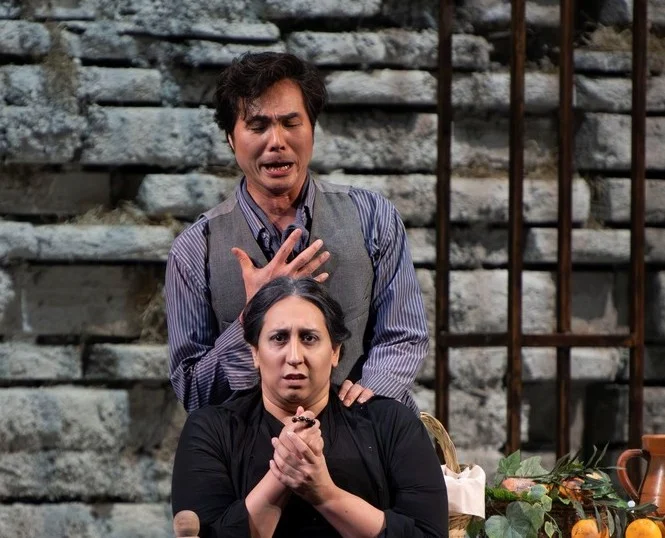
The venerable Teatro Colón in Buenos Aires inaugurated its highly anticipated 2026 operatic season with a daring programmatic choice: a fresh staging of the quintessential verismo double bill, Pagliacci and Cavalleria Rusticana, presented in a reversed order and unified under a singular directorial concept. This ambitious undertaking, featuring Leoncavallo’s Pagliacci as the curtain-raiser followed by Mascagni’s Cavalleria Rusticana, effectively set the tone for the theater’s seven-title operatic lineup, promising a season of both tradition and innovation.
While the pairing of these two beloved, concise verismo masterpieces might appear to be a surefire path to audience acclaim, their successful integration into the complex logistical framework of a major modern opera house presents significant challenges. The operas, though sharing a common genre, demand distinct vocal tessituras and technical prowess, necessitating a substantial rotation of principal singers to meet the rigorous vocal requirements. This ambitious casting endeavor was further amplified by the season opener’s presentation of a striking new production helmed by the internationally acclaimed stage director Hugo De Ana, whose vision aimed to reimagine these operatic cornerstones for a contemporary audience.
A Neorealist Cinematic Universe: De Ana’s Vision Unfolds
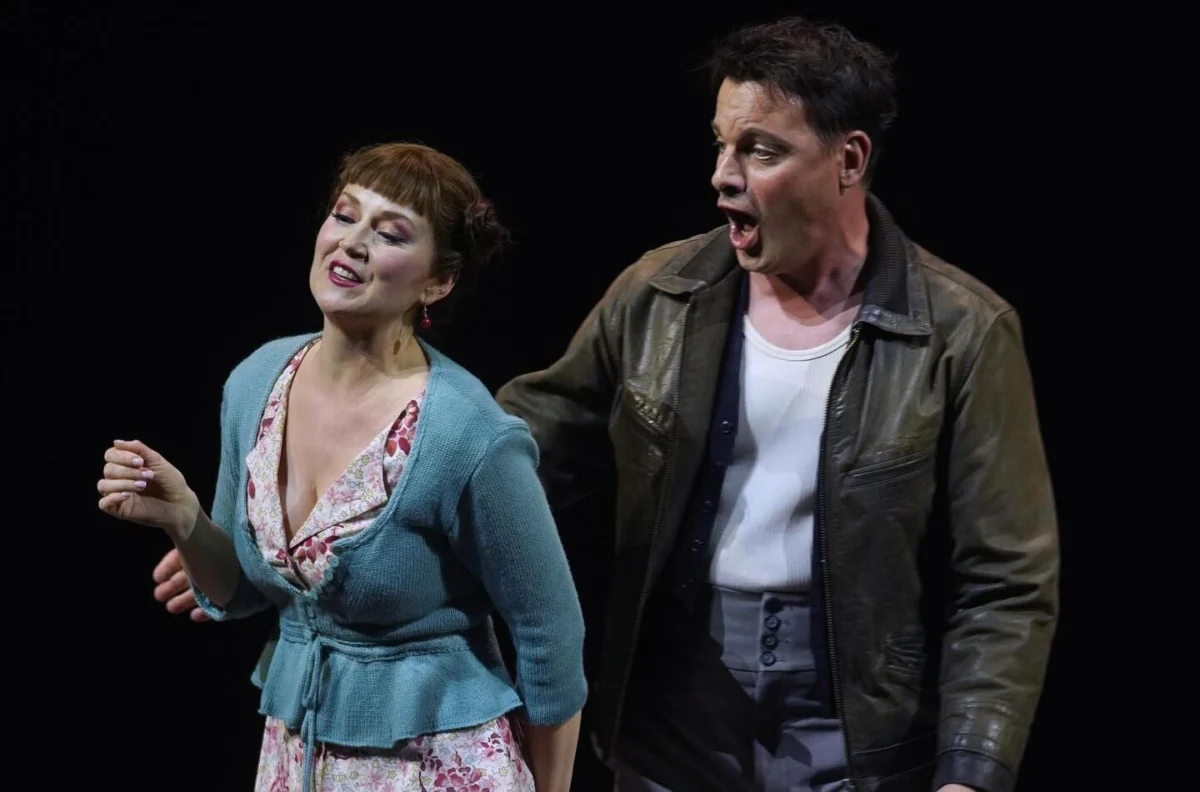
Hugo De Ana’s directorial concept masterfully situates both operas within a shared southern Italian milieu, specifically evoking the mid-1950s. This temporal and geographical anchoring allows De Ana to immerse the audience in the distinctive aesthetic, somber tones, and pervasive cultural influence of Italian Neorealist cinema. Throughout the evening, the production is replete with overt references and subtle nods to the post-war filmmaking movement that profoundly shaped cinematic storytelling.
The prologue of Leoncavallo’s Pagliacci, a pivotal moment that traditionally sets the stage for the unfolding drama, becomes instrumental in De Ana’s execution of this neorealist universe. Performed on the Teatro Colón’s iconic revolving stage, this segment serves to introduce the postwar Italian setting and frames the subsequent narratives as ostensibly fictitious, yet deeply resonant with lived reality. The revolving stage itself becomes a crucial element in maintaining dramatic continuity, facilitating seamless transitions between expansive public scenes and the more intimate, often clandestine, behind-the-scenes drama. This technical marvel effortlessly shifts the focus from Canio’s backstage anxieties to the rustic setting of Mamma Lucia’s tavern, underscoring the interconnectedness of the characters and their worlds.
De Ana’s staging is a monumental achievement in theatrical design, readily capable of standing alongside productions from the world’s leading opera companies. The director’s meticulous attention to detail is palpable from every vantage point. Notably, De Ana has succeeded in achieving a feat that many contemporary directors overlook: ensuring optimal sightlines for every seat in the auditorium. In an era where numerous local productions appear to prioritize the visual experience of the orchestra section, a staging that successfully projects its artistic vision to the entirety of the house is a triumph worthy of significant recognition and praise.
The stagecraft evokes the palpable sensation of being on a bustling film set, with scenes unfolding amidst exposed scaffolding and intricate cinematic rigging. At the commencement of each act, the exposed scaffolding serves to firmly anchor the situational context of the narrative, a presumed visual homage to Federico Fellini’s seminal film 8½. The costume design is equally commendable, presenting an authentic synthesis of the Neorealist aesthetic, meticulously capturing the sartorial nuances of the era and locale.
Overcrowding and Artificial Intelligence: Questionable Artistic Choices
Despite the undeniable scenic beauty and directorial ambition, two specific choices within De Ana’s production drew criticism and appeared to clash with the otherwise cohesive artistic vision. The first concern was the pronounced overabundance of supernumeraries. In an apparent effort to sustain a high level of visual spectacle, the stage was frequently crowded with an excessive number of actors, dancers, and circus performers, particularly during the course of Pagliacci. While the utilization of the revolving stage helped to modularize and manage this potential chaos, the sheer visual saturation was, at times, overwhelming, leaving the audience’s gaze uncertain of where to focus its attention.
The second, and perhaps more glaring, misstep was the perplexing integration of Artificial Intelligence (AI) into key musical moments. Both Pagliacci and Cavalleria Rusticana feature orchestral intermezzos of unparalleled beauty. Mascagni’s intermezzo, in particular, is universally recognized as one of the most beloved instrumental pieces within the classical canon. These interludes are intentionally designed as moments of profound stillness and introspection, offering a serene interlude before the inevitable tragic denouement. However, for this particular production, the creative team opted to project AI-generated imagery during these crucial pauses. In Pagliacci, this manifested as an anguished clown, while in Cavalleria Rusticana, an Easter procession was depicted, culminating in a bombed-out church, presumably representing the post-war devastation.
While the thematic intention behind these AI projections might have appeared fitting to the creative team, their execution felt ostentatious and ultimately distracting, detracting from the inherent emotional weight of the music. Given the production’s heavy reliance on Federico Fellini as a core stylistic inspiration, the projection of actual scenes from his extensive filmography—such as I Clowns, Amarcord, Le Notti di Cabiria, or La Strada—would have undoubtedly been far more poignant and artistically resonant. An even more compelling approach might have been to strip away all extraneous visual stimuli during these intermezzos, allowing the sheer, unadulterated beauty of the orchestral music to envelop the audience without transforming these operatic masterworks into mere soundtracks for a visual montage.
Prior to assessing the soloists, significant commendation is due to chorus master Miguel Martínez and the Teatro Colón’s Permanent Chorus, alongside Mariana Rewerski and the Children’s Chorus. These ensembles once again proved themselves to be a robust and superlative pillar of the theater’s operatic output, delivering performances of exceptional quality that consistently enriched the dramatic fabric of both operas.
The Clowns: Contrasting Takes on Tragedy
In Pagliacci, the pivotal role of Canio was essayed by two formidable international talents. The first cast featured Ukrainian tenor Denys Pivnitskyi, who showcased a voice of substantial heft and compelling dramatic bite. While he occasionally took liberties with the score’s phrasing, his visceral vocalism was effectively paired with a captivating stage presence. His interpretation of Canio portrayed him as an unhinged, deeply abusive figure, a portrayal that perfectly aligned with the toxic relationship dynamic established between him and Nedda.
Conversely, the second cast’s Canio was brought to life by Spanish tenor Alejandro Roy. Roy offered a highly polished, potent, and profoundly moving vocal interpretation. Although his acting was more restrained and measured, his vocal instrument performed the heavy lifting, delivering a thrilling and resonant rendition of "Vesti la giubba." This aria, so iconic that it inevitably invites comparisons to legendary past performances, saw Roy holding his own flawlessly. Audiences were able to simply relax and revel in the sheer vocal security he brought to the role, a testament to his technical mastery.
As the fragile Nedda, Argentine sopranos María Belén Rivarola (First Cast) and Marina Silva (Second Cast) delivered contrasting portrayals. Rivarola, possessing a plush lyric instrument capable of filling the cavernous Colón auditorium, honored the role with exquisite tonal beauty, even while navigating the extreme physical fragility and submission demanded by her character. Her duet with Silvio was arguably the vocal highlight of the evening, a moment of pure sonic delight. Silva covered the role dependably; while perhaps lacking the same level of vocal transcendence, she compensated with a deeply secure and convincing theatrical presence. It is worth noting that De Ana’s production placed a heavy emphasis on Nedda’s victimization and objectification, a directorial choice that undeniably impacted the physical and vocal delivery of both sopranos, highlighting the pervasive power dynamics within the narrative.
A character that typically remains secondary in operatic narratives, Silvio, assumed remarkable weight and prominence in this production. Interpreted by Ramiro Maturana (First Cast) and Samson McCrady (Second Cast), both baritones elevated the role through their sheer vocal solvency and power. The sprawling scene, "E fra quest’ansie in eterno vivrai," culminating in the duet with Nedda, emerged as an unexpected jewel of this Pagliacci. Both singers transformed a traditionally smaller part into a star turn, commanding the audience’s attention with their compelling performances.
Sicilian Bloodshed: A Resonant Cavalleria Rusticana
The sublime and raw Cavalleria Rusticana featured a compelling mix of international and local stars. South Korean tenor Yonghoon Lee, singing in the first cast, brought immense vocal power (squillo), dynamic nuance, and a gorgeous legato to his portrayal of Turiddu. Vocally, he delivered precisely what the score demanded. Theatrically, his performance seemed more inspired by the brooding bad boys of Marlon Brando than a Sicilian ex-soldier, yet his undeniable charisma was warmly embraced by the audience.
Expectations were exceptionally high for the highly anticipated debut of Ukrainian dramatic soprano Liudmyla Monastyrska as Santuzza in the first cast. Her massive vocal instrument easily sliced through the dense orchestration, filling every corner of the hall from her very first notes. While her phrasing occasionally lacked authentic Italianate bite and precise diction, she more than compensated with sheer vocal firepower. Theatrically, she delivered a Santuzza deeply attuned to the inherent tragedy of the story, imbuing the character with a profound sense of suffering and despair.
In the second cast, esteemed Argentine soprano Mónica Ferracani delivered her customary reliable emission and seasoned acting, leaning into the traditional martyrdom of the character. However, her performance, while solid, lacked moments of distinctive vocal transcendence that might have elevated it further. Argentine tenor Diego Bento proved a highly believable Turiddu, embracing the spirit of the staging with a potent vocal instrument. Nevertheless, during the intense confrontation scene with Santuzza, his technique faltered slightly. In his effort to maintain volume and dramatic thrust, he resorted to a noticeable throaty resonance that unfortunately robbed his upper register of its natural, ringing spin.
Just as Silvio commanded attention in Pagliacci, Mamma Lucia occupied an unusually prominent position in this production of Cavalleria Rusticana. This prominence was largely attributable to the formidable vocal and theatrical presence of Argentine mezzo-soprano Guadalupe Barrientos, who sang the role in both casts. Armed with a plush, resonant lower register, Barrientos maximized De Ana’s staging choices, transforming a supporting role into a deeply connected and scene-stealing anchor for the drama. Her commanding performance ensured that Mamma Lucia’s maternal anguish and moral compass resonated powerfully throughout the opera.
The Baritones Anchor the Evening
Finally, immense credit is due to Fabián Veloz and Youngjun Park, who undertook the Herculean task of singing the Prologue, Tonio, and Alfio across both operas. These baritones bore the brunt of the evening’s rapid costume and scenic changes, demonstrating remarkable stamina and versatility. Within this cinematic concept, the Prologue to Pagliacci took on heightened importance, functioning not merely as an introduction to Leoncavallo’s opera, but as a thematic gateway to the entire double bill, setting the stage for the operatic journey that lay ahead.
Argentine baritone Fabián Veloz, a prominent international star and a favorite at the Colón, sang with his trademark vocal solvency in the first cast. He offered a warm timbre and nuanced phrasing across all three demanding roles. South Korean baritone Youngjun Park, in the second cast, boasted a booming, resonant instrument and delivered highly accurate characterizations, shining particularly bright as the wronged teamster Alfio. Both men served as the foundational pillars of this ambitious production, their vocal strength and dramatic presence providing essential cohesion to the evening.
The Teatro Colón’s 2026 season opener was an event of undeniable magnitude, characterized by spectacle, brilliance, and significant musical merit. While there were certainly missteps—namely, a few questionable directorial choices and visually distracting technological gimmicks—these did not ultimately eclipse the overall triumph of the evening.
Ultimately, the Colón succeeded in presenting a staging whose scale and meticulous elaboration are worthy of one of the world’s most legendary opera houses. Bolstered by robust national and international vocal talent, this Pagliacci and Cavalleria Rusticana proved to be a highly successful launch to the lyric season. However, the production leaves behind a lingering cautionary note: as opera continues its evolution into the future, there is a critical need for discernment regarding the overreliance on artificial intelligence. It is imperative to recognize that the true, enduring magic of this art form relies exclusively on the irreplaceable power of human talent, emotion, and artistic expression. The integration of AI, while offering novel possibilities, must be approached with careful consideration to ensure it enhances, rather than detracts from, the profound humanistic core of opera.