Nayara Elvina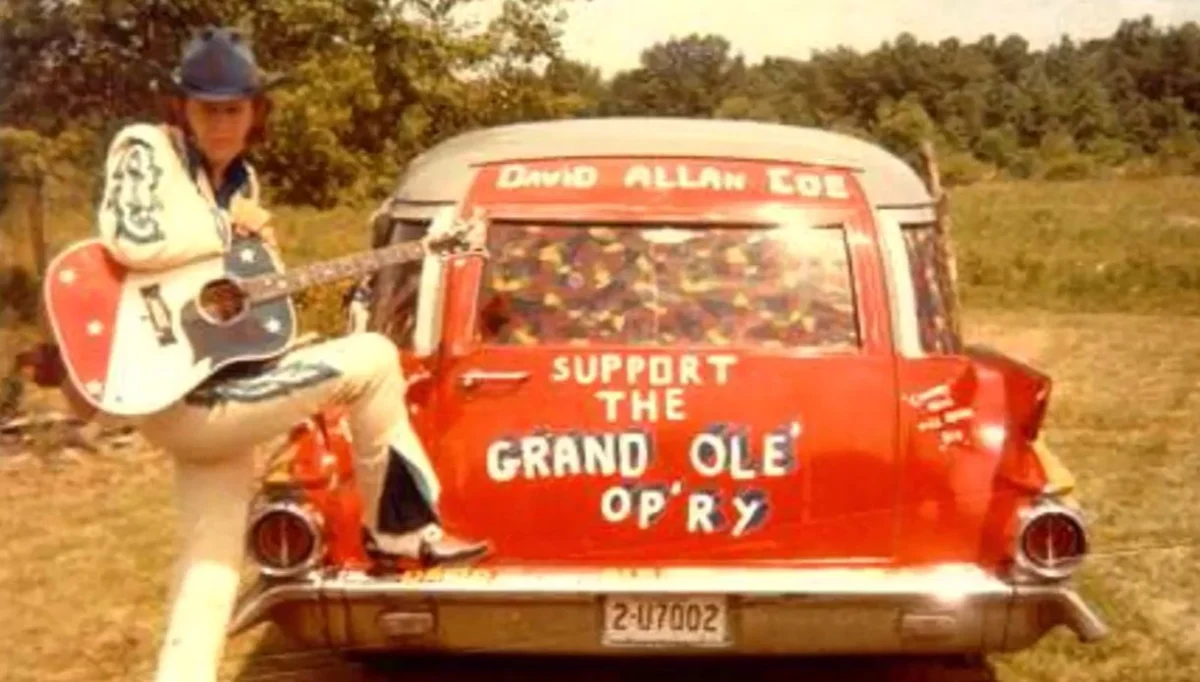
David Allan Coe, the enigmatic and frequently controversial figurehead of the outlaw country movement, passed away on April 29 at the age of 86. His death, which occurred while he was receiving treatment in an intensive care unit, was confirmed by a longtime representative. Coe’s passing marks the conclusion of one of the most storied and tumultuous careers in American music history, leaving behind a legacy defined by profound songwriting, a rebellious public persona, and a life story that often seemed to blur the lines between reality and folklore. Known as the "Mysterious Rhinestone Cowboy," Coe was a central architect of the 1970s outlaw movement, alongside figures such as Waylon Jennings and Willie Nelson, though his path to stardom was arguably the most unconventional of the group.
The Formative Years: A Life Defined by Institutionalization
Born in Akron, Ohio, on September 6, 1939, David Allan Coe’s early life was marked by a series of conflicts with the law and the social welfare system. At the age of nine, he was sent to a reform school, beginning a cycle of institutionalization that would define his youth and early adulthood. Records indicate that Coe spent the better part of two decades moving between juvenile facilities and adult correctional institutions, including the Ohio State Penitentiary.
It was during these periods of incarceration that Coe began to hone his craft as a songwriter. Music became a primary outlet for the frustrations and observations of a man living on the fringes of society. While many of his contemporaries in Nashville were studying the mechanics of the music industry through traditional channels, Coe was learning the blues and traditional country music from fellow inmates. This background provided his later work with an authenticity and grit that resonated with listeners who felt alienated by the increasingly polished "Nashville Sound" of the 1960s.
The Nashville Arrival: The Man in the Hearse
Upon his release from prison in 1967, Coe relocated to Nashville with the singular goal of pursuing a career in music. Lacking financial resources and industry connections, he adopted a radical approach to self-promotion. Coe famously lived out of a red and white Cadillac hearse, which he parked directly in front of the Ryman Auditorium, the then-home of the Grand Ole Opry.
During the weekends, as crowds gathered for the Opry’s performances, Coe would stand atop his hearse, performing his original songs and busking for tips. The vehicle was emblazoned with his name and the slogan “SUPPORT THE GRAND OLE OP’RY.” This calculated act of defiance and showmanship served two purposes: it provided him a platform to be heard by the most dedicated country music fans and ensured he caught the eye of industry executives passing by. This period of his life has become a cornerstone of country music lore, illustrating the "all-or-nothing" stakes of the early outlaw era.
Breakthrough and Songwriting Proliferation
Coe’s persistence eventually led to a contract with Shelby Singleton’s Plantation Records. His debut albums, Penitentiary Blues (1970) and Requiem for a Harlequin (1973), introduced his raw, blues-influenced style to a wider audience. However, it was his prowess as a songwriter for other artists that first established his financial stability and industry respect.
In 1973, Tanya Tucker reached the top of the charts with Coe’s composition, "Would You Lay With Me (In a Field of Stone)." The song’s success was a watershed moment, proving that Coe could write hits that appealed to mainstream sensibilities without sacrificing his lyrical depth. This success facilitated a move to Columbia Records, where he would release many of his most enduring works.
Perhaps his most significant contribution to the American songbook was "Take This Job and Shove It," which became a massive hit for Johnny Paycheck in 1977. The song transcended the country genre to become a cultural anthem for the American working class, later inspiring a motion picture of the same name. Additionally, Coe was the first to record "Tennessee Whiskey," a song that would later become a career-defining hit for George Jones and, decades later, a multi-platinum success for Chris Stapleton.
Defining the Outlaw Movement
While Willie Nelson and Waylon Jennings provided the commercial face of the outlaw movement, David Allan Coe provided its edge. His 1975 hit "You Never Even Called Me by My Name," co-written with Steve Goodman, is widely regarded as the definitive outlaw country anthem. The song famously includes a final verse that humorously checks off every trope required for a "perfect country and western song," including mention of trains, trucks, prison, and getting drunk.
Coe’s 1970s output, including albums like The Mysterious Rhinestone Cowboy and Longhaired Redneck, challenged the conservative norms of Nashville. He successfully bridged the gap between the traditional country audience and the burgeoning counterculture, as evidenced by the title track of Longhaired Redneck, which describes the tension and eventual camaraderie between hippies and cowboys in a roadside tavern.
Despite his musical genius, Coe remained a polarizing figure. His uncompromising nature and the controversial themes in some of his underground recordings led to a complicated relationship with the mainstream media and industry gatekeepers. However, his influence remained undeniable, as he continued to tour relentlessly and release music across several decades.
Posthumous Plans and Final Recordings
In the years leading up to his death, there was significant speculation regarding new material from Coe. Fans were encouraged by social media updates showing the veteran artist in the recording studio. Following his passing, his manager, Ken Madson, provided clarity regarding Coe’s final artistic contributions.
According to statements made to media outlets including TMZ, Coe recorded a final studio album in 2017. The project was initially shelved after a dispute with a record label that ultimately opted not to release the material. This "lost" album has remained unheard by the public for nearly nine years. Madson has announced plans to release the album posthumously on September 6, 2026, a date chosen to coincide with what would have been Coe’s 87th birthday.
The upcoming release is reported to feature a combination of re-imagined versions of his classic tracks and entirely new material. One specific track, titled "A Million Reasons," has been highlighted as a centerpiece of the collection. This posthumous release is expected to provide a final, definitive statement on a career that spanned over half a century.
Chronology of Key Events
- September 6, 1939: Born in Akron, Ohio.
- 1948–1967: Spent the majority of his youth and early adulthood in reform schools and prisons.
- 1967: Moved to Nashville and began living in a hearse outside the Ryman Auditorium.
- 1970: Released his debut album, Penitentiary Blues.
- 1973: Tanya Tucker reached #1 with Coe’s "Would You Lay With Me (In a Field of Stone)."
- 1975: Released "You Never Even Called Me by My Name," cementing his "outlaw" status.
- 1977: Johnny Paycheck’s version of Coe’s "Take This Job and Shove It" became a national phenomenon.
- 1983: Released "The Ride," a ghost story about Hank Williams that became one of his biggest solo hits.
- 2017: Recorded his final, as-yet-unreleased studio album.
- April 29, 2026: Passed away in an intensive care unit at age 86.
- September 6, 2026: Scheduled release date for his final posthumous album.
Broader Impact and Implications for Country Music
The death of David Allan Coe represents the fading of a generation of artists who prioritized individual expression and lived experience over commercial viability. Coe’s impact is visible in the work of modern artists like Jamey Johnson, Sturgill Simpson, and Eric Church, who have all cited the outlaw era as a primary influence on their approach to the "Nashville machine."
Analysis of Coe’s career suggests that his greatest contribution was his ability to synthesize disparate elements of American music—blues, rock, and country—into a cohesive narrative of the American underdog. While his persona was often larger than life, his songwriting remained grounded in the realities of struggle, heartbreak, and resilience.
As the industry prepares for the release of his final recordings, the legacy of David Allan Coe serves as a reminder of the power of authenticity in art. Though he was often at odds with the establishment, his contributions to the genre’s evolution are undeniable. His journey from a prison cell to the heights of the country music charts remains one of the most remarkable narratives in the history of the performing arts. In the final estimation, Coe was a man who lived the life he sang about, ensuring his place in the pantheon of American music legends.