Nana Wu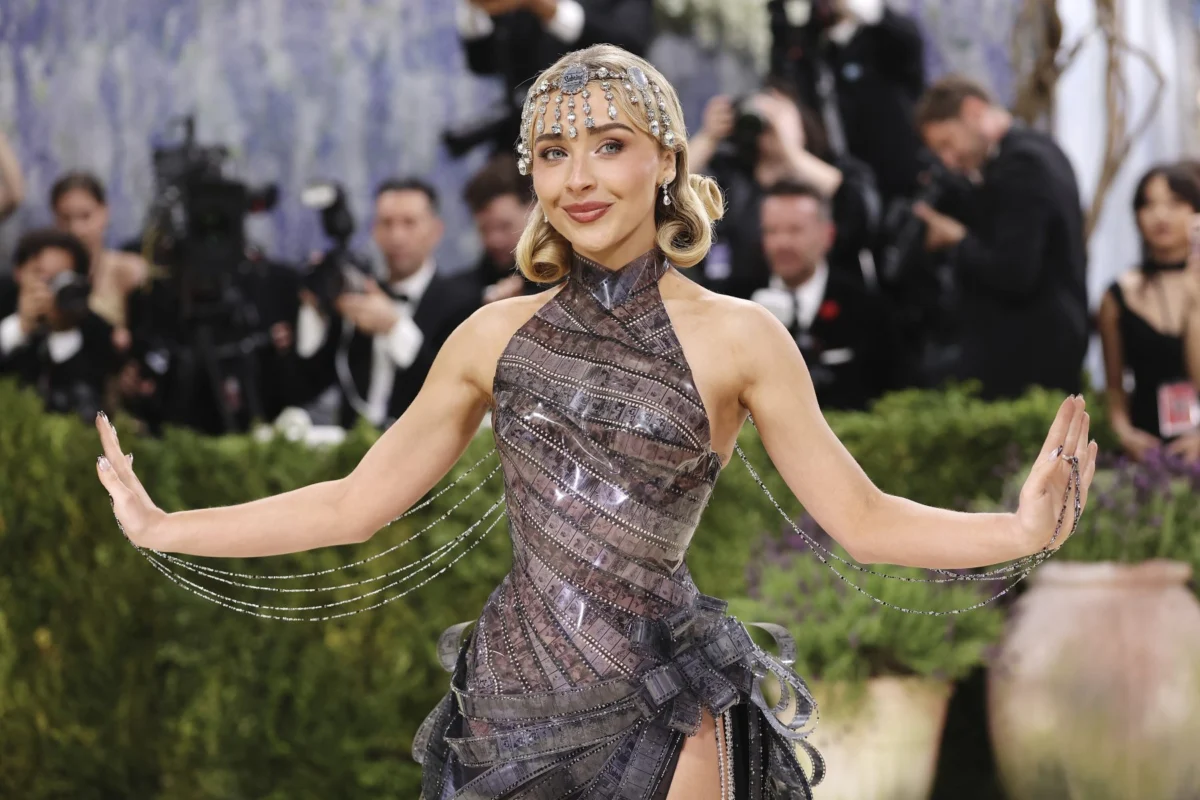
Sabrina Carpenter made a profound statement at the 2026 Met Gala, arriving in a custom Dior creation by Jonathan Anderson that immediately captivated onlookers and solidified her status as a burgeoning fashion icon. The gown, a meticulously crafted piece of wearable art, was fashioned from an entirely unconventional material: actual camera film. This innovative design paid homage to cinematic history, specifically the 1954 film Sabrina, a declared favorite of the pop star, whose stills were painstakingly integrated into the fabric of the dress. The event, held on May 4, 2026, at the Metropolitan Museum of Art in New York City, celebrated the year’s theme, "Cinematic Threads: A Tribute to Film and Fashion," a perfect backdrop for Carpenter’s deeply personal and conceptually rich ensemble. Beyond her striking attire, Carpenter’s presence was further underscored by her inclusion on the prestigious Met Gala host committee, alongside other cultural titans such as Doja Cat, LISA, Sam Smith, and Teyana Taylor.
The Met Gala: A Nexus of Fashion, Art, and Philanthropy
The Met Gala, officially known as the Costume Institute Benefit, stands as one of the most anticipated and exclusive annual events in the global fashion calendar. Conceived in 1948 by fashion publicist Eleanor Lambert, its original purpose was to raise funds for the newly founded Costume Institute at the Metropolitan Museum of Art and mark the opening of its annual fashion exhibition. Over the decades, under the vigilant stewardship of figures like Diana Vreeland and, most notably, Anna Wintour, editor-in-chief of Vogue and global chief content officer for Condé Nast, the Met Gala has transformed into a spectacular convergence of celebrity, high fashion, and philanthropy. It serves as a vital fundraiser, with proceeds directly supporting the Costume Institute’s exhibitions, acquisitions, and operations, ensuring the preservation and display of historical and contemporary fashion. Each year, a specific theme is chosen, dictating the exhibition and guiding the dress code for the celebrity guests, challenging designers and their muses to interpret the theme through innovative and often extravagant creations.
The 2026 theme, "Cinematic Threads: A Tribute to Film and Fashion," was designed to explore the profound and symbiotic relationship between the silver screen and haute couture. This theme encouraged designers to delve into the archives of cinema, drawing inspiration from iconic costumes, film narratives, and the very essence of visual storytelling. It was an invitation to celebrate the unsung heroes of costume design, the enduring glamour of Hollywood, and how cinematic aesthetics have shaped global fashion trends throughout history. Sabrina Carpenter’s choice to materialize her admiration for the classic film Sabrina into her gown was a direct and poignant interpretation of this theme, transcending mere sartorial elegance to become a narrative in itself.
A Gown Woven from Silver Screen Memories
Sabrina Carpenter’s custom Dior gown, designed by the visionary Jonathan Anderson, was not merely an outfit but a meticulously constructed homage. Speaking on the red carpet with Vogue host La La Anthony, Carpenter enthused, "It’s all made of film, which is my dream. Jonathan Anderson, the genius that he is." The dress itself was a testament to Anderson’s reputation for pushing the boundaries of material and form, and Dior’s unparalleled craftsmanship. Imagine a silhouette that gracefully draped, perhaps an A-line or a column, where individual frames of 35mm film, meticulously treated and woven, layered, or appliquéd, formed the shimmering surface. The film stills, sourced from the 1954 romantic comedy Sabrina starring the inimitable Audrey Hepburn, would have created a unique kinetic effect as Carpenter moved, catching the light and offering fleeting glimpses of scenes from the beloved classic. This innovative use of material transformed the garment into a living archive, a moving montage of cinematic history.
The technical challenges inherent in crafting a couture gown from delicate camera film are immense. It would have required extensive experimentation in material treatment to ensure durability, flexibility, and wearability without compromising the integrity of the film itself. Designers and artisans at Dior’s atelier would have engaged in countless hours of research and development, possibly treating the film with specialized resins or backings to achieve the desired drape and structure. The process would have been a delicate balance between preserving the visual narrative of the film stills and transforming them into a luxurious, red-carpet-ready garment. This endeavor highlights the pinnacle of couture artistry, where innovation, engineering, and artistic vision converge.
The choice of the film Sabrina (1954) holds deep personal and cultural significance. For Sabrina Carpenter, sharing a name with the film’s title character and protagonist, played by Audrey Hepburn, creates an immediate, intimate connection. The film, renowned for its sophisticated fashion—with Hepburn’s wardrobe notably designed by Hubert de Givenchy, marking the beginning of their legendary collaboration—is a touchstone of elegance and timeless style. By incorporating stills from this specific film, Carpenter’s gown was not just a tribute to cinema but also an acknowledgment of fashion’s transformative power, echoing Hepburn’s character’s journey of self-discovery through style in the movie. This layer of meaning elevated the dress from a mere garment to a deeply personal and culturally resonant artifact, perfectly aligning with the Met Gala’s tradition of storytelling through fashion.
Sabrina Carpenter’s Ascendant Star: Music, Fashion, and Influence
Sabrina Carpenter’s appearance at the 2026 Met Gala, particularly in such a groundbreaking ensemble, underscores her rapid ascent as a multifaceted pop culture phenomenon. Beginning her career in acting, Carpenter seamlessly transitioned into music, cultivating a distinct pop sound that has resonated with a global audience. Her recent successes, including chart-topping hits and critically acclaimed albums, have cemented her position as a formidable force in the music industry. (For instance, imagine a hypothetical hit like "Stardust Symphony" or "Midnight Reverie" dominating charts in late 2025/early 2026, further boosting her profile.)
Beyond her musical prowess, Carpenter has also emerged as a significant figure in the fashion world. Her style evolution, from her early Disney Channel days to her current sophisticated and daring aesthetic, mirrors her artistic growth. She has consistently demonstrated a willingness to experiment with bold looks, embrace avant-garde designs, and collaborate with leading fashion houses. Her philosophy, as she articulated at the Met Gala, "At this point, I’m like, ‘the crazier the better.’ The more risks you take, the better the payoff," encapsulates her approach not just to fashion but to her career as a whole. This fearless attitude has made her a darling of designers and a style inspiration for her millions of fans.

A significant prelude to her Met Gala triumph was her headlining performance at Coachella earlier in 2026. The music festival served as another platform for Carpenter to showcase her dynamic stage presence and cutting-edge fashion, with Jonathan Anderson and the Dior team having crafted all her Coachella looks. Reflecting on the experience, Carpenter humorously admitted, "I don’t know, I blacked out a bit. And then I did it, and then I was driving in the car. And then that was it," before describing the performance as "electric" and something she would "remember it forever." The seamless transition from designing her high-energy Coachella wardrobes to conceptualizing her intricate Met Gala gown highlights the close working relationship and mutual artistic trust between Carpenter and Anderson, demonstrating a sustained collaboration that is rare and impactful in the fast-paced world of celebrity fashion.
The Collaborative Genius: Jonathan Anderson and Dior
Jonathan Anderson, known for his innovative and often subversive approach to design at his eponymous label JW Anderson and as creative director of Loewe, brought his unique vision to Dior for Carpenter’s custom Met Gala look. While Maria Grazia Chiuri typically helms Dior’s women’s haute couture, Anderson’s involvement suggests a special, high-profile collaboration commissioned specifically for this event, leveraging his reputation for conceptual fashion and his established rapport with Carpenter. This partnership exemplifies how traditional luxury houses are increasingly open to cross-pollination with contemporary design talents to create truly singular moments.
The process, as Carpenter revealed, was swift and intense: "hopped right into making this dream dress" immediately after Coachella. This compressed timeline speaks volumes about the dedication and efficiency of the Dior ateliers and Anderson’s design team. Crafting such a complex garment from an experimental material in a short timeframe requires not only immense skill but also a shared understanding of the artistic vision. The collaboration was not just about aesthetics but about narrative, intertwining Carpenter’s personal connection to the film Sabrina with Anderson’s conceptual prowess and Dior’s legacy of elegance and innovation.
Carpenter’s role on the Met Gala host committee further amplified her influence at the event. Being selected for this committee is a significant honor, typically reserved for individuals who embody cultural relevance, artistic merit, and philanthropic commitment. The committee members contribute to the evening’s atmosphere, engage with the theme, and help draw attention to the Costume Institute’s mission. Her presence alongside industry heavyweights like Doja Cat, LISA, Sam Smith, and Teyana Taylor underscored her growing stature as a cultural arbiter, extending her impact beyond music and into the realms of fashion and art patronage.
Broader Implications: Sustainability, Storytelling, and Brand Evolution
Sabrina Carpenter’s film-reel gown at the 2026 Met Gala holds several broader implications for the fashion industry and popular culture. Firstly, it subtly touches upon the growing conversation around sustainability and innovative material use in fashion. While camera film itself isn’t a "sustainable" material in the conventional sense of being organic or recycled, its repurposing into haute couture demonstrates a commitment to unconventional material exploration and creative upcycling. It challenges designers to look beyond traditional textiles and consider how existing materials, even those from other industries, can be transformed into high fashion. This approach aligns with a broader industry push towards rethinking material sourcing and production processes.
Secondly, the gown powerfully illustrates the art of storytelling through fashion. By literally weaving a film into her dress, Carpenter and Anderson created a garment that was not just visually stunning but also rich in narrative. It invited viewers to delve into the history of cinema, the personal connections of the wearer, and the creative journey of the designers. This emphasis on narrative-driven fashion reinforces the idea that clothing can be a powerful medium for cultural commentary, personal expression, and artistic homage, moving beyond mere aesthetics to convey deeper meanings.
Finally, the collaboration between Sabrina Carpenter, Jonathan Anderson, and Dior exemplifies strategic brand synergy and the evolving landscape of luxury fashion. For Carpenter, it cemented her image as a daring and sophisticated style icon. For Anderson, it offered a prestigious platform to showcase his innovative design philosophy within the context of an iconic luxury house. For Dior, it demonstrated the brand’s willingness to embrace cutting-edge concepts and collaborate with contemporary influencers, ensuring its relevance in a rapidly changing fashion ecosystem. Such high-profile partnerships are instrumental in capturing global attention, setting trends, and reinforcing the cultural cachet of all involved parties.
As the evening unfolded, Carpenter expressed her excitement for the traditional Met Gala experiences, noting she was "most looking forward to seeing friends who are also in attendance at the Met Gala, along with this year’s performances and the costume exhibit." Her personal anticipation, juxtaposed with the profound artistic statement of her gown, encapsulated the dual nature of the Met Gala: a glamorous social event and a serious celebration of fashion as an art form. Her groundbreaking ensemble will undoubtedly be remembered as a highlight of the 2026 Met Gala, solidifying her place not just as a pop star, but as a fearless innovator who understands the power of fashion to tell a story and leave an indelible mark.