Nayara Elvina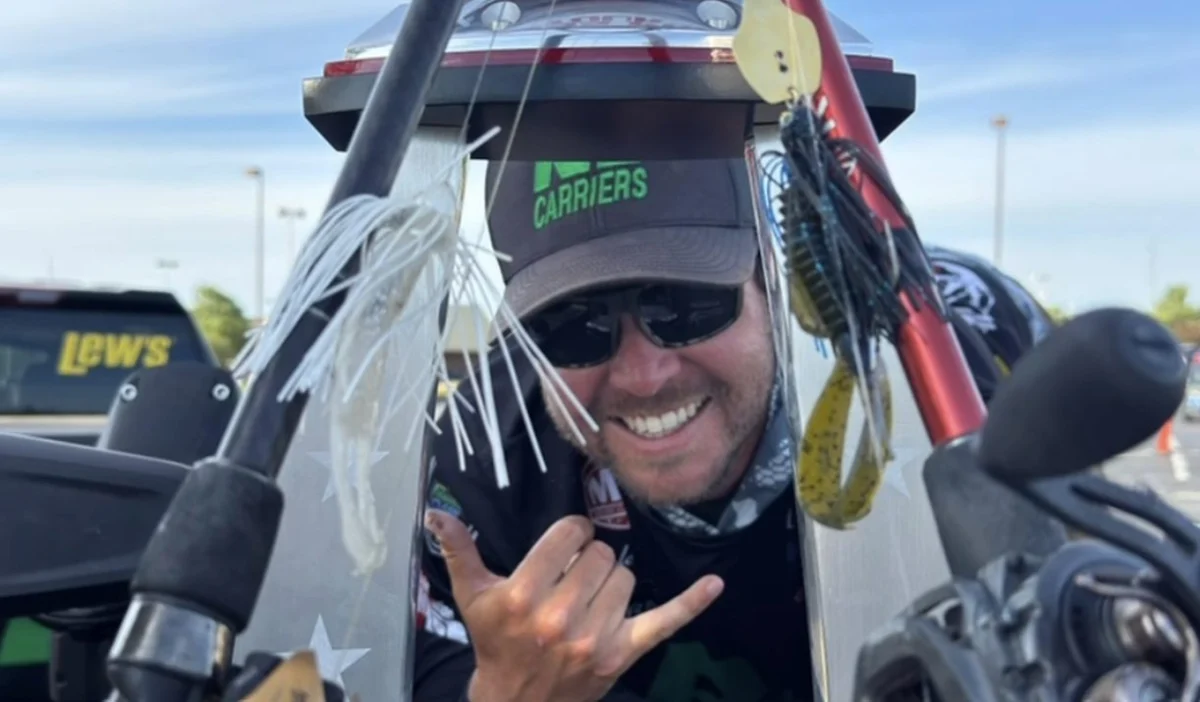
The Major League Fishing (MLF) Bass Pro Tour recently concluded its high-stakes visit to the Ozark Mountains, marking a pivotal moment in the 2024 season. Following a successful event in the region, the tour moved to Beaver Lake in Northwest Arkansas, a venue known for its diversity of habitats and often unpredictable conditions. The tournament, which drew a field of elite professional anglers, showcased a complex tactical environment where competitors had to navigate crystal-clear waters near the dam, muddy inflows in the river arms, and a transitional period for the bass population involving spawning and post-spawn behaviors.
The event concluded with Cole Floyd emerging as the champion, amassing a final-day total of 56 pounds even. His victory was underpinned by a commitment to power-fishing in the turbid waters of the lake’s tributaries, a strategy that contrasted sharply with the finesse-oriented approaches utilized by much of the field. The tournament underscored the technical evolution of professional bass fishing, where traditional "power" methods and modern "finesse" techniques assisted by advanced electronics both played critical roles in the final standings.
Tournament Chronology and Environmental Conditions
The competition at Beaver Lake unfolded across several days of varying weather patterns, which significantly influenced fish behavior. During the early practice rounds, anglers reported a mix of stages; while some bass remained on spawning beds, a significant portion of the population had transitioned to guarding fry or moving toward their summer haunts on deeper points.
Environmental factors played a decisive role in the leaderboard’s fluctuation. The main body of Beaver Lake maintained its characteristic transparency, requiring light lines and subtle presentations. Conversely, heavy rains in the region prior to the event caused the upper reaches of the White River and War Eagle Creek to become "blown out" with muddy, high-visibility-reducing runoff. This environmental dichotomy forced the Top 10 finalists to choose between two distinct styles of fishing: "scoping" for individual fish in clear water using Forward-Facing Sonar (FFS) or "grinding" in the mud for larger, more aggressive bites.
By the final Championship Round, the pressure had mounted on the remaining ten anglers. The ScoreTracker—MLF’s real-time leaderboard—showed a volatile race as several pros moved between the clear and muddy sections of the lake to maximize their catch-per-hour rates.
Tactical Breakdown of the Top 10 Finalists
The diversity of techniques used at Beaver Lake provides a comprehensive look at the current state of professional bass fishing. Below is a detailed analysis of the gear and strategies employed by the Top 10 finishers.
1. Cole Floyd – 56-0 (24 Fish)
Floyd’s winning strategy relied on localized knowledge and a preference for shallow, stained water. Navigating far up War Eagle Creek, he focused on a specific stretch of water that held a high concentration of aggressive largemouth bass. His primary tool was a 3/8-ounce Strike King Thunder Cricket in black and blue, paired with a Strike King Rage Bug trailer. This vibrating jig allowed him to cover water quickly while providing the vibration necessary for fish to locate the bait in low-visibility conditions. He supplemented this with a 3/8-ounce Strike King Hack Attack Heavy Cover swim jig and a topwater frog to trigger strikes in dense cover.
2. Wesley Strader – 55-2 (23 Fish)
A veteran of the tour, Strader utilized his extensive experience on Ozark reservoirs to secure a runner-up finish. Strader focused on muddy pockets and drains where warmer water had collected. He landed three fish over five pounds—a rarity for Beaver Lake—using moving baits. His setup included a chartreuse and white 3/8-ounce Z-Man Jack Hammer with a Zoom Z-Craw Jr. trailer, as well as a custom Wesley Strader EPIC Spinnerbait. His ability to find "kicker" fish in the mud nearly propelled him to the top spot.
3. Banks Shaw – 38-13 (20 Fish)
Shaw took a different route, focusing on mid-lake points where the water clarity was moderate. He leaned heavily on "minnow shaking," a technique where a small plastic bait is suspended and shaken in front of fish identified on sonar. His primary bait was a Rapala CrushCity Freeloader on a 3/16-ounce jighead. He also utilized a CrushCity Janitor worm on a drop-shot to target fish holding tighter to the bottom.
4. Zack Birge – 34-12 (15 Fish)
Birge remained consistent with his reputation as a power fisherman, targeting flooded timber and shoreline grass. He utilized a Z-Man Jack Hammer (white) with a CrushCity Mooch Minnow trailer to draw strikes from fish positioned in heavy cover. To navigate the thickest brush, he employed a 5/16-ounce Dirty Jigs No-Jack swim jig, which is designed to prevent snagging while maintaining a high hook-up ratio.
5. Spencer Shuffield – 28-6 (13 Fish)
The Arkansas native utilized a "one-two punch" that combined modern electronics with traditional finesse. Shuffield used a 6-inch Z-Man Scented Jerk ShadZ on a 1/4-ounce head to target suspended bass on deep points. When the suspended bite slowed, he moved to the banks to drag a Z-Man TRD CrawZ (Canada Craw color) on a Ned rig over pea gravel and rocky transitions.
6. Anthony Gagliardi – 22-14 (10 Fish)
Gagliardi focused on the "fry-guarding" phase of the bass life cycle. He targeted adult bass that were protecting schools of newly hatched fish in the shallows. He used a Roboworm straight tail on a drop-shot for fish in slightly deeper water and various wacky-rigged soft plastics for fish visible in the shallows.
7. Drew Gill – 21-7 (11 Fish)
As a rising star in the Angler of the Year (AOY) race, Gill demonstrated the effectiveness of the Neko rig. He targeted fish holding near standing timber in 10 to 15 feet of water using a Big Bite Baits Nekorama. For steeper, wood-laden banks, he switched to a 6-inch Roboworm FAT on a drop-shot to minimize snags while maintaining a larger profile.
8. Jacob Wheeler – 20-14 (10 Fish)
Wheeler, often regarded as the most consistent angler in the world, split his time between the dirty water of the White River and the clear water near the dam. In the morning, he used a Rapala Claptail 110 topwater and a ChatterBait. By the afternoon, he transitioned to the clear water to hunt smallmouth bass with a Neko-rigged CrushCity Janitor worm.
9. Ron Nelson – 20-4 (10 Fish)
Nelson specialized in sight-fishing for spawning smallmouth. Working in the clearest water available, he utilized a Ned rig with a "peanut butter and jelly" colored worm to entice bedding fish. When wind or light conditions prevented direct sight-fishing, he used a green pumpkin swim jig to mimic bluegill, a primary predator of bass eggs.
10. Marshall Hughes – 13-0 (6 Fish)
Hughes found success in a unique "hidden spring" located in a creek channel. The inflow of fresh water and a hard-bottom substrate attracted a concentration of fish. He used a 3/8-ounce vibrating jig (white) with a Yamamoto Zako Slim trailer to trigger reaction strikes, followed by a Bill Lewis ATV 1.5 squarebill crankbait to target fish that had become wary of the vibrating jig.
Supporting Data: The Fishery and the Field
Beaver Lake, a 28,000-acre impoundment of the White River, is known for its "three-species" potential, containing healthy populations of largemouth, smallmouth, and spotted bass. However, the average size of the fish at Beaver Lake is often smaller than those found in other Bass Pro Tour stops like Sam Rayburn or Lake Fork. This makes the "number of fish" caught just as important as the "size of fish" caught.
Data from the event shows that the "Scoreable Bass" threshold (typically 2 pounds on the Bass Pro Tour) was a significant hurdle for many. While the clear water produced more frequent bites, the muddy water in the creek arms produced the heavier "kicker" fish that ultimately decided the winner. Cole Floyd’s average weight per fish was approximately 2.33 pounds, while Wesley Strader’s average was slightly higher at 2.4 pounds, illustrating how close the margin for error was at the top of the leaderboard.
Official Responses and Tactical Implications
Following his win, Cole Floyd remarked on the importance of staying "shallow and dirty." Analysts noted that Floyd’s win is a testament to the enduring viability of power-fishing, even in an era increasingly dominated by finesse tactics and Forward-Facing Sonar. "A lot of guys were looking at their screens all day," one tournament official noted. "Cole went the other way. He went where he couldn’t see the fish, but he knew they had to be there because of the cover and the current."
The tournament also had significant implications for the 2024 Fishing Clash Angler of the Year race. Drew Gill’s 7th-place finish allowed him to maintain a strong position in the standings, while Jacob Wheeler’s 8th-place finish kept him within striking distance for yet another title.
Broader Impact and Industry Trends
The Beaver Lake event highlights several broader trends in the sportfishing industry. First is the continued refinement of "system-based" fishing, where anglers like Wheeler and Gill use specific brands (such as Rapala’s CrushCity or Z-Man’s ElaZtech) to create a cohesive tackle strategy.
Second, the event showcased the economic and recreational importance of the Ozark reservoirs. These fisheries are under constant pressure, yet they continue to produce world-class tournament results. The success of the Bass Pro Tour at Beaver Lake is expected to drive increased tourism to the Rogers and Eureka Springs areas, as amateur anglers seek to replicate the strategies used by the pros.
As the tour moves forward, the lessons learned at Beaver Lake—the importance of water clarity adjustments, the effectiveness of the Neko rig in timber, and the reliability of the vibrating jig in muddy water—will likely serve as a blueprint for anglers competing in similar highland reservoirs across the United States. For now, Cole Floyd stands as the man to beat, having proven that in the world of professional bass fishing, sometimes the old-school "power" approach is still the fastest way to the trophy.