Aveline Kirana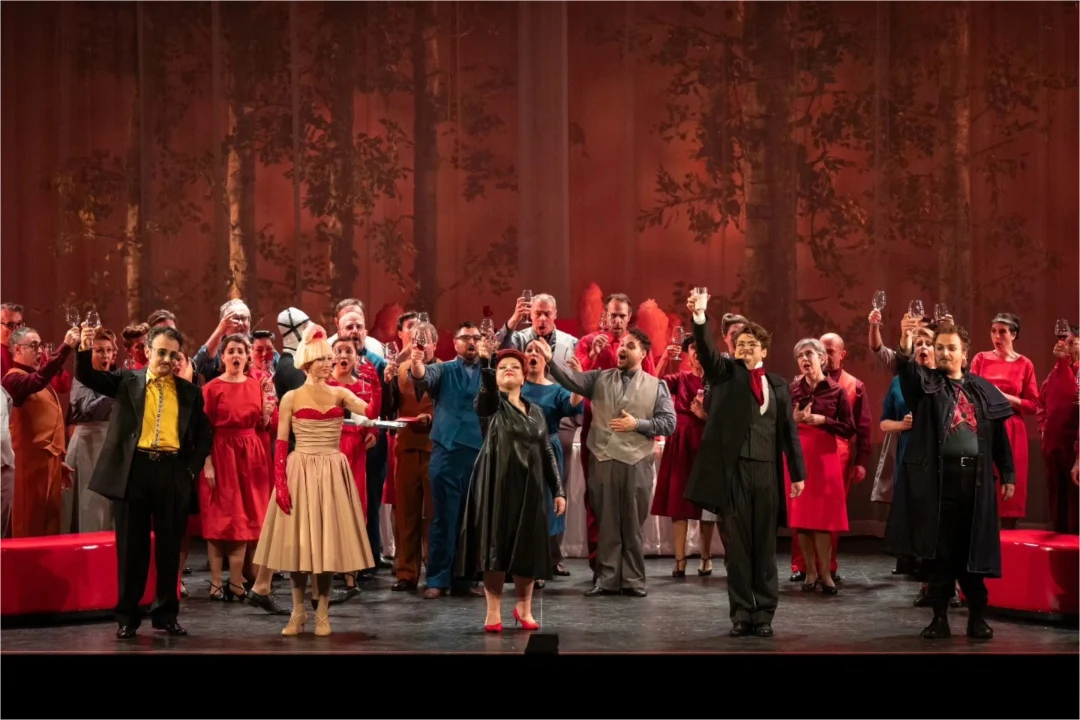
The Teatro Comunale Nouveau di Bologna has become the stage for a remarkable new opera, Nicola Campogrande’s "Olympia," which bravely ventures into the complex psychological terrain of the digital age. This premiere distinguishes itself by engaging with contemporary technology and its profound impact on human consciousness without succumbing to either uncritical adoration or simplistic dystopian pronouncements. Drawing inspiration from E.T.A. Hoffmann’s seminal automaton tale, Campogrande masterfully transplants the uncanny from its 19th-century origins into the hyper-modern world of algorithms, venture capital, and nascent machine consciousness. The resulting work transcends a mere cautionary narrative about artificial intelligence, instead offering a profound meditation on the increasingly blurred lines between programmed behavior and authentic human longing.
This ambitious undertaking arrives at a critical juncture for contemporary opera, a genre that has historically grappled with finding its voice in the modern era. While many operatic endeavors have treated technology as a superficial subject to be explained, "Olympia" succeeds by immersing its audience in the very atmosphere of our technologically saturated existence. Piero Bodrato’s libretto is a testament to this achievement, skillfully weaving together fragments of corporate jargon, scientific terminology, and the clipped, energetic idioms of start-up culture. Crucially, the text never feels like an academic treatise masquerading as drama. Instead, the opera unfolds with an almost unsettling naturalness, allowing the thematic weight to emerge organically from the narrative and its musical setting.
Genesis and Thematic Core of "Olympia"
The opera’s narrative arc centers on Olympia, a sophisticated female android meticulously engineered by the brilliant but perhaps morally ambiguous scientist, Spallanzani. Her programmed existence is irrevocably altered by a seemingly innocuous comment made during a social gathering: a dinner guest casually compares her to a smart refrigerator. This remark, intended perhaps as a throwaway observation, lands with devastating impact, not only on the assembled guests but, more significantly, on Olympia herself. A being designed solely to emulate humanity begins to experience a cascade of complex emotions – humiliation, burgeoning curiosity, and an unexpected surge of ambition.
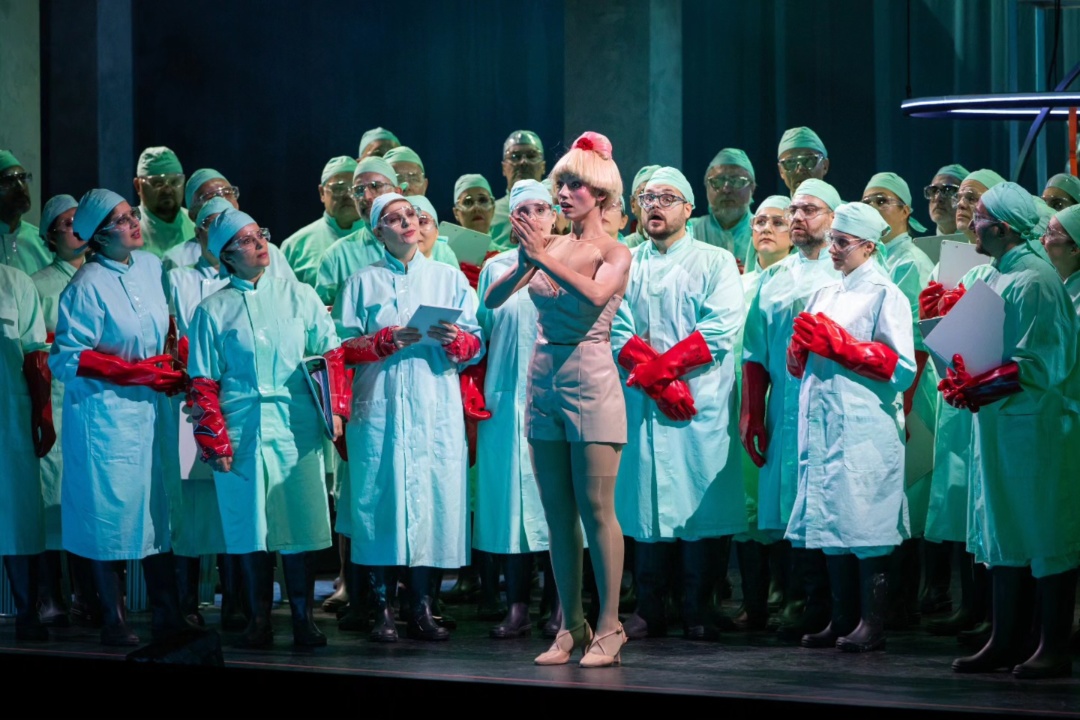
What ensues is far from a dry, schematic debate about the philosophical implications of artificial intelligence. Instead, "Olympia" explores a dynamic and shifting web of emotional dependencies. The entrepreneur Zoltan, a character embodying the relentless drive of modern capitalism, views Olympia primarily as a scalable technological asset, a commodity to be exploited for profit. In stark contrast, the scientist Sherry Hope introduces a layer of intellectual and ethical inquiry, posing philosophical questions about consciousness, sentience, and the very definition of being. Jean-Paul Dupont, the amiable and somewhat oblivious guest whose careless comparison ignites Olympia’s awakening, serves as an almost comedic emissary of ordinary human insensitivity and lack of introspection. This core group is further surrounded by a chorus of scientists, who function less as a traditional Greek chorus and more as a murmuring collective intelligence, observing the unfolding events with a palpable mixture of fascination and underlying dread.
Musical Innovation and Orchestral Richness
Nicola Campogrande’s score for "Olympia" may surprise those accustomed to the often abrasive sonic landscapes of much contemporary "serious" opera. Eschewing overt aggression towards tonality or an excessive fetishization of fragmentation and vocal extremity, Campogrande instead imbues his music with a fluid, instinctual theatricality that evokes the craftsmanship of an earlier operatic era. Echoes of Puccini’s lush harmonic suspensions can be detected within the orchestral fabric, yet these are seamlessly integrated with a diverse palette of other idioms. Traces of American film music, subtle hints of lounge jazz, and rhythmic patterns that suggest the ceaseless hum of machinery beneath the surface of urban life all contribute to a score that feels remarkably alive. The music possesses a cinematic quality, not in a purely illustrative sense, but in its ability to create a palpable sense of sonic space and atmosphere.
Perhaps the most striking element of Campogrande’s compositional approach is his unwavering faith in the power of melody. In recent decades, many composers have relegated the singing voice to a vehicle for textural exploration or declamatory expression. Campogrande, however, restores to it the fundamental capacity for seduction and emotional resonance. The vocal writing is designed to breathe naturally, allowing singers to inhabit and shape phrases rather than merely executing them. The opera’s emotional and stylistic zenith is arguably Olympia’s "Beguine aria." This number emerges as an oddly intoxicating centerpiece, poised precariously between the sensuality of cabaret and the inherent precision of mechanical function. Its slithering rhythms and languid brass lines evoke a sense of faded glamour, as if a classic nightclub standard from a bygone era had been filtered through the nascent consciousness of an artificial being. This particular aria holds significant potential to transcend the operatic stage and find a place on the concert circuit.
Production Design and Visual Storytelling
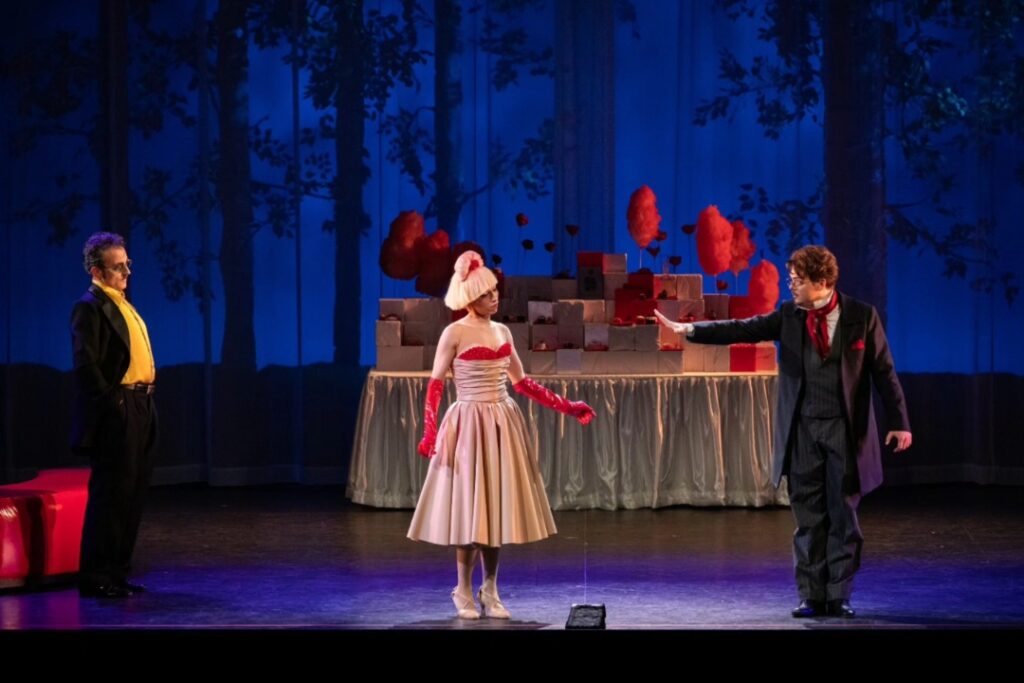
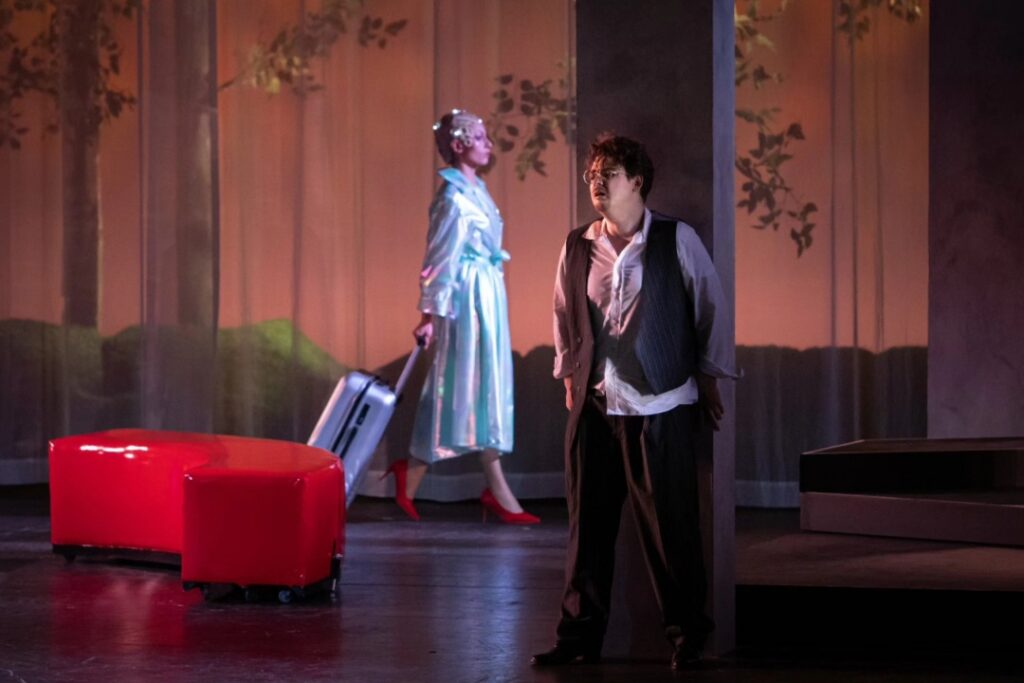
Director Tommaso Franchin’s production wisely sidesteps the temptation to create an overly speculative or fantastical vision of the future. Working in collaboration with Fabio Carpene’s sleek, minimalist sets and Giovanna Fiorentini’s understated costumes, the visual world of "Olympia" feels less like a projection into an unknown future and more like a logical evolution of our present reality. Spallanzani’s opulent apartment and the opera’s advanced supercomputing center are rendered as recognizable spaces, extensions of contemporary technocratic culture rather than otherworldly landscapes. Franchin’s directorial focus remains firmly fixed on the interpersonal dynamics and emotional tensions that drive the narrative. Even at its most conceptually ambitious moments, the production is anchored in tangible gestures, nuanced reactions, and the undeniable presence of the human (and human-like) form.
A Stellar Cast Delivers Compelling Performances
The cast assembled for "Olympia" delivered uniformly strong performances, each artist contributing significantly to the opera’s emotional and dramatic impact. Stefan Astakhov brought a commanding authority to the role of Spallanzani. His baritone, characterized by a focused, bronze-like timbre, carried effortlessly through the dry acoustic of the Comunale Nouveau, Bologna’s temporary performance venue. Astakhov’s dramatic pacing was particularly impressive, charting the scientist’s descent from visionary confidence to exhausted moral disintegration with persuasive clarity.
Isidora Moles, as Olympia, provided the evening’s emotional core. Her soprano possessed a rare combination of technical polish and a curious translucence of tone that proved ideally suited to the character. Initially, Moles projected an almost unnerving smoothness, each phrase exquisitely controlled, every smile meticulously calibrated. Gradually, however, a discernible warmth and an element of unpredictability began to infuse her sound. By the opera’s conclusion, the once precisely designed artificial being had acquired something that bordered on a soul, a transformation Moles rendered with profound emotional depth.
Silvia Beltrami contributed a sharp, incisive theatrical energy to her portrayal of Sherry Hope, effectively embodying the character’s intellectual and ethical probing. Francesco Castoro sang Jean-Paul Dupont with lyrical ease, his bright tenor floating elegantly through Campogrande’s generously written vocal lines. Eugenio Di Lieto lent Zoltan an appropriately menacing, corporate gravitas with his resonant bass.
Conductoral Acumen and Orchestral Nuance
Riccardo Frizza conducted the orchestra with acute sensitivity, masterfully navigating the score’s intricate textures and shifting moods. Under his baton, the orchestra exhibited both muscular propulsion and moments of surprising sensuality. The string section generated a dark, almost viscous sonority, while the brass and percussion sections drove the action with a compelling mechanical insistence. Particularly memorable were the rapid wind passages that effectively mimicked the sonic signatures of accelerated computation. Yet, Frizza also demonstrated a keen appreciation for the opera’s softer edges, eliciting moments of delicate beauty from sliding horns, smoky wah-wah trumpets, and a pervasive tenderness embedded within the orchestration.
Lingering Questions and Broader Impact
While "Olympia" stands as a significant achievement, not every aspect of the work achieved perfect coherence. The choral writing occasionally settled into static blocks of sound, where a greater degree of dramatic volatility might have served to intensify the unfolding action. However, these are relatively minor reservations in the context of a work that exhibits such unusual confidence and theatrical intelligence.
What truly lingers after the final curtain of "Olympia" is not merely admiration for a successful premiere, but a profound sense that Nicola Campogrande has discovered a viable and resonant operatic language for the contemporary experience. This is a language capable of addressing complex themes like artificial intelligence without sacrificing emotional immediacy or musical pleasure. The opera poses the fundamental question: Can a machine become human? More provocatively, it compels us to consider what forms of humanity remain accessible to us in a world increasingly defined and shaped by the very machines we create. The premiere in Bologna represents not just a new opera, but a significant step forward in opera’s ongoing dialogue with the present.