Jia Lissa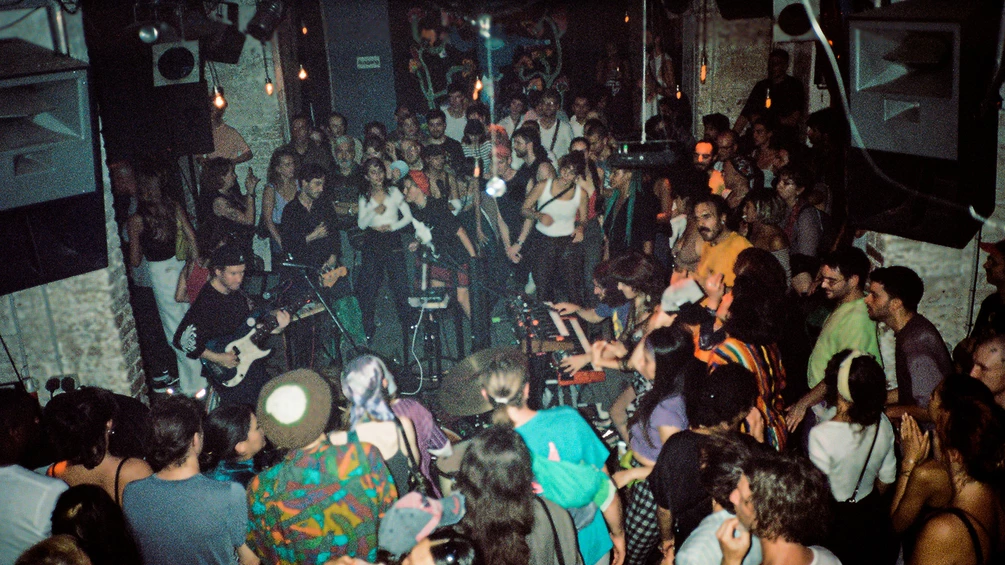
Berlin, Germany – A vibrant and increasingly influential musical movement is quietly reshaping the city’s renowned cultural landscape, dissolving traditional boundaries between live performance and electronic dance music. A loose-knit network of musicians, DJs, and collectives is forging a unique sound that prioritizes groove, improvisation, and collaboration, drawing equally from the spontaneous spirit of jazz and the pulsating energy of Berlin’s club scene. This burgeoning underground, as explored by Anna Grubauer, is not an orchestrated phenomenon but rather an organic convergence, a collision of diverse backgrounds, formal training, and DIY instincts that finds common ground in music as a fluid, rhythmic, and profoundly physical experience.
The Genesis of a Hybrid Sound
The emergence of this electronic jazz underground is a testament to Berlin’s enduring capacity for artistic innovation. Unlike more rigidly defined scenes, this movement defies easy categorization, weaving together elements of jazz, techno, house, broken beat, hip-hop, R&B, and soul. Its roots lie in the personal journeys of artists who found traditional genre silos restrictive. For Hungarian-born producer and pianist Szabolcs Bognár, known as Ábáse, this fusion was innate. His early musical education balanced classical instruments like drums and piano with a deep interest in record digging, DJ culture, and sampling. This duality was never a calculated crossover but an intrinsic part of his musical language, a natural symbiosis that he carried into his jazz piano studies at the conservatory while simultaneously crafting electronic beats.
Ábáse’s work exemplifies this hybrid approach. One evening might see him commanding a grand piano with his quintet, while the next he could be delivering an electrifying club set, such as the exclusive mix provided for DJ Mag. His debut album, Layorê, released in a 2026 remaster, captures the organic flow of impromptu sessions in Brazil, transitioning seamlessly from ambient jams to beat-driven, bass-heavy workouts. The 2024 follow-up, Awakening, showcased a more stripped-back, live-recorded aesthetic with minimal overdubs. His ambition for future projects is to fully integrate these two facets: creating compositions that blend jazz tradition and improvisation with club-ready rhythms, blurring the line between machine-generated and human-played, sampled and live. For Ábáse, true hybridisation goes beyond merely layering a saxophone solo over a four-on-the-floor beat; it demands a deep understanding and respect for the nuances of both electronic and improvised musical worlds.
Key Players and Their Philosophies
Drummer and producer Ziggy Zeitgeist, leader of Zeitgeist Freedom Energy Exchange and a frequent collaborator with Ábáse, embodies this duality through his dynamic live performances. His band integrates drum machines and synthesizers with acoustic instruments, aiming to replicate the immersive, transcendent quality of techno found in clubs, but imbued with the soulful and organic energy of live music. Zeitgeist credits early experiences at iconic Berlin venues like Berghain with profoundly influencing his approach to rhythm and structure, inspiring him to inject the minimalism and long-form energy of electronic music into a live band setting. His sets are continuous, improvisation-driven journeys that blend house, broken beat, and ’70s jazz-funk, reflecting a desire to create a cohesive, evolving soundscape. Both Ábáse and Zeitgeist view their live performances as a form of DJing, reading the audience and cueing their bands on the spot, constantly seeking an energetic exchange that blurs the lines between performer and participant.
The Moses Yoofee Trio – comprising pianist Moses Yoofee, bassist Roman Klobe, and drummer Noah Fürbringer – represents another crucial thread in Berlin’s electronic jazz tapestry. Winners of the prestigious 2024 German Jazz Prize for Live Act of the Year, the trio deliberately avoids strict genre definitions. Their music, which has drawn comparisons to fusion, nu-jazz, broken beat, hip-hop, R&B, and soul, is a rich tapestry of influences. Despite their academic training within Germany’s rigorous music system, the trio sought to break free from its often-restrictive nature. Roman Klobe specifically cites Berlin’s vibrant jam sessions as his "gateway out of a purely academic scene and into something with a more contemporary, raw feel." Their mission includes dismantling the perceived cultural stiffness around jazz in Germany, appealing to younger audiences seeking authentic, music-first experiences without overt spectacle. Their sound emphasizes groove, minimalism, and repetition, drawing on club logic to enhance accessibility. Moses Yoofee’s alter ego, Yoofee, produces broken beat, drum & bass, and dub sketches, demonstrating how electronic explorations directly inform the trio’s collective writing and evolution.
Approaching from the opposite direction is producer Luca Murgia, known as Two Thou. His journey began not in conservatories but in the warehouses, record crates, and DIY ethos of electronic music. He self-identifies as an "outsider in jazz," having absorbed its spirit through listening and sampling rather than formal study, echoing the profound influence of jazz on early hip-hop. His Oraculu project, a hybrid jazz act and 12-inch release featuring a diverse array of collaborators, emerged from a desire to push beyond the confines of house music. Oraculu’s sound oscillates between spiritual and abstract jazz and electronic forms, reflecting Two Thou’s formative experiences in Sardinia where jazz felt theoretically rigid, contrasted with the boundless creativity of Detroit and New York electronic music scenes. Despite his own successful genre-bending, Two Thou observes a growing conservatism within electronic music, a shift towards "purity" over experimentation, underscoring the vital role of this hybrid scene in maintaining innovative momentum.
Collectives and Infrastructural Support
The scene’s growth is not solely driven by individual artists but also by dedicated collectives and platforms. SHUSH, founded in 2022 by Ken Okuda, Orlando Rosé, and D’Monk, emerged from a shared frustration with the musical monotony prevalent in many Berlin parties. Their aim was to create a more open, musically diverse space where people could express themselves freely. SHUSH quickly began treating genre boundaries as fluid, famously booking Ziggy Zeitgeist for a 2 AM live band set between DJ performances at one of their early events. This approach resonates deeply with artists like Zeitgeist, who prefers the interactive energy of a club over the passive environment of a traditional jazz concert.
JAW Family, a collective with a significant legacy, has been a pivotal force in this crossover for nearly two decades. Founded in Paris in 2005 and relocating to Berlin in 2008, JAW Family’s events seamlessly merge concerts with club nights, showcasing artists from Detroit house legend Theo Parrish to the late jazz icon Pharoah Sanders. Co-founder Thomas Vermynck emphasizes the intrinsic link between live music and DJ culture, particularly in the lineage of electronic music from Detroit and Chicago. JAW Family’s philosophy has always been to break down artificial barriers, placing bands and DJs on the same stage, often transplanting live acts from traditional venues into club settings like the former Prince Charles or Tresor’s Globus room. Their approach is organic, prioritizing synergy between artists, venue, and sound. The collective is set to celebrate its 20th anniversary with a three-day event in late June 2026, a testament to its enduring influence.
Another critical hub for this evolving sound is XJAZZ Festival. It has played a crucial role in dismantling rigid perceptions of jazz, creating a broad platform for diverse sounds. Festival representative Anastasiia Pokaz highlights the unique experience offered: "You get this elevating feeling during the day, listening to spiritual jazz, and then later, you lose yourself in massive house tracks." XJAZZ also acts as a vital connector, supporting newcomers and elevating local artists by placing them alongside established names. Past editions have featured talents like drummer, composer, and producer Philo Tsoungui (known for her work with Fred again..) and soulful vocalist Douniah, who performed live with New York house duo musclecars at the 2025 festival. Pokaz proudly notes that "Artists who started on XJAZZ are being invited to different festivals; they started their artistic path with us."
Challenges and the Paradox of Berlin’s Scene
Despite its artistic vibrancy, Berlin’s electronic jazz underground faces significant challenges. The main 2026 edition of XJAZZ Festival was unfortunately cancelled in March due to funding cuts, highlighting the precarious financial landscape for cultural institutions. While an outpouring of support led to a special XJAZZ weekender in late May 2026, featuring acts like Moses Yoofee Trio and Sera Kalo ex.II, the incident underscores the vulnerability of even well-established platforms. Smaller collectives like SHUSH also grapple with rising costs, strict bar minimums, and limited access to mid-sized venues. As Ken Okuda admits, "It’s become hard for smaller collectives to host events. We want to pay artists fairly but also keep nights accessible. Most of the time, we’re happy if we break even."
The scene is further shaped by Berlin’s transient population, a "blessing and a curse," according to Ziggy Zeitgeist. While the constant influx of international artists and immigrants fuels its eclecticism, it also makes building lasting structures and communities difficult, exacerbated by visa issues, language barriers, and the infamous Berlin winter. Maxime Libiszewski of JAW Family notes that while "a lot of exciting things have been happening musically in Berlin in recent years," there’s "still a lack of structures to raise international awareness of the scene." Unlike other global music capitals where intense pressure forces faster professionalization, Berlin’s scene grows in unpredictable, lateral directions, making it artistically thrilling but challenging to package for the broader music industry.
Economically, the dominance of DJ culture presents another hurdle. DJ sets are often cheaper for venues, easier to schedule, and lower risk, which limits opportunities for live musicians. Many innovative performers find themselves in a unique limbo: too electronic for traditional jazz clubs, yet too live for techno institutions. This contrasts sharply with cities like London, where hybrid acts are increasingly embraced by jazz venues. Ziggy Zeitgeist laments, "I can’t think of anywhere in this city that calls themselves a jazz club that would book us. But in London, we get booked at jazz clubs."
Cultural Impact and Future Outlook
Despite these pressures, the scene continues to evolve, defined by a rhythmic sensibility that is groove-forward, trance-oriented, and improvisational. Ábáse emphasizes that "the eclecticism defines it more than a unified sound," noting the absence of a single defining genre. A core ethos of the movement is the reclamation of jazz’s lost vitality, particularly its connection to movement and physicality. "I feel like the dance aspect is something that got lost in jazz," Ábáse states.
Berlin’s club culture provides the missing link. Singer-rapper and performer Astan Meyer, known as Astan KA, born in France with roots in Mali, describes Berlin’s raw partying as authentic: "People don’t come to show off. You really come to immerse yourself in the sound and dance and escape reality." KA’s "Gangsta Jazz" epitomizes this collision of cultures and genres, blending jazz, punk rock, Afro-tech, trip-hop, slam, trap, and drill. She is also part of Sonic Interventions, a transdisciplinary, diaspora-futuristic band that emerged in 2020, known for performances that feel more like ritual gatherings than conventional concerts, integrating diverse languages, rhythms, and movement.
Gugulethu Duma, known as Dumama, a South African musician, composer, and producer, and former member of Sonic Interventions, channels the immersive energy of the dancefloor into her work. She speaks of "People in dark rooms, moving bodies and just being completely lost in the music," and how this club experience mirrors the collective spirit achieved when making music together. Her solo project transforms oral storytelling and memory into electronic improvisations.
While London has seen a new wave of British jazz, and New York solidified the hip-hop-jazz crossover, Berlin is carving out its own distinct dialect: experimental, raw, deeply communal, and focused on shared experience. As Maxime Libiszewski of JAW Family observes, "People who come for the concert and people who come for the DJ night end up in the same space. And they realise: We’re here for the same thing." This shared conviction among artists – that the distinction between live and electronic, concert and club, is ultimately an artificial construct – is the driving force. "It’s all about enjoying music," Ábáse concludes. "The format doesn’t matter."
The interconnectedness of this scene is striking: the artists mentioned have likely shared stages, collaborated on records, or jammed together late into the night. They attend each other’s events as performers, DJs, or simply dancers, reinforcing the communal spirit. This organic, interconnected ecosystem, despite its challenges, represents a powerful force for musical innovation, positioning Berlin not just as a hub for electronic music, but as a crucible for a new, undefinable genre of live, dance-oriented improvisation that continues to captivate and evolve.
Listen to an exclusive mix exploring Berlin’s electronic jazz underground, mixed by Ábáse, below.
Tracklist:
Cassette Heads Sessions ‘Let’s Hit It’ [self-released]
Sonic Interventions ‘Can’t Uproot Me’ [XJazz Music]
Ábáse x Zeitgeist feat. Moses Yoofee ‘Nuit Des Toîeres (Live at Brewery Studios)’ [Jazz & Milk]
Adeolu ‘A Breath’ [Power House Records]
Oraculu ‘Altair’ [Division 81]
Dumama x Ziggy Zeitgeist ‘eKhaya’ [Energy Exchange]
Otis Sandsjö ‘Skerry’ [We Jazz]
Astan KA ‘Alkimia’ [unreleased]
Moses Yoofee Trio ‘Push’ [Leiter]
Zeitgeist Freedom Energy Exchange ‘Green Eyes’ [Get Together]
Magro ‘Tokyo Tree’ [Sonar Kollektiv]
Ábáse, Petter Eldh, Lukas Akintaya, Eric Owusu ‘Ohm Eleven (Version)’ [XJazz Music]
Wayne Snow ‘Automatic’ [Diggers Factory]
Yoofee ‘One Is None’ [Casa Voyager]
Sera Kalo ‘AFENI [XJazz Music]
Petter Eldh feat. Savannah Harris [Midsum Brew]
Zeitgeist Freedom Energy Exchange ‘Inspire (Afterthought)’ [Energy Exchange]
Styleboi92 feat. Astan KA & Marius Max ‘4’τ’Œτ’ϟM’ϟR’ [unreleased]
Ábáse ‘Bloom (May Flip Remix)’ [Oshu]
Philo Tsoungui ‘Philm Rework’ [unreleased]
Ekowmania ‘Lagos Heavy’ [Ronet]
K’boko feat Othnell Mangoma ‘Muzazananda Nova’ (self-released)
Move 78 ‘Neuralgia’ [Village Live]
Ábáse ‘Destruction Everywhere’ [Oshu x Analogue Foundation]