Nana Wu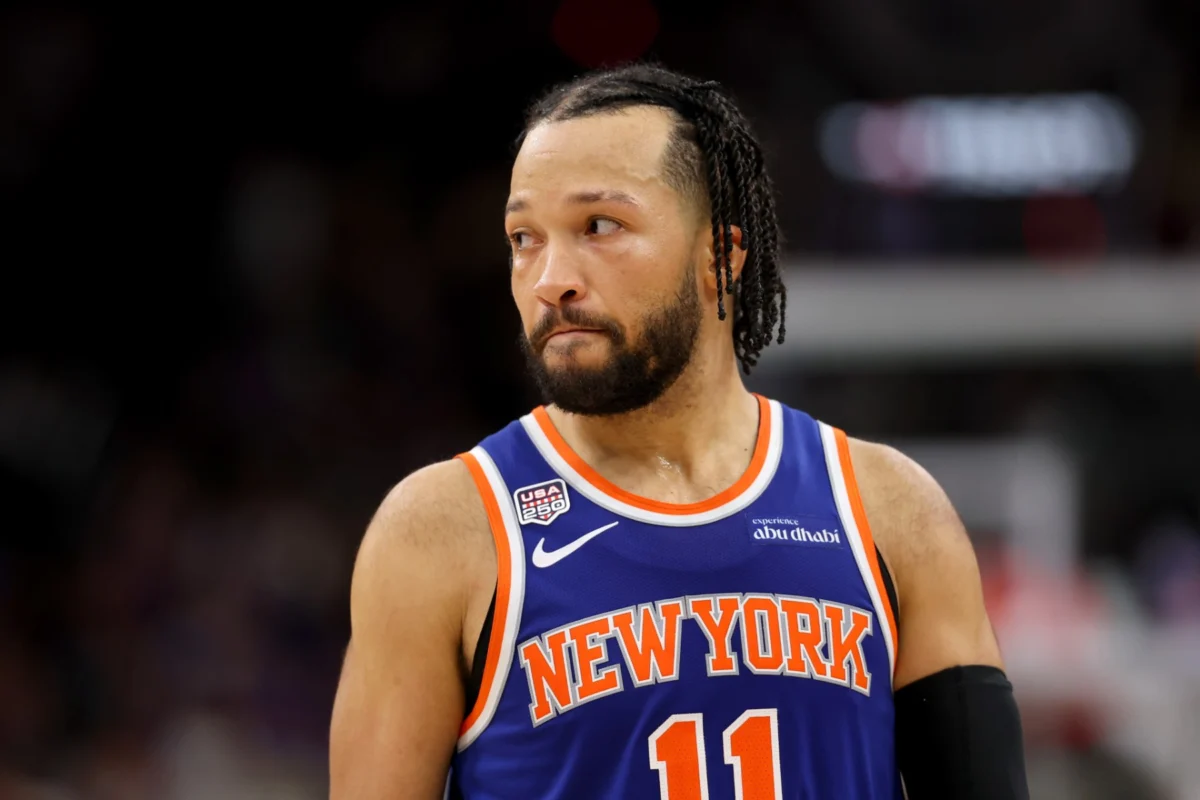
The intersection of sports fervor and pop culture celebrity reached a crescendo during the 2026 NBA Finals, culminating in an unexpected plea from newly crowned NBA Finals MVP, Jalen Brunson. Following the New York Knicks’ championship-clinching victory on Saturday, June 13, Brunson utilized his elevated platform to address a burgeoning online controversy, urging Taylor Swift’s devoted fanbase, known as Swifties, to "ease up" on Knicks radio analyst Monica McNutt. The situation, which began with McNutt’s questioning of Swift’s allegiance to the Knicks, rapidly escalated across social media, drawing widespread attention to the evolving dynamics between traditional sports media and the pervasive influence of global music icons.
The Genesis of the Controversy: Game 4 and a Question of Loyalty
The catalyst for the social media maelstrom occurred during the broadcast of Game 4 of the NBA Finals on Wednesday, June 10, 2026. The atmosphere at Madison Square Garden was electric, with the Knicks battling fiercely for supremacy. As is customary at high-profile sporting events in New York City, the celebrity row was packed with notable personalities, including pop superstar Taylor Swift. A long-time resident of New York, Swift’s presence courtside alongside her friends, sisters from the band HAIM, and Law & Order: Special Victims Unit star Mariska Hargitay, immediately drew considerable media attention and fan excitement.
However, during the live radio broadcast, Monica McNutt, a respected Knicks analyst known for her insightful commentary, expressed skepticism regarding Swift’s purported loyalty to the team. Her broadcast partner, seemingly eager to capture a moment with the global icon, had reportedly leaned in to snap a photo. McNutt’s candid reaction, captured and swiftly disseminated online, was unequivocal: “She’s not a Knicks fan. Get out of here, girl.” The comment, delivered with a mix of playful exasperation and professional skepticism, instantly went viral. Within minutes, clips of her statement were circulating across Twitter (now X), TikTok, and Instagram, becoming a flashpoint for a passionate online debate.
The Swiftie Response: An Online Mobilization
The reaction from Taylor Swift’s colossal fanbase, the Swifties, was swift and emphatic. Known for their fierce loyalty and organized digital activism, they quickly mobilized to defend the singer against what they perceived as an unwarranted slight. Hashtags related to the incident trended nationally, with millions of impressions. Fans meticulously scoured social media archives and news reports for evidence of Swift’s long-standing connection to the Knicks, resurfacing old photos and anecdotes. One prominent piece of evidence, later highlighted by McNutt herself, was a photograph of Swift donning an original Amar’e Stoudemire Knicks jersey, a relic from an earlier era of Knicks basketball. The online discourse ranged from playful memes to more pointed critiques, all united in their defense of Swift’s fandom credentials. The incident served as yet another powerful demonstration of the Swifties’ ability to influence online narratives and generate significant public attention around topics involving their idol.
Monica McNutt’s Clarification and Contextualization
Recognizing the intensity of the online backlash, Monica McNutt took to Instagram Stories the following morning to address the controversy. In a video, she acknowledged the Swifties’ passion and offered a measured clarification of her initial remarks. "Swifties, I appreciate your passion. I said what I said. Here’s the deal, if I’m wrong — I am wrong, apparently," she stated, referencing the unearthed evidence of Swift’s prior Knicks support. She specifically cited the discovery of the Amar’e Stoudemire jersey as definitive proof she had "misspoken."
McNutt then proceeded to provide crucial context for her skepticism. As an analyst who had been with the Knicks organization for five years, she explained her familiarity with the team’s regular celebrity attendees, such as Ben Stiller, Spike Lee, and Fat Joe. She noted that she had not observed Swift at Knicks games either that year or the previous one. Furthermore, she pointed out Swift’s highly publicized attendance at Cleveland Cavaliers games to support her then-fiancé, Travis Kelce, who plays for the Kansas City Chiefs and is also a noted Cavaliers fan. McNutt emphasized that Swift had not been seen wearing any Knicks paraphernalia at the Game 4 fixture, which contributed to her assumption. "I literally just did a piece on Celebrity Row. I’ve been with this organization for 5 years. I know these folks… I had not seen her here this year or last year, and we just saw her in Cleveland with her fiance, obviously Travis supports the Cavs, she didn’t have any Knicks paraphernalia, so I did not know of her Knicks loyalty," McNutt elaborated. Despite her initial error, she extended an olive branch: "But shout out to T-Swift! Like, we can be united in orange and blue, it’s fine!"
Ahead of Game 5, McNutt returned to Instagram Stories, aiming to further downplay the lingering controversy. She characterized the entire episode as a "big fat nothingburger," urging fans to shift focus to the more significant matter at hand: the NBA championship. "We got bigger fish to fry, because a title is on the line," she declared, reiterating an inclusive stance. "Of course, whoever wants to be at the game is welcome to the game." Her statements reflected an effort to move past the online skirmish and refocus attention on the Knicks’ historic pursuit of a championship.

Jalen Brunson’s Championship-Winning Intervention
The true turning point in the unfolding narrative came after the New York Knicks secured their momentous championship victory in Game 5. The Frost Bank Center in San Antonio, Texas, erupted in celebration as the Knicks lifted the Larry O’Brien trophy, marking a historic achievement for the franchise and its long-suffering fanbase. Amidst the jubilant chaos of the postgame celebrations, Jalen Brunson, who had delivered a spectacular performance throughout the series and was deservedly named the NBA Finals MVP, encountered Monica McNutt.
With the exhilaration of victory still palpable, Brunson, ever the composed and thoughtful leader, took a moment to address the lingering online tension. His intervention, delivered with a lighthearted tone but carrying the weight of his MVP status, was a significant gesture of support for his colleague. As McNutt laughed beside him, likely relieved and appreciative of the solidarity, Brunson turned to the camera and directly addressed the pop star’s formidable fanbase. “I just want to say something to the Swifties,” the basketball star began, a wide smile on his face. “She’s a really good one, cut her some slack. It’s all good, I promise.”
Brunson’s words resonated deeply. Coming from the undisputed hero of the championship team, his statement instantly lent credibility and a sense of resolution to the situation. It effectively served as a peacemaking gesture, leveraging his immense popularity and the goodwill generated by the Knicks’ triumph to diffuse a potentially escalating online conflict. His defense of McNutt underscored a sense of team unity and mutual respect within the Knicks organization, extending beyond the players to include the media personnel who cover the team.
The Convergence of Sports and Pop Culture: A New Landscape
This entire incident serves as a microcosm of the increasingly intertwined worlds of professional sports and global pop culture. Taylor Swift’s heightened visibility in the sports landscape, largely due to her relationship with Travis Kelce and her frequent attendance at NFL games, has brought a massive new audience to sports. Her presence at any major sporting event now inherently carries a unique cultural weight. When a figure of her stature attends a game, her perceived allegiance or lack thereof becomes a topic of discussion not just among traditional sports fans, but also within her vast and engaged global fanbase.
The dynamics at play highlight several broader implications. Firstly, the incident demonstrates the power of social media to amplify even seemingly innocuous comments, transforming them into significant online debates within hours. For sports analysts and media personalities, it underscores the need for heightened awareness of how their remarks, particularly those touching upon celebrity figures, can be interpreted and disseminated across diverse online communities. What might once have been a fleeting comment on a local radio broadcast now has the potential to become a global trending topic.
Secondly, Brunson’s intervention showcases the evolving role of athletes as cultural figures. Beyond their on-court achievements, modern athletes often possess immense social capital and influence. Brunson, as an NBA Finals MVP, could have simply celebrated his victory. Instead, he chose to use his moment in the spotlight to advocate for a colleague caught in a social media storm, demonstrating leadership that transcends the basketball court. His actions likely garnered approval from both the traditional sports community, who appreciate camaraderie, and potentially even some Swifties, who saw their idol being acknowledged and respected in a positive light.
Finally, the episode highlights the challenges and opportunities presented by the merging of fan bases. While the initial reaction from Swifties was defensive, McNutt’s subsequent clarification and Brunson’s support ultimately led to a more amicable resolution. It suggests that while clashes can occur at these cultural intersections, there is also potential for mutual understanding and even unity, as McNutt herself suggested with her "united in orange and blue" comment. The incident, while initially controversial, ultimately became a testament to the power of dialogue and the influence of respected figures in defusing online tensions.
A "Nothingburger" with Lasting Resonance
While Monica McNutt aptly dubbed the controversy a "big fat nothingburger" in the grand scheme of an NBA Finals, its brief but intense trajectory offered valuable insights into contemporary media, fandom, and celebrity culture. It underscored the profound loyalty of Taylor Swift’s fanbase, the immediate and far-reaching impact of social media, and the significant influence wielded by athletes like Jalen Brunson, whose words can shape public perception beyond the confines of their sport. The 2026 NBA Finals will be remembered not only for the New York Knicks’ historic championship and Jalen Brunson’s MVP performance but also for the unexpected subplot that momentarily drew the worlds of basketball and pop music into a spirited, yet ultimately resolved, debate over fandom and allegiance.