Mia Khoirunisa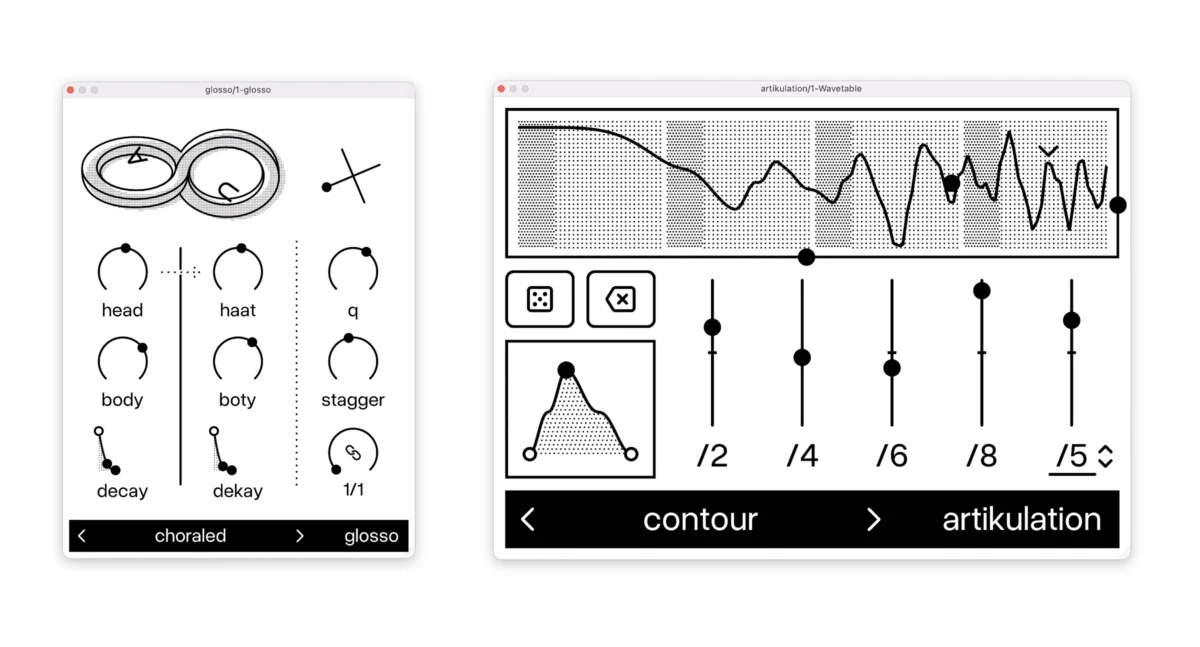
Jelle Akkerman, a multifaceted engineer and artist hailing from Northern Italy, has officially launched his innovative software imprint, "every something," today, ushering in a new era of experimental sound design with the release of two distinct audio plugins: Glosso and Artikulation. This debut signifies Akkerman’s ambitious foray into the digital realm, building upon his established reputation in hardware synthesis, including the acclaimed "every division and duration" Eurorack module co-developed with Nicolas Bougaïeff and Johannes Lohbihler. The initial plugin offerings, Glosso and Artikulation, are now available for AU and VST3 formats on both macOS and Windows operating systems, with a free trial period provided.
The genesis of "every something" traces back to Akkerman’s diverse creative endeavors, which span music production, hardware engineering, and now, software development. His early artistic experiences, including an unexpected opening slot for the Vengaboys at a local zoo at the tender age of 14, underscore a lifelong commitment to pushing sonic boundaries. This independent spirit is further embodied by the "every division and duration" Eurorack module, a testament to collaborative innovation within the modular synthesis community. The current plugin release is part of a larger roadmap, with two additional plugins, "perp" (a Risset-powered live looper) and "otophon" (a dedicated synthesizer), slated for release next month, promising further exploration into rhythmic complexity and synthesis.
Glosso: The Art of "Speaking in Tongues"
Glosso, the first of the newly released plugins, delves into the realm of experimental vocal synthesis, drawing inspiration from the chaotic and generative principles found in analog circuitry. The plugin’s name itself, derived from "glossolalia," meaning speaking in tongues, accurately reflects its core functionality: the creation of evolving, often unpredictable vocal textures.
At the heart of Glosso’s design lies the influence of Rob Hordijk’s groundbreaking work, particularly the "rungler" circuit found in the legendary Benjolin. The rungler is a sophisticated pseudorandom generator where two oscillators interact in a feedback loop. One oscillator clocks a shift register, which is then fed by the second oscillator. Crucially, an output from this process is fed back into the circuit as control voltage, creating a dynamic and often chaotic interplay between the signals.
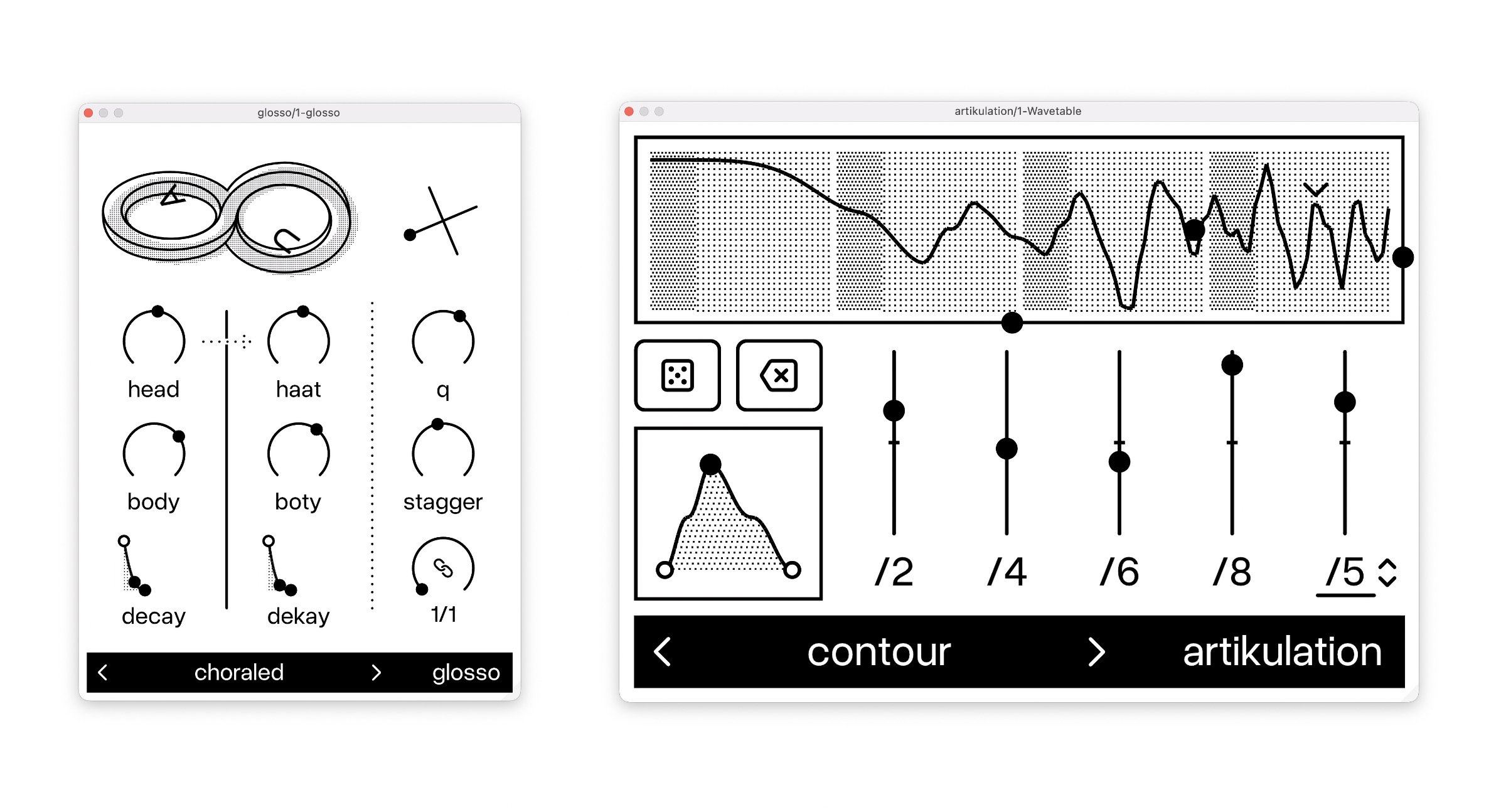
Akkerman has translated this intricate analog concept into a digital environment within Glosso. The plugin features two distinct chaotic rhythmic circuits, each driving its own vocal voice. The inherent pseudorandom nature of these circuits ensures that each iteration produces subtle, and often significant, variations. This means that listeners will rarely encounter identical outputs, fostering a sense of organic evolution and unique sonic signatures. The plugin’s user interface visually represents the shifting vowel-filter shapes, offering a dynamic feedback loop for the user.
The control parameters within Glosso offer a granular approach to sculpting these evolving vocal sounds. The "Head/body" and "haat/boty" parameters allow for precise tuning of each voice’s fundamental frequencies, enabling users to establish harmonic relationships or dissonant textures. The "Q" control plays a pivotal role in emphasizing the phonemic qualities of the synthesized voices by accentuating the vowel filter, allowing for more distinct vocalizations or abstract timbres.
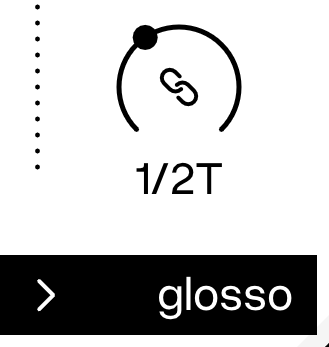
A particularly engaging feature is the "stagger" control, which dictates the temporal separation between the two voices. This parameter offers a wide range of possibilities, from subtle rhythmic shuffling to creating distinctly independent rhythmic patterns for each voice. The "clock" control provides further temporal manipulation. It can be synced to the host DAW’s tempo for precise rhythmic integration or set to "free-running" mode, which relinquishes all external timing constraints, unleashing the full chaotic potential of the rungler-inspired circuits for maximum unpredictable sonic exploration.
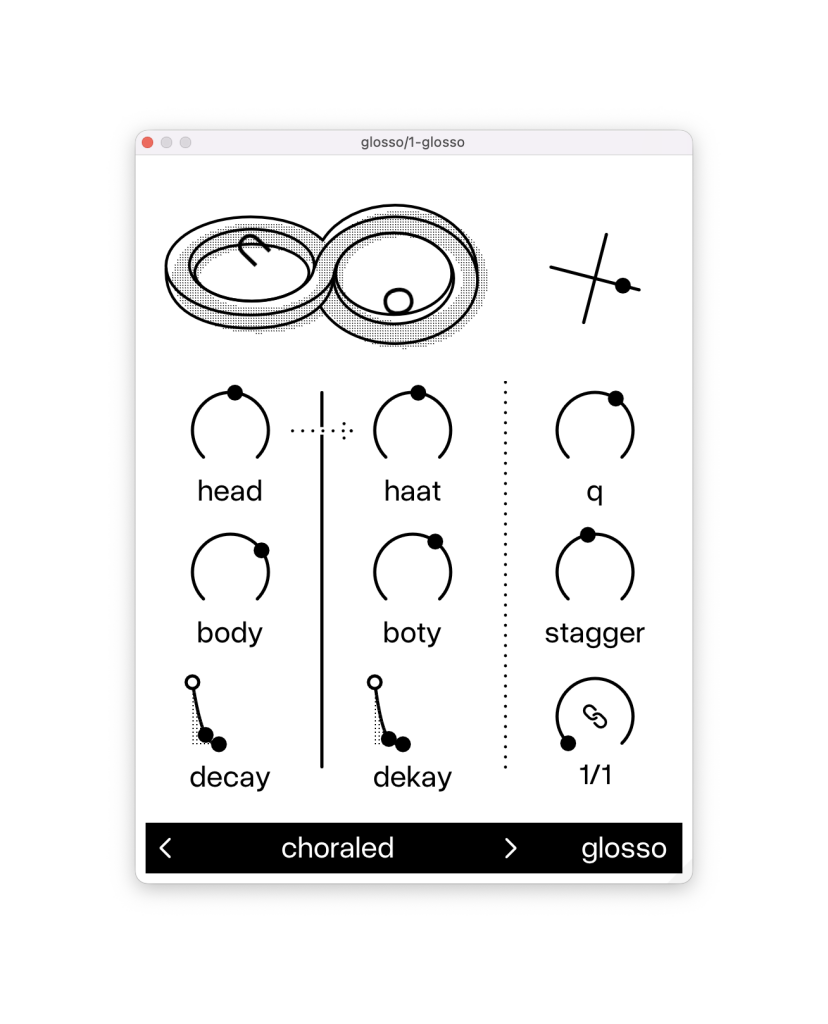
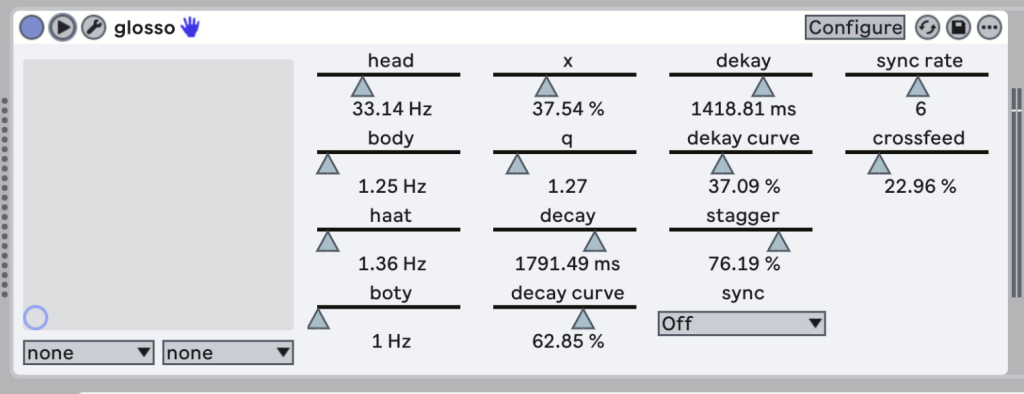
Beyond these core controls, Glosso incorporates a unique "cross-modulation" feature, visually represented by an interactive element at the top right of the interface. This mechanism allows for a degree of "physics-based" interaction between the two voices, further enhancing their sonic entanglement. Additionally, users can delve into the plugin’s parameters to directly adjust "crossfeed." This control allows for a spectrum of stereo imaging, from hard-panned separation to complete sonic overlaying in the center, providing extensive control over the spatial characteristics of the synthesized output. This level of detailed control over inter-voice audio interaction was a specific request from early testers, highlighting the collaborative development process.
The cumulative effect of these controls allows Glosso to transcend simple vocal synthesis. It can generate a spectrum of sonic material, ranging from deeply unsettling vocal weirdness to rich, evolving drones and complex ambient textures. The plugin’s ability to evoke Benjolin-esque territories is particularly noteworthy, offering a digital gateway into the often elusive world of generative analog sound design.
Artikulation: Precision Rhythmic Sculpting
Complementing Glosso’s generative approach, Artikulation offers a sophisticated yet intuitive tool for shaping rhythmic envelopes and complex grooves. While many envelope shaping plugins focus on static shapes or manually drawn step sequences, Artikulation distinguishes itself by providing precise control over rhythmic definition, allowing users to construct intricate polymetric patterns and manipulate them with unprecedented fluidity.
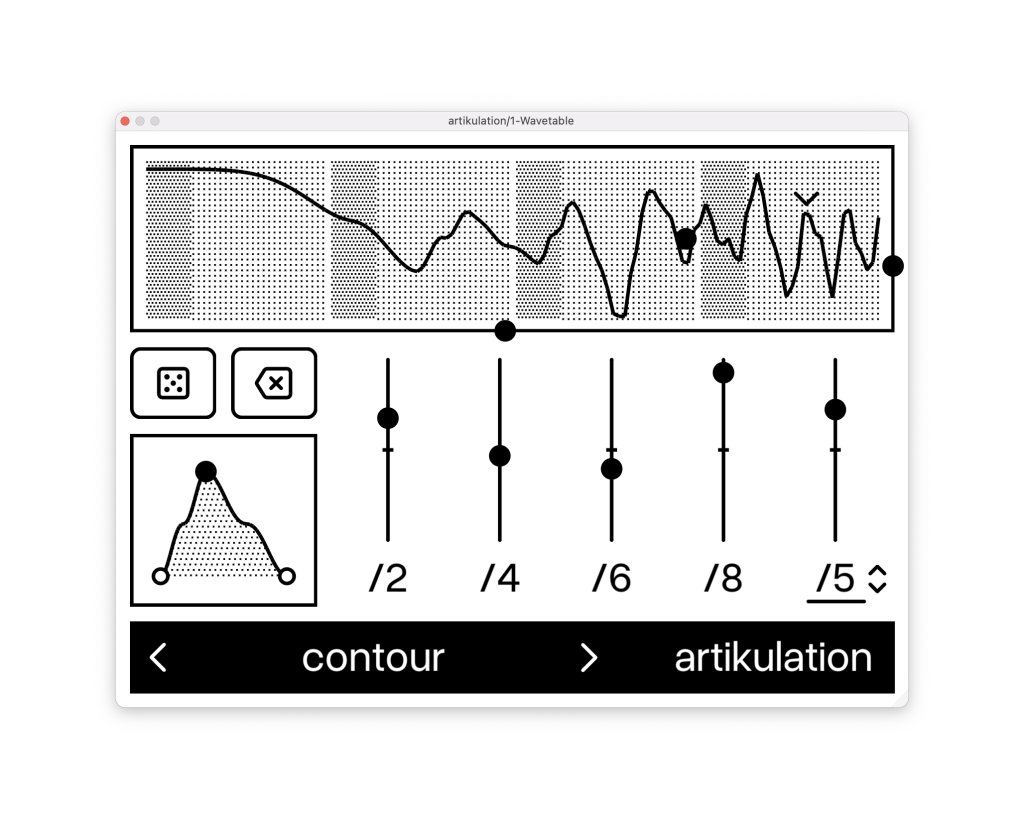
The plugin’s core innovation lies in its departure from traditional envelope drawing. Instead of manually sketching waveforms, Artikulation employs a system of clever controls that enable users to define rhythmic divisions and contours with precision. The "depth" control, particularly when applied to divisions of /2, /4, /6, and /8, allows for straightforward duple and more complex subdivisions, laying the groundwork for rhythmic complexity.
Once a foundational rhythmic division is established, users can further sculpt the envelope’s character using the "shape" and "skew" controls, located in the bottom left of the interface. These parameters allow for the creation of a diverse range of envelope shapes, from sharp, on-beat accents to smooth, pumping "ducked" effects, and beyond. This provides a tactile and analog-feeling method for shaping the dynamic contour of any sound.
For more intricate rhythmic patterns, Artikulation introduces "tuplets" settings. This feature allows users to overlay complex rhythmic patterns atop the existing base rhythm. The effect is not merely additive; it can introduce subtle swing, create intricate accentuation, and generate sophisticated polymetric relationships. The implementation of tuplets is designed to be intuitive, allowing users to dial in complex rhythmic interactions in a manner that feels organic and responsive.
Further temporal manipulation is offered through the "phase" control, represented by a dot at the bottom of the graphical view. This allows for the precise shifting of the entire envelope pattern left or right, offering fine-grained control over its alignment within the rhythmic grid. The "scale" control, situated on the right-hand side, enables users to adjust the overall duration or intensity of the envelope, with smaller scales proving particularly effective for introducing nuanced, subtle rhythmic effects.
The "timing warp" control represents a significant departure from conventional rhythmic manipulation. It empowers users to squeeze or stretch the entire rhythmic pattern forward or backward in time, while still maintaining a connection to the underlying grid. This capability unlocks a wealth of expressive possibilities, from rapid-fire ratcheting effects to fluid rubato passages and dynamic acceleration and deceleration. This emphasis on temporal manipulation, even within a quantized framework, aligns with a growing interest in tools that offer nuanced control over time-based elements in music production.
To illustrate the potential of Artikulation, demonstrations have showcased its application in conjunction with Ableton’s Wavetable synthesizer. These examples highlight how the plugin can transform a basic synthesized tone into a dynamically evolving rhythmic sequence. The use of additional modulation from Max for Cats’ Modulators Plus and custom Ableton Live themes by Studio Brootle in these demonstrations underscores the plugin’s versatility and its ability to integrate seamlessly into established production workflows.
The plugin also comes equipped with a comprehensive library of presets, designed to serve as both starting points for users and demonstrations of the plugin’s diverse capabilities. These presets offer a valuable resource for understanding the interplay of the various controls and can be immensely satisfying to tweak and customize, further encouraging exploration and personal sonic discovery.
Broader Impact and Future Prospects
The launch of Glosso and Artikulation by "every something" signals a commitment to providing musicians and sound designers with tools that encourage experimentation and push the boundaries of conventional sound creation. In an industry often saturated with plugins that emulate existing sounds, Akkerman’s approach focuses on generative processes, unique algorithmic interactions, and intuitive control over complex rhythmic and sonic phenomena.
The emphasis on chaotic and generative elements in Glosso taps into a growing appreciation for the unpredictable and organic qualities that analog synthesis is known for. By translating these principles into accessible digital tools, "every something" democratizes access to experimental sound design techniques that were previously confined to hardware enthusiasts or those with extensive programming knowledge.
Artikulation, on the other hand, addresses the need for more sophisticated and flexible rhythmic manipulation. Its ability to precisely control tuplets, polymeters, and temporal warping offers a powerful alternative to rigid, step-sequenced patterns, allowing for more fluid and expressive rhythmic phrasing. This could have a significant impact on genres that rely heavily on intricate rhythmic layering and dynamic groove manipulation.
The successful collaboration on the "every division and duration" Eurorack module suggests a strong foundation for future hardware and software integration. The planned release of "perp" and "otophon" further indicates a comprehensive vision for "every something" as a holistic creative ecosystem.
The availability of free trials for both Glosso and Artikulation is a strategic move that allows potential users to experience the unique sonic possibilities firsthand, fostering adoption and building a community around these innovative tools. As Jelle Akkerman continues to develop his offerings under the "every something" banner, the music technology landscape can anticipate further contributions that prioritize originality, depth, and a spirit of sonic exploration. The dual release marks a significant milestone, providing a compelling glimpse into the future of experimental digital sound design.