 Lana Akmaluna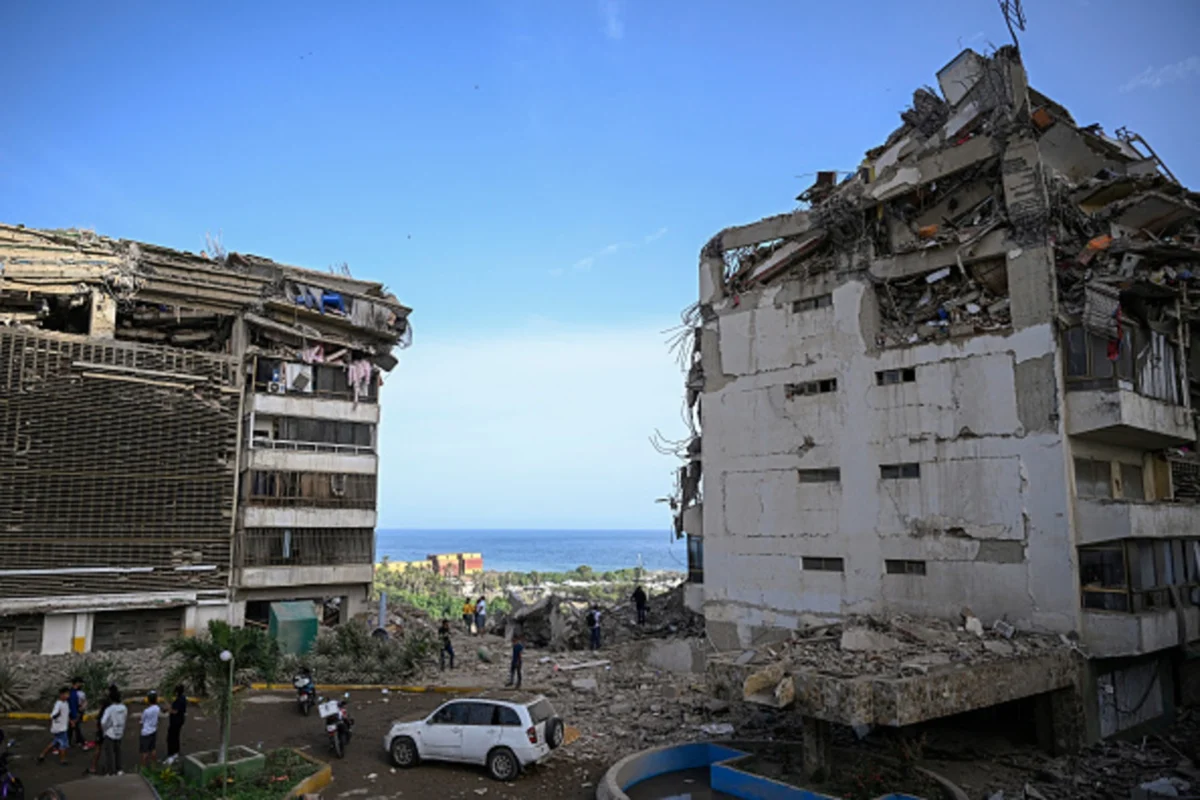
Venezuela has been plunged into a catastrophic state of national emergency following a rare and violent seismic event that struck the nation’s northern coast on the night of Wednesday, June 24, 2026. Two powerful earthquakes, registering magnitudes of 7.2 and 7.5 respectively, occurred in rapid succession, causing widespread structural failure in major urban centers and coastal settlements. The dual shocks, described by seismologists as a "doublet" earthquake, represent the most significant seismic activity recorded in the country in over a century. By the morning of June 25, official reports confirmed at least 164 fatalities, though rescue workers and government officials warn that the death toll is expected to rise sharply as search-and-rescue teams penetrate the mountainous rubble of collapsed apartment complexes and commercial districts.
The devastation is concentrated heavily in the coastal state of La Guaira, specifically in the port city of Catia La Mar, and has extended south into the capital city of Caracas. The psychological and physical impact on the population has been profound, as the earthquakes struck during a period of complex political transition. While the nation has faced years of socio-political instability, this natural disaster presents a humanitarian challenge of unprecedented scale, necessitating a coordinated international response to prevent further loss of life from secondary causes such as exposure, lack of clean water, and medical shortages.
A Chronology of the Disaster
The seismic sequence began at approximately 9:40 p.m. local time on Wednesday. According to data provided by the U.S. Geological Survey (USGS) and the Venezuelan Foundation for Seismological Research (FUNVISIS), the first tremor, a magnitude 7.2 earthquake, originated approximately 105 miles west of Caracas. The epicenter was located just west of the town of Morón, on the Caribbean coast, at a relatively shallow depth of 14 miles. This initial shock lasted for nearly 40 seconds, causing immediate panic and minor structural damage to older buildings in the central and western states.
However, the tragedy intensified less than sixty seconds later. At 9:41 p.m., a second, more powerful magnitude 7.5 earthquake occurred. This second rupture was located approximately 10 miles southwest of Morón, at an even shallower depth of only 6 miles. The proximity in time and location meant that structures already weakened by the 7.2 magnitude shock were unable to withstand the violent acceleration of the 7.5 magnitude event. The shallow depth of the second quake significantly amplified the surface shaking, leading to the total collapse of multi-story residential buildings in La Guaira and the pancaking of several office towers in the Chacao and Libertador districts of Caracas.
Throughout the night and into the early hours of Thursday, June 25, the region was besieged by dozens of aftershocks, some reaching magnitudes as high as 5.8. These secondary tremors hampered initial rescue efforts, forcing first responders to retreat from unstable ruins. By daybreak, the full extent of the damage became visible: entire neighborhoods in the coastal regions were unrecognizable, and the main highway connecting the port of La Guaira to the capital—a critical artery for aid—was severed by massive landslides and structural cracks.
Geological Context and the Boconó Fault System
The severity of the June 24-25 events can be attributed to the complex tectonic boundary between the Caribbean Plate and the South American Plate. Northern Venezuela is crisscrossed by a series of major strike-slip faults, most notably the Boconó, San Sebastián, and El Pilar fault systems. Preliminary analysis suggests that the twin quakes involved a significant rupture along the San Sebastián fault, which runs parallel to the coastline.
Seismologists point out that "doublet" earthquakes—two large events of similar magnitude occurring close together in time and space—are rare but exceptionally destructive. In this instance, the first quake likely triggered the second by transferring stress further along the fault line. This phenomenon explains why the damage was so much more severe than a single 7.5 magnitude event might have suggested. The shallow depth of the 7.5 magnitude quake (6 miles) meant that the energy released was not dissipated by the Earth’s crust before reaching the surface, resulting in peak ground velocities that exceeded the design tolerances of most Venezuelan infrastructure.
This event surpasses the destructive 1967 Caracas earthquake, which had a magnitude of 6.6 and resulted in approximately 240 deaths. The 2026 twin quakes involve significantly higher energy release, and the urban density of the affected areas has increased fourfold since the 1960s, magnifying the potential for casualties.
Infrastructure Damage and the Humanitarian Crisis
The most visible devastation occurred in Catia La Mar, where high-rise apartment buildings constructed during the mid-20th-century oil boom collapsed. Witnesses described scenes of terror as residents fled into the streets only to be met by falling debris and the sound of rupturing gas lines. In Caracas, the city’s metro system was immediately shut down, leaving thousands stranded. Power outages have affected roughly 70% of the capital region, and telecommunications remain spotty, complicating efforts by families to locate missing relatives.

The healthcare infrastructure, which has been under significant strain for years, is currently overwhelmed. Hospitals in Caracas, such as the Hospital Universitario and the Centro Médico de Caracas, are operating on emergency generators and treating patients in parking lots and hallways. There is an urgent reported need for orthopedic supplies, blood for transfusions, and heavy machinery to lift concrete slabs from trapped survivors.
The coastal state of La Guaira is particularly isolated. With the main Caracas-La Guaira highway blocked, the only way to move supplies is via sea or air. However, damage to the port infrastructure and the Simón Bolívar International Airport in Maiquetía has limited the volume of incoming aid. Initial aerial surveys show that several "barrios"—informal settlements built on steep hillsides—have suffered from catastrophic landslides triggered by the seismic vibrations, potentially burying hundreds of homes.
Political Landscape and International Response
The earthquakes have struck Venezuela at a pivotal moment in its political history. Earlier in 2026, the country underwent a dramatic shift following a surprise military operation by the United States that led to the capture of former president Nicolás Maduro. The nation is currently navigated by a transitional administrative body tasked with restoring democratic order and stabilizing the economy.
This transition, while opening doors for international cooperation, has also created logistical hurdles. However, the scale of the June 24 disaster has prompted a swift suspension of political friction in favor of humanitarian necessity. The United States government was among the first to offer comprehensive aid packages, including the deployment of USAID Disaster Assistance Response Teams (DART) and specialized search-and-rescue units from Fairfax County and Los Angeles.
Other nations, including Colombia, Brazil, and several European Union member states, have pledged millions in emergency funding and are preparing to send hospital ships and cargo planes loaded with food and medicine. The United Nations has also announced the release of emergency funds to assist in the coordination of the global response.
The Cultural and Social Mobilization
In the absence of a fully functional domestic emergency grid, the Venezuelan people and the global community have turned to social media and private organizations to fill the gap. Platforms like X (formerly Twitter) and Instagram have become vital tools for sharing real-time information on missing persons and identifying areas where survivors are still trapped.
The music and entertainment industry, which maintains deep ties to the Venezuelan diaspora, has mobilized rapidly. High-profile musicians and global celebrities have begun organizing benefit concerts and digital fundraising campaigns. Organizations such as the Red Cross, Cáritas Venezuela, and various non-governmental organizations (NGOs) are soliciting donations to provide immediate relief. These private sector efforts are focusing on "last-mile" delivery—ensuring that food and water reach the most isolated communities that government agencies have yet to reach.
Broader Implications and the Path to Recovery
The long-term implications for Venezuela are staggering. The cost of rebuilding the destroyed coastal infrastructure and retrofitting Caracas’s vulnerable buildings will likely run into the tens of billions of dollars. For a country already struggling with hyperinflation and a fragile power grid, the road to recovery will be measured in decades rather than years.
There are also concerns regarding a potential new wave of migration. The destruction of homes and livelihoods in the coastal regions may force thousands of newly displaced citizens to seek refuge in neighboring countries, adding pressure to a regional migrant crisis that had only recently begun to stabilize.
As the 72-hour "golden window" for finding survivors closes, the focus of the mission will shift from rescue to recovery and disease prevention. The international community’s ability to work with the transitional Venezuelan government will be the deciding factor in whether the country can emerge from this tragedy or fall further into a cycle of crisis. For now, the people of Venezuela remain in a state of mourning and resilience, searching through the ruins of their homes for signs of life and hope.