Nayara Elvina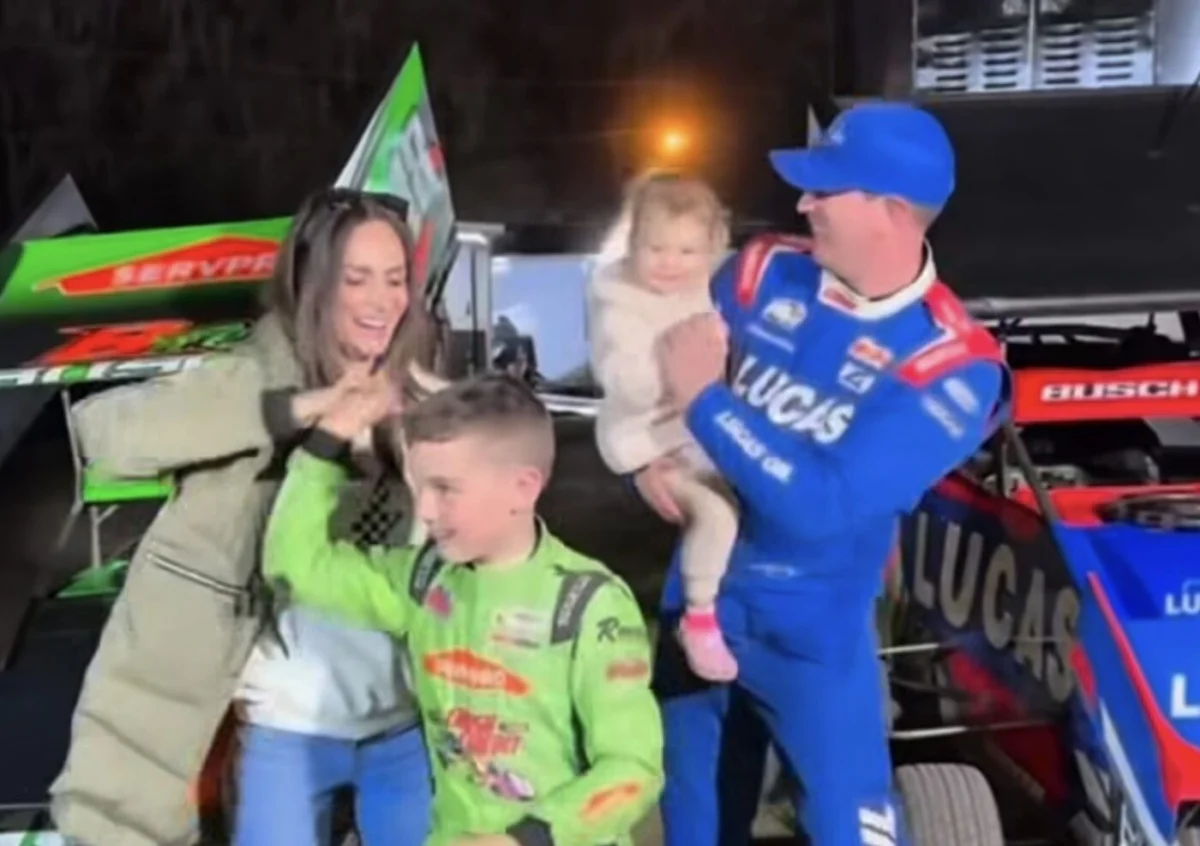
The professional racing world and the family of the late Kyle Busch marked a somber milestone this weekend, observing the first Father’s Day since the sudden passing of the two-time NASCAR Cup Series champion. Sunday, June 21, 2026, also coincided with the one-month anniversary of Busch’s death, which occurred on May 21 at the age of 41. The loss of the driver, widely regarded as one of the most talented and polarizing figures in the history of the sport, continues to resonate through the garage area and among a global fanbase. As his widow, Samantha Busch, shared a poignant tribute to the father of their two children, his team, Richard Childress Racing (RCR), secured a symbolic victory on the track, providing a moment of catharsis for an organization still grappling with the absence of its flagship driver.
The Circumstances of May 21 and the Medical Context of Sepsis
The news of Kyle Busch’s passing on May 21, 2026, sent shockwaves through the sporting world. Busch, a veteran of over two decades in high-level stock car racing, succumbed to complications arising from a severe case of pneumonia. Medical reports indicated that the respiratory infection rapidly progressed into sepsis, a life-threatening condition that occurs when the body’s response to infection causes widespread inflammation and organ failure.
According to clinical data, sepsis remains a leading cause of mortality globally, often progressing with a speed that can overwhelm even otherwise healthy and athletic individuals. In the weeks following his death, medical experts and NASCAR health consultants have used the tragedy to highlight the importance of early intervention in respiratory distress. For the Busch family, however, the clinical details are secondary to the profound personal void left by a man who was as dedicated to his role as a father as he was to his career as a driver.
A Heartbreaking Tribute: The Busch Family’s First Father’s Day
On Sunday morning, Samantha Busch utilized social media to communicate the depth of the family’s grief. The post, which quickly circulated among the racing community, detailed the emotional difficulty of navigating a holiday centered on fatherhood while mourning the loss of a spouse and parent. Samantha revealed that Father’s Day cards, prepared by 11-year-old Brexton and 4-year-old Lennix prior to their father’s illness, remained in a drawer—a stark physical reminder of a future abruptly altered.
“This still doesn’t feel real at all,” Samantha wrote, describing a night spent contemplating what the day should have looked like for her husband and children. She characterized Busch not as the aggressive "Rowdy" persona known to race fans, but as a father who prioritized "one more book" and "one more question" during bedtime routines. The tribute emphasized the physical sensation of grief, describing the ache of reaching for a presence that is no longer there.
The Busch family has been a fixture in the NASCAR infield for over a decade. Brexton Busch, following in his father’s footsteps, has already established a burgeoning career in youth racing, often with Kyle serving as both coach and mechanic. The loss of this mentorship has been cited by industry insiders as one of the most tragic aspects of Busch’s early passing, as he was deeply invested in nurturing the next generation of the Busch racing dynasty.
Victory at Naval Base Coronado: Austin Hill and the #8 Tribute
While the family mourned privately, the racing community gathered in San Diego for the O’Reilly Auto Parts Series race, held on a temporary street circuit at Naval Base Coronado. The event served as a backdrop for what many in the industry described as a "divine" tribute to the late driver. Austin Hill, driving for Richard Childress Racing—the team Busch joined in 2023—captured a victory that carried significant emotional weight for the organization.
The win marked the first time an RCR entry had reached victory lane since Busch’s death. Throughout the race, the presence of the late driver was felt through various tributes, including a large #8—Busch’s car number—painted on the track surface. In a post-race interview that has since gone viral, Hill revealed a moment of mid-race desperation where he sought guidance from his late teammate.
Hill explained that with approximately five to six laps remaining, he was struggling significantly with rear grip, a common issue on the abrasive and technical Coronado street course. "I’m like, ‘Man, Kyle, if you’re watching this race, I could use some help here,’" Hill recounted. Following this internal plea, Hill reported an intuitive urge to adjust his front brake bias—a move he described as "unorthodox" for a road course, where drivers typically avoid excessive front-end braking to prevent lock-ups. However, the adjustment proved decisive. Hill stated that the car "came to life" over the final four laps, allowing him to secure the win.
Technical Analysis and Team Reaction
The technical shift described by Hill—adding front brake bias—is a maneuver often used to stabilize a car that is "loose" or oversteering on entry to a corner. By shifting the braking force forward, a driver can pin the nose of the car down and prevent the rear end from swinging out. While Hill noted it was unorthodox for that specific track configuration, it was exactly the type of high-IQ technical adjustment Kyle Busch was famous for making during his 63 Cup Series wins.
Following the checkered flag, Hill performed a celebratory burnout immediately adjacent to the #8 tribute painted on the asphalt. The imagery of the smoke enveloping the number of the fallen champion provided a powerful visual for the television broadcast and the fans in attendance.
Richard Childress, the Hall of Fame team owner who famously recruited Busch to revitalize RCR, was visibly moved during the post-race celebrations. Childress, who had developed a close personal bond with Busch over the last three years, struggled to maintain composure when discussing the significance of the win. For Childress, the victory was a testament to the culture Busch helped build at the shop in Welcome, North Carolina—a culture of resilience and uncompromising pursuit of performance.
The Professional Legacy of Kyle Busch
Kyle Busch’s impact on NASCAR cannot be overstated. At 41, he was still considered to be in the prime of his career, chasing a third Cup Series championship that would have elevated him into the most elite tier of the sport’s history. With 63 Cup wins, 102 Xfinity Series wins, and 64 Truck Series wins, he holds the record for the most total wins across NASCAR’s top three national touring series.
His move to Richard Childress Racing in 2023 was one of the most significant free-agent signings in the modern era, signaling a "second act" for a driver who had spent the bulk of his career at Joe Gibbs Racing. At RCR, Busch was tasked with not only winning races but also mentoring younger drivers like Austin Hill and helping the team refine its technical programs. The success seen by the organization in the weeks following his death is viewed by many as the "Busch Effect"—the result of the high standards and technical feedback he provided during his tenure.
Broader Implications for the Sport
The death of a figure as prominent as Kyle Busch has prompted a period of reflection within NASCAR regarding the health and well-being of its athletes. While the cause of death was a natural illness, the speed with which a champion athlete was taken has led to discussions about the rigorous travel schedules and the physical toll of the 36-week season.
Furthermore, the 2026 season will likely be remembered as a turning point for the sport’s marketing and fan engagement. The "Rowdy" brand, once built on a "villain" persona, has been transformed into a legacy of excellence and family devotion. NASCAR has announced plans for a permanent memorial at the Hall of Fame in Charlotte, and there are ongoing discussions regarding the retirement of the #8 at RCR or the creation of a "Kyle Busch Excellence Award" to be given annually to the driver who demonstrates the most versatility across multiple racing disciplines.
Supporting the Next Generation
As the industry looks forward, much of the focus remains on supporting Samantha, Brexton, and Lennix. The racing community has rallied around Brexton Busch’s racing schedule, with several veteran drivers offering to step in as mentors in Kyle’s absence. The goal, according to family spokespeople, is to ensure that the children grow up knowing the full scope of their father’s impact—not just as a racer, but as a man who valued his family above any trophy.
The events of this Father’s Day weekend serve as a reminder that while the engines continue to roar and the points standings continue to shift, the loss of a foundational figure like Kyle Busch leaves a permanent mark. The victory by Austin Hill at Coronado provided a momentary bridge between the grief of the past month and the competitive future of the sport, suggesting that while the driver is gone, the "Rowdy" spirit remains an integral part of the NASCAR fabric.