Johan Budi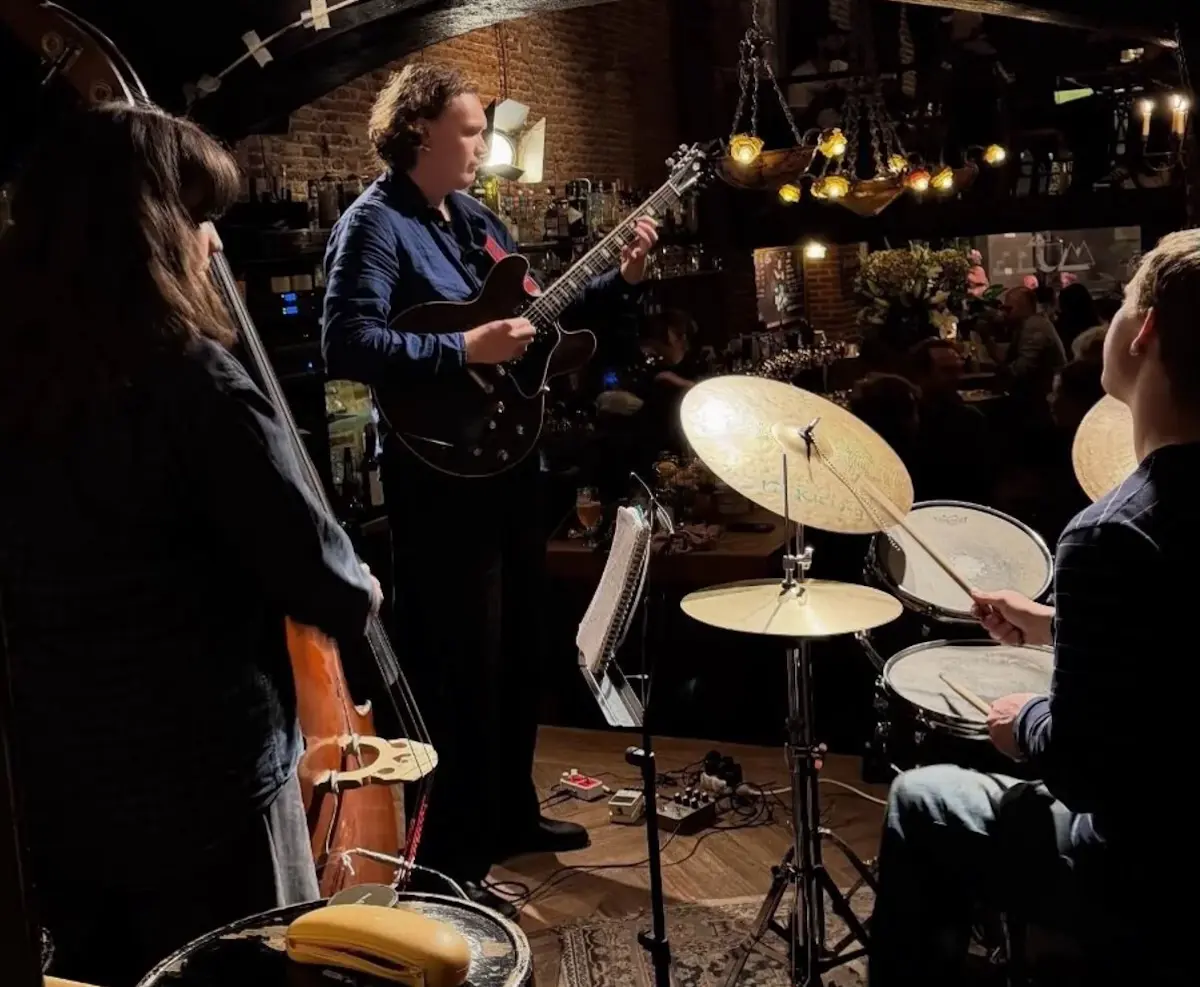
The global jazz landscape continues to witness a significant convergence of emerging talent and established legends, as evidenced by three major new releases that redefine the boundaries of the trio format, the vocal-bass duet, and the chamber-jazz ensemble. These recordings, spanning from the fjords of Norway to the studios of New York, offer a comprehensive look at how contemporary musicians balance the weight of tradition with the impulse for spontaneous creation. Through the Joachim Lyche Trio’s Primal Heuristics, Chuck Bergeron’s Bass & Face, and Steve Swallow’s Winter Songs, the industry is seeing a renewed focus on technical economy, historical reverence, and the emotional resonance of understated performances.
The Norwegian New Wave: Joachim Lyche’s Primal Heuristics
At 27 years old, Norwegian guitarist Joachim Lyche has positioned himself as a formidable voice in the European jazz circuit. His debut album, Primal Heuristics, released under the Losen Records label (LOS 322-2), serves as a manifesto for "in-the-moment" composition. The title itself refers to the mental shortcuts and intuitive decision-making processes that humans use to solve problems efficiently. In Lyche’s musical context, this translates to a rejection of over-analysis in favor of fluid, instinctive interplay between his trio members.
The album was recorded in Asker, Norway, across two distinct sessions: the first on May 1–2, 2025, and the second on October 31, 2025. This timeline suggests a period of refinement and growth between the spring and autumn sessions, resulting in a cohesive 37-minute and 53-second collection. The trio features Uma Morelia Bustos Reksten on bass and Bendik Johnk on drums, both of whom provide a sturdy yet flexible foundation for Lyche’s guitar work.
Technical Influences and Repertoire
Lyche’s playing style draws from a deep well of jazz guitar history. Critics and listeners have noted the clear influence of Nordic masters such as Staffan William-Olsson, Bjorn Vidar Solli, and Frode Kjekstad. However, Lyche also looks across the Atlantic, incorporating the sophisticated phrasing and chord-melody traditions of Joe Pass. The repertoire on Primal Heuristics is a balanced mix of original compositions—including "BIP," "Muze," and the title track—and high-energy interpretations of American jazz standards.
The trio’s take on John Coltrane’s "Lazy Bird" and Joe Henderson’s "Punjab" demonstrates their ability to navigate complex harmonic structures at brisk tempos. Bendik Johnk’s drumming is particularly noteworthy on these tracks, as he introduces a rhythmic vitality that borders on a "skiffle-like" energy, providing a unique texture that differentiates the trio from more traditional bebop ensembles.
Market Impact and Implications
The release of Primal Heuristics highlights the continued vitality of the Norwegian jazz scene, which has long been a hub for experimental and high-fidelity recordings. By keeping the album length under 40 minutes, Lyche follows a modern trend toward concise, impactful releases that prioritize quality over quantity. Industry analysts suggest that this debut establishes Lyche as a leader to watch in the coming years, particularly within the European festival circuit.
Minimalist Dialogues: Chuck Bergeron’s Bass & Face
In a stark contrast to the trio format, bassist Chuck Bergeron’s latest project, Bass & Face (Summit Records SMT 852), explores the intimate and technically demanding world of the bass-and-voice duet. Subtitled "Duets With Ten Premier Vocalists," the album is a retrospective and collaborative effort that compiles recordings made over a twenty-year span, ranging from 2005 to March 2025.
The project is an ambitious undertaking, as the bass is inherently limited in its harmonic capabilities when compared to a piano or guitar. Bergeron himself has acknowledged the difficulty of providing adequate harmonic support while maintaining a rhythmic pocket for a vocalist. Despite these constraints, the album features a prestigious roster of vocalists, including the late Kevin Mahogany, Sheila Jordan, Janis Siegel, and Roseanna Vitro.
Structural Analysis of Bass & Face
The album follows a consistent structural pattern: Bergeron typically initiates a track with a "smoky, roomy" bass line, establishing the tonal center and tempo before the vocalist enters. This approach allows for a high degree of transparency, highlighting the nuances of the vocal performances. The inclusion of tracks like "An Occasional Man," "Emily," and "Devil May Care" showcases a variety of moods, from witty and reflective to deeply melancholic.
However, the recording also reveals the inherent risks of the duo format. Some tracks experiment with humor and scat singing that may feel forced to certain listeners, and the lack of a chordal instrument occasionally leaves the vocalists with less "safety net" than in a traditional quartet setting. Interestingly, the album’s standout moments often occur when the duo format is expanded. The inclusion of guest musicians like Richie Bravo (percussion), John Hart (guitar), and Charles Pillow (tenor sax) on select tracks provides a welcome harmonic breadth.
The Significance of the Bonus Track
The album concludes with a non-vocal finale featuring Bergeron and pianist Phil Strange. This delicate duet, which serves as a departure from the "Bass & Face" theme, has been cited by some as the most effective track on the record. It suggests that while the bass-vocal experiment is a valuable pedagogical and artistic exercise, the bass often finds its most lyrical expression when paired with a sensitive melodic counterpart like the piano.
The Return of a Legend: Steve Swallow’s Winter Songs
The most anticipated release in this current cycle is undoubtedly Winter Songs (ECM 2879) by the legendary bassist Steve Swallow. This album marks Swallow’s first recording as a leader in more than a decade. Known for his unique five-string electric bass playing and his long-standing collaborations with Carla Bley and John Scofield, Swallow occupies a singular space in the jazz world.
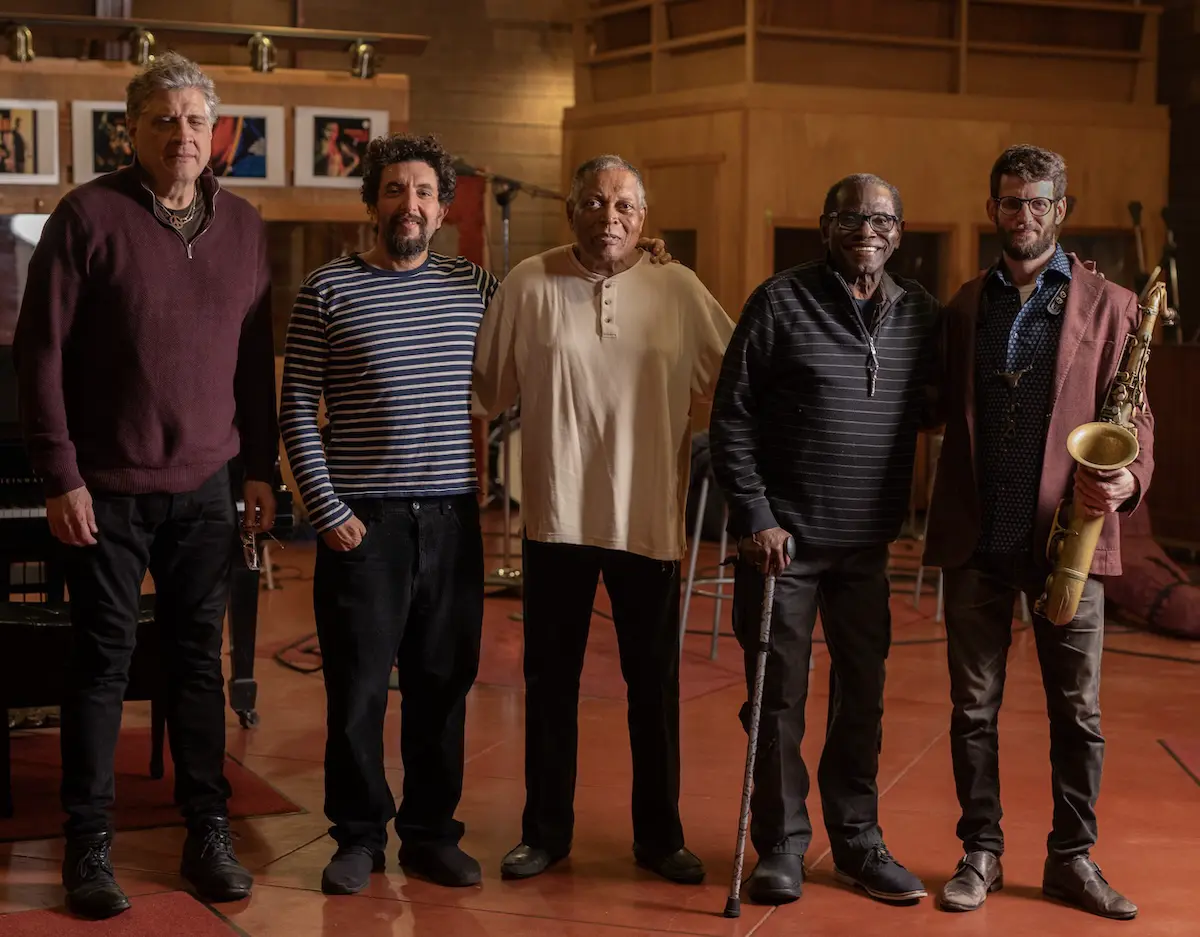
Recorded in New York in September 2024, Winter Songs is a 42-minute journey through what can be described as "chamber-jazz." The ensemble is a gathering of long-time musical comrades, including Mike Rodriguez (trumpet), Chris Cheek (tenor sax), Gil Goldstein (piano), Steve Cardenas (guitar), and Adam Nussbaum (drums). The chemistry between these players is the cornerstone of the album’s success.
The Philosophy of "Elemental" Music
Swallow has described the music on this album as "elemental, like the air we breathe." This philosophy is reflected in the minimalist titles of the tracks, which are simply numbered "One" through "Nine." The music is characterized by a profound sense of calm and a lack of ego. Unlike many jazz recordings where musicians vie for the spotlight, Winter Songs is a collective effort where the sum is greater than its parts.
The opening track "One" sets the tone, with Gil Goldstein and Steve Cardenas weaving intricate melodies before Mike Rodriguez introduces a melancholy trumpet line. Swallow himself remains largely in the background, providing subtle, foundational support that allows the other instruments to breathe. This understated approach is a hallmark of the ECM aesthetic, which emphasizes space, silence, and high-fidelity production.
Chronology and Context
The release of Winter Songs comes at a reflective point in Swallow’s career. Following his work on Carla Bley’s Life Goes On in 2020, this new album serves as a testament to his enduring creativity and his ability to foster deep musical connections. The recording captures a specific emotional landscape—one of looking back and taking stock—making it a poignant addition to his extensive discography.
Comparative Analysis and Industry Broader Impact
When viewed together, these three albums provide a snapshot of the current state of jazz production and composition. Each artist addresses the challenges of the genre in a different way:
- The Trio Tradition: Lyche proves that the classic guitar trio remains a viable and exciting format for young musicians to display virtuosity and "primal" energy.
- The Experimental Duo: Bergeron pushes the technical limits of his instrument, proving that even with harmonic limitations, the bass can be a primary partner in vocal storytelling.
- The Chamber Ensemble: Swallow demonstrates that maturity in jazz often leads to a distillation of ideas, where silence and collective texture are more powerful than individual speed or complexity.
Recording Trends
A notable trend across these releases is the geographic diversity of the recording locations. From the quiet suburbs of Asker, Norway, to the bustling studios of New York, the jazz world remains a globalized network. Furthermore, the varying lengths of the albums—from Lyche’s 38-minute sprint to Bergeron’s 66-minute marathon—show that artists are increasingly tailoring their release formats to suit the specific conceptual needs of their projects rather than adhering to rigid industry standards.
Conclusion of Findings
The release of Primal Heuristics, Bass & Face, and Winter Songs reinforces the idea that jazz is a genre of both continuity and change. While Lyche looks to the phrasing of Joe Pass, and Bergeron honors the legacy of Kevin Mahogany, Steve Swallow continues to refine the "chamber" aesthetic he helped pioneer decades ago. For the listener and the industry at large, these recordings offer a rich tapestry of sounds that celebrate the enduring power of the instrument and the human voice. As these artists tour and promote these works throughout 2025, the influence of these specific sessions is expected to resonate across future generations of improvisational musicians.