Jia Lissa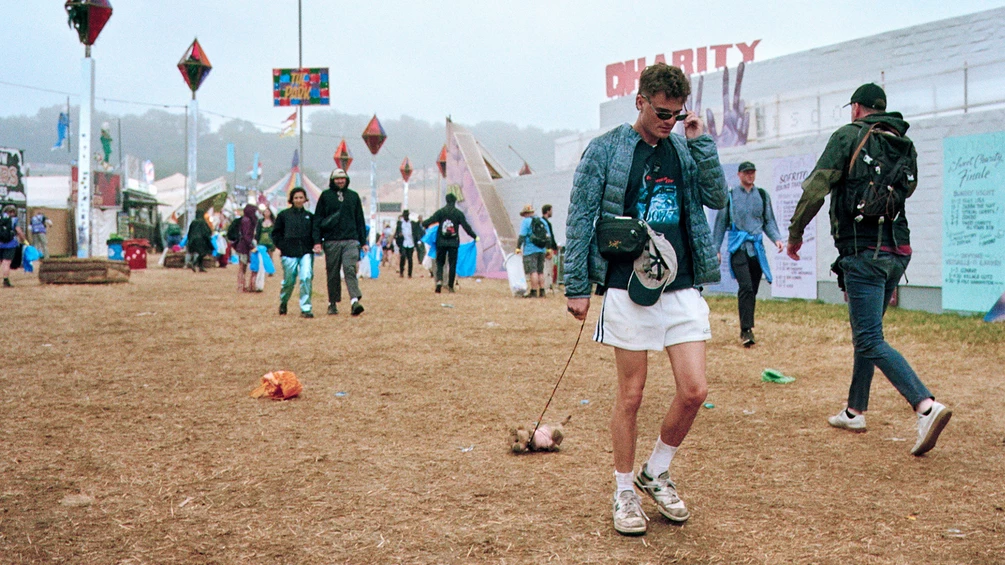
Mischa Haller, a photographer known for capturing the liminal spaces of nocturnal culture, embarked on a unique project at Glastonbury Festival in 2024. Eschewing the typical photographic pursuit of headline acts and thronging daytime crowds, Haller immersed himself in the festival’s pre-dawn hours, meticulously documenting the sprawling site and its enduring inhabitants between 4 AM and 8 AM. This distinctive approach, now chronicled in his latest book, Not Done Yet: Glastonbury After The Music, offers an atmospheric and surreal portrayal of the UK’s most revered festival, revealing a lesser-seen side of its 24-hour ecosystem. His work provides an invaluable insight into the stamina crew ravers, dedicated stewards, and Stone Circle diehards who populate Worthy Farm as night gives way to day.
The Unseen Hours: A Photographer’s Vision
Glastonbury Festival, with its colossal capacity of 210,000 attendees, transforms Somerset’s Worthy Farm into a vibrant, temporary metropolis over a single long weekend. It is a place of ceaseless activity, where music, art, and communal revelry converge in an intricate tapestry of experiences. While the festival traditionally takes a fallow year every five to six years to allow the land to recover – a tradition observed in 2026, leaving a Glastonbury-shaped void between June 24th and 28th – the energy of previous years continues to resonate. It was against this backdrop of monumental scale and enduring legend that Mischa Haller undertook his photographic expedition in 2024.
Haller’s motivation was to uncover the festival’s quieter, yet equally potent, moments. His methodology was deliberate: retiring by 9 PM each night, he would emerge from his tent just before sunrise, traversing the vast grounds during the enigmatic hours from 4 AM to 8 AM. This period, often overlooked, offered a stark contrast to the daytime bustle, revealing a different rhythm and a distinct cast of characters. From the indefatigable ravers maintaining the party’s momentum, to the diligent stewards and litter pickers already at work, and those greeting the new day with a clear head, Haller captured a spectrum of human experience. He found as much magic in this twilight zone as during any peak performance.
Despite it being his inaugural visit to Glastonbury, Haller recognized its unparalleled suitability for his project. "I knew that it was the biggest and the best there was, so I thought, if I do this story, I want to do it there," he recounted. "It just makes sense, because it is kind of a 24-hour event and there’s a real tribe that just lives for Glastonbury. It’s an amazing place." His initial foray into the pre-dawn festival confirmed his instincts. "It was such a nice atmosphere, because suddenly there was barely anybody there, which I loved," he observed. "I felt like you could suddenly see the place again, as well as the people, compared to in the daytime where it’s so full and busy that it just melts all together and it’s overwhelming. Suddenly everything was shut and there’s a change in atmosphere." This shift in atmosphere allowed for a clarity and focus that the daytime chaos often obscured, enabling Haller to capture intimate, unvarnished moments.
Glastonbury’s Liminal Landscape: A Psychological and Cultural Insight
Haller’s photographic collection, Not Done Yet: Glastonbury After The Music, follows his acclaimed previous work, Not Going Home. That project, initiated in 1998, documented post-club scenarios across the UK, capturing the peculiar "in-between" state where night transitions into day. This thematic continuity underscores Haller’s fascination with liminality – moments and spaces that exist on the threshold, neither fully one thing nor another.
In the introduction to Not Done Yet, Dorian Lynskey, a veteran Glastonbury attendee and respected journalist, eloquently describes the festival’s pre-dawn hours as a period where the conventional sense of time dissipates, yielding to an otherworldly existence. Lynskey writes, "The rhythm of Glastonbury grows fuzzier, shaggier, totally unbound. This is the time of peak wandering, tripping through the lights and laughter with no particular destination in mind. Never mind your maps and watches, you’re in a liminal world, between here and there, night and day." This observation perfectly encapsulates the psychological landscape Haller sought to capture: a dreamlike state where inhibitions are shed, and the boundaries of reality blur, fostering profound connections and surreal encounters.
The festival’s unique environment, where the sheer volume of human interaction and artistic expression creates a collective consciousness, amplifies this liminal experience. For those still awake, the early morning becomes a crucible for introspection, continued revelry, or quiet contemplation, offering a profound sense of detachment from the outside world. Haller’s photographs serve as visual evidence of this temporal distortion, freezing moments that are simultaneously fleeting and deeply resonant.
The Glastonbury Phenomenon: Context and Scale
To fully appreciate Haller’s project, it is essential to understand the sheer scale and cultural significance of Glastonbury Festival. Founded by Michael Eavis in 1970 on his Worthy Farm in Pilton, Somerset, the festival has evolved from a small gathering of hippies into one of the world’s largest and most iconic music and performing arts events. Beyond its musical offerings, Glastonbury is a sprawling cultural village, featuring theatre, circus, comedy, spoken word, and a myriad of interactive art installations. Its economic impact is substantial, contributing tens of millions of pounds to the local and national economy annually, and it supports numerous charitable causes.
The festival’s ethos, rooted in counter-culture and community, fosters an environment where the extraordinary becomes commonplace. With a temporary population exceeding that of many small cities, Glastonbury operates with its own infrastructure, emergency services, and complex logistics. This intricate ecosystem, constantly in motion, provides an unparalleled backdrop for human drama and interaction. The tradition of the fallow year, such as the one in 2026, highlights the organizers’ commitment to sustainability and preserving the land, yet it also underscores the intensity of the festival’s impact, necessitating periods of rest and recovery. This cyclical nature of intense activity followed by quietude makes Haller’s focus on the ‘after the music’ hours particularly pertinent, as it captures the very edges of this human and environmental cycle.
Decoding the Moments: Ten Iconic Photographs
Haller’s book presents a curated selection of images, each a portal into Glastonbury’s nocturnal soul. Here, we delve deeper into ten of his favourite shots, analyzing their individual significance and their collective contribution to understanding the festival’s unique atmosphere:
-
The Giant Turtle Structure: This image, captured near the Park Stage, depicts individuals emerging from a colossal turtle-shaped installation. Haller recounts, "This was on the first day of shooting, and when I took that photo I was so happy that I had decided to do this story. I quickly realised that you will not get moments like this anywhere else in the world." The photograph is a testament to Glastonbury’s surreal artistic landscape and the unscripted interactions it fosters. The dramatic early morning light bathes the scene, enhancing its dreamlike quality and underscoring the festival’s capacity for unexpected beauty and fantastical encounters. It symbolizes the immersion into a different reality that defines the Glastonbury experience.
-
Stewards Assisting a Lost Reveller: This shot features stewards engaging with a disoriented festival-goer, possibly seeking friends or connection in an area with poor phone signal. Haller notes the stewards’ playful interaction with his camera: "They saw me and started doing these funny poses. It was just another Glastonbury moment in a way." This image highlights the camaraderie that extends beyond attendees to the festival’s essential staff. It speaks to the community spirit, where even those in official roles contribute to the vibrant, often whimsical, atmosphere, demonstrating empathy and a willingness to participate in the festival’s unique charm.
-
The Man with the Stuffed Dog: One of the most eccentric figures Haller encountered was a man who carries a stuffed dog throughout his Glastonbury adventures. "He got in touch with me afterwards when he saw the book had come out. He really went fully in – total commitment," Haller observed. This photograph embodies the individualistic expression and deep personal connection many feel to Glastonbury. It celebrates the quirks and rituals that attendees bring, transforming personal eccentricities into shared festival folklore. The image captures a moment of unwavering dedication to the spirit of celebration, regardless of the hour.
-
"Rah!": A Defiant Duo: Taken between the Arcadia techno spider and the Park Stage, this photograph captures a powerful, uninhibited moment. "She was giving me the finger, he was kind of growling at me. It was this perfect moment and I just thought, ‘Why not?’," Haller recalls. The raw energy and defiance expressed by the subjects encapsulate the unvarnished, authentic human interactions that thrive in Glastonbury’s liminal hours. It’s a snapshot of freedom, spontaneous expression, and the occasional confrontational playfulness that can emerge when inhibitions are lowered and the world feels boundless.
-
Clean-up vs. Revelry: This striking image presents a powerful juxtaposition: a clean-up crew member diligently emptying discarded cans, while a determined reveller protectively clutches his drink. Haller describes it: "I love this shot because there’s a real juxtaposition between the early morning clean-up crews and the people who still want to continue clubbing and drinking." This photograph eloquently illustrates the dual realities of Glastonbury’s early morning – the ongoing party versus the inexorable process of maintenance. It highlights the diverse motivations and dedications of individuals within the festival, from those committed to sustaining the revelry to those ensuring the site’s environmental integrity.
-
Ephemeral Friendships: At a bar south of the Park Stage, Haller captured a tender moment of parting. "A lot of people meet people randomly during Glastonbury. It’s like you become friends for the night," he explains. This image portrays the transient yet profound connections forged in the crucible of the festival experience. It captures the bittersweet essence of these temporary bonds, symbolizing the shared journey and the inevitable, often poignant, farewells that characterize the end of a night, or indeed, the end of the festival itself.
-
Stone Circle Diehards with Beer Keg Backpack: This photograph, taken at the iconic Stone Circle, shows a group of hardy festival-goers who, despite looking "kind of rough," are still intent on continuing the party. Notably, one individual has ingeniously converted a water backpack into a beer keg. This image speaks to the ingenuity, resilience, and communal spirit of Glastonbury’s most dedicated attendees. The Stone Circle, a place of spiritual significance and continuous activity, becomes a hub for those determined to extract every last drop of experience, embodying a deep-seated resistance to the festival’s conclusion.
-
Monday Morning Resilience: Captured on the final morning, this shot at the Stone Circle reveals a youthful exuberance amidst the weariness of five days of festival life. "I think you must have to be young to look like this after five days of Glastonbury," Haller muses. The scene is one of vibrant energy, with people making music and dancing, refusing to let the magic end. This photograph powerfully conveys the festival’s last defiant gasp, the collective desire to prolong the experience, and the remarkable resilience of its youngest participants. It’s a celebration of endurance and the unyielding spirit of joy.
-
Stone Circle Carnival: Another Monday morning shot from the Stone Circle, this time from within the heart of the crowd. Haller describes a "slightly chaotic but really great vibe" with people making music akin to carnival sounds, dancing on the ancient stones. This image captures the raw, improvisational creativity and collective joy that often erupts spontaneously at Glastonbury. It highlights the Stone Circle’s role as a nexus for communal expression, where music and movement intertwine to create a truly magical, almost ritualistic, farewell to the festival.
-
The Walk Home: The final photograph in the book depicts two individuals walking away from the main stages towards Silver Hayes. Haller envisioned it as a symbolic ending: "This would be great to end the book with, because it’s something that shows that this all repeats itself." This image offers a poignant conclusion, reflecting on the cyclical nature of Glastonbury – the inevitable end of one festival, but the promise of its return. It evokes the enduring memories created and the anticipation for future moments of connection and shared experience, encapsulating the deep emotional resonance the festival holds for its attendees.
Broader Implications: Documenting Festival Culture and Human Endurance
Mischa Haller’s Not Done Yet: Glastonbury After The Music is more than just a collection of photographs; it is a significant sociological and cultural document. His project contributes invaluable insights into the psychology of festival attendees, particularly their endurance and dedication to prolonging an extraordinary experience. By focusing on the hours when most would be resting, Haller reveals a subculture within the broader festival culture – a "tribe" of committed revelers, workers, and dreamers who define the boundaries of human stamina and artistic immersion.
The book serves as a powerful reminder of photography’s capacity to capture ephemeral subcultures and shed light on less-explored facets of major cultural events. In an era often dominated by carefully curated social media images of headline acts, Haller’s raw, authentic portrayal of Glastonbury’s twilight hours offers a refreshing counter-narrative. It challenges conventional perceptions of what constitutes the "main event," suggesting that true magic often resides in the margins, in the moments between the structured performances.
The project also implicitly analyzes the evolving narrative of large-scale cultural events like Glastonbury. As festivals grow in size and complexity, understanding the full spectrum of human experience within them becomes crucial. Haller’s work underscores the importance of every participant, from the most energetic raver to the most diligent cleaner, in shaping the collective memory and enduring legend of such an iconic gathering.
Mischa Haller’s Not Done Yet: Glastonbury After The Music stands as a testament to his unique vision and unwavering commitment to capturing the essence of festival life beyond the spotlight. Through his lens, the often-overlooked hours between 4 AM and 8 AM at Glastonbury are transformed into a vibrant, surreal, and deeply human landscape. His photographs reveal the resilience, camaraderie, and sheer dedication of those who refuse to let the magic fade, extracting every last drop of experience from the world’s greatest temporary city. As Glastonbury observes its fallow year in 2026, Haller’s work provides a compelling visual narrative that fuels anticipation for the festival’s inevitable, magical return, cementing its place as an event where the spirit truly is "not done yet."
Buy a copy of Not Done Yet: Glastonbury After The Music here.


![Watch Carl Cox spotlight his favourite disco records ahead of Louie Vega b2b set at [UNVRS] Ibiza](https://empire-music.net/wp-content/uploads/2026/09/watch-carl-cox-spotlight-his-favourite-disco-records-ahead-of-louie-vega-b2b-set-at-unvrs-ibiza.webp)