 Johan Budi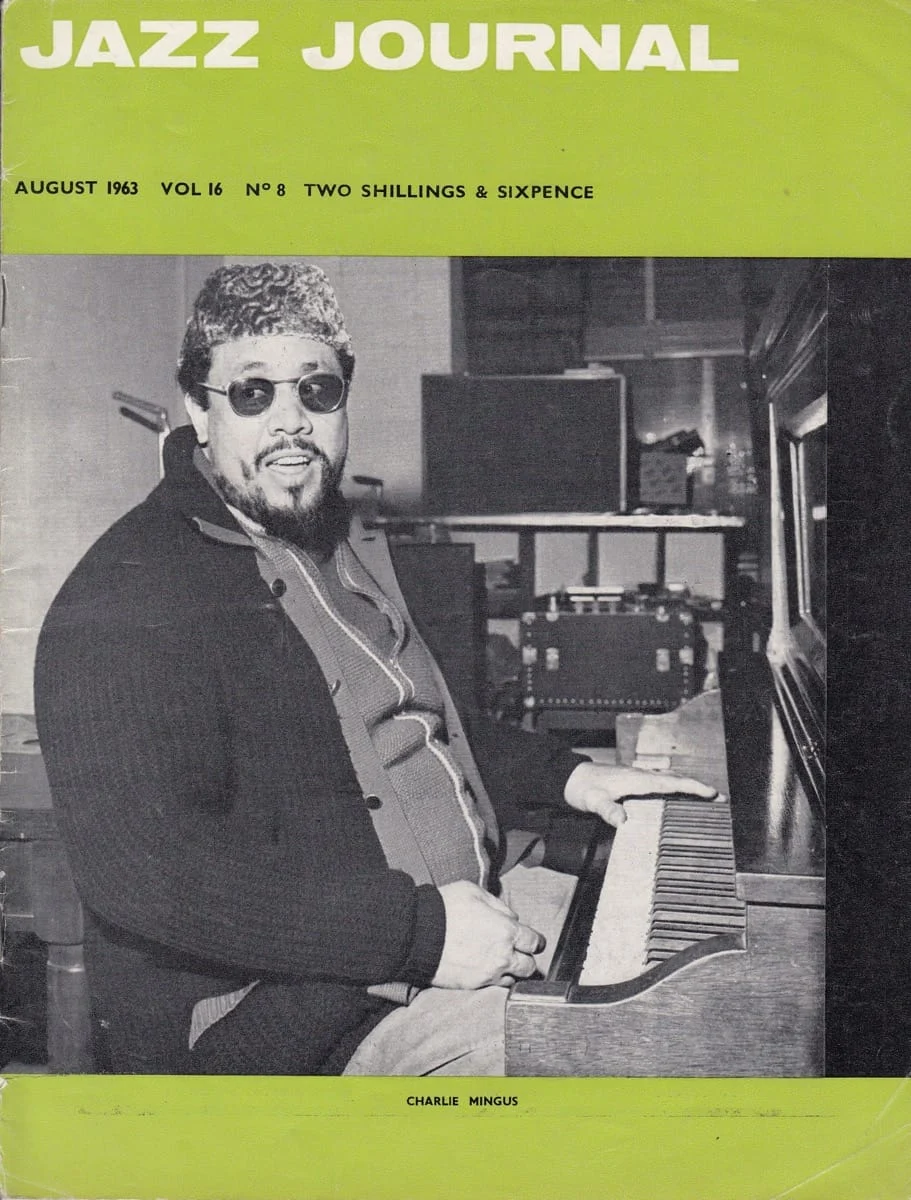
The landscape of American recorded music was irrevocably altered during the mid-20th century, an era when bebop evolved into hard bop, modal jazz, and avant-garde experimentation. Among the central figures driving this evolution were bassist and composer Charles Mingus and pianist and composer Horace Silver. Both artists captured the raw vitality of the American jazz underground, channeling the blues, gospel, and rhythm and blues traditions into sophisticated, enduring long-playing records. Two quintessential reissues—Charles Mingus’s landmark 1959 album Mingus Ah Um and Horace Silver’s 1956 tour-de-force Silver’s Blue—serve as masterclasses in composition, arrangement, and improvisational freedom, encapsulating the zenith of a golden age in American music history.
The Architectural Genius of Charles Mingus and Mingus Ah Um
Within a prolific discography comprising 133 recordings as a leader, Charles Mingus carved out a legacy defined by structural audacity and emotional intensity. While his expansive catalog contains numerous critical darlings, three distinct 1950s releases have attained legendary status, each earning rare five-star ratings in the All Music Guide to Jazz: Tijuana Moods (1957), Blues & Roots (1959), and Mingus Ah Um (1959).
These foundational albums relied heavily on the Jazz Workshop, a loosely structured collective of musicians who shared Mingus’s exuberant, freewheeling approach to ensemble playing. Drummer Dannie Richmond and trombonist Jimmy Knepper anchored all three recordings. Other key collaborators rotated through the lineup: saxophonists Booker Ervin, John Handy, and the elusive Curtis Porter (also known as Shafi Hadi) contributed to specific projects. Notably, Mingus Ah Um marked Porter’s final studio recording session, though his distinctive sound can also be heard on the 1959 film soundtrack for Shadows. Each record featured strictly original material performed by sidemen who were intimately fluent in Mingus’s demanding sonic vision.
Deep Roots in the Blues and R&B Circuit
Mingus Ah Um functions as an exhaustive exploration of the blues in all its stylistic manifestations. Mingus deliberately recruited musicians who possessed deep, foundational knowledge of basic jazz and R&B harmonies. Instrumentalists such as John Handy, Booker Ervin, Dannie Richmond, and Curtis Porter had all initiated their professional careers performing on the demanding rhythm and blues touring circuit, granting them a visceral connection to groove-driven music.
The album’s opening track, appropriately titled "Better Git It In Your Soul," sets a blistering pace. It is a hard-driving gospel romp executed in an unusual 6/4 time signature, serving as a spiritual sibling to Mingus’s earlier composition "Wednesday Night Prayer Meeting." During the track, Booker Ervin delivers two blistering tenor saxophone choruses, visibly and audibly encouraged by Mingus’s own soulful exhortations layered over rhythmic hand-clapping from the ensemble.
In stark contrast, "Goodbye Pork Pie Hat" offers a poignant, deeply emotional elegy dedicated to tenor saxophone titan Lester Young, who had passed away just two months prior to the recording sessions. John Handy provides a heart-wrenching reading that captures the melancholic grace associated with Young’s legacy.
Further demonstrating compositional range, "Boogie Stop Shuffle" presents an ambitious architectural exercise built upon four distinct thematic motifs. The track features driving solos from Ervin and pianist Horace Parlan, cushioned securely by sympathetic, hard-swinging ensemble riffs. Meanwhile, "Open Letter To Duke"—a tribute to the immortal Duke Ellington—begins as a themeless, uptempo blowing vehicle before executing a dramatic, calculated tempo shift into a lush, Johnny Hodges-style ballad, complete with expressive glissandos from Handy.
Political Censorship and Satirical Composition
Artistic expression during the late 1950s frequently collided with corporate sensitivities, a reality Mingus faced firsthand during the sessions for Mingus Ah Um. The album’s most politically charged composition, "Fables Of Faubus," served as Mingus’s sardonic reference to Orval Faubus, the notoriously segregationist governor of Arkansas who deployed the National Guard in 1957 to prevent the integration of Little Rock Central High School.
Reflecting the corporate caution of the era, executives at Columbia Records refused to allow Mingus to record and distribute the explicit satirical lyrics, deeming the content overly controversial and political. Unfettered by corporate interference, Mingus eventually recorded the vocal version with full lyrical delivery on his 1960 album Charles Mingus Presents Charles Mingus released on the Candid label (Candid CJM005).
Despite the censorship surrounding "Fables Of Faubus," the instrumental arrangements on the Columbia LP remain rich with irony and historical commentary. Trombonist Jimmy Knepper, who maintains a prominent presence throughout the album’s ensemble passages, is rarely granted solo space; however, his contribution to "Pussy Cat Dues" is an absolute masterclass, widely considered worthy of jazz trombonist Jack Teagarden. Knepper’s trombone lines brilliantly bookend "Jelly Roll," which is underpinned by the archaic, old-style slapped bass techniques of the leader. John Handy maintains the record’s satirical undercurrent, utilizing his alto saxophone to mimic a street-corner busker before effortlessly transitioning into a brilliant, soaring chorus of pure bebop.
Complete Mingus Ah Um Discography and Personnel
- Track Listing: Better Git It In Your Soul; Goodbye Pork Pie Hat; Boogie Stop Shuffle; Self-Portrait In Three Colours; Open Letter To Duke; Bird Calls; Fables Of Faubus; Pussy Cat Dues; Jelly Roll (Total Duration: 57:00)
- Personnel: Jimmy Knepper, Willie Dennis (trombone); Curtis Porter (alto saxophone, tenor saxophone); John Handy (alto saxophone, tenor saxophone, clarinet); Booker Ervin (tenor saxophone); Horace Parlan (piano); Charles Mingus (bass); Dannie Richmond (drums).
- Recording Locations and Dates: New York City, May 5 and May 12, 1959.
- Catalog Identifier: Number One Essentials 291048
Horace Silver and the Genesis of Silver’s Blue
The ascendancy of pianist and composer Horace Silver represents one of the most remarkable career trajectories in modern jazz history. Silver’s introduction to the broader jazz consciousness came courtesy of saxophonist Stan Getz, who invited the young pianist to participate in a recording session for the Roost label in December 1950. Getz had encountered Silver just weeks prior when booked as a solo act at the Sundown Club in Connecticut, where Silver’s house trio was hired to provide accompaniment.
Impressed by the pianist’s harmonic sophistication and rhythmic drive, Getz immediately hired the entire group to tour with him. The ensemble remained a fixture of Getz’s touring operation for the subsequent eighteen months. During this pivotal partnership, Getz recorded three original compositions penned by Silver: "Penny," "Potter’s Luck," and "Split Kick"—the latter functioning as a clever contrafact based on the chord progression of "There Will Never Be Another You."
Once firmly established within the hyper-competitive New York City jazz circuit, Silver rapidly found freelance work alongside luminaries such as Lou Donaldson, Terry Gibbs, Bill Harris, Coleman Hawkins, and Lester Young. By 1954, Silver reached a major career milestone by co-founding the legendary Jazz Messengers alongside drummer Art Blakey, defining the blueprint for the hard bop movement. Silver’s Blue was recorded mere months after Silver’s official departure from the Messengers. Around the time of these sessions, esteemed jazz critic Leonard Feather surveyed 120 leading professional musicians for a prominent poll to identify the premier "new star" on the piano. Horace Silver captured the top position, comfortably outpacing contemporary talents Hampton Hawes and Dave McKenna.
The Hard Bop Blueprint and Ensemble Dynamics
While legendary drummers Kenny Clarke and Art Taylor handle percussion duties on the majority of the album tracks, Silver’s Blue heavily features musicians who shared a direct lineage with the Jazz Messengers. The title track, "Silver’s Blue," unfolds as a slow, deliberate call-and-response blues structure that epitomizes the signature sound of the early Messengers.
Another standout track, "To Beat Or Not To Beat," utilizes a classic Rhythm changes chart to showcase the exceptional technical facility of trumpeter Joe Gordon, whose promising career was tragically cut short in a fatal residential fire in 1963. Gordon demonstrates his stylistic versatility by employing a cup mute to imbue the standard "How Long Has This Been Going On?" with an intimate, melancholic atmosphere.
Trumpeter Donald Byrd, whose staggering productivity is highlighted by the fact that he recorded on roughly two dozen separate occasions during the calendar year of 1956 alone, delivers a particularly inspired performance on the intricate arrangement of "The Night Has A Thousand Eyes." Meanwhile, saxophonist Hank Mobley—who frequently served as the de facto house tenor player for Blue Note Records—solidifies his critical reputation as the middleweight champion of the tenor saxophone. Mobley’s contributions, particularly on "Shoutin’ Out" and the melodic "Hank’s Tune," display a buttery tone and relaxed phrasing that defined the quintessential East Coast hard bop aesthetic.
Complete Silver’s Blue Discography and Personnel
- Track Listing: Silver’s Blue; To Beat Or Not To Beat; How Long Has This Been Going On?; I’ll Know; Shoutin’ Out; Hank’s Tune; The Night Has A Thousand Eyes; Everything Happens To Me (Total Duration: 46:36)
- Personnel (Session 1 – July 2 and 17, 1956): Donald Byrd, Joe Gordon (trumpets); Hank Mobley (tenor saxophone); Horace Silver (piano); Doug Watkins (bass); Art Taylor, Kenny Clarke (drums). Recorded in New York City.
- Personnel (Session 2 – December 2, 1955): Donald Byrd (trumpet); Hank Mobley (tenor saxophone); Horace Silver (piano); Doug Watkins (bass); Art Blakey (drums). Recorded in New York City.
- Catalog Identifier: Pan Am Records 9152341
Broader Historical Impact and Archival Legacy
The enduring fascination with albums like Mingus Ah Um and Silver’s Blue underscores a fundamental truth about mid-century American jazz: these recordings were not merely entertainment products, but vital documents of social, cultural, and artistic evolution. Released during an era marked by racial tension, civil rights mobilization, and rapid commercial shifts within the music industry, both Mingus and Silver utilized their platforms to assert artistic autonomy.
Mingus’s refusal to compromise his thematic intent—despite corporate resistance from Columbia Records—foreshadowed the outspoken activism that would characterize jazz artists during the turbulent 1960s. Similarly, Horace Silver’s leadership in synthesizing gospel, blues, and bebop helped democratize jazz, ensuring that complex harmonic explorations remained anchored in the visceral, danceable rhythms of the African American experience.
Modern reissues of these masterworks serve a crucial archival purpose. They provide contemporary audiences with pristine access to the foundational blueprints of modern improvised music. As institutional and commercial landscapes continue to evolve, the rigorous musicianship, uncompromising artistic vision, and emotional depth captured on Mingus Ah Um and Silver’s Blue ensure that Charles Mingus and Horace Silver remain towering monoliths in the pantheon of twentieth-century music.