 Nayara Elvina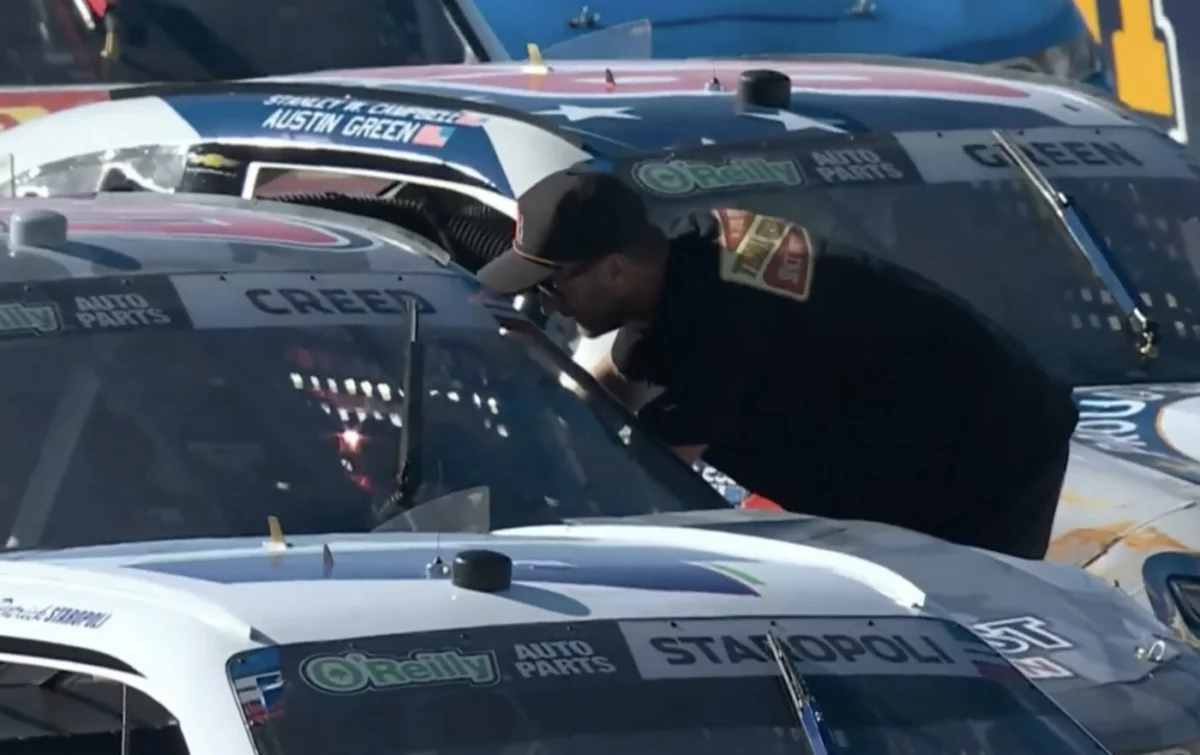
The intersection of high-stakes professional motorsport and military infrastructure reached a flashpoint this weekend as NASCAR’s visit to Naval Base Coronado in San Diego was marred by a significant security breach and a series of technical track failures. While the event was designed to showcase the versatility of NASCAR’s racing product and honor the United States Navy, the weekend’s proceedings were defined as much by off-track anomalies as by the competitive action on the 3.4-mile temporary street circuit. From a spectator infiltrating the live track to a manhole cover causing catastrophic engine damage, the event has raised critical questions regarding the logistical complexities of hosting premier racing events on active military installations.
The Security Breach: Fan Interaction Under Red Flag Conditions
The most startling moment of the weekend occurred during a prolonged red-flag period in the O’Reilly Auto Parts Series race. Following a multi-car accident on lap 35 that necessitated extensive repairs to the track’s safety barriers, the field was brought to a halt on the backstretch. During this stationary period, an unidentified male spectator successfully scaled the perimeter fencing of the naval base and entered the "hot" track area.
The individual approached the #00 car piloted by Sheldon Creed. In a move that bypassed several layers of security, the fan reached into the cockpit of the stationary vehicle to engage the driver. According to on-board camera footage and eyewitness accounts, the spectator spoke briefly with Creed and initiated a fist bump before retreating across the track and jumping back over the security fence.
Creed, visibly perplexed by the encounter, immediately notified his team and NASCAR officials via radio. "I think he’s wasted," Creed reported to his crew. "I didn’t even understand what he was saying. I just let the officials know we have no part of this guy." While the incident ended without physical harm, it represented a significant lapse in the security perimeter of a Department of Defense facility. Reports from the ground indicate that the individual was detained by military police and local law enforcement shortly after returning to the spectator area.
Technical Volatility: The Manhole Cover Incident
The security breach was not the only disruption to the weekend’s schedule. The integrity of the racing surface itself came into question during the opening stages of the O’Reilly Series event. On the very first lap of competition, the aerodynamic suction generated by the field of heavy stock cars dislodged a manhole cover on a section of the taxiway utilized for the course.
The loose cover was struck by the car of Corey Day, becoming lodged in the vehicle’s radiator and causing immediate mechanical failure. The incident mirrors similar high-profile failures at other street circuits, most notably during the inaugural Formula 1 Las Vegas Grand Prix in 2023. The physics of modern racing vehicles, which rely on low ground clearance and high-velocity airflow beneath the chassis, can create a vacuum effect strong enough to lift unsecured metal fixtures from the pavement.
In response to the failure, NASCAR officials issued a red flag to allow maintenance crews to weld all remaining manhole covers around the 3.4-mile circuit. In an unusual display of administrative leniency necessitated by the track failure, NASCAR permitted Day’s team to make repairs and awarded the driver his lost laps back, though Day was later involved in a separate racing incident that ended his day prematurely.
The Lap 35 "Big One" and Structural Integrity
The primary cause for the extended delay that facilitated the fan’s track entry was a massive restart accident on lap 35. Street circuits are notoriously narrow, often lacking the expansive run-off areas found at purpose-built facilities like Talladega or Daytona. When a mid-pack car faltered during the restart, it triggered a chain reaction that consumed nearly half the field.
Anthony Alfredo, one of the primary drivers involved in the melee, described the impact as the "hardest hit" of his professional career. The sheer force of the multi-car pile-up was sufficient to displace the temporary concrete barriers and water-filled "Triton" barricades used to define the track limits.
The repair process was arduous. Because the barriers serve as the primary line of defense between the high-speed vehicles and the sensitive infrastructure of the naval base, NASCAR officials refused to resume the race until the line was perfectly reconstructed. This delay lasted over forty minutes, creating the window of opportunity for the aforementioned security breach.
Chronology of the Weekend’s Major Events
To understand the scope of the challenges faced at Naval Base Coronado, a timeline of the weekend’s disruptions provides necessary context:
- Friday Afternoon: Practice sessions for the Truck Series reveal "bumpy" conditions on the runway sections, leading to several suspension adjustments across the garage.
- Saturday, 1:00 PM: The O’Reilly Auto Parts Series race begins.
- Saturday, 1:05 PM: Lap 1 manhole cover failure involves Corey Day. The race is halted for emergency welding operations.
- Saturday, 2:15 PM: Racing resumes after a 70-minute delay for track maintenance.
- Saturday, 2:45 PM: Lap 35 restart leads to a massive multi-car wreck, damaging track barriers and injuring no drivers, but totaling several vehicles.
- Saturday, 3:05 PM: During the red flag for barrier repair, a fan scales the fence to approach Sheldon Creed.
- Saturday, 3:15 PM: The spectator is apprehended by base security.
- Saturday, 3:50 PM: Track repairs are completed, and the race concludes under sunset conditions.
Comparative Analysis: A History of Fan Interference
While the breach at Coronado was shocking given the military setting, NASCAR has a documented history of fans attempting to interact with drivers during active sessions. The most cited precedent occurred in 2007 at Watkins Glen International. During a red flag, a fan bypassed security and approached Matt Kenseth’s car, requesting an autograph while the driver sat on the track.
The Coronado incident, however, carries different legal and safety implications. Because the event took place on a naval base, the perpetrator faces federal jurisdiction and potential charges related to trespassing on a military installation, which carry significantly harsher penalties than trespassing at a private sporting venue.
Logistical and Strategic Implications
The decision to race at Naval Base Coronado was part of NASCAR’s broader strategic initiative to bring racing to urban centers and non-traditional venues. Following the success of the Chicago Street Race and the Busch Light Clash at the Los Angeles Memorial Coliseum, the San Diego market—specifically the picturesque North Island—was viewed as a prime location for expansion.
The logistical undertaking was immense. The 3.4-mile course required:
- The installation of over 2,000 concrete jersey barriers.
- The construction of a temporary broadcast center situated atop an active aircraft carrier docked adjacent to the track.
- The coordination of security between NASCAR’s private firm, the San Diego Police Department, and Naval Security Forces.
Despite the weekend’s chaos, the event provided a unique visual spectacle. The sight of stock cars drafting past fighter jets and an aircraft carrier served the promotional goals of the partnership. However, the technical failures of the track surface and the ease with which a spectator breached the perimeter suggest that the "pop-up" nature of street circuits continues to present risks that purpose-built tracks have long since mitigated.
Official Responses and Safety Reviews
In the aftermath of the event, NASCAR officials and representatives from Naval Base Coronado have indicated that a full safety and security review will be conducted.
"The safety of our drivers and the security of this installation are our highest priorities," a joint statement might typically read in such circumstances. "While the racing was competitive, the incidents involving track hardware and unauthorized personnel are unacceptable. We will evaluate the barrier configurations and the security protocols to ensure these lapses do not recur in future iterations of this event."
Engineers will also likely focus on the "pavement vacuum" issue. The transition of runways—designed for the vertical pressure of landing aircraft—to racing circuits—designed for the horizontal and suction forces of high-downforce cars—requires a different set of engineering tolerances.
Conclusion: The Future of Military-Base Racing
The NASCAR weekend at Naval Base Coronado will be remembered as a "strange yet awesome" chapter in the sport’s history. It highlighted the raw, unpredictable nature of street racing where the environment is not a controlled laboratory but a living, breathing piece of infrastructure.
While the "Sheldon Creed fist bump" may become a viral moment of levity, it serves as a sobering reminder of the vulnerabilities inherent in temporary venues. As NASCAR continues to explore new markets and experimental formats, the lessons learned in San Diego—ranging from the necessity of welding manhole covers to the reinforcement of perimeter fencing—will be vital in ensuring that the "wild scenes" of the track remain confined to the competition and do not compromise the safety of the participants or the sanctity of the host venues.