 Indra Aziz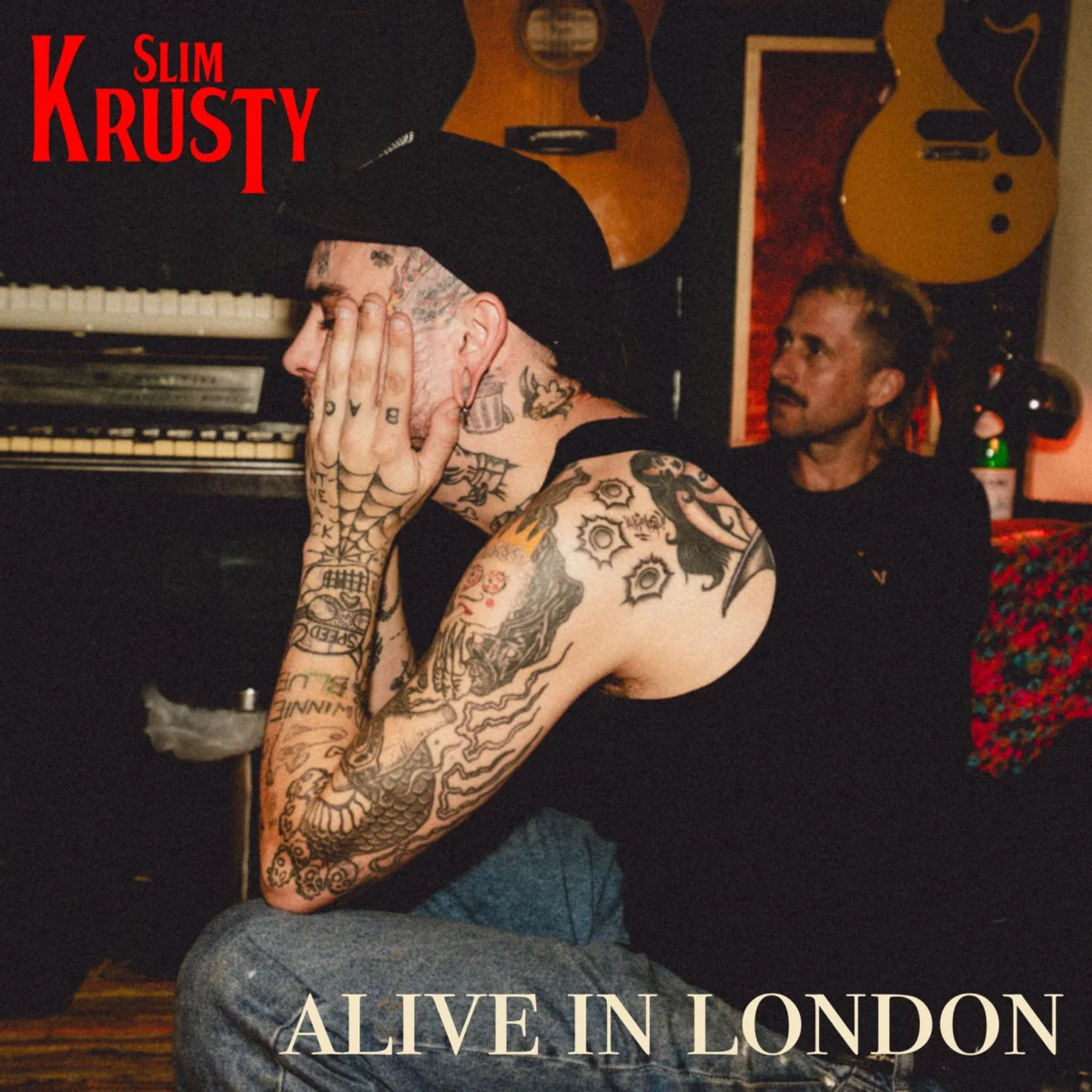
The intersection of urban exploration and live musical reinvention forms the core of Alive In London, the latest recorded project from the idiosyncratic songwriter known as Slim Krusty. Released as the inaugural offering from the newly established independent label Cutting Teeth Records, the EP documents the artist’s maiden voyage to the United Kingdom’s capital. Rather than serving as a standard promotional studio recording, the release captures a collection of previously established compositions performed live within a metropolitan environment that the artist was experiencing for the very first time. This geographic and sensory collision has yielded a distinctive auditory document that defies standard genre classification while offering a rare glimpse into the spontaneous adaptation of an artist’s catalog within an unfamiliar cultural landscape.
The project, which has steadily garnered attention within independent music circles following its release, bridges the gap between pre-existing studio material and the unpredictable nature of live performance. Industry analysts and musicologists frequently examine the ways in which a new environment can alter the reception and execution of established works. In the case of Slim Krusty, the transition from familiar surroundings to the sprawling, historic, and demanding backdrop of London introduced a distinct urgency to the performances. The recordings do not merely utilize the city as an aesthetic backdrop; rather, they present a dialogue between the artist’s established aesthetic and the acoustic and atmospheric realities of the capital.
Background and Chronological Development of the Project
The genesis of Alive In London can be traced back to a series of informal creative dialogues and community-building initiatives that have long defined the subterranean corridors of the British music scene. While Slim Krusty had built a dedicated following through previous releases, the logistical realization of the London project required a deliberate convergence of timing, artistic vision, and infrastructural support.
Planning for the venture began months prior to the actual performances, involving a small collective of independent promoters, audio engineers, and community organizers. The broader London connection was further solidified through creative networks associated with Strummerville, the esteemed organization established in memory of The Clash frontman Joe Strummer. Strummerville has historically dedicated its resources to supporting emerging artists, fostering grassroots collaboration, and preserving a fiercely independent ethos within the arts. This ideological alignment provided the foundation for Cutting Teeth Records, a label intentionally designed to champion unorthodox musicians who sit outside traditional major-label frameworks.
Upon arriving in London, Slim Krusty immersed himself in the city’s localized creative hubs, engaging in impromptu writing sessions, rehearsals, and discussions with local musicians. The chronology of the project culminated in a series of intimate, live-to-tape performances executed across various unconventional venues throughout the city. These sessions were deliberately unpolished, prioritizing emotional immediacy and raw performance value over immaculate studio perfection. By capturing these moments, the project preserves the genuine friction of an artist navigating a major metropolis for the very first time.
The Aesthetic Profile of Slim Krusty
To understand the significance of Alive In London, one must examine the broader artistic profile of Slim Krusty, whose body of work has consistently resisted conventional categorization. Operating at the fringes of contemporary alternative music, the artist’s catalog is characterized by a deliberate juxtaposition of sardonic humor and stark vulnerability. Melodic structures are often paired with lyrical observations that render everyday occurrences slightly surreal, while simultaneously grounding abstract emotional concepts in relatable human experiences.
Critics have frequently noted that Slim Krusty’s music possesses a distinct conversational quality, as though the listener is being addressed directly by an eccentric yet profoundly perceptive narrator. This style requires a high degree of listener engagement, as the material intentionally avoids neat resolutions or predictable structural arcs. In the studio, these qualities are managed through careful arrangement and production choices. However, translating this ethos to a live environment—particularly in a city as culturally saturated as London—demanded a recalibration of the performance approach.
The live renditions captured on the EP reveal a looser, more volatile interpretation of the source material. Without the safety net of multi-track overdubs, the compositions rely entirely on the dynamic interplay between the performer and the immediate acoustic environment. This vulnerability is precisely what anchors the project, transforming familiar songs into documents of transience and discovery.
Analysis of the Live Recording Methodology
The decision to record Alive In London as a live document rather than a traditional studio album reflects a broader industry trend toward authenticity and spatial realism in recorded music. In an era dominated by hyper-quantized digital production and pristine audio manipulation, the raw acoustic bleed, ambient room noise, and minor performance imperfections captured on the EP serve as markers of genuine human activity.
Audio engineers involved in the project utilized minimalist recording setups to preserve the natural acoustics of the performance spaces. By utilizing high-fidelity mobile recording units, the production team managed to capture not only the direct instrument and vocal signals but also the spatial resonance of the rooms in which they were performed. This methodology ensures that the listener experiences a sense of spatial immersion, effectively placing them in the room alongside the artist.
Data compiled from independent music distribution networks indicates a rising consumer demand for live-format physical media and limited-edition vinyl pressings, particularly among younger demographics seeking tangible connections to artists. Alive In London capitalizes on this market preference, positioning itself as a collectible artifact for dedicated followers while serving as an accessible entry point for new listeners.
Statements and Reactions from Related Parties
While formal press statements from major corporate entities have been sparse—owing to the fiercely independent nature of the release—key figures within the project’s surrounding creative community have offered insight into the motivations behind the record.
A spokesperson for Cutting Teeth Records emphasized the label’s foundational philosophy during the rollout of the EP:
"The mission of Cutting Teeth from day one has been to provide a stable platform for music that refuses to conform to standardized industry expectations. Slim Krusty represents everything we want to champion: uncompromising individuality, artistic fearlessness, and a complete disregard for commercial formulas. Bringing him to London for this project was not about finding a new market; it was about placing a unique artistic voice into a challenging new context to see what kind of creative friction would occur."
Representatives from organizations aligned with the Strummerville network also highlighted the ideological continuity of the project, noting that the spirit of grassroots collaboration and artistic exploration remains vital to the health of the capital’s independent music infrastructure. Observers within the wider independent music community have praised the release for its refusal to pander to algorithmic trends, viewing the collaboration between artist, label, and city as a refreshing reminder of the vitality inherent in unscripted artistic endeavors.
Broader Impact and Market Implications
The release of Alive In London carries several significant implications for the contemporary independent music landscape, particularly regarding how regional scenes interact with nomadic artists. As streaming platforms and digital distribution homogenize the global music market, projects that emphasize geographic specificity and real-time performance provide a necessary counterweight to placeless digital consumption.
Furthermore, the launch of Cutting Teeth Records via this specific release establishes a blueprint for boutique record labels operating outside traditional industry hubs. By leveraging community networks, focusing on physical-first media strategies, and prioritizing artistic authenticity over immediate commercial scalability, the label has successfully positioned itself as a credible new home for unorthodox talent.
For Slim Krusty, the EP marks a transitional phase in his career. By documenting his initial encounter with one of the world’s most culturally influential cities, the artist has expanded his creative parameters without abandoning the core identity that initially attracted his fanbase. The project demonstrates that established material can be successfully revitalized through simple changes in environment and delivery, offering a template for future live-context recordings.
As physical copies of the EP circulate among collectors and digital streams continue to introduce the release to international audiences, Alive In London stands as a testament to the power of unvarnished artistic exploration. It is a record defined not by calculated precision, but by the honest, unpredictable results of an artist stepping out of the familiar and into the unknown.