 Nayara Elvina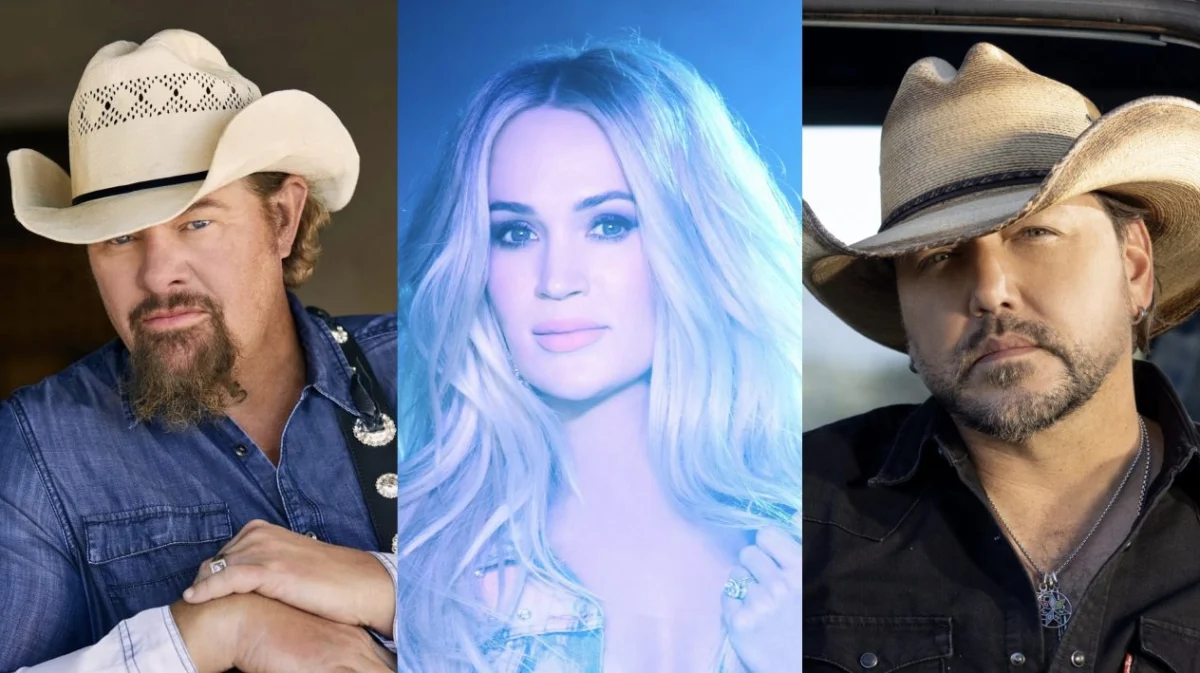
As the anticipation builds for the 60th Annual CMA Awards, scheduled to broadcast live from the Bridgestone Arena in Nashville on Wednesday, November 18, the country music community is once again immersed in the high-stakes debate over nominations, victories, and glaring omissions. This year’s ballot highlights a powerful trend of female dominance, with artists like Ella Langley, Miranda Lambert, and Kacey Musgraves leading the charge across major categories. Langley has captured a staggering nine nominations—including her historic first-ever Entertainer of the Year nod—cementing a record-shattering year driven by her success with “Choosin’ Texas” and her album Dandelion. Lambert follows closely with seven nominations, while male counterparts such as Chris Stapleton, Cody Johnson, and Stephen Wilson Jr. continue to command critical acclaim and commercial resonance.
Yet, as the glittering gala approaches, the conversation invariably pivots from who is nominated today to the historical anomalies of the past. The industry’s most prestigious accolade, Entertainer of the Year, has a notoriously complex legacy. Throughout the six-decade history of the Country Music Association Awards, the ultimate trophy has frequently eluded some of the genre’s most commercially viable, culturally transformative, and critically revered icons. Examining the annals of the CMAs reveals a fascinating roster of legendary performers who never managed to secure the title of Entertainer of the Year, shedding light on the shifting criteria, voting dynamics, and occasional oversights that define Nashville’s highest honor.
Randy Travis: The Architect of Traditional Revival
Few artists have reshaped the sonic landscape of mainstream country music as decisively as Randy Travis. Emerging in the mid-1980s with a rich, neo-traditional baritone that cut through the polished pop-country crossovers of the era, Travis ushered in a golden age of traditionalism. With over 23 million albums sold worldwide, 23 number-one singles, and seven Grammy Awards, the "I Told You So" singer laid the groundwork for at least two generations of artists who followed in his footsteps.
Despite collecting five CMA Awards throughout his career—including consecutive Male Vocalist of the Year titles in 1987 and 1988, alongside Album of the Year for Storms of Life and Single of the Year for "Forever and Ever, Amen"—Travis famously never captured Entertainer of the Year. His commercial dominance and critical acclaim translated into four consecutive nominations in the category from 1987 to 1990. However, during an era defined by monumental touring behemoths and cultural juggernauts, Travis was repeatedly edged out by peers like George Strait and Garth Brooks. For an artist who effectively revived the traditional wing of the genre, the absence of an Entertainer of the Year trophy remains one of the CMA’s most notable historical omissions.
Carrie Underwood: A Record-Breaking Legacy Met with Ballot Inconsistencies
Carrie Underwood’s trajectory from American Idol winner to global country music icon is a masterclass in sustained excellence. Over a career spanning two decades, Underwood has amassed 12 Academy of Country Music (ACM) Awards—including three Entertainer of the Year honors—alongside eight Grammy Awards and seven CMA Awards. Milestone achievements continued to accumulate when the Recording Industry Association of America (RIAA) officially named her the highest-selling female country artist of all time.
Despite this unprecedented commercial and critical footprint, Underwood’s history with the CMA Entertainer of the Year category is a study in contradiction. During the peak commercial window of her career, roughly spanning from 2005 to 2015, Underwood did not receive a single nomination for the award. Instead, her inclusion on the ballot arrived years later, beginning with her first nod in 2016 and followed by a consecutive five-year run of nominations from 2019 to 2023. While industry observers acknowledged the validity of her latter-day nominations, the failure of voters to recognize her during her most explosive commercial era highlights a persistent disconnect between sales records and academy recognition.
Chris Stapleton: The Decade-Long Wait for the Ultimate Crown
The career of Chris Stapleton represents a rare convergence of critical adoration, industry respect, and mainstream commercial power. With 11 Grammy Awards, 19 CMA Awards, and 11 ACM Awards, the Kentucky native stands as arguably the most decorated and influential country artist of the 21st century. His cultural footprint was further cemented when his landmark cover of David Allan Coe’s "Tennessee Whiskey" became the first country song in history to be certified double-diamond by the RIAA, surpassing 20 million equivalent units sold in the United States.
Stapleton’s narrative is inextricably linked to the CMA Awards, most notably his explosive 2015 breakout performance alongside Justin Timberlake, which served as a cultural turning point away from the era of bro-country. Yet, within the mechanics of the CMA voting body, Stapleton occupies a unique statistical anomaly: he is the second-most-decorated artist in the history of the award show with 19 trophies, yet he has gone home empty-handed in the Entertainer of the Year category for ten consecutive years. Entering the upcoming ceremony with another nomination, Stapleton continues his pursuit to finally break a decade-long streak of coming up short for the genre’s top honor.
Toby Keith: The Populist Powerhouse Overlooked by Nashville Insiders
For the better part of two decades, the late Toby Keith was an undeniable colossus of American popular music. Recognized as one of the top touring artists of the millennium, Keith accumulated 41 Top 10 hits, 20 number-one singles, 10 number-one albums, and 14 ACM Awards. His brand of unapologetic, blue-collar patriotism—supercharged by post-9/11 anthems like "Courtesy of the Red, White and Blue (The Angry American)" and enduring staples like "Should’ve Been a Cowboy" and "As Good As I Once Was"—resonated deeply with millions of fans worldwide.
Despite this monumental grassroots and commercial success, Keith received remarkably modest recognition from the Country Music Association during his lifetime. He secured only three competitive CMA wins: Male Vocalist of the Year in 2001 and two Music Video of the Year trophies. Following the height of his patriotic anthem success, Keith earned four consecutive Entertainer of the Year nominations from 2002 to 2005, yet failed to secure a victory on any occasion. His exclusion reflects a historical divergence between mainstream populist appeal and the voting preferences of the Nashville-centric CMA establishment.
Zach Bryan: Choosing Independence Over Association Honors
The modern country landscape features few figures as disruptive or commercially potent as Zach Bryan. Within a remarkably brief span, the Oklahoma singer-songwriter transitioned from recording acoustic tracks in a Florida Airbnb to selling out massive stadiums, setting a U.S. attendance record with 112,408 fans at Michigan Stadium, and commanding massive publishing valuations. While artists like Tyler Childers and Sturgill Simpson laid the groundwork for the modern independent and alternative country renaissance, Bryan fundamentally altered the genre’s commercial boundaries by bridging the gap between underground authenticity and mainstream dominance.
Unlike others on this list who actively pursued academy recognition, Bryan’s absence from the CMA winner’s circle is entirely self-determined. In late 2022, the singer publicly addressed his stance on industry awards, releasing a definitive statement declaring that he neither wanted nor expected to be considered for CMA accolades. Emphasizing that his decision was rooted in personal priority rather than institutional disrespect, Bryan noted that his focus remained on artistic integrity and connecting directly with listeners rather than displaying trophies on a shelf. Consequently, his zero-nomination status stands as a conscious rejection of traditional Nashville machinery.
Jason Aldean: The ACM Favorite and CMA Outsider
As a reigning ACM Artist of the Decade, Jason Aldean has forged a career defined by enduring mainstream relevance. With 32 number-one singles, 27 RIAA platinum certifications, and over 55 million units sold in the United States, the Georgia native has achieved milestones that few artists attain. His energetic stadium anthems and genre-bending collaborations have sustained his position at the apex of modern country touring for well over a decade.
However, Aldean’s relationship with country music’s two major award bodies offers a stark dichotomy. While the Academy of Country Music heavily embraced his contributions—culminating in three consecutive Entertainer of the Year victories from 2016 to 2018—the Country Music Association has historically shown far more conservative support. Aldean has amassed just four career nominations in the CMA Entertainer of the Year category, failing to convert any of those appearances into a win. This disparity underscores how differently regional and institutional voting bodies evaluate career achievements and live performance dominance.
Florida Georgia Line: Commercial Titans Shuts Out of the Ultimate Ballot
During the height of their decade-long run, Florida Georgia Line (FGL) functioned as an unstoppable commercial engine that fundamentally redefined the sonic parameters of mainstream country music. Propelled by the historic, diamond-certified success of "Cruise," alongside era-defining smashes like "This Is How We Roll," "Stay," and the crossover pop phenomenon "Meant to Be" with Bebe Rexha, the duo achieved a level of cross-genre saturation that few contemporaries could rival.
Despite operating as one of the most commercially successful duos in the history of the format, FGL never secured an Entertainer of the Year nomination during their peak years. While the duo’s polarizing fusion of hip-hop beats, pop hooks, and traditional instrumentation sparked intense debate among purists, their undeniable ticket-selling power and chart dominance made their complete exclusion from the category’s ballot a notable talking point in retrospective analyses of 2010s country music.
Broader Implications for Industry Recognition
The recurring phenomenon of major artists missing out on the CMA’s highest honor illuminates the complex criteria governing Nashville’s most visible institution. Factors ranging from touring volume, radio airplay, and peer perception to shifting voter demographics and personal artist boycotts continue to influence how history records success. As the 60th Annual CMA Awards draw closer, the ongoing discourse surrounding these historical snubs serves as a reminder that critical acclaim and popular triumph do not always align under the bright lights of the Bridgestone Arena.