Nayara Elvina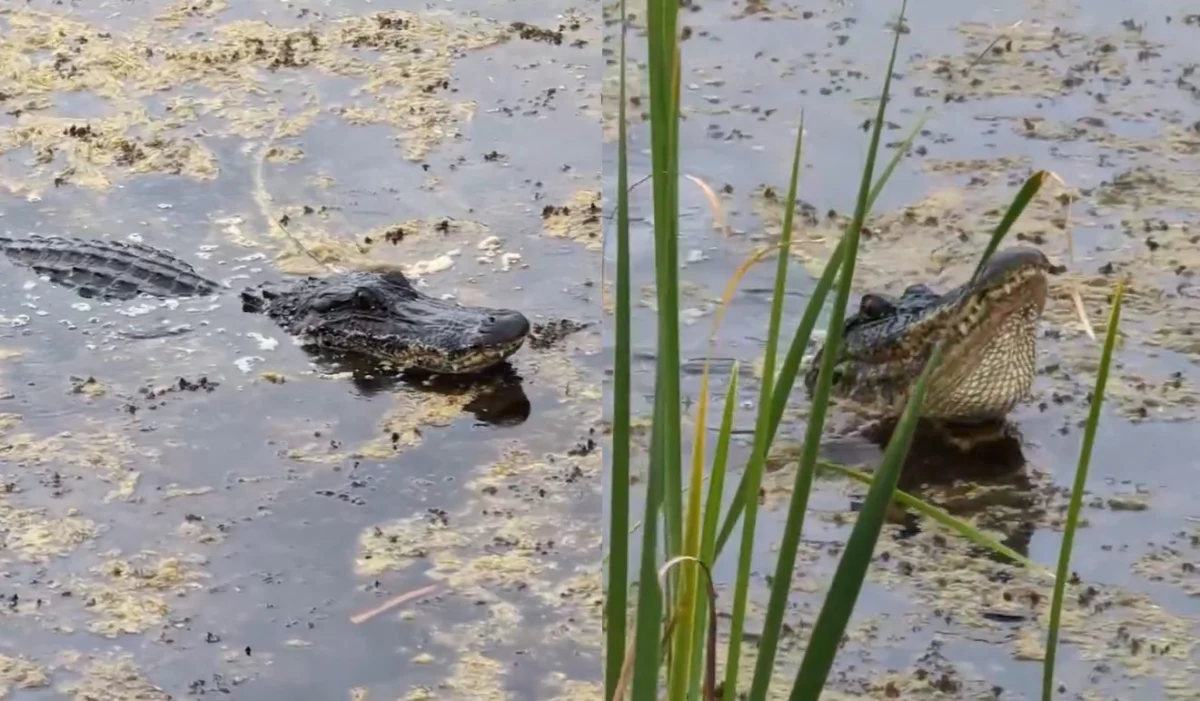
The United States Department of the Interior recently released a compelling audiovisual record of an American alligator (Alligator mississippiensis) performing a powerful territorial bellow at the Aransas National Wildlife Refuge in Austwell, Texas. The footage, captured during the peak of the species’ active season, provides a rare and intimate look at the acoustic communication methods utilized by one of North America’s largest apex predators. The recording has sparked significant interest among wildlife biologists and the general public, highlighting the complex social structures and physiological capabilities of these ancient reptiles. As the video circulated across digital platforms in July 2026, it served as a reminder of the raw power inherent in the natural ecosystems managed by the U.S. Fish and Wildlife Service.
The American alligator, a species that has become a symbol of successful conservation efforts in the United States, utilizes a range of vocalizations and infrasonic signals to interact with its environment and its peers. The specific behavior captured at the Aransas National Wildlife Refuge is known as "bellowing," a low-frequency vocalization that is often accompanied by visible vibrations in the surrounding water. This phenomenon, colloquially referred to as the "water dance," occurs when the alligator’s torso vibrates at such a high intensity that it causes droplets to leap from the surface of the water, creating a shimmering effect around the animal’s back.
Physiological Mechanics of Alligator Vocalization
One of the most remarkable aspects of the alligator’s bellow is the physiological method by which it is produced. Unlike mammals, which rely on complex vocal cords within the larynx to produce sound, alligators utilize a different mechanism. While they possess a larynx, the sound is primarily generated by the forceful expulsion of air from the lungs through the glottis. This process is amplified by the animal’s large body size and the resonance of its internal air sacs.
The resulting sound is a deep, guttural roar that can reach decibel levels comparable to a small aircraft engine at close range. However, a significant portion of the energy in an alligator’s bellow is transmitted in the form of infrasound—frequencies below the threshold of human hearing (typically under 20 Hz). These low-frequency waves can travel vast distances through both air and water, allowing alligators to communicate with individuals that are miles away. This is particularly advantageous in the dense, marshy habitats of the Texas coast, where visual contact is often obstructed by thick vegetation such as cordgrass and mangroves.
The "water dance" observed in the footage is the physical manifestation of these infrasonic waves. As the alligator tenses its trunk muscles to produce the sound, the vibrations are transferred to the water column. The resulting Faraday waves create a localized disturbance that serves as a visual signal to other alligators, reinforcing the acoustic message being sent.
Territoriality and Mating Season Dynamics
The timing of the footage, released in July, aligns with the tail end of the alligator breeding and nesting season in the Gulf Coast region. In Texas, the courtship and mating period typically begins in mid-April and extends through June, with nesting occurring in late June and July. During this window, male alligators, or "bulls," become significantly more vocal and territorial.
The primary functions of the bellow are three-fold:
- Attracting Mates: Female alligators use the depth and frequency of a male’s bellow to assess his size and health. A deeper, more resonant sound generally indicates a larger, more dominant male, making him a more desirable mate.
- Territorial Proclamation: By bellowing, a male alligator establishes a "buffer zone" around his immediate habitat. This warns other males to stay away, thereby reducing the likelihood of physical confrontations that could lead to injury or death.
- Social Hierarchy: Bellowing helps maintain the social order within a local population. Smaller males may respond with their own, less intense bellows or choose to remain silent to avoid drawing the attention of a dominant bull.
Biologists at the Aransas National Wildlife Refuge note that while alligators are generally solitary animals, the breeding season necessitates these complex interactions. The refuge, which encompasses over 115,000 acres of coastal prairie, oak motts, and salt marshes, provides an ideal laboratory for observing these behaviors in a protected environment.
The Aransas National Wildlife Refuge: A Critical Habitat
Located along the inland side of Matagorda Island, the Aransas National Wildlife Refuge is perhaps best known as the wintering ground for the endangered whooping crane. However, its diverse wetlands also support a robust population of American alligators. The refuge serves as a vital sanctuary where these reptiles can thrive without the pressures of urban encroachment or heavy industrial activity.
The management of alligator populations within the refuge is a delicate balance. As apex predators, alligators play a crucial role in maintaining the health of the ecosystem. They help control the populations of prey species, such as nutria, raccoons, and various fish, and their "alligator holes"—depressions they dig in the marsh—provide essential water sources for other wildlife during periods of drought.
The footage provided by the Department of the Interior emphasizes the importance of these protected lands. By documenting and sharing these natural behaviors, federal agencies aim to foster a greater public understanding of wildlife biology and the necessity of habitat preservation.
Historical Context and Conservation Success
The presence of a healthy, vocalizing alligator population at Aransas is a testament to the success of the Endangered Species Act (ESA). In the mid-20th century, the American alligator was pushed to the brink of extinction due to unregulated hunting and habitat loss. By 1967, the species was listed as endangered.
Through rigorous federal and state protections, as well as the implementation of sustainable management programs, the population rebounded with remarkable speed. In 1987, the U.S. Fish and Wildlife Service declared the American alligator fully recovered. Today, it is classified as "threatened due to similarity of appearance" to the endangered American crocodile and other crocodilians, a designation that allows for controlled hunting and trade while still providing necessary legal protections.
In Texas, the alligator population is managed by the Texas Parks and Wildlife Department (TPWD). The state is divided into "core" and "non-core" counties, with Aransas County falling within the core range where alligators are most abundant. The recovery of the species has led to increased sightings, making public education regarding alligator behavior and safety more important than ever.
Public Safety and Human-Wildlife Interaction
The release of the bellowing video also serves a practical purpose in public safety. The sound, which many social media users described as "frightening" or "prehistoric," is a natural warning sign. Wildlife officials urge hikers, kayakers, and residents in alligator-prone areas to recognize these vocalizations as a signal to maintain a safe distance.
Standard safety protocols recommended by the TPWD and the U.S. Fish and Wildlife Service include:
- Maintain Distance: Always stay at least 30 feet away from an alligator. If the animal begins to hiss or bellow, you are too close.
- Avoid Feeding: Feeding alligators is illegal in Texas and causes the animals to lose their natural fear of humans, leading to dangerous "nuisance" behavior.
- Exercise Caution Near Water: During the breeding and nesting season, alligators are more protective. Pet owners should be especially vigilant, as small animals can trigger a predatory or territorial response.
The visceral reaction to the video on social platforms—ranging from comparisons to "old cars stalling" to "snoring"—highlights a common lack of familiarity with the species’ acoustic repertoire. By demystifying the sound through scientific explanation, wildlife agencies can reduce irrational fear while promoting a healthy respect for the animal’s space.
Scientific Implications of Infrasonic Research
The study of alligator bellows extends beyond simple observation. Researchers are increasingly interested in the mechanics of low-frequency communication and its implications for evolutionary biology. Because crocodilians have remained relatively unchanged for millions of years, studying their communication methods provides a window into the acoustic world of the Mesozoic era.
Recent studies have suggested that the infrasonic components of the bellow may be used to convey specific information about the individual’s size and even its hormonal state. Furthermore, the ability of these sounds to travel through water makes them a subject of interest for bioacousticians studying how sound pollution from human activity—such as boating and industrial shipping—might interfere with wildlife communication.
The Aransas footage contributes to this body of knowledge by providing a high-quality reference point for territorial displays in the wild. It allows researchers to correlate visual behavioral cues with specific acoustic signatures.
Conclusion: The Enduring Legacy of the American Alligator
The deep bellow of the American alligator at Aransas National Wildlife Refuge is more than just a startling noise in the marsh; it is a sophisticated biological signal that has ensured the survival of the species for millennia. The collaborative efforts of the Department of the Interior and the Aransas National Wildlife Refuge in capturing and disseminating this footage provide the public with a unique opportunity to appreciate the complexity of reptilian behavior.
As the American alligator continues to thrive across the Southeastern United States, its presence serves as a barometer for the health of our wetlands. The resonance of its call is a reminder of the successful conservation strategies of the past and the ongoing need for vigilant stewardship of our natural resources. Whether viewed as a scientific marvel or a prehistoric warning, the bellow of the alligator remains one of the most powerful and evocative sounds of the American wilderness. Through continued research, public education, and habitat protection, the "water dance" and the booming calls of the Texas coast will remain a permanent fixture of the region’s natural heritage.